
 Worksheets
DNA, Inheritance and Evolution Quiz
Total questions: 64
Worksheet time: 56mins


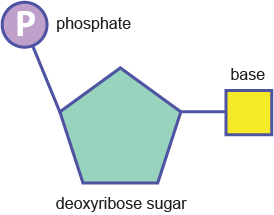
Which of the following statements best explains
the Theory of Natural Selection?
Acquired characteristics of parents can be passed on to offspring.
Organs that are not used may disappear, while organs that are constantly used may develop.
In nature, the organism with desirable characteristics may survive, while those with weaker traits may not.
Organisms develop desirable structures to survive in a given environment.
Which of the following statements explains
Lamarkc,s Theory of Use and Disuse?
Body structures develop because of mutation.
Body structures develop because they are not in use.
Body structures develop because of competition.
Body structures develop because they are used extensively.
He proposed a Theory of Evolution based on Natural Selection.
Jean Baptiste De Lamarck
Jean Baptiste De La Salle
Charles Darwin
Charles Marvin
In Darwin's exploration throughout Galapagos Island, what particular specie did he make use as a subject for his study?
Doves
Love birds
Eagles
Finches
What point of natural selection states that having many offspring increases the chance that some of them will survive?
Adaptation
Competition
Variation
Overproduction
He was able to develop three theories which include Theory of Need, Theory of Use and Disuse and Theory of acquired characteristics.
Albert Einstein
Jean Baptiste de Lamarck
Charles Darwin
This revolutionary pattern selects organisms that will or will not survive based on their existing traits. Organisms with favorable traits are those that are best suited to the environment and have a better chance of survival.
Natural Selection
Genetic Drift
Speciation
Is the evolution of morphological similarities in organisms that are not closely related but they have similarities in their habitats, they have similar environmental demands.
Coevolution
Convergent Evolution
Punctuated Equilibrium
Biological fitness is defined as __________.
the ability of an organism to survive and reproduce
the average life span of an organism
the amount of energy an organism can use in the environment
the average life span of an organism
Which of the following is NOT an example of evolution?
Over many generations, wild teosinte has become corn.
When the Grand Canyon formed, it geographically divided a squirrel population into two populations, which developed into distinct species.
A frog begins its life as a tadpole, but becomes an amphibian.
Finches in the Galapagos islands have diversified over time into many species each well-suited for eating a particular type of food.
The wings of a bird and the wings of a beetle are considered __________.
homologous structures
analogous structures
vestigial structures
phylogenetic structures
What is a vestigial structure?
A structure that has origins in a common ancestor, but has evolved to perform the same functions
A structure that has origins in a common ancestor, but has evolved to perform different functions
A structure that makes an organism better suited to a habitat
A structure that has lost its function but is still part of the organism
Which of the following is evidence of a common ancestor?
Vestigial structures
Fossil record
Similarities in the embryo
All of these
The structures of the front flipper of a whale and the forearm of a wolf have similar bone structure and derive from a common ancestor. This is an example of __________.
analogous structures
homologous structures
vestigial structures
None of these
How did Darwin's finches help support his theory of evolution?
The finches all lived on different islands
Only the largest birds had survived on the island, while the smaller ones went extinct
The birds were different colors, which allowed for camouflage in different habitats
The size and shape of their beaks varied due to the different environments they lived
Structures that were once functional in the past but no longer serve a purpose due to evolutionary adaptations and physiological changes are referred to as __________ structures.
homologous structures
analogous structures
vestigial structures
None of these
In science, the inheritance of a structure that results from natural selection and by which the organism becomes better able to survive and reproduce is called
mutation
advantage
adaptation
evolution
How do fossils support evolution?
The fossil record provides evidence that organisms have changed over time.
Individual species disappear and reappear in the fossil record over time.
The fossil record provides evidence that all organisms developed at the same time.
Organisms in the fossil record are identical to living organisms.
Which of the following statement about fossils is FALSE?
Fossils from the deeper layers are the ancestors of current forms
Fossils from the upper layers are the ancestors of modern forms.
Fossils from the uppermost rock are most like current forms.
Fossils are remains of ancient organisms

Does the presence of homologous structures in genetically different animals suggest common ancestry?
Yes
No

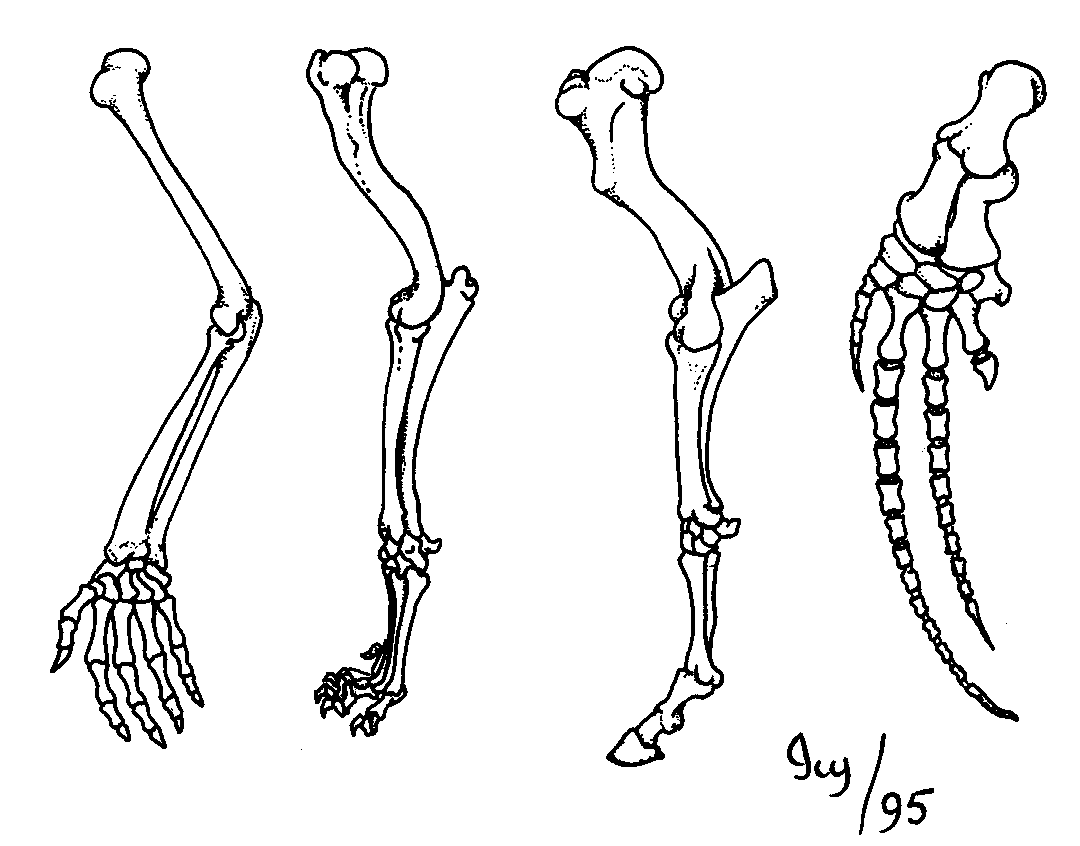
What type of evidence are shown in the picture above?
Fossils
Embryology
Homologous Structures
Vestigial Structures


What type of evidence is shown in the image above?
Fossils
Vestigial structures
Homologous Structures
DNA
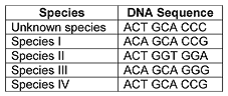
Sperms can have
Only X chromosome
Only Y chromosome
Either X or Y chromosome
Either XX or XY chromosomes
Which of the following is homozygous dominant?
Jj
MM
Rr
ee
Which of the following is heterozygous?
AA
Aa
aa
22
Brown eye color is dominant. Blue eye color is recessive. Select the combination of letters below that would represent a person being a purebred for brown eyes. In other words, which option represents a person having both alleles for brown eyes? (hint: think of capitalization of letters and what is used for dominant vs. recessive).
AA
Aa
aa
aA
Brown eye color is dominant. Blue eye color is recessive. Select the person that is a purebred for blue eyes.
AA
Aa
aA
aa
What is the definition of the phenotype?
The physical traits of an organism
The genetic makeup of an organism
The letters eg, Aa
How the genotype is expressed.
Which of the following is homozygous recessive?
rr
TT
AA
Ff

What is the probability of heterozygous offspring?
1/4
2/4
3/4
4/4
Which of the following genotypes is dominant?
AA
Aa
aa
both AA and Aa
Which of the following statements about chromosomes is correct?
Chromosomes are long, thread-like structures
Chromosomes are found in the nucleus of all cells in the human body
Chromosomes contain DNA
All of the above
How many chromosomes are found in each cell of your body?
46
23
40
45
What does DNA stand for?
Deoxyribonucleic acid
ribosenucleic acid
Deoxyribose
Nucleic acid
Where is DNA found in a human cell?
ribosome
nucleus
cell membrane
cytoplasm

From smallest to largest how would genetic information be organized?
genes, cell, nucleus, chromosome, DNA
chromosome, cell, gene, DNA, nucleus
DNA/nucleotides, gene, chromosome, nucleus, cell
nucleus, cell, gene, DNA, chromosome

A piece of DNA that codes for a particular protein or a characteristic trait is called a
Variation
chromosome
DNA
Gene
genotype
Organisms with one dominant and one recessive allele are called .......
give one example
Heterozygous
homozygous
C
Hh
HH
Dominant character is always represented by
Capital letter
simple letter
which of the following statements are true for sex linked inheritance (select 3)
it is carried by sex one of the chromosome
it is carried by a dominant allele
it is carried by a recessive allele
the condition is expressed more frequently in one sex than other
it is eqally present in both sex
Which statement about the human sex chromosomes is correct?
A All boys have two Y chromosomes.
B Everybody has at least one X chromosome.
C Girls have a Y chromosome and an X chromosome.
D Nobody has two X chromosomes.
In pea plants the allele for tall, T, is dominant to the allele for dwarf, t.
Which cross would produce plants in the proportion of 1 tall: 1 dwarf?
TT × Tt
Tt × Tt
Tt × tt
tt × tt
What will be the genotypes of the offspring resulting from a genetic cross between two
individuals, one of which is homozygous dominant, (TT), and the other heterozygous?
all Tt
50% TT, 50% tt
50% TT, 50%Tt
25%T Tt
Ostriches are native to the savannahs of Africa, while penguins live in the polar regions. Although ostriches and penguins are closely-related, they look very different
Convergent
Divergent
Coevolution
As smaller lizard like reptiles hid in rock crevices to avoid larger predators and feed on smaller insects they found that shorter legs could get further in and find more insects. Over time through many generations snakes evolved as the legs were slowly lost.
Convergent
Divergent
Coevolution

