
 Worksheets
Characteristics and Classification of Life
Total questions: 50
Worksheet time: 44mins
Which of these is the broadest category?
Phylum
Order
Family
Species
Which of these never makes its own food?
Plants
Fungi
Protists
Archaebacteria
What is the classification of living things called?
Binomial nomenclature
Taxonomy
Classification Studies
Linnaeusology

The scientific name for an organism is made from the:
class and family name
genus and species name
domain and kingdom name
kingdom and phylum name

An example of an unicellular organism would be:
monkey
bacteria
spider
human

What kingdom do unicellular, prokaryotic organisms that live in extreme environments?
Animal
Archaebacteria
Eubacteria
Plant

I am prokaryotic and am found everywhere. What kingdom do I belong to?
Eubacteria
Archaebacteria
Fungi
Protista

What is the correct order of taxonomy?
Kingdom, pylum, class, species, genus, family, class
Species, genus, family, order, class, phylum, kingdom
Kingdom, phylum, class, order, family, genus, species
species, phylum, order, class, kingdom, family, genus
Maintaining a stable internal
environment is called
homeostasis
equilibrium
balance
evenness
Green plants produce their own food through the process of photosynthesis. Which characteristic of life does this represent?
All living things use energy
All living things contain cells
All living things maintain homeostasis
All living things grow
A baby song bird hatches from its egg with both parent songbirds watching. Which characteristic of life does this represent?
All living things reproduce
All living things maintain homeostasis
All living things use energy
All living things grow

Microscopic unicellular organism found in a mud puddle. Organism's DNA is contained in a nucleus and it moves by beating tiny hairs in the water.
Which four kingdoms are eukaryotic?
Archaebacteria, Protist, Plant, Animal
Eubacteria, Fungi, Archaebacteria, Plant
Eubacteria, Fungi, Plant, Animal
Protist, Fungi, Plant, Animal
Which four kingdoms are eukaryotic?
Archaebacteria, Protist, Plant, Animal
Eubacteria, Fungi, Archaebacteria, Plant
Eubacteria, Fungi, Plant, Animal
Protist, Fungi, Plant, Animal
Which kingdom contains organisms whose cells never have a cell wall and are heterotrophs?
Plant
Animal
Archaebacteria
Fungi
This organism spends its day taking in carbon dioxide and releasing oxygen through its stomata. It never eats but can grow many meters tall.
Fungi
Protist
Plant
Archaebacteria
I am eukaryotic and mostly multicellular. Occasionally, I can be unicellular but I cannot make my own food so I absorb nutrients from dead and decaying materials.
Fungi
Eubacteria
Archaebacteria
Plant
What should be capitalized within a scientific name?
The first letter of the first word, but not the second word
The first letter of the second word, but not the first word
Only the third word, when there is one
Capitalize all the words
Three organisms have the taxonomic levels below:
1) ) Kingdom Animalia, Phylum Chordata, Class Mammalia, Order Lagomorpha, Family Laporidae, Genus Brachylagus, Species idahoensis
2 )Kingdom Animalia, Phylum Chordata, Class Mammalia, Order Rodentia, Family Castoridae, Genus Castor, Species canadensis
3) Kingdom Animalia, Phylum Chordata, Class Mammalia, Order Lagomorpha, Family Laporidae, Genus Sylvilagus, Species
obscurus
Which two organisms are more similar to each other than to the other one?
1 and 2
2 and 3
1 and 3
They're all equally similar to each other.

Based on the dichotomous key, which insect would be identified as insect "A"?
Dragonfly
Ladybug
Firefly
Bee
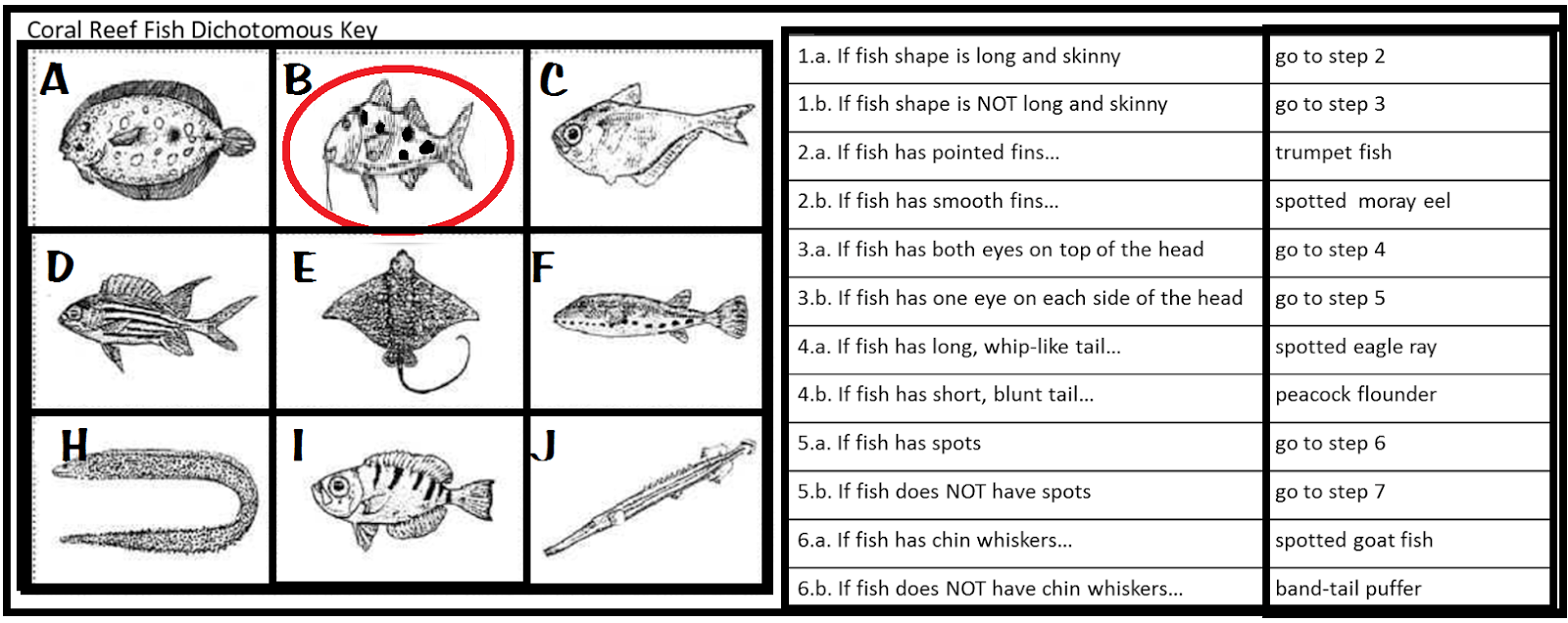
A student collects plants and pebbles and places them in an aquarium to record observations. The sizes of the plants increased, but the pebbles did not. the student classifies the pebbles as nonliving. Which criteria does the student use as the basis of classification?
ability to grow
ability to move
ability to reproduce
ability to respond to stimuli
Equus caballas (Horse) & Equus burchellii (Zebra)
Cyanea artica (Jellyfish) &
Ctenodiscus crispatus (Mud Starfish)
Naja naja (cobra) & Glycine max (soya bean)
Ophiocomina nigra (black brittle star) & Brassica nigra (black mustard)
Panthera tigris
Which one is not a characteristic of all living things?
homeostasis
reproduce
breathing
grow and develop
Which of the following taxonomic groups would contain plants with the greatest amount of variety and differences?
Kingdom
Phylum
Order
Family

Which of the following pairs of organisms from the table shown to the left would be the most closely related?
Desert iguana and Box turtle
Chuckwalla and Bush anole
Box turtle and Bush anole
Desert iguana and Chuchwalla
Which object is an example of a prokaryotic cell?
A plant cell
An animal cell
A bacterium
None of the above
________ ___________ is the two- word system of naming organisms to create a scientific name.
scientific name
dichotomous key
genus and species
binomial nomenclature
Multicellular organism that converts energy from the Sun into food.
Bacteria
Plantae
Animalia
Protista

What kingdom am I? When you think of eukaryotic, mostly multi-cellular decomposers, you should think of me!
Plant
Fungi
Animal
Protist

What is not true about this kingdom?
Eukaryotic
Multicellular
Immobile
Photosynthesizes
Decomposer
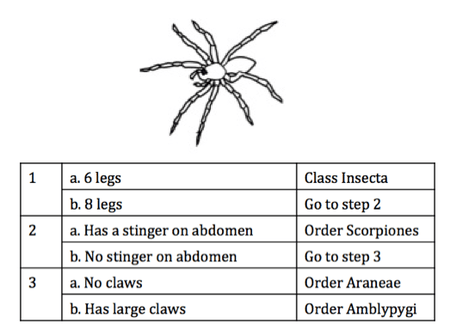


Identify the plant shown
A
B
C
D

What is wrong with the following scientific name: Felis Domesticus
Genus needs to be lowercase
Species needs to be lowercase
Scientific name needs to be underlined
nothing is wrong

Which level of classification do the members have the least characteristics in common?
Phylum
Genus
Class
Order

Which is a characteristic of the missing box?
Only found in water
Eukaryotic
Multicellular
Unicellular
Which of the following excludes a virus from being considered a living organism?
It cannot reproduce on it's own
It cannot maintain metabolic processes on it's own
It is not made of cells
All the above
What is another name for grouping and classifying items by their similarities or differences.
Morphology
Biology
Taxonomy
Ecology
What is the name of the scientist that invented the classification system that we use today?
Aristotle
Bohr
Linneaus
Hooke
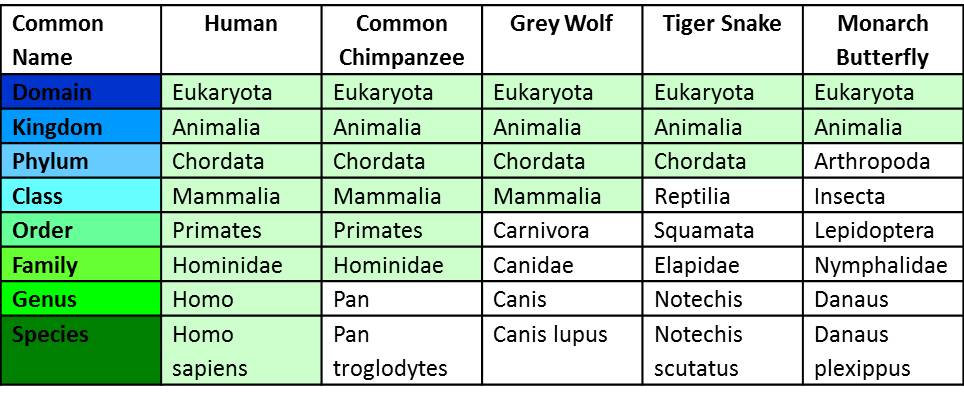
Which kingdoms could have organisms made up of one cell and other organisms made up of more than one cell?
Protist
Fungi
Plant
Bacteria

