wayground logo

Free Printable Worksheets

Font size

S
M
L
XL
Worksheets

GENBIO2

Total questions: 219

Worksheet time: 2hrs 26mins

Name
Class
Date
1.

What are the five unifying themes of biology?

a)

organization, information, energy and matter, interactions, evolution

b)

organization, coexistence, ecology, hierarchy, energy

c)

cellular structure, reproduction, metabolism, genetics, and evolution

d)

taxonomy, biogeography, physiology, ecology, and genetics

2.

Enumerate the different levels of Biological Organization (biggest to smallest)

a)

Molecule, Organelle, Cell, Tissue, Organ, Organ System, Individual, Population, Community, Ecosystem

b)

Organism, Organ System, Tissue, Cell, Organelle, Molecule, Population, Community, Ecosystem, Biosphere

c)

Biosphere, Ecosystem, Community, Population, Organism, Organ System, Organ, Tissue, Cell, Organelle, Molecule

d)

Biosphere, Ecosystem, Population, Community, Organism, Organ System, Organ, Organelle, Tissue, Cell, Molecule

3.

global system that contains all ecosystems where life exists and the abiotic environment reside in

(a)  

4.

interactions of (organisms, population, and community) to their non-living environment

(a)  

5.

interaction of different populations with each other

(a)  

6.

group of organisms of one type that live in the same area

(a)  

7.

individual living thing composed of organ systems that function altogether

(a)  

8.

an association of different organs and other anatomical structures that perform a certain physiological process

(a)  

9.

collection of tissues that function as one

(a)  

10.

aggregation of similar cells

(a)  

11.

basic unit of life

(a)  

12.

basically do for a cell what our organs do for us (nucleus, golgi body, ER, etc.)

(a)  

13.

group of atoms; smallest version of an element or compound that still retain its chemical properties

(a)  

14.

contains membrane-enclosed organelles, largest of which is the nucleus
(Ex. plants, animals, humans)

a)

Eukaryotic Cell

b)

Prokaryotic Cell

15.

simpler, smaller, does not contain a nucleus or other membrane-enclosed organelles
(Ex. bacteria, archaea)

a)

Eukaryotic Cell

b)

Prokaryotic Cell

16.

unit of inheritance

(a)  

17.

these structures contain genetic material in the form of deoxyribonucleic acid

(a)  

18.

controls the development and maintenance of organisms; contains genetic material

(a)  

19.

large-scale analysis of DNA sequence; study of sets of genes within and between species

a)

genomics

b)

proteomics

20.

study of proteomes (whole sets of proteins encoded by the genome)

a)

genomics

b)

proteomics

21.

an organism's entire set of genetic instructions

(a)  

22.

We immediately gain energy when we eat food.

a)

True

b)

False

23.

Interactions may be beneficial or harmful to one or both organisms

a)

True

b)

False

24.

Feedback regulation instructs the body to meet (a)   (e.g. touching a hot pot, pulling your hand back in order to reduce pain and go back to your normal state)

25.

this is the scientific explanation for both the unity and diversity of organisms, positing that organisms are modified descendants of common ancestors

a)

Darwinism

b)

Evolution

c)

Taxonomy

d)

Natural Selection

26.

branch of biology that names and classifies species into groups of increasing breadth

a)

Darwinism

b)

Evolution

c)

Taxonomy

d)

Natural Selection

27.

Three Domains of Life

a)

Bacteria

b)

Archaea

c)

Eukarya

d)

Plantae

e)

Animalia

28.

produce their own food through photosynthesis

a)

Plants

b)

Fungi

c)

Animals

29.

absorb nutrients

a)

Plants

b)

Fungi

c)

Animals

30.

ingest their food

a)

Plants

b)

Fungi

c)

Animals

31.

What book did Charles Darwin author and when did he publish it? (on the duality of unity and diversity)

a)

'The Origin of Species by Means of Natural Selection' (1859)

b)

'The Descent of Man' (1871)

c)

'The Voyage of the Beagle' (1839)

d)

'On the Origin of Species' (1861)

32.

the theory wherein the environment "selects" for the propagation of beneficial traits

a)
Natural Selection
b)
Artificial Selection
c)
Sexual Selection
d)
Kin Selection
33.

Natural Selection regresses the adaptation of organisms

a)

True

b)

False

34.

scientific study of animals; animal biology

(a)  

35.

study of insects

a)
Entomology
b)
Ornithology
c)
Ichthyology
d)
Herpetology
36.

study of fishes

a)
Ichthyology
b)
Entomology
c)
Herpetology
d)
Ornithology
37.

study of sponges

a)

mammalogy

b)

malacology

c)

spongiology

d)

ornithology

38.

study of parasitic worms

a)
Helminthology
b)
Entomology
c)
Herpetology
d)
Ichthyology
39.

study of crustaceans

a)
Herpetology
b)
Ornithology
c)
Ichthyology
d)
Caricinology
40.

study of mammals

a)

entomology

b)

ornithology

c)

mammalogy

d)

herpetology

41.

study of mollusc shells

a)
Conchology
b)
Entomology
c)
Ichthyology
d)
Herpetology
42.

study of molluscs

a)

entomology

b)

ornithology

c)

malacology

d)

botany

43.

study of reptiles and amphibians

a)
Herpetology
b)
Ichthyology
c)
Entomology
d)
Ornithology
44.

study of birds

a)
Ornithology
b)
Entomology
c)
Ichthyology
d)
Herpetology
45.

Which of the following are characteristics of animals?

a)

multicellular

b)

heterotrophic

c)

body cavity

d)

symmetry

e)

interaction

46.

Who discovered the protoplasm?

a)
Albert Einstein
b)
Isaac Newton
c)
Marie Curie
d)

Dujardin

47.

Who are the two people attributed to the transmission electron microscope?

a)
Ernst Ruska and Max Knoll
b)
Albert Einstein and Niels Bohr
c)
Isaac Newton and Galileo Galilei
d)
Marie Curie and Pierre Curie
48.

Who are the two people attributed to the discovery of DNA?

a)
Albert Einstein and Isaac Newton
b)
Marie Curie and Louis Pasteur
c)
James Watson and Francis Crick
d)
Charles Darwin and Gregor Mendel
49.

Who coined the term "cells" in 1665?

a)
Robert Hooke
b)
Isaac Newton
c)
Charles Darwin
d)
Albert Einstein
50.

Who made the 30x magnification microscope?

a)
Antonie van Leeuwenhoek
b)
Galileo Galilei
c)
Isaac Newton
d)

Robert Hooke

51.

"Father of Microscope" who observed living cells and discovered the 300x microscope magnification (1673)

a)
Antonie van Leeuwenhoek
b)
Robert Hooke
c)
Galileo Galilei
d)
Isaac Newton
52.

Who coined the term nucleus?

a)
Albert Einstein
b)
Isaac Newton
c)
Robert Brown
d)
Charles Darwin
53.

Who was the botanist in 1838 who concluded that all plants are made of cells?

a)
Matthias Schleiden
b)
Robert Hooke
c)
Antonie van Leeuwenhoek
d)
Rudolf Virchow
54.

Who was the physician who did research on cancer cells and concluded that all cells are from other pre-existing cells?

a)
Louis Pasteur
b)
Robert Koch
c)
Rudolf Virchow
d)
Alexander Fleming
55.

Which cell has a single chromosome with DNA only?

a)

Eukaryotic

b)

Prokaryotic

56.

The cytoplasm of this cell contains thylakoids, and ribosomes. Which cell is this?

a)

Eukaryotic

b)

Prokaryotic

57.

What distinct parts does a eukaryotic cell contain?

a)

Nucleus, Mitochondria, Ribosomes

b)
Nucleus, Cell Wall, Chloroplast
c)
Nucleus, Cytoplasm, Cell Membrane
d)
Nucleus, Cytoplasm, Mitochondria
58.

Does prokaryotic cell have a cell wall?

a)

Yes

b)

No

59.

DNA, Cell Wall, Cytoplasm and Ribosomes are the common features of prokaryotic and eukaryotic cells

a)

True

b)

False

60.

What are the four major parts of the cell?

a)

Organelles, Cytoplasm, Cell membrane, Inclusions

b)
Nucleus, Cell wall, Cell membrane, Chloroplast
c)
Nucleus, Ribosomes, Endoplasmic reticulum, Golgi apparatus
d)
Nucleus, Cytoplasm, Cell membrane, Cell wall
61.

governor of the cell

(a)  

62.

part of a cell that transports materials

(a)  

63.

Rough ER: protein synthesis; Smooth ER: (a)   synthesis

64.

site of protein synthesis

(a)  

65.

part of cell that specializes in storage, modifications, packaging, and secretory

(a)  

66.

what are lysosomes?

a)
Energy producing organelles in the cell
b)
Organelles that contain the cell's genetic material
c)
Organelles that digest waste materials and cellular debris
d)
Structures that transport substances within the cell
67.

part of the cell that aids in respiration

(a)  

68.

cell that gives color and protection (ANIMALS)

(a)  

69.

What are microbodies in cells?

a)
Small structures that produce energy
b)
Small structures that store food
c)
Small structures involved in protein synthesis
d)
Small structures that contain enzymes involved in metabolic processes
70.

What are centrioles?

a)
A type of cell organelle involved in cell division
b)
A type of protein found in muscle cells
c)
A type of DNA molecule
d)
A type of lipid found in cell membranes
71.

What function do the cilia and flagella play?

a)
They provide structural support to the cell
b)
They are involved in cell division
c)
They are involved in the movement of the cell
d)
They store food and water for the cell
72.

temporary subcellular structures performing non-metabolic functions

a)
Lysosomes
b)
Ribosomes
c)
Inclusions
d)
Mitochondria
73.

In terms of cell inclusions, what are crystals?

a)

Crystals are formed from precipitated waste products/inorganic salts

b)
Crystals are the power source of a cell
c)
Crystals are the main component of a cell wall
d)
Crystals are the storage units of a cell
74.

In terms of cell inclusions, what are crystals?

a)

Crystals are formed from precipitated waste products/inorganic salts

b)
Crystals are the power source of a cell
c)
Crystals are the main component of a cell wall
d)
Crystals are the storage units of a cell
75.

In terms of cell inclusions, what are fat droplets?

a)
They are a type of cell organelle
b)
They are a type of protein
c)
They are a type of nucleic acid
d)
They are a type of lipid
76.

What is diffusion?

a)

Net movement of molecules from a region of high concentration to a region of low concentration

b)

Net movement of molecules from a region of low concentration to a region of high concentration

c)
The process by which molecules stay still
d)
The process by which molecules disappear
77.

What is osmosis?

a)
The process of lower concentration to higher concentration
b)

The diffusion of water through a selectively permeable membrane from lower osmotic pressure to higher osmotic pressure

c)

The diffusion of water through a selectively permeable membrane from higher osmotic pressure to lower osmotic pressure

d)
The process of higher concentration to lower concentration
78.

Facilitated Transport is with permease and requires energy

a)

True

b)

False

79.

I. SIMPLE DIFFUSION is without permease and doesn't require energy

II. ACTIVE TRANSPORT is with permease and requires energy

III. BULK TRANSPORT is when molecules pass through the membrane in bulks through the use of energy

a)

All statements are TRUE

b)

Only statements I and II are TRUE

c)

Only statement III is TRUE

d)

Only statement I is TRUE

80.

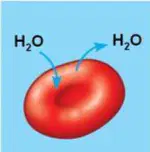
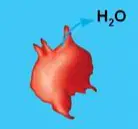
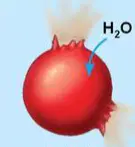
Which of the following describes a HYPOTONIC animal cell?
a)

b)

c)

81.

Which of the following describes a NORMAL animal cell?

a)

b)

c)

82.

Which of the following describes a HYPERTONIC animal cell?

a)

b)

c)

83.

Which of the following require vesicles to cross the membrane?

a)

water

b)

small molecules

c)

polysaccharides

d)

proteins

84.

What is exocytosis in cell transport?

a)
The process of taking materials into a cell by means of infoldings, or pockets, of the cell membrane
b)

The process by vesicles fuse with the membrane to release certain contents outside the cell

c)
The movement of ions or molecules across a cell membrane into a region of higher concentration
d)
The process by which cells obtain nutrients and oxygen
85.

What is endocytosis?

a)

Process by which cells absorb molecules by engulfing them through vesicles

b)

Process by which cells expel waste materials through vesicles

c)
Process by which cells divide into two
d)
Process by which cells produce energy
86.

What is the difference between phagocytosis and pinocytosis?

a)
Phagocytosis involves the ingestion of solid particles, while pinocytosis involves the ingestion of liquid particles
b)
Phagocytosis and pinocytosis are the same process
c)
Phagocytosis involves the ingestion of liquid particles, while pinocytosis involves the ingestion of solid particles
d)
Phagocytosis and pinocytosis both involve the ingestion of solid particles
87.

Describe receptor-mediated endocytosis.

a)
It is a process by which cells absorb metabolites, hormones, proteins – and in some cases viruses – by engulfing them.
b)
It is a process by which cells expel waste materials.
c)
It is a process by which cells divide and reproduce.
d)
It is a process by which cells produce energy.
88.

Attributed to the rule that in DNA there is always equality in quantity between the bases A and T and between the bases G and C

(a)  

89.

this is referred to as the union of two gametes

a)
Fertilization
b)
Mitosis
c)
Meiosis
d)
DNA replication
90.

a fertilized egg containing a full set of chromosomes, one set from each parent

a)
Zygote
b)
Embryo
c)
Fetus
d)
Blastocyst
91.

a type of cell division that reduces chromosome number by half

a)

Mitosis

b)

Meiosis

92.

a type of cell division that produces sex cells

a)

Mitosis

b)

Meiosis

93.

[MEIOSIS]

phase wherein the crossing-over and pairing with homologues occur

a)

Prophase II

b)

Prophase I

c)

Telophase I

d)

Telophase II

94.

[MEIOSIS]

phase wherein pairs of homologous chromosomes move to the equator of the cell

a)

Metaphase II

b)

Metaphase I

c)

Telophase I

d)

Telophase II

95.

[MEIOSIS]

phase wherein homologous chromosomes separate

a)

Metaphase II

b)

Metaphase I

c)

Anaphase I

d)

Anaphase II

96.

[MEIOSIS]

phase that forms two haploid daughter cells wherein each chromosome consists of two sister chromatids

a)

Telophase II

b)

Telophase I

c)

Anaphase I

d)

Anaphase II

97.

[MEIOSIS]

phase wherein a new spindle forms around the chromosomes

a)

Prophase II

b)

Prophase I

c)

Interphase I

d)

Interphase II

98.

[MEIOSIS]

phase wherein sister chromatids separate and move as two newly individual chromosomes

a)

Prophase II

b)

Prophase I

c)

Anaphase I

d)

Anaphase II

99.

[MEIOSIS]

phase wherein sister chromatids arrange at metaphase plate

a)

Metaphase II

b)

Metaphase I

c)

Anaphase I

d)

Anaphase II

100.

[MEIOSIS]

phase that results in 4 genetically distinct daughter cells

a)

Telophase II

b)

Telophase II

c)

Prophase I

d)

Prophase II

101.

ability of organisms to produce more of their own kind

a)
Reproduction
b)
Respiration
c)

Cell Division

d)

Digestion

102.

phase in the cell cycle in charge of cell growth and copying of chromosomes in preparation for cell division

a)
Prophase
b)
Anaphase
c)
Interphase
d)
Telophase
103.

Chromosomes are duplicated during the G0 period

a)

True

b)

False

104.

cell growth

a)

G1

b)

S

c)

G2

105.

DNA Synthesis

a)

G1

b)

S

c)

G2

106.

More growth, preparation for mitosis

a)

G1

b)

S

c)

G2

107.

structures made of microtubules that controls chromosome movement during mitosis

a)

Kinetochore

b)

Centrosome

c)
Centrioles
d)

Mitotic Spindle

108.

protein complex associated with centromeres

a)

Kinetochore

b)

Centrosome

c)
Centrioles
d)

Mitotic Spindle

109.

assembly of spindle microtubules

a)

Kinetochore

b)

Centrosome

c)
Centrioles
d)

Mitotic Spindle

110.

protein complex associated with centromeres

a)

Kinetochore

b)

Centrosome

c)
Centrioles
d)

Mitotic Spindle

111.

transmission of traits from one generation to the next

a)

Heredity

b)

Inheritance

c)

Variation

d)

Genetics

112.

demonstrated by the differences in appearance that offspring show from parents and siblings

a)

Heredity

b)

Inheritance

c)

Variation

d)

Genetics

113.

scientific study of heredity and variation

a)

Heredity

b)

Inheritance

c)

Variation

d)

Genetics

114.

Children inherit physical traits

a)

True

b)

False

115.

What is the difference between sexual and asexual reproduction?

a)
Sexual reproduction involves two parents and asexual reproduction involves one
b)
Sexual reproduction involves three parents and asexual reproduction involves two
c)
Sexual reproduction involves one parent and asexual reproduction involves two
116.

an ordered display of the pairs of the chromosomes from a cell

(a)  

117.

Human somatic cells have __ pairs of chromosomes

a)

23

b)

46

c)

96

118.

In terms of sex chromosomes, XX signifies MALES

a)

FALSE

b)

TRUE

119.

the remaining 22 pairs of chromosomes

(a)  

120.

Father of Genetics

(a)  

121.

Why did Gregor Mendel use garden peas in his experiments?

a)
Because they were easy to grow and had a short life cycle
b)
Because they were his favorite plant
c)
Because they were the only plant available
d)
Because they were the most beautiful plant
122.

varying heritable features (e.g. flower color)

a)

characters

b)

traits

123.

variant for a feature (e.g. purple)

a)

characters

b)

traits

124.

Law wherein A gamete carries either a recessive or a dominant allele, but not both alleles at the same time

a)
Law of Segregation
b)
Law of Independent Assortment
c)
Law of Dominance
d)
Law of Variation
125.

Law wherein alleles of two or more different genes get sorted into gametes independently of one another

a)
Law of Segregation
b)
Law of Independent Assortment
c)
Law of Dominance
d)
Law of Variation
126.

a tool that shows possible combinations of sperm and egg

a)
Punnett Square
b)
Microscope
c)
DNA Sequencer
d)

Pedigree

127.

2 identical alleles (PP)

a)

Heterozygous

b)

Homozygous

128.

2 different alleles (Pp)

a)

Heterozygous

b)

Homozygous

129.

heterozygote phenotype and dominant homozygote are identical (RR + rr = Rr)

a)

Complete Dominance

b)

Incomplete dominance

c)

Codominance

d)

Multiple Alleles

e)

Polygenic Inheritance

130.

neither allele is dominant, the third phenotype is a blend of the other two (red + white = pink)

a)

Complete Dominance

b)

Incomplete dominance

c)

Codominance

d)

Multiple Alleles

e)

Polygenic Inheritance

131.

two dominant alleles affect the phenotype in separate, distinguishable ways (red + white = red and white)

a)

Complete Dominance

b)

Incomplete dominance

c)

Codominance

d)

Multiple Alleles

e)

Polygenic Inheritance

132.

four phenotypes of the ABO blood group are determined by three alleles (IA, IB, and i)

a)

Complete Dominance

b)

Incomplete dominance

c)

Codominance

d)

Multiple Alleles

e)

Polygenic Inheritance

133.

What is a phenotype?

a)
The physical expression of a gene
b)
The genetic makeup of an organism
134.

What is a genotype?

a)
The physical expression of a gene
b)
The genetic makeup of an organism
135.

Ones phenotype reflects its overall genotype and unique environmental history

a)

TRUE

b)

FALSE

136.

inter-relationships that describes and traces inter-relationships and inheritance patterns of parents and children across generations

(a)  

137.

These are heterozygous individuals who carry recessive allele but are phenotypically normal

a)
Carriers
b)
Dominant individuals
c)
Homozygous individuals
d)
Phenotypically abnormal individuals
138.

rare and arise by mutation (achondroplasia)

a)

Recessively Inherited Disorders

b)

Dominantly Inherited Disorders

139.

influenced by genes and environment

a)

Recessively Inherited Disorders

b)

Dominantly Inherited Disorders

c)

Multifactorial Disorders

140.

no matter the genotype, one's lifestyle has an effect on phenotype

a)

TRUE

b)

FALSE

141.

conserves number of chromosome sets

a)

MITOSIS

b)

MEIOSIS

142.

focuses on growth and repair

a)

MITOSIS

b)

MEIOSIS

143.

ensures stability in the chromosome number across generations

a)

MITOSIS

b)

MEIOSIS

144.

focuses on growth and repair

a)

MITOSIS

b)

MEIOSIS

145.

ensures cells are replenished and regenerated

a)

MITOSIS

b)

MEIOSIS

146.
What are the nucleotides made of?
a)
Sugar, Phosphate, nitrogen base
b)
Phosphate, Adenine, nitrogen base
c)
Thymine, Adenine, Cytomine
d)
Phosphate, Nitrogen, Adenine
147.
Adenine bonds with ______________.
a)
Guanine
b)
Thymine
c)
Cytosine
d)
Adenine
148.
Guanine bonds with ______________.
a)
Adenine
b)
Guanine
c)
Cytosine
d)
Thymine
149.
Why is DNA important?
a)
it is very small and very complicated
b)
it's in everything
c)
it serves as the blueprint for traits of all living things
d)
because we eat it every day for energy
150.
What are the 4 nitrogen bases?
a)
adenine, thymine, cytoplasm, and guanine
b)
adenine, thymine cytosine, and guanine
c)
adenine, thymine, cytosine, and gylcerol
d)
adenine, thymine, cytosine, and glucose
151.
Which sequence of DNA bases would pair with this partial strand
ATG TGA CAG
a)
ATG TGA CAG
b)
TAC ACT GTC
c)
GTA AGT GAC
d)
CAT TCA CTG
152.

In eukaryotes, which organelle is DNA usually found in?

a)

cell membrane

b)

vacuole

c)

chloroplast

d)

nucleus

153.
Which shows the correct complementary base pairing for DNA?
a)
C-A, T-G
b)
A-G, C-T
c)
C-G, U-A
d)
T-A, G-C
154.
What does DNA stand for?
a)
Deoxyribonucleic acid
b)
Denitrogenous acid
c)
Deribonucleic acid
d)
Diribonucleic acid
155.
The building block of nucleic acids are nucleotides.  Nucleotides are composed of a sugar, a phosphate group, and a _________________ base.
a)
oxygen
b)
hydrogen
c)
nitrogen
d)
carbon
156.
The sugar in DNA is ?
a)
sucrose
b)
glucose
c)
deoxyribose
d)
fructose
157.
Which of the following monomers are repeatedly joined together to form a strand of DNA?
a)
amino acids
b)
nucleotides
c)
fatty acids
d)
polysaccharides
158.
What determines the code, or information, of a DNA molecule?
a)
the shape (structure) of the nitrogen bases
b)
the order (sequence) of the nitrogen bases
c)
the color of the nitrogen bases
d)
the frequency (number) of nitrogen bases
159.
Which 2 molecules form the sides (backbone) of the DNA ladder?
a)
deoxyribose sugar and adenine
b)
deoxyribose sugar and a hydrogen bond
c)
deoxyribose sugar and the nucleus
d)
deoxyribose sugar and phosphate
160.
The two strands of nitrogenous bases in DNA are joined by which type of bond?
a)
polar bonds
b)
ionic bonds
c)
covalent bonds
d)
hydrogen bonds
161.
The drawing shows the structure of what molecule?
a)
A DNA molecule
b)
A lipid molecule
c)
A carbohydrate molecule
d)
A protein molecule
162.
X outlines a(n) ___________.
a)
amino acid
b)
nitrogen base 
c)
nucleotide
d)
nitrogen base pair
163.
Identify #2.
a)
nitrogen base
b)
phosphate group
c)
deoxyribose sugar
d)
nucleotide
164.
A long chain of amino acids is a/an
a)
protein
b)
nucleic acid
c)
tRNA
d)
mRNA
165.
If a DNA molecule consists of 29% Guanine, how much cytosine will it contain?
a)
29%
b)
58%
c)
21%
d)
I have no idea.
166.
If the percentage of DNA is made of 30% Thymine, what is the correct percentage of Guanine?
a)
30
b)
15
c)
20
d)
60
167.
Replicate the following strand of DNA: 
AATCATGGA
a)
AATCATGGA
b)
TTAGTACCT
c)
UUAGUACCU
d)
GGATAUCUA
168.
The enzyme that unzips the DNA to prepare for replication
a)
helicase
b)
replicase
c)
polymerase
d)
synthase
169.
DNA replication results in two DNA molecules,
a)
each one with two original strands
b)
each one with two new strands
c)
each one with one new strand and one original strand
d)
one with two new strands and the other with two original strands
170.
A scientist observes a base sequence of AGCTAGCTAGCT.  Which of the following would be the complimentary strand?
a)
TGCATGCATGCA
b)
TCGATCGATCGA
c)
TAGCTAGCTAGC
d)
TTAAGGCCTTCC
171.
A process in which DNA has the unique ability to make an exact copy of itself.
a)
Replication
b)
Translation
c)
Transcription
172.
The bonds that hold the two strands of DNA together come from...
a)
the attraction of phosphate groups 
b)
strong bonds between  bases and sugars
c)
carbon to carbon bonds in the sugar
d)
weak hydrogen bonds between the bases
173.
The DNA nucleotide is composed of three parts. Which two components make up the nucleotide backbone?
a)
ribose sugar and base
b)
ribose sugar and phosphate group
c)
nitrogen base and deoxyribose sugar
d)
deoxyribose sugar and phosphate group
174.
What is responsible for holding the two strands of the DNA double helix together?
a)
hydrogen bonds
b)
alleles
c)
London dispersion forces
d)
deoxyribose sugars
175.
Why is DNA important?
a)
it is very small and very complicated
b)
it's in everything
c)
it serves as the blueprint for traits of all living things
d)
because we eat it every day for energy
176.
What are the 4 nitrogen bases?
a)
adenine, thymine, cytoplasm, and guanine
b)
adenine, thymine cytosine, and guanine
c)
adenine, thymine, cytosine, and gylcerol
d)
adenine, thymine, cytosine, and glucose
177.
Which organelle is DNA usually found in?
a)
cell membrane
b)
vacuole
c)
chloroplast
d)
nucleus
178.
Describes the twisted ladder-like shape of a DNA molecule
a)
Nitrogen Base
b)
Hexagon
c)
Double Helix
179.
Which component of DNA specifies the traits of an organism?
a)
5-carbon sugar (deoxyribose)
b)
hydrogen bonds
c)
phosphate groups
d)
nitrogenous base pairs
180.
What term names the process during which DNA is copied prior to cell division?
a)
DNA polymerase
b)
DNA replication
c)
DNA regneration
d)
DNA redistribution
181.
After analyzing a sample of DNA, a scientist recorded the data shown in the table. What percentage of the DNA sample is cytosine?
a)
22%
b)
25%
c)
28%
d)
56%
182.
The nucleic acid DNA is composed of
a)
sugar, protein, and nitrogenous bases.
b)
protein, nitrogenous bases, and phosphate.
c)
nitrogenous bases, phosphate, and RNA.
d)
sugar, phosphate, and nitrogenous bases.
183.
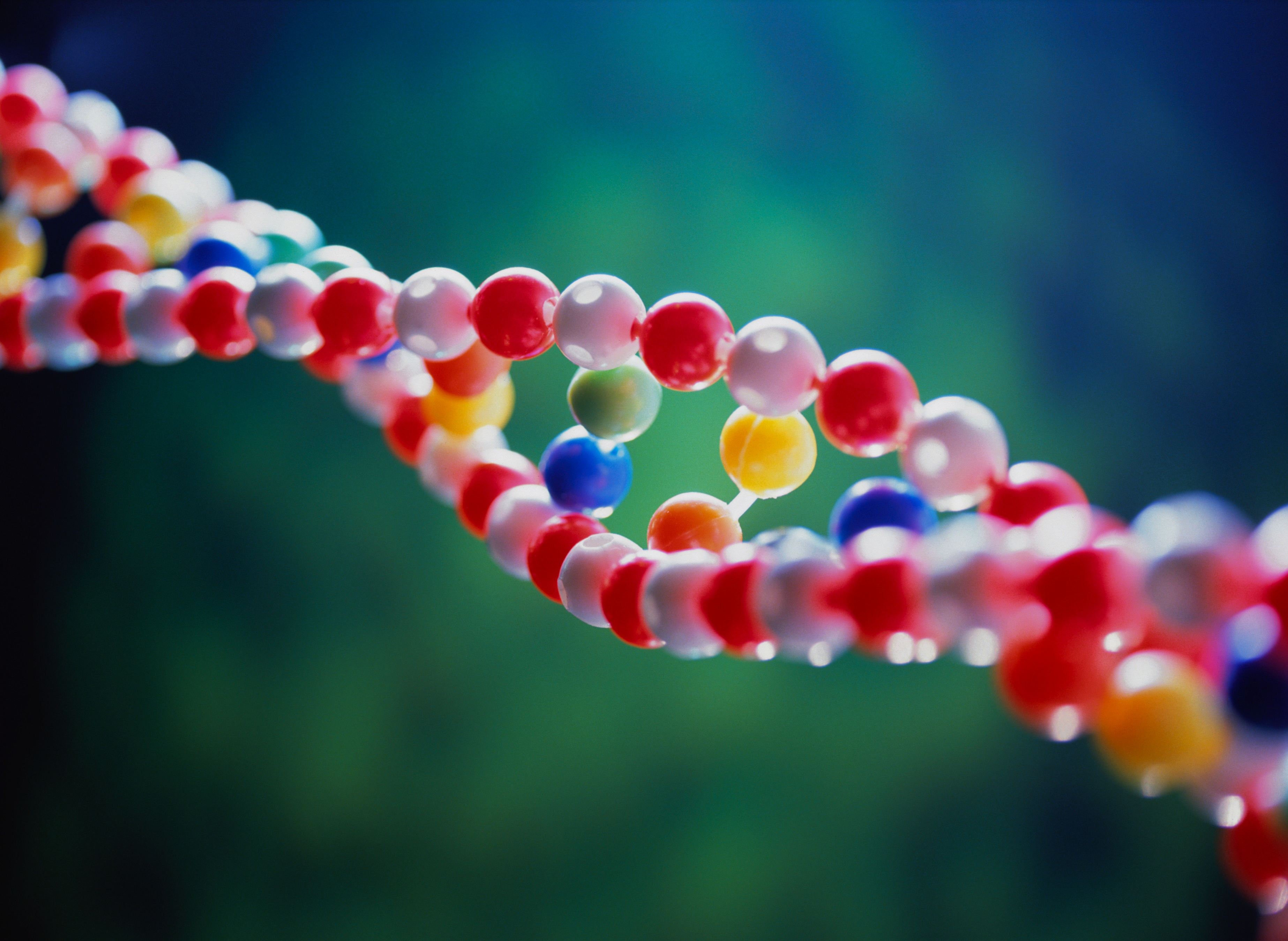
Name this structure
a)
double helix
b)
nucelotide
c)
twisted ladder
d)
hydrogen bond
184.

The fragments on the lagging strand that are made up of repeating segments of DNA and RNA Primers

a)

okazaki fragments

b)

Primase

c)

Polymerase

d)

unused DNA

185.

Which of the following best describes the arrangement of the sides of the DNA molecule

a)

Bonding

b)

Alternating

c)

Anitparallel

d)

Parallel

186.

DNA replication results in

a)

2 completely new DNA molecules

b)

2 DNA molecules that each contain a strand of the original

c)

1 new DNA molecule and 1 old

d)

1 new molecule of DNA

187.

DNA polymerase moves in the _________ to ____________ direction

a)

3' to 5'

b)

easiest

c)

5" to 3"

d)

9 to 5

188.

Enzyme that connects the DNA to the backbone (glues)

a)

Ligase

b)

Polymerase

c)

Helicase

d)

Primase

189.

Enzyme that breaks hydrogen bonds (unzips)

a)

Ligase

b)

Polymerase

c)

Primase

d)

Helicase

190.

DNA strand has the following bases AAGCCA what are the bases on the complementary strand

a)

GGCTTA

b)

TTGGGA

c)

CCAGGT

d)

TTCGGT

191.

Site where replication begins

a)

Polymerase action site

b)

Replication fork

c)

Replication Origin

d)

In the front

192.

The new DNA strand formed after DNA replication is an exact copy of its parent strand

a)

True

b)

False

193.

Proteins that DNA winds itself around to for Chromosomes

a)

Histone

b)

Double Helix

c)

Chromatin

d)

Chromatin

194.

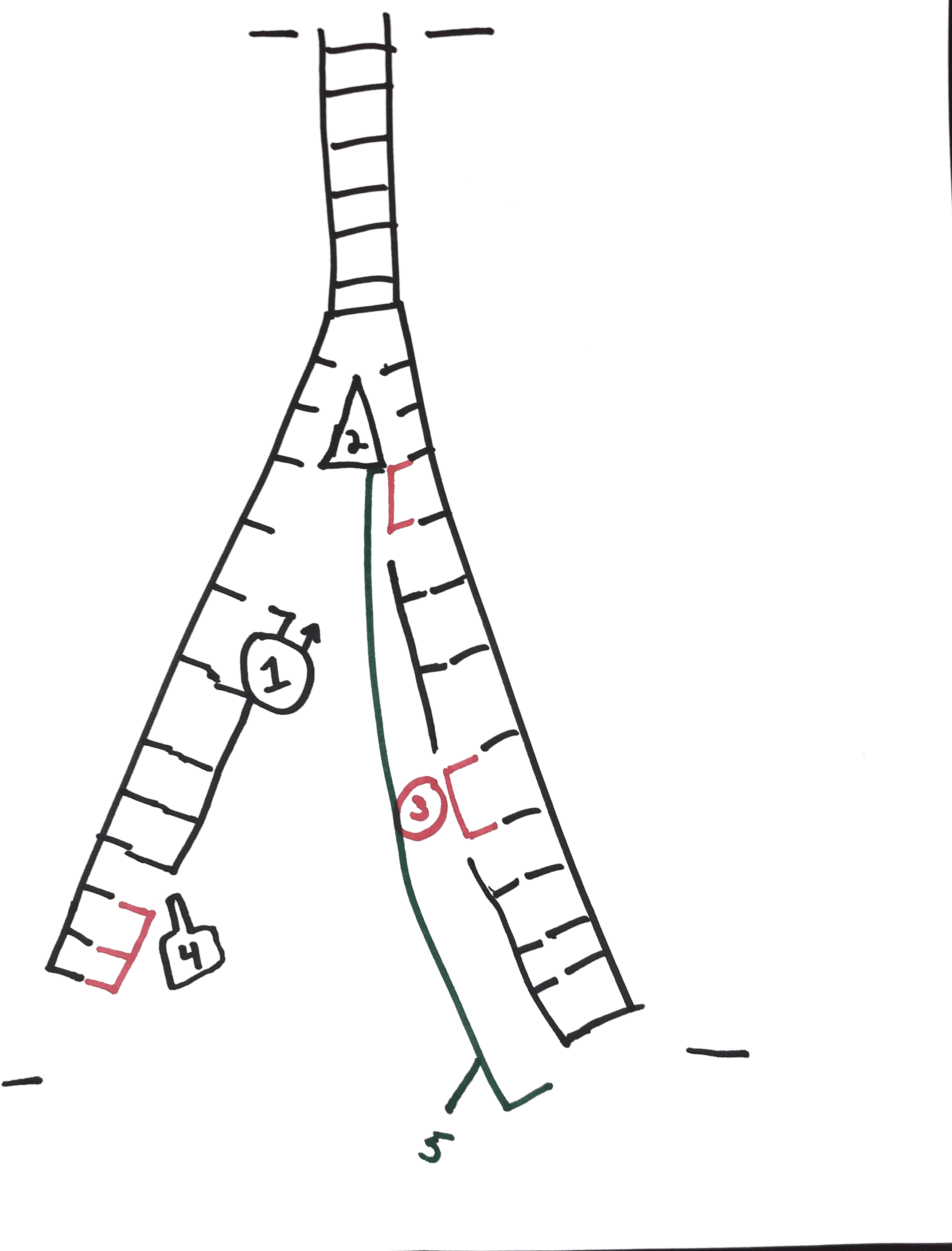
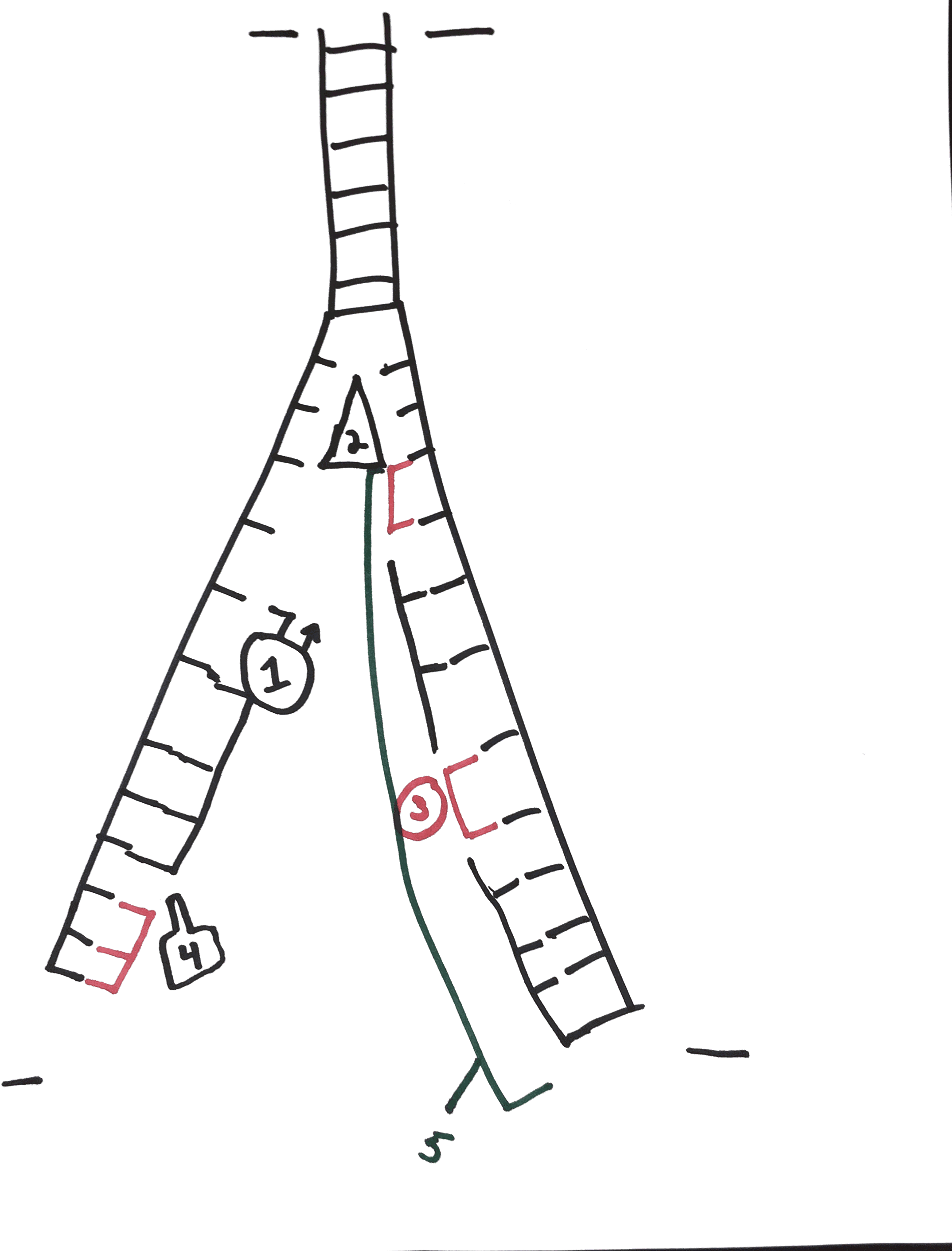
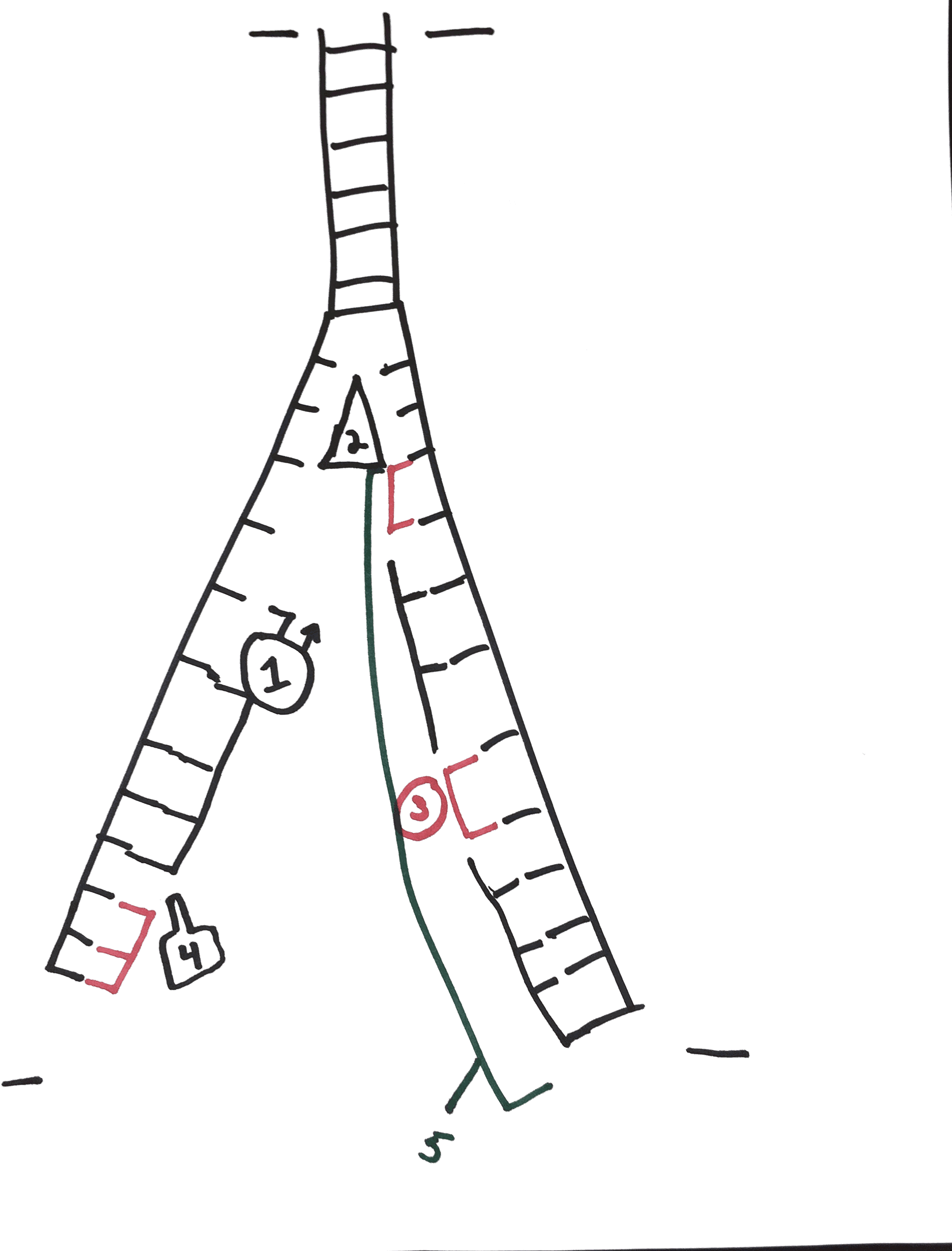
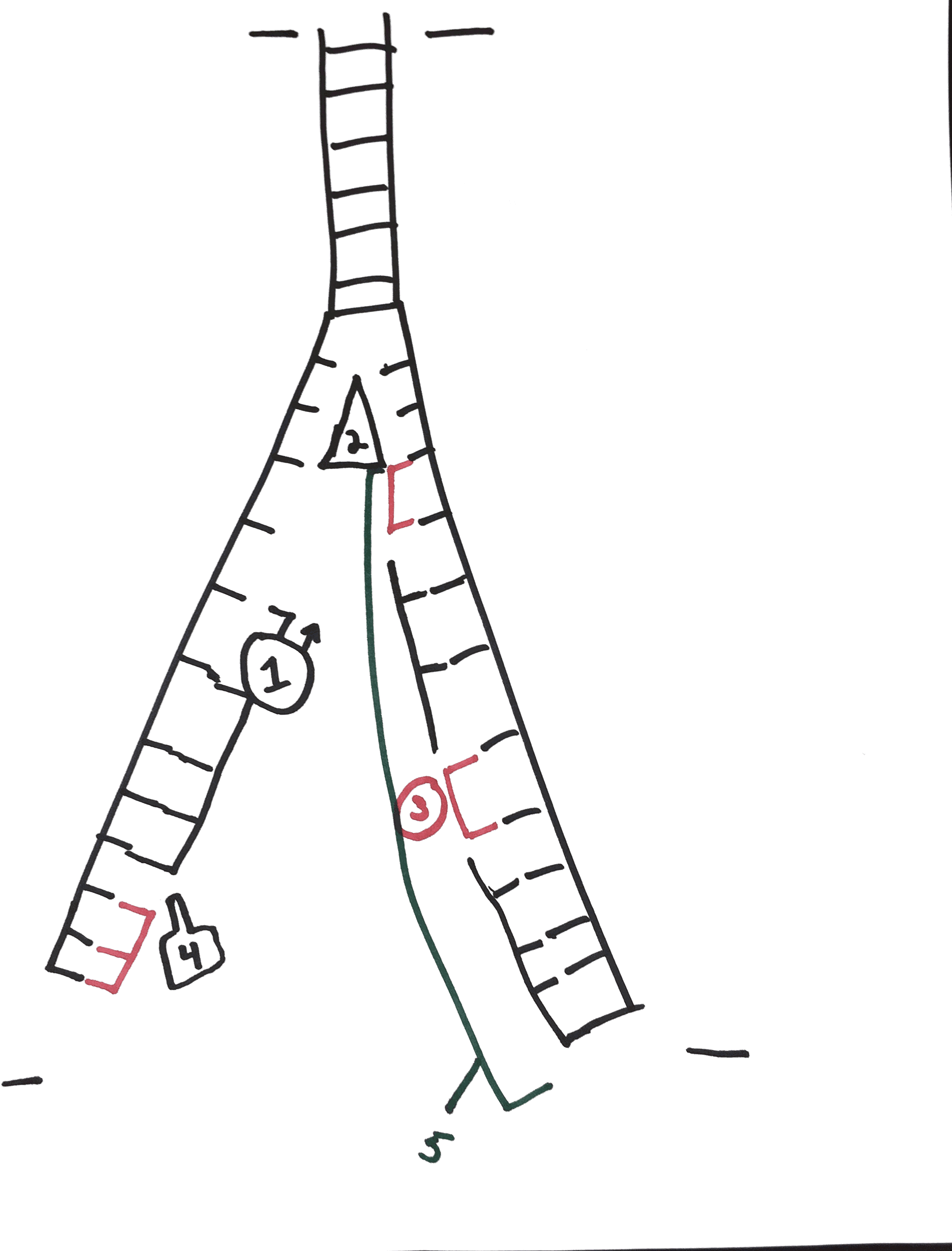
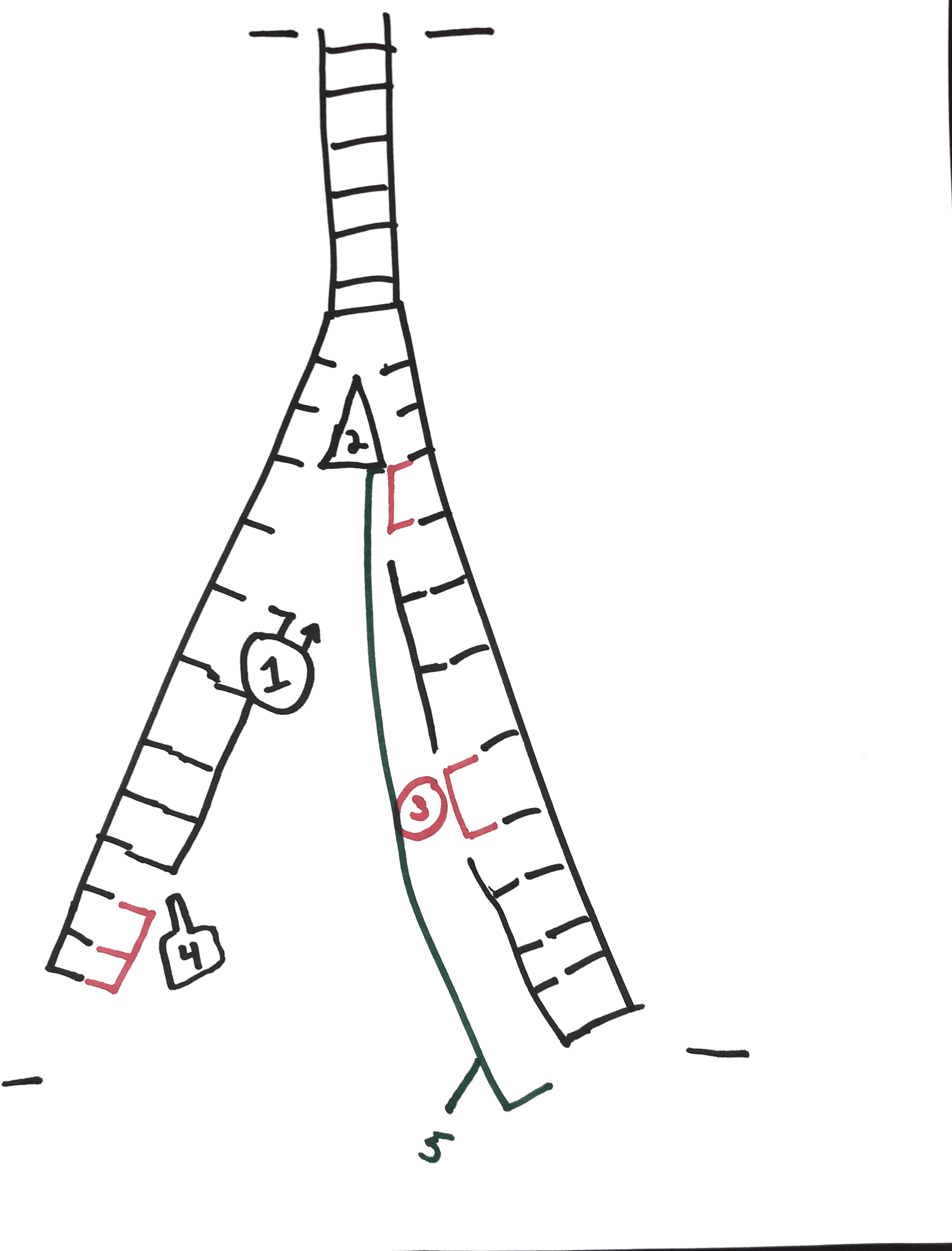
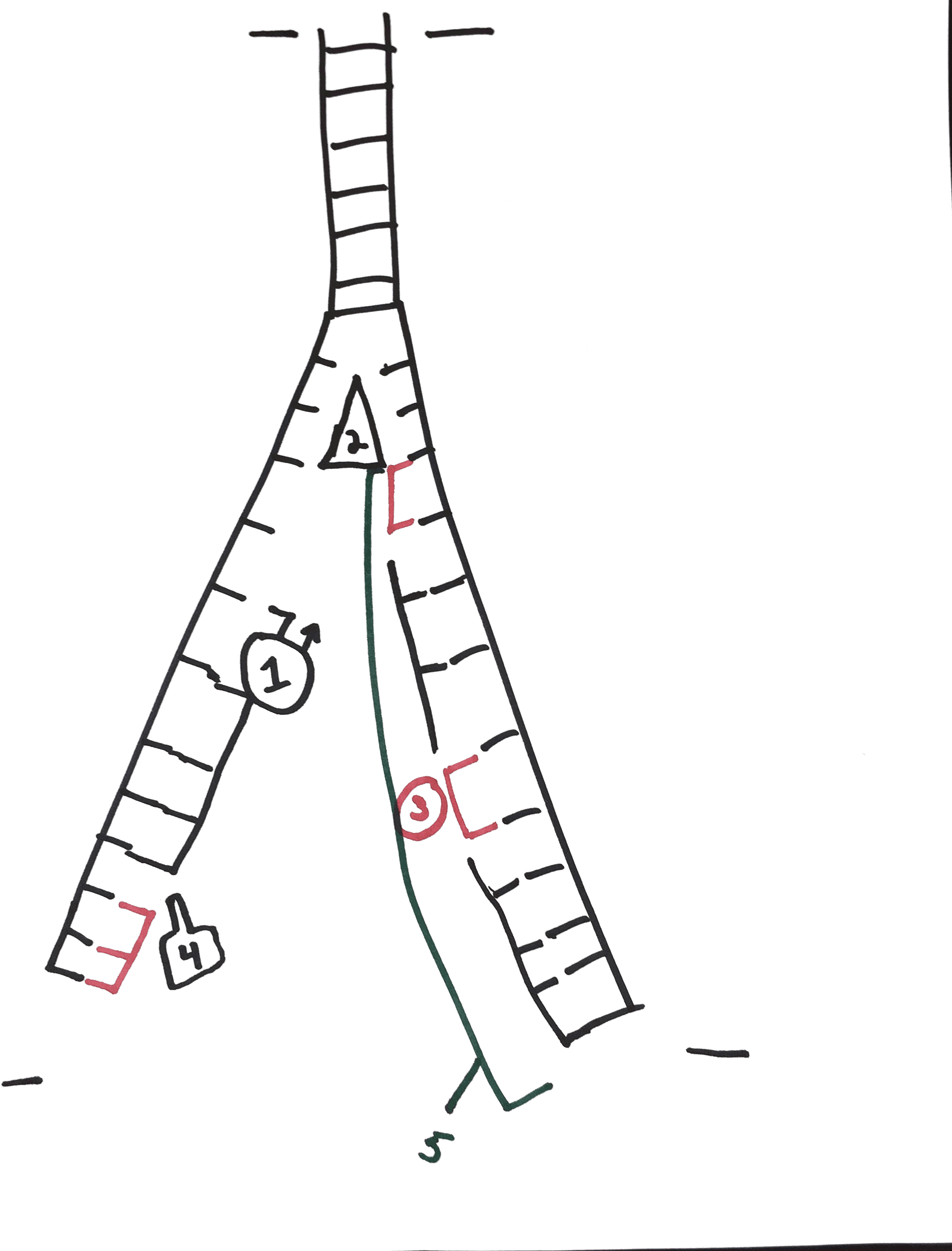
Number 1 in the picture above

a)

Replication

b)

DNA Polymerase

c)

Primase

d)

Ligase

195.

#4 in the picture

a)

Polymerase

b)

Primase

c)

Helicase

d)

Ligase

196.

#1 in the picture above (builder)

a)

Helicase

b)

Primase

c)

Polymerase

d)

Ligase

197.

#3 setting Primers

a)

Ligase

b)

Helicase

c)

Polymerase

d)

Primase

198.

#5

a)

Leading strand

b)

Lagging Strand

c)

Replication fork

d)

Helicase

199.

#5

a)

Leading strand

b)

Okazaki Fragments

c)

Replication fork

d)

Helicase

200.

Entire Picture

a)

Lagging Strand

b)

Leading Strand

c)

Replication fork

d)

Okazaki Fragment

201.

Right Hand Side

a)

Lagging strand

b)

Leading Strand

202.
If the percentage of DNA is made of 30% Thymine, what is the correct percentage of Guanine?
a)
30
b)
15
c)
20
d)
60
203.
The enzyme that unzips the DNA to prepare for replication
a)
helicase
b)
replicase
c)
polymerase
d)
synthase
204.
A scientist observes a base sequence of AGCTAGCTAGCT.  Which of the following would be the complimentary strand?
a)
TGCATGCATGCA
b)
TCGATCGATCGA
c)
TAGCTAGCTAGC
d)
TTAAGGCCTTCC
205.
DNA replication results in two DNA molecules,
a)
each one with two original strands
b)
each one with two new strands
c)
each one with one new strand and one original strand
d)
one with two new strands and the other with two original strands
206.
In what phase of the cell cycle does DNA replication take place?
a)
G1
b)
S
c)
G2
d)
M
207.
Which enzyme is responsible for adding nucleotides?
a)
Topoisomerase
b)
DNA Polymerase
c)
Ligase
d)
Primase
208.
The process of DNA replication is called semi conservative because it results in
a)
none of these
b)
Two DNA molecules.  One original molecule and one with two new strands
c)
two exact copies with new strands
d)
two identical molecules, each with 1 original strand and one new.
209.
Which enzyme seals okazaki fragments together on the lagging strand?
a)
Topoisomerase
b)
Helicase
c)
Polymerase
d)
Ligase
210.
What is A?
a)
Leading strand
b)
Lagging strand
c)
Okazaki Fragments
d)
DNA plymerase
211.
Small segments of DNA made on the lagging strand are called:
a)
Okazaki Fragments
b)
ERVs
c)
Transposable Elements
d)
Telomeres
212.
What strand is copied faster?
a)
Leading
b)
Lagging
213.
If a strand reads:
3' A A A T T T C 5'
The matching strand would read...
a)
5' T T T A A A G 3'
b)
3' T T T A A A G 5'
c)
5' A A A T T T C 3'
d)
3' U U U A A A G 5'
214.
Which of the following must happen first in order for DNA replication to occur?
a)
DNA polymerase binds to the leading strand
b)
DNA is unwound
c)
Hydrogen bonds form between bases
d)
chromosomes condense
215.
Which of the following is required for DNA replication to occur?
a)
DNA helicase
b)
DNA ligase
c)
DNA polymerase
d)
all of these
216.

Which enzyme proofreads and removes RNA Primase

a)

Ligase

b)

Polymerase 1

c)

Polymerase 3

d)

Helicase

217.

The separation of the two single strands of DNA creates a ‘Y’ shape?

a)

enzyme

b)

unzip

c)

A replication fork

218.

Structure C is

a)

helicase

b)

primase

c)

DNA polymerase III

d)

gyrase

219.
In a molecule of double-stranded DNA, the amount of Adenine present is always equal to the amount of
a)
cytosine
b)
guanine
c)
thymine
d)
uracil

Similar Resources on Wayground