
 Worksheets
Punishment Quiz
Total questions: 86
Worksheet time: 22hrs 30mins
You have been injured in the laboratory (cut, burn, etc.). First you should
visit school nurse
tell teacher immediately
see a doctor after school

Report any accident or injury to the teacher _______________, no matter how small it may appear
at the end of the period
immediately
eventually

The proper technique for smelling chemicals is ______________
keeping your nose close to the glassware
wafting

When moving chemicals during labs, you should;
Yell out "Code One" so that everyone clears a path for you to walk through
Walking very fast
Hold them securely and walk carefully

If you break a glass container during lab, you should ___________________
clean it up immediately
Tell your teacher immediately
leave it and tell your teacher after the lab is completed

Be alert and proceed with caution at all times in the lab. _______________ immediately of any unsafe conditions you see.
Call out, "Code 1"
Notify the teacher
Notify your lab partner

Clean up ___________________
only when you are asked
as directed by your teacher
is optional since a maid comes after school

Conduct yourself in a _____________ manner at all times in the laboratory.
honest
silly
responsible

Which of the following footwear is best in the laboratory?
sandals
rain boots
closed-toed shoes
heels

Horseplay or practical jokes in the laboratory are
always against the rules
OK
a must since they are fun

True or false: Hot glass looks the same as cold glass
true
false


Plant and animal cells are examples of
prokaryotic cells
eukaryotic cells
Which of the following structures is ALWAYS found in both eukaryotic and prokaryotic cells?
nucleus
mitochondria
ribosomes
cell wall
Which of the following is only found in EUKARYOTIC cells?
nucleus
DNA
cell membrane
ribosomes
PROKARYOTIC cells do NOT have
membrane bound organelles
cell membrane
DNA
ribosomes
The smallest unit of a living thing are
atoms
cells
DNA
organelles

Which type of cell developed first?
Prokaryotic Cells
Eukaryotic Cells
Which cell type tends to be smaller?
Prokaryote
Eukaryote
there is not a size difference
A cytoplasm is found in
prokaryotic cells.
eukaryotic cells.
Bacteria is an example of a(n)
prokaryotic cell.
eukaryotic cell.
Organelles are found in
prokaryotic cells.
eukaryotic cells.
both
CHALLENGE QUESTION: Which of the following provides evidence for the hypothesis that prokaryotes evolved before eukaryotes.
prokaryotes are more complex
prokaryotes have no nucleus and fewer genes
eukaryotes are multicellular which makes them simpler
prokaryotes grow into eukaryotes

An animal cell has the following except a/an...
Nucleus
Lysosome
Cell Wall
Endoplasmic reticulum


What are cells?
Cells are the smallest unit of any organism that is microscopic, meaning it is too small to be seen.
Cells can be seen with our eyes on both animals and plants, and have different organelles with different functions.
Cells are too small to be seen with our eyes and are only found on animals.
Cells are the smallest unit of any organism, but have no purpose and can sometimes be seen with our eyes.
What are plant cells made of?
Cell wall, cell membrane, cytoplasm, nucleus, and chloroplasts
Stem, leaves, green, petals, flowers
Photosynthesis, membranes, arms, and legs
Jello, bodyguards, fences, and brains
Which is the best description of a cell wall's function?
keeps the organelles inside of the cell
holds the cell up and keeps a square shape so the cell can stack on top of each other
responsible for directing the activities of a cell
is responsible for turning carbon dioxide and water into sugars and oxygen
What is the best description of a chloroplasts function?
holds the cell up and keeps a square shape so the cell can stack on top of each other
regulates what comes in and out of the cell
helps to keep the cell's organelles in place
contains chlorophyll, which is molecule that allows the cell to use light energy to turn water and carbon dioxide into sugars and oxygen
Choose the statement below that is TRUE.
Plant and animal cells both have cell walls so the cell can maintain its shape.
Animal cells do not have chloroplasts because animals do not require the use of photosynthesis to produce their food.
Plant cells do not have a nucleus because plants are not living organisms like animals are.
Animal cells do not have cytoplasm because an animal cell's organelles are free to move around as they please.

What organelle is called the "powerhouse" of a cell?
mitochondria
nucleus
cell wall
cell membrane
A large central vacuole is found in a _____ cell.
animal
plant

What is the function of a chloroplast?
makes proteins for animal cells
allows materials in and out of the cell
provides structure and support
absorbs sunlight for photosynthesis

What is the structure that contains DNA and directs the cell?
endoplasmic reticulum
central vacuole
cell wall
nucleus

Identify the structure that is indicated by the arrow in the image.
cell wall
central vacuole
chloroplast
cell membrane

The arrow is showing the fluid inside the cell that surrounds the cell organelles. What is the arrow pointing to in the cell?
cytoplasm
mitochondria
ribosomes
nucleus

What type of cell is being shown in the image?
plant
animal

Identify the structure that is labeled "C" in the image.
central vacuole
nucleus
chloroplast
mitochondria
cell membrane
This organelle controls what goes in and out of plant and animal cells.
Cell Wall
Cell Membrane
Chloroplasts
Cytoplasm
The _____________ is a gel-like fluid that fills plant and animal cells. It holds the organelles in place and gives each cell its shape.
Cytoplasm
Cell Membrane
Cell Wall
Chloroplast

What do you call the tiny cell structures inside a cell that carry out a specific function within the cell?
Biomolecules
Organelles
Cells
Atoms

Which of the following is the LEAST complex level of organization?
Tissue
Organism
Cell
Organ
Which of the following is the MOST complex level of organization?
Organism
Organ System
Cell
Tissue
Which of the following is the MOST complex level of organization?
Tissue
Organ System
Cell
Organ
Which of the following is the LEAST complex level of organization?
Atom
Organism
Tissue
Organ System
What is a group of different tissues working together to perform a function?
Cells
Atom
Tissue
Organ
What is the smallest unit of life?
Proton
Cell
Bacteria
Electron
What is a group of several organs working together to perform a function?
Organ System
Cell
Atom
Organ
What is the most complex level of organization that brings all other levels together?
Cell
Tissue
Virus
Organism
What is a group of similar cells that perform a function?
Cell
Tissue
Organ
Organ System
What type of cell has a nucleus?
Virus
Prokaryotic cell
Karyotic cell
Eukaryotic cell
What type of cell does NOT have a nucleus?
Prokaryotic cell
Karyotic cell
Eukaryotic cell
Plant cell
What are unspecialized animal cells that can become any type of cell in the body?
Nerve cell
Blood cell
Transgenic cell
Stem cell
What is cell differentiation?
A separate equation that some cells use for respiration
The theory that there are different cell types within the body of living organisms
When stem cells become a specific type of cell and obtains its function
A special type of cell division
Which statement was NOT included in cell theory?
All living things are composed of cells.
Living cells come only from other living cells.
Each cell contains a cell membrane, cytoplasm, nucleus, mitochondria, and endoplasmic reticulum.
Cells are the smallest structure of living things that can perform the functions necessary for life.
Which instrument is credited for helping scientists develop cell theory?


This early cell theory scientist looked in a microscope and discovered "animalcules" in the gunk from his teeth and pond water.
Schleiden
Leeowenhoek
Hooke
Virchow
Schwann
Who discovered and named cells while looking at cork?
Captain Hook
Robert Hooke
Matthais Schleiden
Rudolf Virchow
What was Schleiden convinced of?
All plants are made of cells
All animals are made of cells
All cells are prokaryotic
None of the above
Who noted that all animals are made of cells and helped write the first two parts of cell theory?
Rudolf Virchow
Anton van Leeuwenhoek
Theodor Schwann
Robert Hooke
Who discovered that all cells come from other living cells and had research that lead to the last major principle of cell theory?
Matthias Schleiden
Theodore Schwann
Robert Hooke
Rudolf Virchow
These three scientists together helped come up with the second part of the cell theory (all living things are made of one or more cells). CHOOSE 3 ANSWERS
Schleiden
Leeowenhoek
Hooke
Virchow
Schwann

Robert Hooke, Anton van Leeuwenhoek, Theodor Schwann, Rudolf Virchow, and Matthias Schliden were all responsible for what theory?
The Theory of Gravity
The Theory of Relativity
The Cell Theory
The Theory of Continental Drift
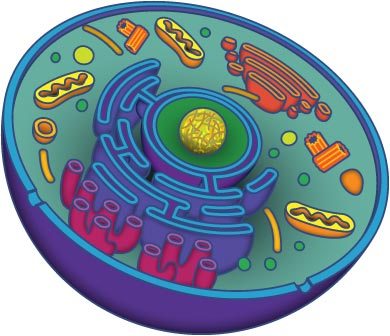
All living things are made up of...
cells
tissues
organ
organ systems
What is the basic structural and functional unit of all living things?
atom
cell
bacteria
animalcules
All cells -----
come from other dead cells
come from other living cells
crystallize out of the air
What will you do to make sure you don't have to take another test like this the next time I am gone?

