wayground logo

Free Printable Worksheets

Font size

S
M
L
XL
Worksheets

7th Grade Science Indiana Pre/Post Test

Total questions: 83

Worksheet time: 2hrs 5mins

Name
Class
Date
1.
This part of the experiment serves as a basis of comparison; the one variable being tested has been omitted. 
a)
experimental group
b)
control group
c)
data
d)
variables
2.
This variable in an experiment is the one being deliberately changed by the scientist. 
a)
dependent variable
b)
independent variable
c)
data
d)
control group
3.
What step does every scientific experiment begin with?
a)
hypothesis
b)
question/problem
c)
procedures
d)
conclusion
4.
The summary at the end of an experiment that explains the results. 
a)
conclusion
b)
procedures
c)
materials
d)
responding variable
5.

The __________________________________ is the organized way scientists answer questions and solve problems.

a)

scientific method

b)

scientific explanation

c)

scientific notation

d)

scientific guesses

6.
1 kilogram=
a)
100 grams
b)
1000 grams
c)
10 grams
d)
10000 grams
7.
What is liquid volume measured in? 
a)
kilograms and grams
b)
liters and milliliters
c)
liters and grams
d)
mililiters and kilograms
8.
How many milliliters is this? 
a)
500mL
b)
700mL
c)
650mL
d)
550mL
9.
How many inches is the blue crayon?
a)
3 inches
b)
2 inches
c)
4 inches
d)
5 inches
10.
Which is longer? A Centimeter or an inch?
a)
centimeter
b)
inch
11.
Which measurement would you use to measure the following?
the length of the science room
a)
meters
b)
liters
c)
grams
d)
kilometers
12.
What is the SI unit for length?
a)
meter
b)
liter
c)
mass
d)
second
13.
What 2 units can be used when measuring volume? 
a)
cubic meters and liters
b)
grams and seconds
c)
milliliters and centimeters
d)
cubic centimeters and kelvin
14.
What is the volume? Count by 2s.
a)
22 ml
b)
25 ml
c)
28 ml
d)
18 ml
15.
What is the volume of the battery?
a)
17 cm3
b)
5 cm3
c)
22 cm3
d)
24 ml
16.
What is the mass?
a)
155g
b)
105g
c)
105.6g
d)
105.2g
17.
Which box has a higher density?  
a)
Box A
b)
Box B
c)
cannot be determined
d)
they are the same
18.
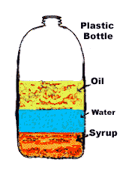
Which liquid is the least dense?
a)
oil
b)
water
c)
syrup 
d)
plastic bottle
19.
__________ is any thing that takes up space.
a)
Mass
b)
Matter
c)
Volume
d)
Length
20.

Gas to liquid is

a)

Condensation

b)

sublimation

c)

deposition

d)

evaporation

21.

Solid to Gas is

a)

condensation

b)

sublimation

c)

evaporation

d)

deposition

22.

Liquid to solid is

a)

freezing

b)

Melting

c)

Boiling

d)

Steaming

23.

Solid to a liquid is

a)

freezing

b)

boiling

c)

steaming

d)

melting

24.

Liquid to a Gas is

a)

Melting

b)

evaporation

c)

condensation

d)

sublimation

25.

How close together particles are is called?

a)

Mass

b)

Weight

c)

Vibrate

d)

Density

26.

Heat is also called?

a)

Thermal Energy

b)

Potential Energy

c)

Kinetic Energy

d)

Light Energy

27.

Mass is _______________.

a)

how much matter is in a object

b)

a measurement

c)

how had gravity pulls on an object

d)

how much volume is in an object

28.

Weight is ____________.

a)

How much matter is an object

b)

How hard gravity pulls on an object

c)

How much mass is in an object

d)

How much volume is in an object

29.
Smallest unit of an element
a)
compound
b)
atom
c)
molecule
d)
product
30.
Smallest unit of a compound
a)
atom
b)
density
c)
element
d)
molecule
31.
Substance that cannot be broken into simpler substances
a)
element
b)
molecule
c)
gram
d)
proton
32.
Substance made up of chemically combined elements
a)
atom
b)
element
c)
electron
d)
compound
33.

The law of conservation of mass says substances can neither be _______ nor ___________.

a)

Built; torn down

b)

Blended together; separated

c)

Created; destroyed

d)

Condensed; extracted

34.
The Law of Conservation of Energy states:
a)
Energy can created or destroyed but not transformed 
b)
Energy cannot be created or destroyed, it can only transformed
c)
Energy can't be created, destroyed or transformed
35.
What Unit do we Measure Force in? 
a)
Newtons
b)
Joules
c)
Force
d)
Kilograms
36.
What is Newton's First Law
a)
F=ma
b)
Every action has an equal and opposite reaction
c)
An object at rest stays at rest, an object in motion stays in motion. 
d)
Friction 
37.
A person is pushed forward into their seatbelt when a car stops
a)
1st
b)
 2nd
c)
2 and 3
d)
3rd 
38.
Newton's third law states that any action will have a(n) _______ and ______ reaction
a)
Equal and similar
b)
Equal and opposite
c)
Equal and different
d)
Greater and opposite
39.
Hot coffee is stirred with a spoon; the spoon gets hot due to
a)
conduction
b)
convection
c)
radiation
40.
Near the ceiling of a room the air is warmer; the warm air rises because of
a)
conduction
b)
convection
c)
radiation
41.
A microwave oven uses which of the following to heat foods.
a)
Microwave elves
b)
Radiation
c)
Convection
d)
Conduction
42.
A rock formed from fragments of other rocks is a(n)
a)
Metamorphic Rock
b)
Sedimentary Rock
c)
Extrusive Rock
d)
Igneous Rock
43.
The three groups of rocks are classified by
a)
How they form
b)
Color
c)
Grain size
d)
Chemical Composition
44.

Geologists have classified rocks into three major groups of rocks which are:

a)

inorganic, organic and chemical rocks

b)

igneous, sedimentary and metamorphic rocks

c)

metamorphic, chemical and non chemical rocks

d)

sedimentary, inorganic and igneous rocks

45.

Any rock that forms from another rock as a result of changes in heat or pressure (or both) is a:

a)

chemical rock

b)

igneous rock

c)

sedimentary rock

d)

metamorphic rock

46.

A naturally occurring solid that can form by inorganic processes and that has a crystal structure and a definite chemical composition.

a)

It´s a rock

b)

It´s a crystal

c)

It´s a mineral

d)

It´s a substance

47.

Which type of rock is made from lava or magma cooling?

a)

igneous

b)

sedimentary

c)

metamorphic

48.

What are renewable resources?

a)

A limited amount and cannot be replaced in a human life time.

b)

Plastic bags

c)

Coal, oil, and natural gas

d)

Can be replaced in our lifetime through natural processes
49.

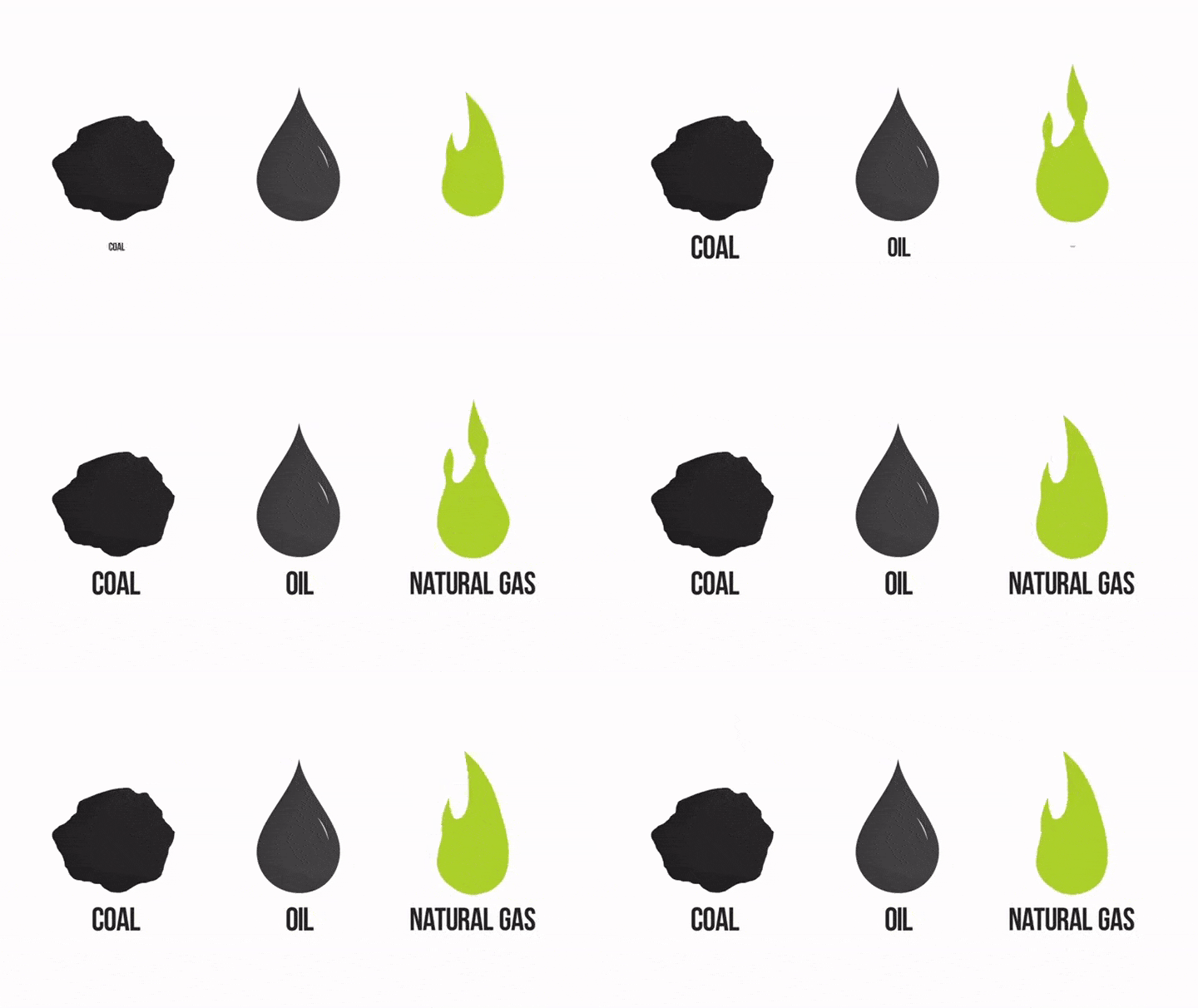
A group of non-renewable resources, called ______________, include coal, oil, and natural gas.

a)

Fossils

b)

Energy

c)

Resources

d)

Fossil fuels

50.
What is the best pro about renewable resources? 
a)
The are inexpensive 
b)
They are always available
c)
They are expensive
d)
They create pollution  
51.

A landscape underlain by limestone which has been eroded by dissolution, producing springs, sinkholes, caves and aquifers.

a)

landform

b)

karst

c)

Topography

d)

Aquifer

52.

The arrangement of the natural and artificial physical features of an area.

a)

Karst

b)

Landform

c)

Topography

d)

Cave/caverns

53.

A naturally occurring underground hollow or passage, especially one with an opening to the surface of the Earth.

a)

Cave/cavern

b)

Aquifer

c)

Limestone

d)

Stream

54.

A gigantic mass of moving ice

a)

glacial drift

b)

stratified drift

c)

till

d)

glacier

55.
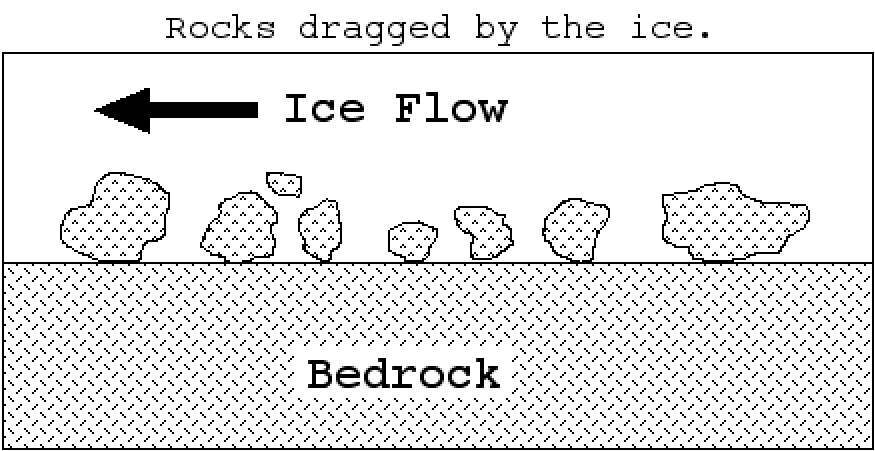
_____ is rock debris embedded in base of ice create polishing, grooves and striations.
a)
Plucking
b)
Abrasion
c)
Weathering
d)
Erosion
56.
Glaciers form when _____.
a)
less snow falls than melts 
b)
more snow falls than melts 
c)
less rain falls than freezes 
d)
more rain falls than freezes 
57.
The process that breaks down rocks and other materials on Earth's surface is called
a)
Weathering
b)
Erosion
58.
What is the process that picks up and moves weathered rocks?
a)
Erosion
b)
Landslide
c)
Weathering
59.
The cracks in Earth's crust are called ___________.
a)
tectonic plates
b)
faults
c)
magma
d)
lava
60.
What are the puzzle pieces of the Earth's surface called?
a)
Tectonic plates
b)
Puzzles
c)
Earthquakes
61.
What is the outermost layer of the Earth called?
a)
Core
b)
Mantle
c)
Crust
62.
The area around the Pacific Ocean where lots of earthquakes and volcanoes happen is called the ____________.
a)
Ring of Earth
b)
Ring of Fire
c)
Ring of Stone
d)
Ring of Diamond
63.
________________ measures the strength of an earthquake on a scale of 1-10.
a)
Seismometer
b)
Richter Scale
c)
Magnitude
d)
Seismology
64.
Lava that is still deep inside the earth is called ____________________________.
a)
lava
b)
magma
c)
volcano
d)
earthquake
65.

This famous fault in California has a lot of earthquakes!

a)

New Madrid

b)

Denali Fault

c)

Ramapo Seismic Zone

d)

San Andreas Fault

66.

The movement of the tectonic plates is caused by

a)

the rotation of the Earth.

b)

convection currents in the Asthenosphere

c)

the gravity of the iron-nickel core.

d)

the Moho discontinuity.

67.
This landform can occur at a divergent plate boundary.
a)
ocean trench
b)
mid-ocean ridge
c)
tall mountains
d)
transform fault
68.

What does the theory of Continental Drift explain?

a)

Ocean currents move continents around the planet

b)

Convection works deep within the asthenosphere

c)

Mid-ocean ridges force tectonic plates to move

d)

Continents were once together and slowly drifted to where they are today

69.

Who was the scientist who proposed the theory of continental drift?

a)

Alfred Powell

b)

Harry Hess

c)

Alfred Wegener

d)

Ernest Rutherford

70.

Where does seafloor spreading take place?

a)

Convergent boundaries

b)

The continentals shelves

c)

Transform boundary

d)

Mid-ocean ridges

71.

How far do tectonic plates move each year?

a)

Meters per year

b)

Centimeters per year

c)

Kilometers per year

d)

Feet per year

72.

Which layer is the only liquid layer?

a)

Crust

b)

Mantle

c)

Outer Core

d)

Inner Core

73.

Which layer is made of solid Iron and nickel?

a)

Crust

b)

Mantle

c)

Outer Core

d)

Inner Core

74.

What is the thickest layer?

a)

Crust

b)

Mantle

c)

Outer Core

d)

Inner Core

75.

What is the thinnest layer?

a)

Crust

b)

Mantle

c)

Outer Core

d)

Inner Core

76.

If we can't travel to the center of the Earth, how do we know so much about it?

a)

Seismic waves, made by earthquakes and man-made explosions

b)

special camera scopes sent through all the layers of the earth

c)

very long thermometers that can reach to the inner core

d)

super powerful x-rays

77.
Which of the following is the smallest unit of life that can carry out all life functions?
a)
the mitochondria
b)
the vacuoles
c)
the nucleus
d)
the cell
78.
Who was the first  person to see cells under the microscope and give them their name?
a)
Mattias Schleiden
b)
Robert Hooke
c)
Theordor Schwann
d)
Anton van Leeuwenhoek
79.
A cell is...
a)
the basic unit of structure and function in living organism
b)
an organism
c)
a basic part of everything that we see
d)
found only in animals, not plants
80.
Which of the following are NOT found in animal cells
a)
chloroplasts and cytoplasm
b)
chloroplasts and cell wall
c)
cell wall and cell membrane
d)
mitochondria and nucleus
81.

"Small organs" of the cell that carry out specific functions

a)

Organelles

b)

Organs

c)

Cell Wall

d)

Cell

82.
It is the process of dividing the DNA of a cell into two new nuclei.
a)
mitosis
b)
meiosis
c)
cytokinesis
d)
cell division
83.

This picture shows which process? (IPMAT)

a)

mitosis

b)

meiosis

c)

the cell cycle