wayground logo

Free Printable Worksheets

Font size

S
M
L
XL
Worksheets

BIOL 101 010 EXAM 1 REVIEW

Total questions: 68

Worksheet time: 37mins

Name
Class
Date
1.

Identify the Functional Group

4 lines
2.

Identify the Functional Group

4 lines
3.
Name the class of macromolecule.
a)
protein
b)
nucleic acid
c)
carbohydrate
d)
lipid
4.

What is the monomer of this macromolecule?

a)

lipid

b)

nucleic acid

c)

carbohydrate

d)

protein

e)

fatty acid

5.

What is this a picture of?

a)

monomer: monosaccharide

b)

monomer: amino acid

c)

polymer: carbohydrate

d)

polymer: protein

6.

The three parts of a nucleotide are.....

a)

phosphate, amino acid, hydrogen

b)

sugar, phosphate, N base

c)

CHONPS

d)

hydroxyl, phosphate and amine

7.

How many monomers are shown here?

a)

1

b)

2

c)

3

d)

4

e)

5

8.
Large bodies of water do not quickly fluctuate in temperature. Why?
a)
Water is a solvent.
b)
Water has a high heat capacity.
c)
Water acts as a buffer.
d)
Water is non-polar.
9.
Classify the functional group present in the molecule. 
a)
carbonyl
b)
carboxyl
c)
amine
d)
hydroxyl
10.
The fact that ice floats on liquid water is due to the fact that water's solid is ___________ than it's liquid form
a)
less polar
b)
more polar
c)
less dense
d)
more dense
11.
Large bodies of water help to keep nearby climates from being too hot or too cold  because they...
a)
absorb heat in the spring and slowly release that heat in the fall
b)
absorb heat in the fall and slowly release that heat in the spring
c)
absorb heat in the summer and slowly release that heat in the winter
d)
absorb heat in the winter and slowly release that heat in the summer
12.

________________________ is the energy needed to heat a substance by a particular amount.

a)

specific heat

b)

specific temperature

c)

Universal solvent

d)

adhesion

13.
What are the coefficient used to balance the equation below?
__Ag2O →__ Ag +___O2
a)
2,4,1
b)
1,1,1
c)
2,1,2
d)
2,2,2
14.
What is the right ratio of chemicals for the BCE (Balanced Chemical Equation)?__CO + __Fe2O3--> __Fe + __CO2
a)
3,1 --> 2,3
b)
3,2 --> 1,1
c)
3,2 --> 2,4
d)
3,2 --> 2,1
15.
What is the right ratio of chemicals for the BCE (Balanced Chemical Equation)?__Al + __O2--> __Al2O3
a)
4,1 --> 2
b)
4,3 --> 4
c)
3,4 --> 1
d)
4,3 --> 2
16.
Balance this equation.
_SnO+_H2-->_Sn +_H2O
a)
1,1,2,1
b)
1,2,1,1
c)
1,2,1,2
d)
1,2,2,1
17.
Acids produce _________ ions when they break down or dissocciate. 
a)
Hydroxide (OH-)
b)
Water
c)
Chlorine (Cl-)
d)
Hydrogen (H+)
18.
A(n) ______ is a substance with a pH less than 7
a)
Acid
b)
Alkaline
c)
Base
d)
Buffer
19.
A(n) _______ is a substance with a pH greater than 7.
a)
Base
b)
Acid
c)
Buffer
d)
Water
20.
If a substance has a pH of 10 it is considered
a)
Acidic
b)
Basic
c)
Neutral
21.

CHECK ALL THAT APPLY:

Electronegative atoms that are often involved in Hydrogen Bonds.

a)

Nitrogen

b)

Carbon

c)

Oxygen

d)

Fluorine

e)

Calcium

22.

CHECK ALL THAT APPLY:

Check all statements that are true of Van der Waals Interactions.

a)

Very Weak

b)

Brief Interactions

c)

Occur when molecules are far apart.

d)

Occur when molecules are very close.

23.
A florist places a bouquet of white carnations in water containing blue dye. After a time, the flowers turn blue. What process helped the carnations to change color?
a)
Specific heat 
b)
Surface tension
c)
Cohesion and adhesion of water molecules 
d)
Formation of covalent bonds between hydrogen and oxygen molecules
24.

Buffer is defined as

a)

ability to change a pH

b)

ability to prevent pH from decreasing

c)

ability to resist a pH increase

d)

minimizes the changes in the concentrations of H+ and OH-

25.

If some process releases acid [H+] into the blood, this equilibrium responds by shifting to the left as long as there is HCO3-present for the H+ to react with, thus removing the excess H+ions. What happens after the release of H+?

a)

pH never lowers

b)

pH is lowered and then immediately restored

c)

pH raises and then is restored

d)

ph lowers and remains low

26.

Which of the following are examples of carbohydrates? (Select all that apply).

a)

Bread

b)

Pasta

c)

Olive Oil

d)

Cheese

27.

Nucleic acids make up which of the two molecules listed below?

a)

FDA

b)

RNA

c)

DNA

d)

FDR

28.

This is one job proteins do not have in the body.

a)

structure for tissues and organs

b)

transport things through cell membranes

c)

speed up chemical reactions

d)

insulation

29.
Lipids can be digested into what smaller subunits?
a)
nucleic acids
b)
amino acids
c)
fatty acids
d)
glucose
30.
What type of macromolecule is being represented in this image? 
a)
carbohydrate
b)
lipid
c)
protein
d)
nucleic acid
31.

What is the monomer of carbohydrates?

a)

Monosaccharide

b)

Nucleotide

c)

Fatty Acid

d)

Amino Acid

32.

What is the monomer of proteins?

a)

Amino Acid

b)

Fatty Acid

c)

Nucleotide

d)

Monsaccharide

33.

What is the monomer of lipids?

a)

Monosaccharide

b)

Fatty Acid

c)

Amino Acid

d)

Nucleotide

34.

What is the monomer of nucleic acids?

a)

Monsaccharide

b)

Nucleotide

c)

Amino Acid

d)

Fatty Acid

35.

Why is folding so important in proteins?

a)

It gives them a unique, functional shape

b)

It makes them look tidier

c)

It makes every protein molecule different from the next even if they are the same type

d)

The folding is random so is not that important at all

36.

Given the compound:


Which structural formula represents an isomer?

a)
b)
c)
d)
37.
Which of the following is true about structural isomers?
a)
Have the same molecular formula
b)
Have different physical and chemical properties.
c)
Have the same number of elements
d)
all of the above
38.

Which is an isomer of

a)
b)
c)
d)
39.
The level of protein structure that results from hydrogen bonding causing the protein to fold into α-helix and β-pleated sheets is known as
a)
primary structure
b)
secondary structure
c)
tertiary structure
d)
quaternary structure
40.
The name of the initial chain of monomers in a protein is called.....
a)
polypeptide
b)
polysaccharide
c)
polyester
d)
polynucleotide
41.
The main bonding in the secondary structure of a protein is due to.....
a)
covalent bonding
b)
ionic bonding
c)
hydrogen bonding
d)
polar bonding
42.
When a protein unfolds, it is
a)
Denatured
b)
Building
c)
Adding amino acids
d)
Making food
43.
Which structure changes in the 20 different amino acids?
a)
#1
b)
#2
c)
#3
d)
#4
44.
Which letter corresponds to an alpha helix?
a)
A
b)
B
c)
C
d)
D
45.
Which letter corresponds to an beta sheet?
a)
A
b)
B
c)
C
d)
D
46.
Which letter corresponds to the primary protein structure?
a)
A
b)
B
c)
C
d)
D
47.
Which letter corresponds to the tertiary protein structure?
a)
A
b)
B
c)
C
d)
D
48.
What statement best describes letter E in the diagram??
a)
This is a proteins tertiary structure.
b)
This is a protein that has formed an enzyme.
c)
This is more than one protein that have combined together.
d)
This is a protein that has been denatured.
49.

A hydrogen bond is a weak attraction between:

a)

Two protons

b)

A hydrogen atom and an oxygen atom in different molecules

c)

Two oxygen atoms

d)

Two carbon atoms

50.

How do two strands of DNA bind to create a double helix?

a)

Through covalent bonds between the nitrogenous bases

b)

Through hydrogen bonds between the nitrogenous bases

c)

Through hydrogen bonds between the sugar molecules

d)

Through covalent bonds between the deoxyribose sugars

51.

The structure of DNA is best described as:

a)

A single linear strand

b)

A double helix

c)

A triple helix

d)

A branched structure

52.

Water's polarity is primarily due to:

a)

Unequal sharing of electrons between hydrogen and oxygen

b)

Equal sharing of electrons between hydrogen and oxygen

c)

The presence of only oxygen atoms in the water molecule

d)

The absence of hydrogen atoms in the water molecule

53.
What is a hypothesis?
a)
A hypothesis is the right answer to an experiment.
b)
A hypothesis is the wrong answer to an experiment.
c)
A hypothesis is an educated guess.
d)
I don't know.
54.
This variable in an experiment is the one being deliberately changed by the scientist. 
a)
dependent variable
b)
independent variable
c)
data
d)
control group
55.
What step does every scientific experiment begin with?
a)
hypothesis
b)
question/problem
c)
procedures
d)
conclusion
56.
Testing a hypothesis often involves a(n):
a)
answer
b)
experiment
c)
problem
d)
safety check
57.
A student wants to test the effects of type of exercise on heart rate.  What is the dependent variable?
a)
heart rate
b)
type of exercise
c)
amount of exercise
d)
time of day exercise occurs
58.
Observations made during an experiment are called:
a)
data
b)
problems
c)
conclusions
d)
questions
59.

Brian is measuring the weight of each rat and writing it down on a chart. Which stage of the scientific method is this?

a)

Hypothesis

b)

Collecting Data

c)

Question or Problem

d)

Conclusion

60.

What are the 5 unifying themes of biology?

a)

Location, Place, Region, Movement, and Human- Environment Interaction

b)

Organization, Information, Energy and Matter, Interaction, Evolution

c)

Region, Diffusion, Ecology, Interaction, Landscape

d)

Question, Hypothesis, Experiment, Conclusion, Experiment
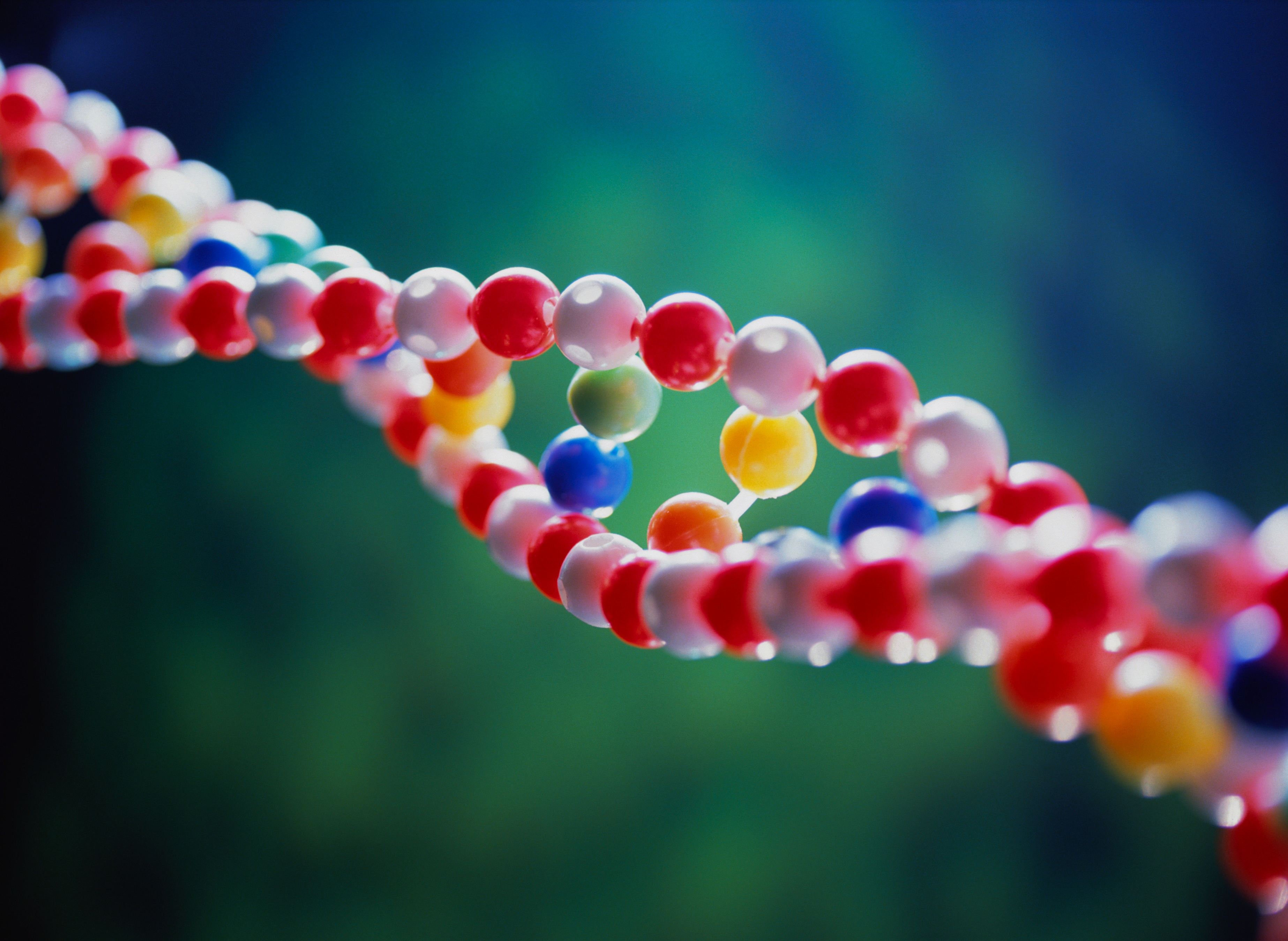
61.
Why is DNA important?
a)
it is very small and very complicated
b)
it's in everything
c)
it serves as the blueprint for traits of all living things
d)
because we eat it every day for energy
62.
Which of the following is a base that is NOT contained in DNA?
a)
Adenine
b)
Thymine
c)
Uracil
d)
Guanine
63.

What is RNA used to make?

a)

DNA

b)

mRNA

c)

tRNA

d)

proteins

64.

What are the reactants in this chemical equation?

a)

CH4 and 2O2

b)

carbon and oxygen

c)

CO2 and 2 H2O

d)

water and methane

65.

What functional group is shown?

a)

hydroxyl

b)

carboxyl

c)

methyl

d)

carbonyl

66.

carbonyl group

a)
b)
c)
67.

phosphate group

a)
b)
c)
68.

amino group

a)
b)
c)