

wayground logo

Free Printable Worksheets

Font size

S
M
L
XL
Worksheets

Earth and Environment

Total questions: 88

Worksheet time: 1hrs 3mins
Name
Class
Date
1.
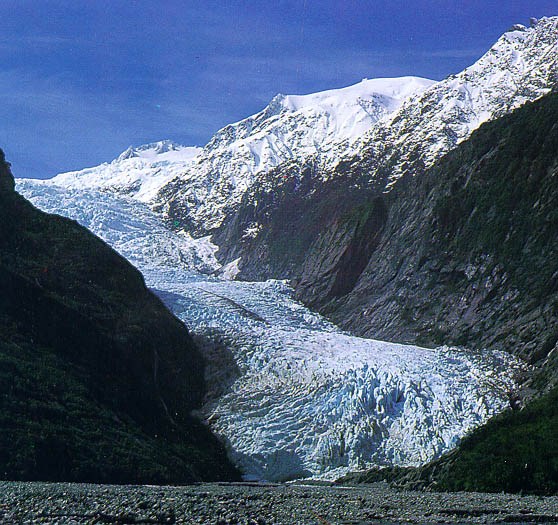
A glacier is a slowly moving mass of __________.
a)
rock
b)
wind
c)
ice 
d)
sediment
2.

The Experts who study the pattern of the Earthquakes are called ...........................

a)

Scientists

b)

Seismologists

c)

Artists

d)

Geologists

3.

Which force acts in the Interior of the Earth

a)

Endogenic Force

b)

Exogenic Force

c)

None of these

d)

Both (A) and (B)

4.

Which forces work on the surface of the Earth

a)

Endogenic Force

b)

Exogenic Force

c)

None of these

d)

Both (A) and (B)

5.

................... is an Instruments which records the intensity of the Earthquake waves

a)

Richter Scale

b)

Seimograph

c)

Barometer

d)

none of these

6.

The place of origin of an Earthquake is called

a)

Epicentre

b)

Focus

c)

Waves

7.

In 2001 massive Earthquake occured in

a)

Bhuj (Gujarat)

b)

Jammu and Kashmir

c)

Chamoli (Uttarakhand)

d)

Latur (Maharashtra)

8.

Which among the following is not related to Exogenic forces?

a)

Sea waves

b)

Wind

c)

Volcano

d)

Glaciers

9.

If an earthquake hits a particular place, the people should run instead oh walking.

a)

The Statement is True

b)

The Statement is False

c)

The Statement is Partially True

d)

None of the above

10.

The breaking up of rocks on the earth surface is known as

a)

Destruction

b)

Deposition

c)

Erosion

d)

Weathering

11.

The magnitude of Earthquake is measured on the

a)

Speedometer

b)

Richter Scale

c)

Galvanometer

d)

Vernier Scale

12.

As the river approaches the sea, the speed of the river will

a)

remain constant

b)

Increases

c)

Decreases

d)

None of the above

13.

Ox bow lakes are found in:

a)

Glaciers

b)

River valleys

c)

Deserts

14.

As the river enters the plain it twists and turns forming large bends known as

a)

Meanders

b)

Leeves

c)

Waterfalls

d)

Delta

15.

Large deposits of loess is found in

a)

Malaysia

b)

Australia

c)

India

d)

China

16.

The earth’s crust is broken into a number of huge parts. They are called

a)

lithospheric plates

b)

metamorphic plates

c)

sedimentary plates

d)

none of these

17.

In which continent is the highest waterfall ‘Angel Falls of Venezuela’ located?

a)

South America

b)

South Africa

c)

South India

d)

North India

18.

Where is ‘Niagara Falls’ located?

a)

On the border between Canada and USA

b)

On the border between India and China

c)

On the border between India and Pakistan

d)

On the border between India and Nepal

19.

Deposition of sand in a low hill like structure is known as a

a)

Glacier

b)

Sand dunes

c)

Hill

d)

Desert

20.

What is a force in which pieces of rock are moved by water, wind or moving ice?

a)

weathering

b)

erosion

c)

deposition

d)

volcanoes

21.

When the Earth's orbit has a higher eccentricity, the planet's surface receives 20 to 30 percent more solar radiation. This happens

a)

At perihelion

b)

At aphelion

c)

At superhelion

d)

At epihelion

22.

We experience ----------------because of the tilt of the Earth's axis relative to the plane of its orbit .

a)

climate change

b)

seasons

c)

heat wave

d)

Extreme climate

23.

Identify the processes within our atmosphere that can force changes in climate ?

a)

Volcanic eruption

b)

Meteor attacks

c)

Oceanic current changes

d)

Global warming

e)

Sea level rise

24.

Earth experienced it's most recent ice ages during the-------------- epoch,

(a)  

25.

A climate -----------is an indirect, or secondary, change—either positive or negative, that occurs within the climate system in response to a forcing mechanism.

a)

Feedback

b)

Internal Forcing

c)

Impact

d)

Vulnerability

26.

Which of the following events is negative feedback ?

a)

decrease in the solar radiation received by earth

b)

Increase in global temperature

c)

larger amounts of water vapor in the atmosphere

d)

Enhanced greenhouse effect

27.

Name the three Milankovitch cycles

4 lines
28.

Earth's climate system is made up of the atmosphere, oceans,ice masses ,--------------- and Geo sphere.

(a)  

29.

The absorption of ------------- infra-red radiation is particularly important to the energy budget of the Earth's atmosphere

a)

terrestrial

b)

oceanic

c)

Glacial

d)

Atmospheric

30.

Which of the following gases in the atmosphere which absorb the outgoing infra-red radiation are known as greenhouse gases ?

a)

carbon dioxide

b)

water vapour

c)

nitrogen

d)

methane

e)

argon

31.

The change in the global energy balance due to changes in the composition of the atmosphere is known as

a)

Internal forcing

b)

External forcing

32.

Changes in the global energy balance due to variations in the Earth’s orbit around the Sun

a)

Internal Forcing

b)

External Forcing

c)

Greenhouse effect

d)

Climate feedback

33.

Eruption of Mount Pinatubo Volcano is an example of

a)

internal climate forcing

b)

External climate forcing

c)

Climate forcing

d)

Climate feedback

34.

The Milankovitch Cycles operate over thousands of years whereas volcanic eruptions change climate over at most 2 to 3 years. Climate change due to man-made emissions of greenhouse gases has raised fears about future global warming over the next --------------years

(a)  

35.

An atmospheric sink is a point or location where the gas is ------------ from the atmosphere

(a)  

36.

Nitrous oxide is naturally produced by oceans and rain forests.

a)

true

b)

false

37.

The protocol that limits use or emission of CFC is

a)

Montreal

b)

Paris

c)

Kyoto

d)

Stockholm

38.

Climate is the long-term average of weather, typically averaged over a period of 30 years.Some of the meteorological variables that are commonly measured are

a)

temperature,

b)

Pressure

c)

Volume

d)

humidity

e)

precipitation

39.

Earth ___________ is primarily caused by the gravity of the sun and moon pulling on Earth's equatorial bulges.

a)

Precession

b)

tilt

c)

eccentricity

d)

obliquity

40.

Earth's axis has been pointed north towards the North Star. The north star before 5000 years was

a)

Polaris

b)

Thubin

c)

Vega

d)

pollux

41.
How can a levee help prevent flooding?
a)
It keeps rising water inside stream channels
b)
It acts as a drain when water gets too high
c)
It pulls water downstream before it can flood
d)
It forms a lake with excess flooding
42.
What kind of information is NOT recorded on a seismograph?
a)
strength of an earthquake
b)
information about when the next earthquake will occur
c)
when the earthquake occured
d)
how long the earthquake lasted
43.
Which of these Georgia landforms is MOST likely to be affected by weathering?
a)
Lookout mountain
b)
Okefenokee Swamp
Okefenokee swamp
c)
Coosa River
d)
Providence Canyon
44.
Which of these Georgia landforms is MOST likely to be affected by weathering?
a)
Lookout mountain
b)
Okefenokee Swamp
Okefenokee swamp
c)
Coosa River
d)
Providence Canyon
45.
Which of the following is formed when sediment is dropped at the mouth of a river?
a)
sand dune
b)
delta
c)
barrier island
d)
sand spit
46.
How does GPS technology help seismologists study earthquakes?
a)
It sends out warnings that an earthquake is occurring
b)
It predicts WHERE an earthquake is likely to occur
c)
It predicts WHEN an earthquake is likely to occur
d)
It measures movement of the group along faults during earthquakes
47.
Which of the following is formed when groundwater erodes soft rock?
a)
landslide
b)
mudslide
c)
mountain
d)
sinkhole
48.
Which of the following landforms are formed by running water?
a)
sand dunes and sandbars
b)
mesas and canyons
c)
mountains and hills
d)
canyons and volcanoes
49.
Which is NOT a way that plants affect landforms?
a)
by showing the erosion of sand dunes by wind
b)
by stopping sinkholes from forming
c)
by weathering rock with their roots
d)
by holding soil in place with their roots
50.
How does a hot spot form a chain of volcanoes?
a)
A hot spot allows magma to explode froma vent
b)
The hot spot allows magma to ooze from a vent
c)
Volcanoes form above a hot spot.  The volcanoes move as the plate moves
d)
The hot spot creates alternating layers of lava and as
51.
Which can cause Earth's crust to crumple and fold?
a)
One is forced into the mantle
b)
Both are forced into the mantle
c)
When earthquakes occur
d)
Earth's crust crumples and folds.
52.
Why do some people want to use floodplains to control flooding?
a)
Floodplains prevent sediment from being carried down a river.
b)
Floodplains absorb the water during flooding.
c)
Floodplains protect the structures built on them from damage.
d)
Floodplains prevent rivers from overflowing their banks.
53.
Sea grass has begun to grow on a sand dune.  How will the sea grass MOST likely influence the sand dune?
a)
The dune will move toward the land.
b)
The dune will move toward the ocean.
c)
The dune will erode more slowly and may even grow.
d)
The dune will erode more quickly.
54.
How do volcanoes change Earth's landforms?
a)
They release pressure that has built up under Earth's crust.
b)
They blow ash and lava high into Earth's atomosphere.
c)
They form over hot spots.
d)
They form mountains of ash and lava.
55.
What happens to a river when sediment is deposited along its banks?
a)
The river becomes wider.
b)
The river becomes narrower.
c)
The river becomes deeper.
d)
The river becomes shallower.
56.
Where will the LEAST damage to surface features be seen after an earthquake?
a)
far from the focus
b)
at the focus
c)
far from the epicenter
d)
at the epicenter
57.
Which of the following is NOT a means of flood control?
a)
dam
b)
jetty
c)
levee
d)
floodplains
58.
A river channel is now so shallow that ships are getting stuck in the mud.  What is the MOST likely cause?
a)
water depositing sediment
b)
water picking up sediment
c)
wind depositing sediment
d)
wind picking up sediment
59.
Why are earthquakes infrequent in Georgia?
a)
Georgia is not located near the edge of a plate.
b)
Georgia is located where two plates meet.
c)
The faults in Georgia are very close to the surface.
d)
The plates beneath Georgia are fused.
60.
A jetty was just built on a beach.  What is MOST likely to happen now?
a)
The current will remove more sand from this beach.
b)
This structure will allow sand to pass through it.
c)
The current will carry more sand to the beach below this structure.
d)
The current will carry more sand to the beach above this structure
61.
This rock was another type of rock that was heated and compressed over time. What type of rock is this?
a)
Sedimentary
b)
Igneous
c)
Metamorphic
62.
In order for a metamorphic rock to form, _______ is needed.
a)
Pressure
b)
Heat 
c)
Heat and Pressure
d)
Weathering
63.
This rock was formed by smaller pieces of rock that settled at the bottom of a lake millions of years ago. What type of rock is this?
a)
Sedimentary
b)
Igneous
c)
Metamorphic
64.
This rock was formed by lots of fossils that settled on top of each other over time. What type of rock is this?
a)
Sedimentary
b)
Igneous
c)
Metamorphic
65.
This rock was found near the mouth of a volcano. What type of rock is this?
a)
Sedimentary
b)
Igneous
c)
Metamorphic
66.
What type of rock?
a)
Sedimentary
b)
Metamorphic
c)
Igneous
67.
What type of rock?
a)
Sedimentary
b)
Igneous
c)
Metamorphic
68.
Name this rock.
a)
marble
b)
limestone
c)
pumice
d)
gneiss
69.

................ Is a combination of two or more minerals

a)

Rocks

b)

Sediment

c)

Metamorf

d)

Magma

70.

Sedimentary rocks are formed from the process…

a)

Water

b)

Minerals

c)

Magma and lava

d)

Weathering and erosion

71.

How many types of rock are .......

a)

2

b)

3

c)

4

d)

6

72.

The following are examples of igneous (beku) rocks .....

a)

Konglomerat

b)

Marmer

c)

Apung

d)

Kapur

73.

Another name of metamorf rocks is ...

a)

Malihan

b)

Obsidian

c)

Andesit

d)

Kapur

74.

The following is an example of metamorf rocks ...

a)
b)
c)
d)
75.

Igneous (beku) rocks are formed from the process…

a)

Magma and lava

b)

Weathering and erosion

c)

Minerals

d)

Sediment and metamorf

76.

How many cycle of rocks are ...

a)

4

b)

5

c)

6

d)

7

77.

Whether rocks are included in the component.......

a)

Base

b)

Biotic

c)

Abiotic

d)

Acid

78.

Experiencing erosion is a rocks cycle to......

a)

1

b)

2

c)

3

d)

5

79.
How does freezing water cause the weathering of rocks?  The freezing water—
a)
keeps the rocks in place
b)
makes the rocks last longer
c)
expands cracks and breaks rocks
d)
causes rocks to fall in landslides
80.
The process that breaks down rocks and other materials on Earth's surface is called
a)
weathering
b)
erosion
c)
soil conservation
d)
decomposition
81.
How does wind abrasion work?
a)
Sediment is blown off a surface from wind.
b)
Wind-blown sediment strikes a surface.
c)
Wind blows large chunks of rock off a surface.
d)
Sediment falls off of a surface on its own.
82.
What is mechanical weathering?
a)
Process through which rocks are physically broken into smaller pieces.
b)
Rocks are broken down through chemical changes.
c)
Rocks are worn away from acid in plant roots.
d)
Rocks broken down by machinery.
83.
What is permeable?
a)
a material that is soft
b)
a material that is full of tiny air spaces that allow water to seep through it
c)
a material that is able to be broken and re-attached
d)
a material that is able to be created into a different substance
84.
Which type of climate will have faster chemical weathering?
a)
Hot and Wet
b)
Cold and Dry
c)
Hot and Cold
d)
Cold and Wet
85.
During chemical weathering, what can happen to the type of rock that has undergone chemical weathering?
a)
a new rock is produced that is larger than the original rock
b)
a new rock is produced that is the same as the original rock
c)
a new rock is produced that is different from the original rock 
d)
no new rock is created - it is just smaller in size
86.
The diagrams  shows a natural process that weathers rock.
 Which statement best explains why this process results in weathering?

a)
frozen water acts as a solute
b)
water expands when it freezes
c)
the mass of water increases when it freezes
d)
frozen water dissolves most types of rock
87.
Which of the following is an example of mechanical weathering?
a)
Acidic groundwater dissolving limestone
b)
frost wedging
c)
Paper being burned
88.
A marble statue is left exposed to the weather.  Within a few years, the details on the statue have begun to weather away.  This weathering probably is caused by...
a)
oxygen in the air
b)
carbonic acid in rainwater
c)
lichens
d)
abrasion