
 Worksheets
Chapter 5 Review Assignment
Total questions: 85
Worksheet time: 44mins
Every living organism relies on the energy originally captured by ________. Whether directly (as plants) or indirectly (as consumers of plants or other animals), all food and energy originate from this essential process.
photosynthesis
respiration
fermentation
transpiration
What is the process through which plants, algae, and certain bacteria convert light energy into chemical energy stored in glucose?
Respiration
Photosynthesis
Fermentation
Digestion
The light-dependent reactions of photosynthesis occur in the ________ membranes of chloroplasts and require light.
thylakoid
mitochondrial
nuclear
plasma
Which of the following is produced during the light-dependent reactions of photosynthesis?
Glucose
ATP and NADPH
Carbon dioxide
Starch
The Calvin Cycle is also called the ________ or dark reactions and occurs in the stroma of chloroplasts.
light-independent reactions
light-dependent reactions
glycolysis reactions
photorespiration reactions
What are autotrophs?
Autotrophs are organisms that can produce their own food using energy from sunlight or inorganic substances.
Autotrophs are organisms that depend on other organisms for food.
Autotrophs are animals that eat only plants.
Autotrophs are organisms that can only survive in the absence of sunlight.
What are heterotrophs?
Heterotrophs are organisms that cannot perform photosynthesis and must consume other organisms to obtain energy and carbon.
Heterotrophs are organisms that produce their own food through photosynthesis.
Heterotrophs are organisms that obtain energy directly from sunlight.
Heterotrophs are organisms that can survive without consuming any other organisms.
Which of the following are photoautotrophs?
Plants
Algae
Cyanobacteria
All of the above
Oceanic algae are especially significant because they contribute greatly to global food and oxygen production.
True
False
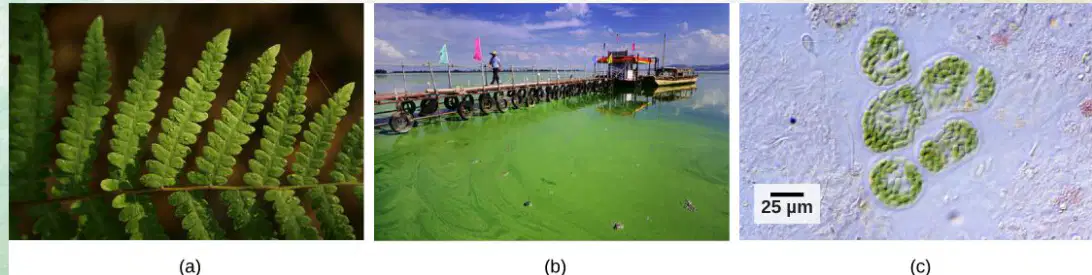
Refer to Figure 5.2. Which of the following images shows cyanobacteria?
Plants
Algae
Certain bacteria, called cyanobacteria
Heterotroph = (a) . Fill in the blank with the correct term.
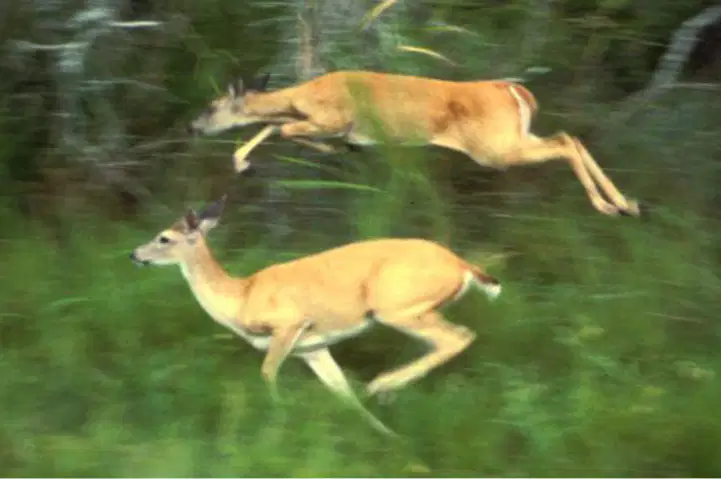
According to the image, how does the predator that eats the deer get energy?
From the sun directly
From the photosynthetic vegetation the deer consumed
From water
From the air
Photosynthesis requires which of the following as starting reactants?
Sunlight, carbon dioxide, and water
Oxygen, glucose, and sunlight
Water, oxygen, and sugar
Carbon dioxide, oxygen, and glucose
What are the products released after the process of photosynthesis is complete?
Oxygen and carbohydrate molecules (glucose)
Carbon dioxide and water
Sunlight and oxygen
Water and glucose
Fill in the blank: The most common carbohydrate molecule produced by photosynthesis is (a) .
Which of the following best describes the energy source required for photosynthesis?
Water
Sunlight
Oxygen
Glucose
Which gas is taken in by the plant during photosynthesis?
Carbon dioxide
Oxygen
Nitrogen
Hydrogen
Photosynthesis Equation: 6CO2 + 6H2O + (a) → C6H12O6 + 6O2. What is the missing component?
The sugar molecules produced by photosynthesis contain the energy that living things need to survive.
True
False
What are the main sites of photosynthesis in plants?
Leaves
Roots
Stems
Flowers
What is the function of stomata in leaves?
Gas exchange (CO2 in, O2 out)
Absorption of water from soil
Transport of food to roots
Protection against herbivores
What are the two main regions found within chloroplasts?
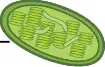
What is the name of the disc-shaped structures in chloroplasts where light-dependent reactions occur?
Thylakoids
Stroma
Grana
Cristae
What is the green pigment embedded in the thylakoid membranes that is key to capturing light energy and initiating photosynthesis?
Chlorophyll
Carotene
Xanthophyll
Anthocyanin
A stack of thylakoids is called a ________.
Granum
Stroma
Cristae
Matrix
The fluid-filled space surrounding the grana in a chloroplast is called the ________.
Stroma
Thylakoid
Matrix
Cristae

Label the part of the chloroplast responsible for harnessing light energy from the sun.
Intermembrane space
Stroma
Thylakoid membrane
Granum
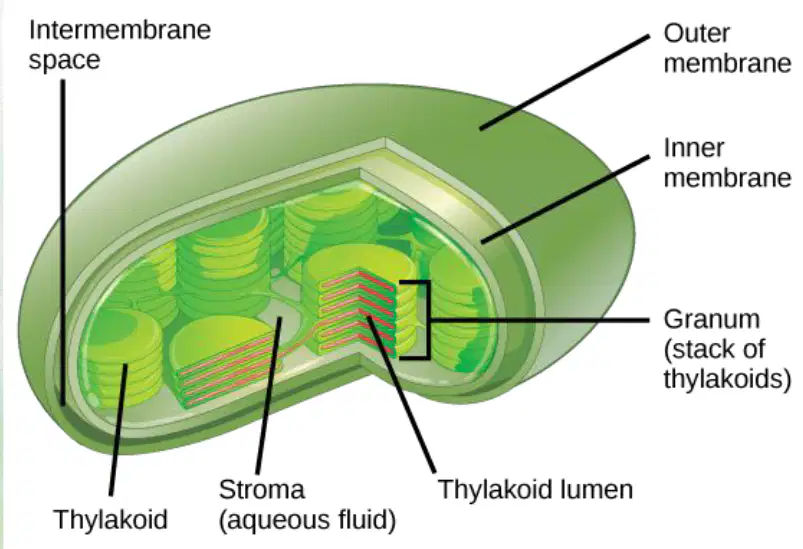
Label the part of the chloroplast structure that contains chlorophyll pigment.
Thylakoid
Stroma
Granum
Matrix
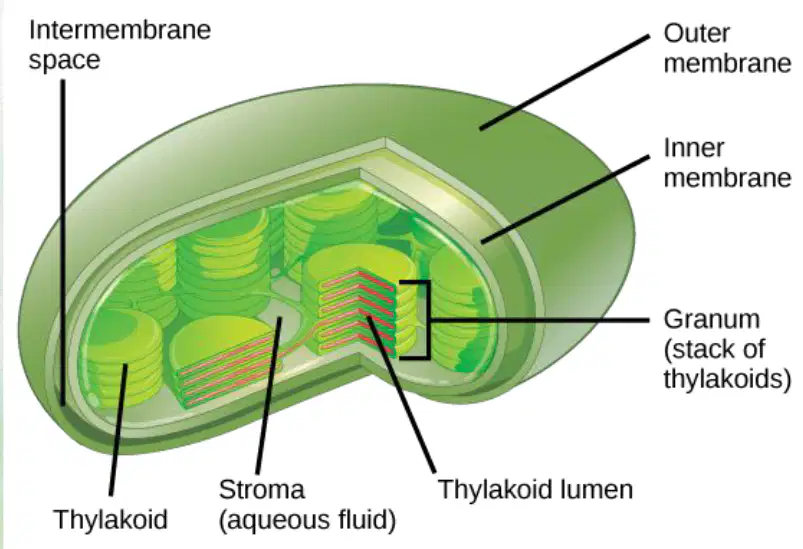
Label the part of the chloroplast structure where light independent reactions (Calvin Cycle) take place.
Stroma (aqueous fluid)
Thylakoid membrane
Granum
Outer membrane
What are the two main stages of photosynthesis?
Light-dependent reactions and Calvin Cycle (dark reactions)
Glycolysis and Krebs Cycle
Fermentation and Respiration
Hydrolysis and Oxidation
Where do the light-dependent reactions of photosynthesis take place?
Stroma
Thylakoid membranes
Cytoplasm
Mitochondria
Fill in the blank: The Calvin Cycle (dark reactions) occurs in the _______ of the chloroplast.
stroma
thylakoid membrane
granum
outer membrane
How many G3P molecules are needed to build a six-carbon glucose molecule according to the passage?
Two G3P molecules are needed to build a six-carbon glucose molecule.
One G3P molecule is needed to build a six-carbon glucose molecule.
Three G3P molecules are needed to build a six-carbon glucose molecule.
Six G3P molecules are needed to build a six-carbon glucose molecule.
The energy carriers are 'charged' (energetically) when they transport electrons and hydrogen ions to the Calvin cycle and return 'empty' to the light-dependent stage to be recharged.
True
False
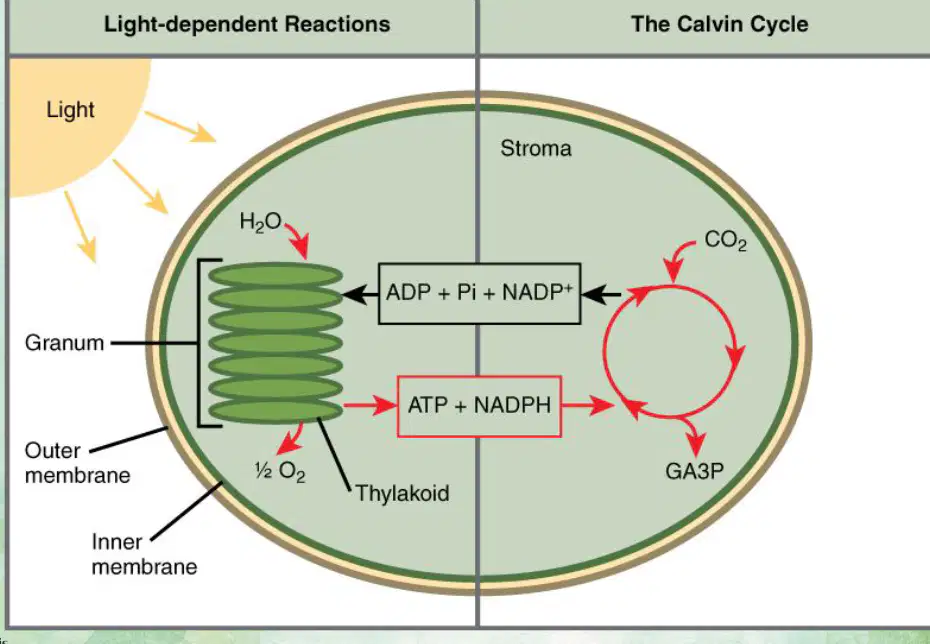
According to the diagram of the Two Stages of Photosynthesis, which of the following occurs during the Light-dependent Reactions?
CO2 is fixed into GA3P
ATP and NADPH are produced
GA3P is converted to O2
NADPH is converted to CO2

In the Calvin Cycle, ______ is input along with ATP and NADPH. (Refer to the diagram of the Two Stages of Photosynthesis)
CO2
O2
H2O
Glucose
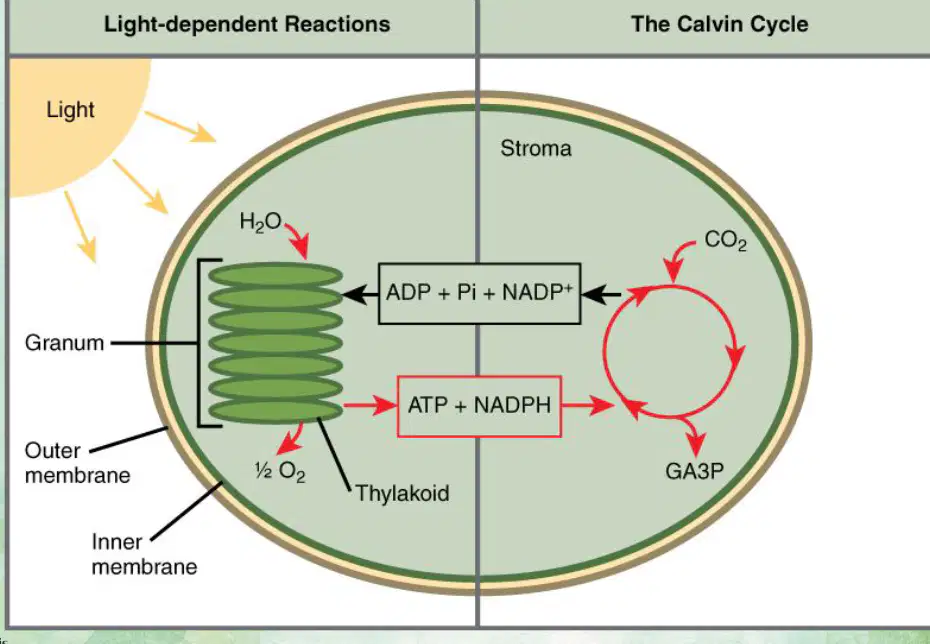
Which structure in the diagram is responsible for the Light-dependent Reactions?
Stroma
Thylakoid
Outer membrane
GA3P
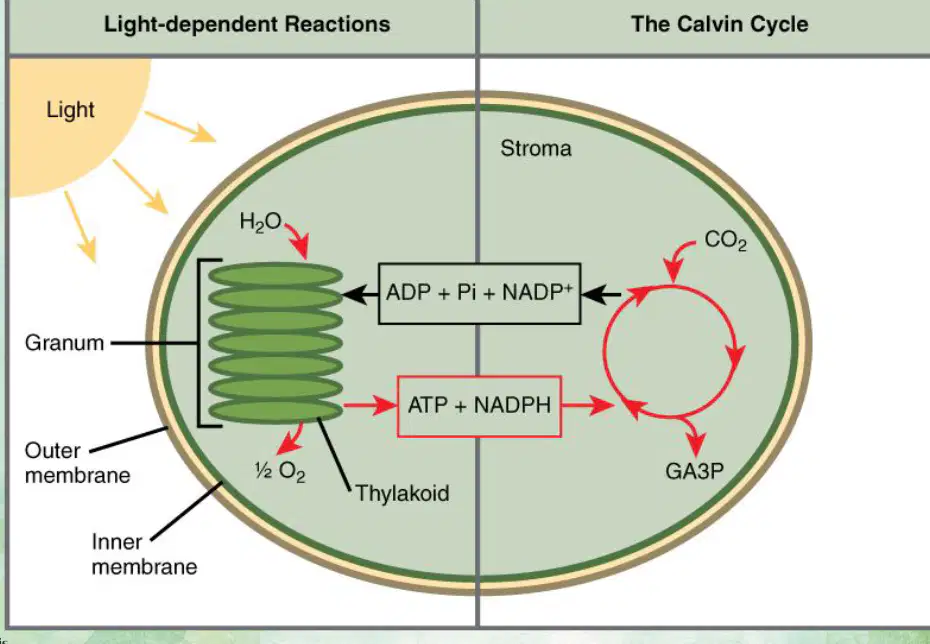
The main product of the Calvin Cycle, as shown in the diagram, is _______.
GA3P
ATP
NADPH
O2
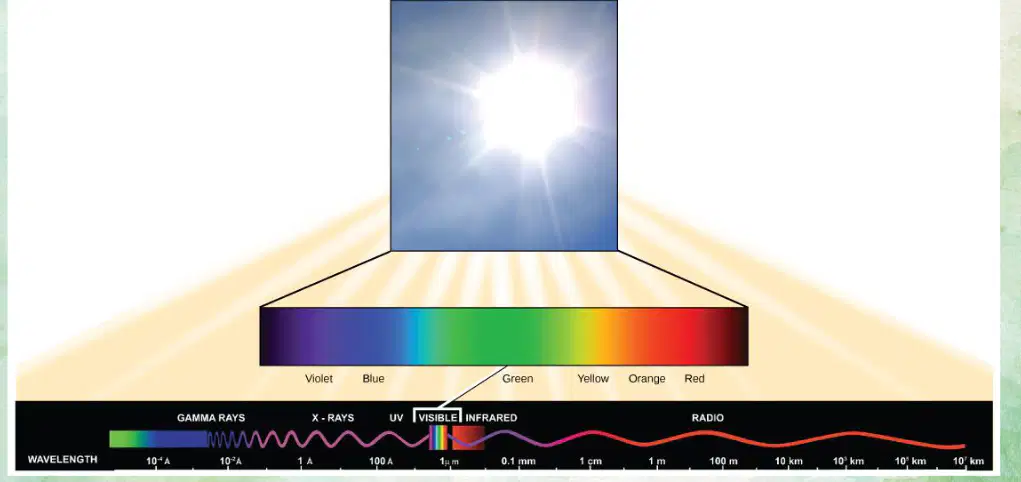
Arrange the following types of electromagnetic radiation in order from shortest to longest wavelength:
Gamma rays, X-rays, Visible light, Infrared, Radio waves.
Radio waves, Infrared, Visible light, X-rays, Gamma rays.
Infrared, Visible light, X-rays, Gamma rays, Radio waves.
Visible light, Gamma rays, Infrared, X-rays, Radio waves.
What type of energy does the sun emit that humans perceive as visible light?
Mechanical energy
Electromagnetic radiation
Chemical energy
Nuclear energy
What is the definition of wavelength?
The height of a wave
The distance between two consecutive wave points (like crest to crest)
The speed of a wave
The color of a wave
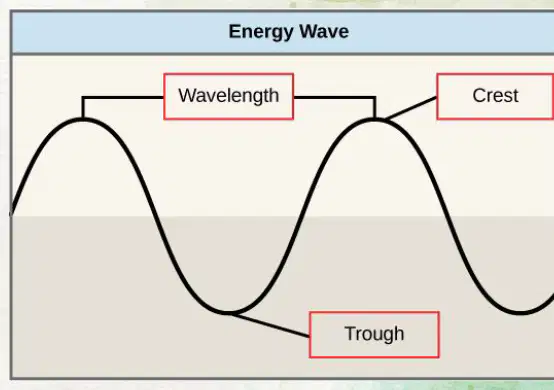
Refer to the diagram of the energy wave. What is the distance between two consecutive points along the wave called?
Crest
Trough
Wavelength
Amplitude
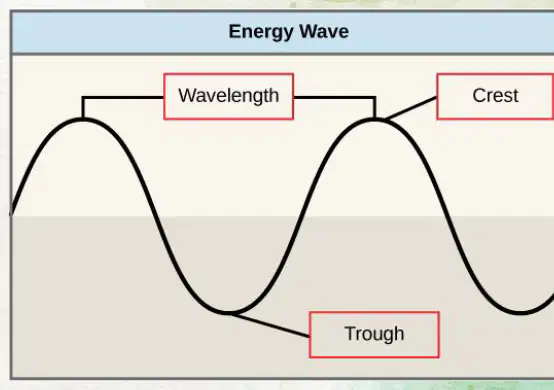
In the energy wave diagram, what is the lowest point of the wave called?
Trough
Crest
Node
Amplitude
Visible light, which appears white to the human eye, is made up of a spectrum of colors. Shorter wavelengths (like violet and blue) carry ______ energy, while longer wavelengths (like red) carry ______ energy.
more; less
less; more
less; less
more; more
Pigments absorb specific wavelengths and reflect others—this is why they appear a certain color. For example: Chlorophyll a, found in all photosynthetic organisms, absorbs blue and red light but reflects ______, making plants look green.
green
yellow
blue
red
Other pigments like chlorophyll b and carotenoids absorb different wavelengths, broadening the range of light energy the plant can use. What is the benefit of having multiple pigments in plants?
It allows plants to absorb only one type of light
It allows plants to absorb more light energy across the visible spectrum
It makes plants grow faster
It reduces the need for sunlight
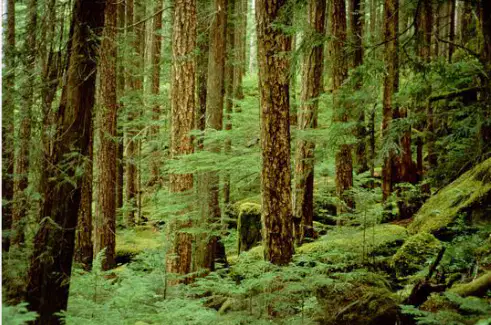
Having a variety of pigments helps plants in shaded environments absorb more available light.
True
False
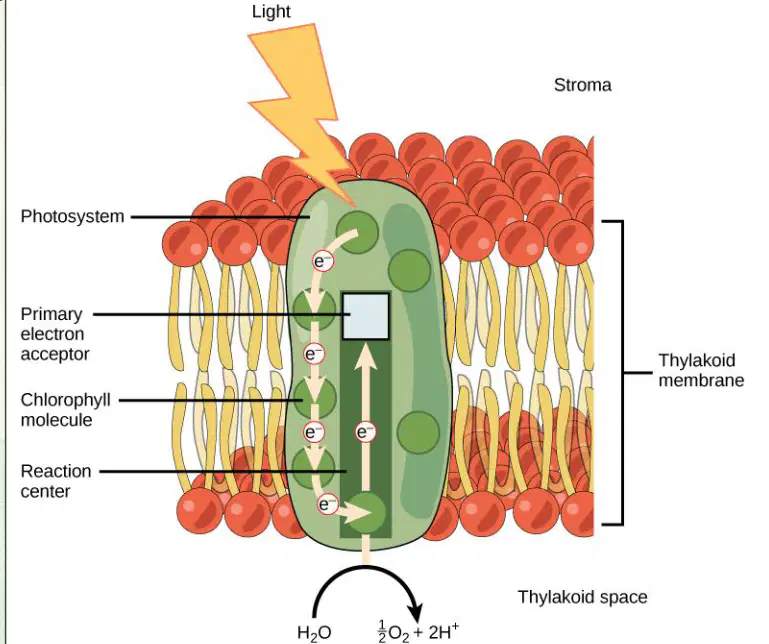
According to the diagram, what is absorbed by a chlorophyll molecule during the light-dependent reactions of photosynthesis?
Light energy
Carbon dioxide
Glucose
Oxygen
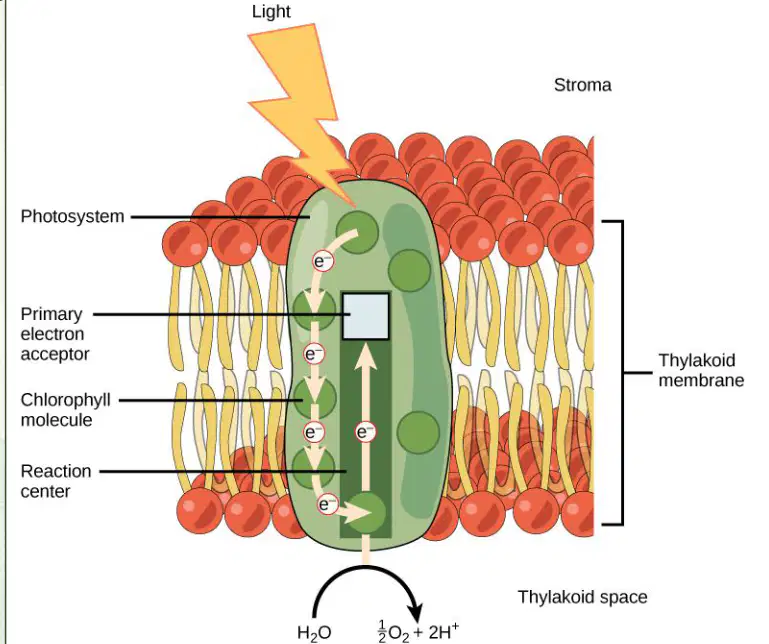
Which of the following is released when a molecule of water splits during the light-dependent reactions of photosynthesis?
Carbon dioxide
Oxygen and hydrogen ions
Glucose
ATP
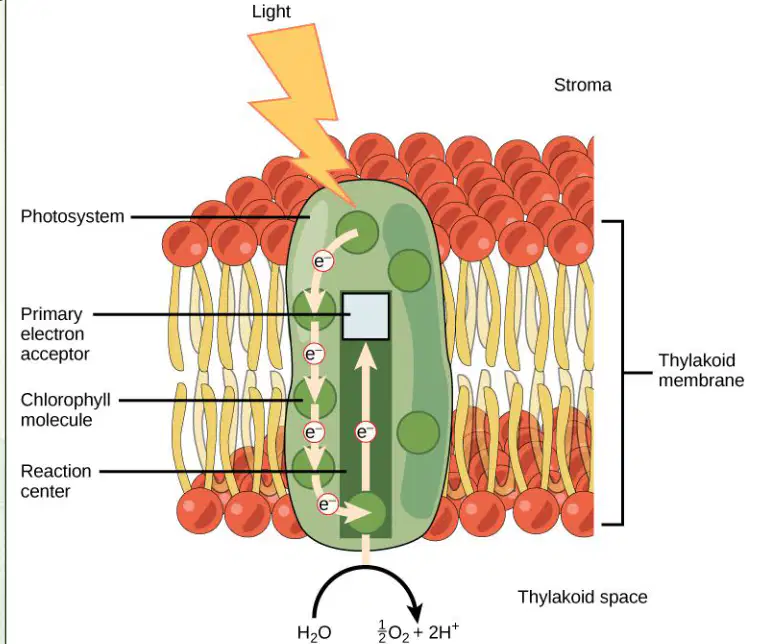
The energy from light excites an electron in the ________ molecule, causing it to be transferred to a primary electron acceptor.
chlorophyll
glucose
ATP
ribosome
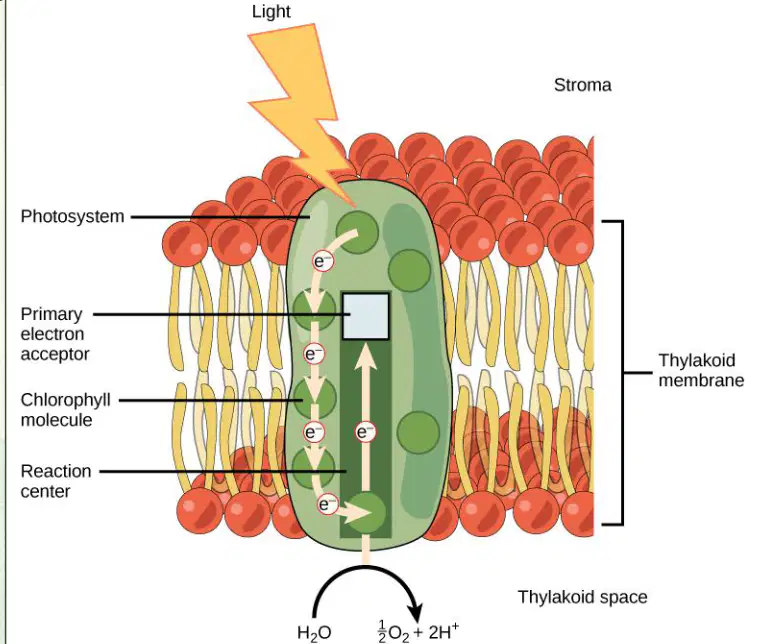
Which structure in the diagram is responsible for capturing light energy during photosynthesis?
Thylakoid membrane
Chlorophyll molecule
Primary electron acceptor
Reaction center
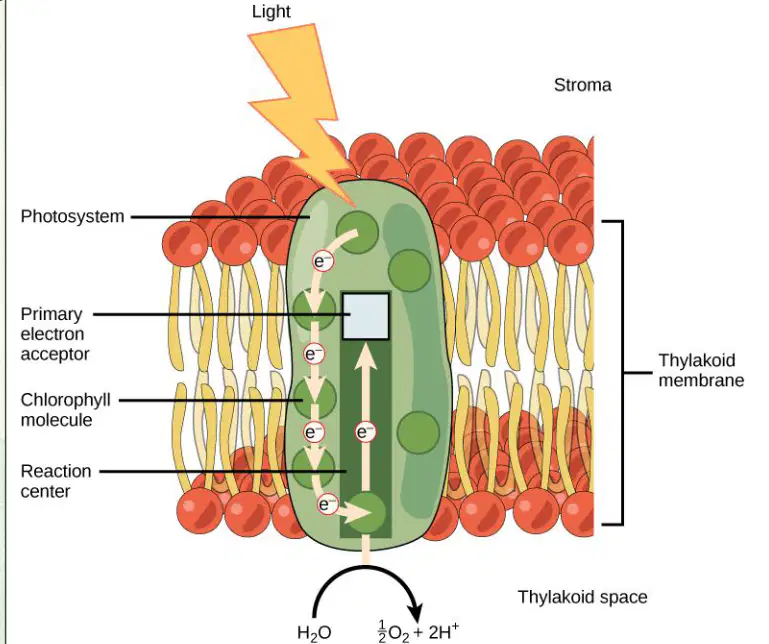
What is the chemical equation for the splitting of water as shown in the diagram?
H2O → 1/2 O2 + 2H+
H2O → H2 + O2
2H2O → 2H2 + O2
H2O → O2 + 2H
What is the main purpose of the light-dependent reactions in photosynthesis?
To convert chemical energy into solar energy
To convert solar energy into chemical energy, which is then used in the Calvin cycle to build sugar molecules
To break down sugar molecules
To release carbon dioxide
Where do the light-dependent reactions occur in plant cells?
Mitochondria
Cytoplasm
Thylakoid membranes
Nucleus
What are the two photosystems involved in the light-dependent reactions?
Photosystem I and Photosystem III
Photosystem II and Photosystem I
Photosystem III and Photosystem IV
Photosystem II and Photosystem IV
A photon is absorbed by a pigment, exciting an electron in ________, which is then passed to a primary electron acceptor.
chlorophyll
carotene
cytochrome
plastocyanin
To replace the lost electron, water is split (a process called photolysis), releasing which of the following? Select all that apply.
Electrons
Oxygen (O2)
Hydrogen ions (H+)
Carbon dioxide (CO2)
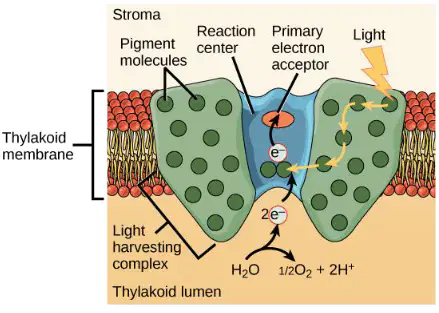
What is the byproduct released into the environment when water is split?
Carbon dioxide
Oxygen (O2)
Glucose
ATP
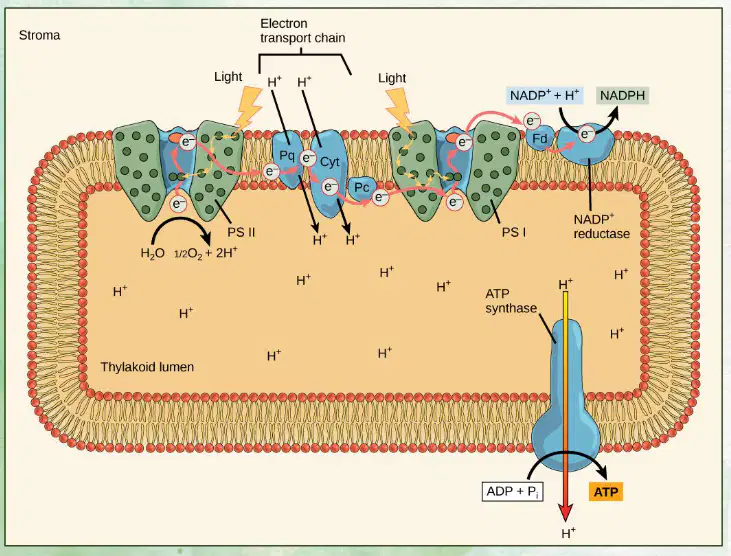
In the light-dependent reactions of photosynthesis, sunlight energy is stored in two key energy carriers: ATP and NADPH. What does ATP store energy in?
The bond of its third phosphate group
The bond of its first phosphate group
The bond of its second phosphate group
A hydrogen atom
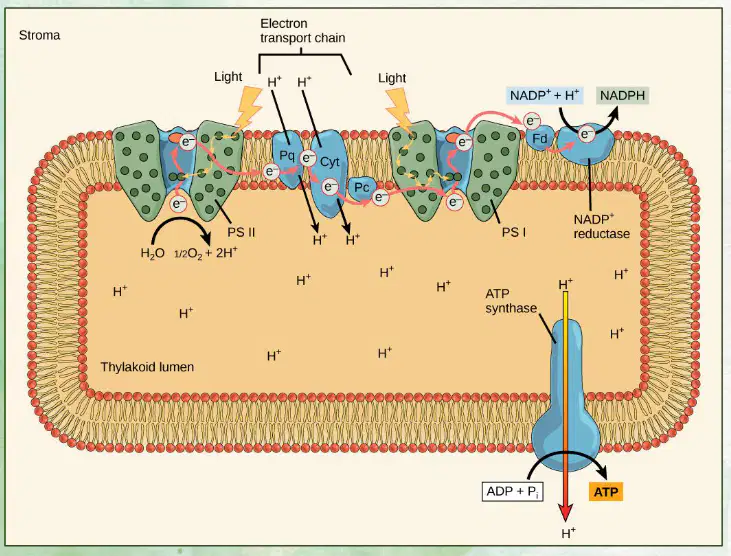
In the light-dependent reactions of photosynthesis, sunlight energy is stored in two key energy carriers: ATP and NADPH. NADPH carries energy with a ________ atom.
hydrogen
oxygen
carbon
nitrogen
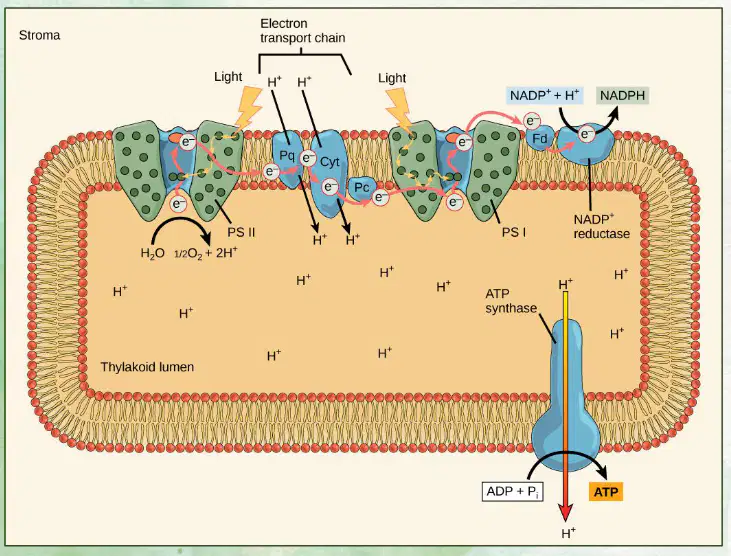
Hydrogen ions (H+) accumulate in the thylakoid space, creating an electrochemical gradient. What is the result of this accumulation?
A buildup of both charge and concentration difference across the thylakoid membrane
A decrease in ATP production
A breakdown of the thylakoid membrane
No effect
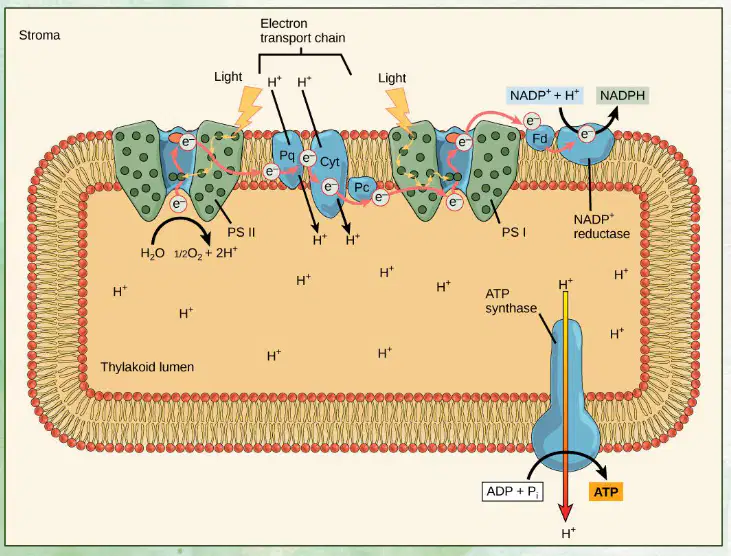
Chemiosmosis is the process where H+ ions flow back into the stroma through a membrane protein called ________.
ATP synthase
NADP reductase
Photosystem II
Rubisco
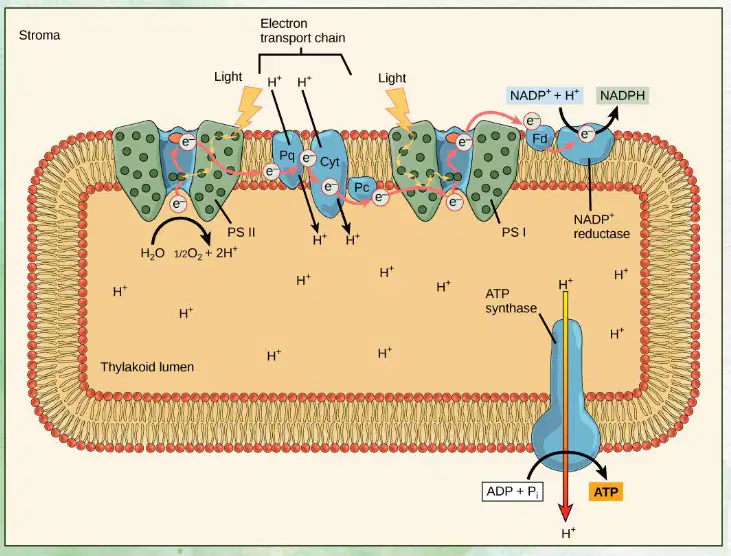
Photophosphorylation: ATP synthase uses the energy from this ion flow to attach a third phosphate to ADP, forming ________.
ATP
NADPH
Glucose
Oxygen
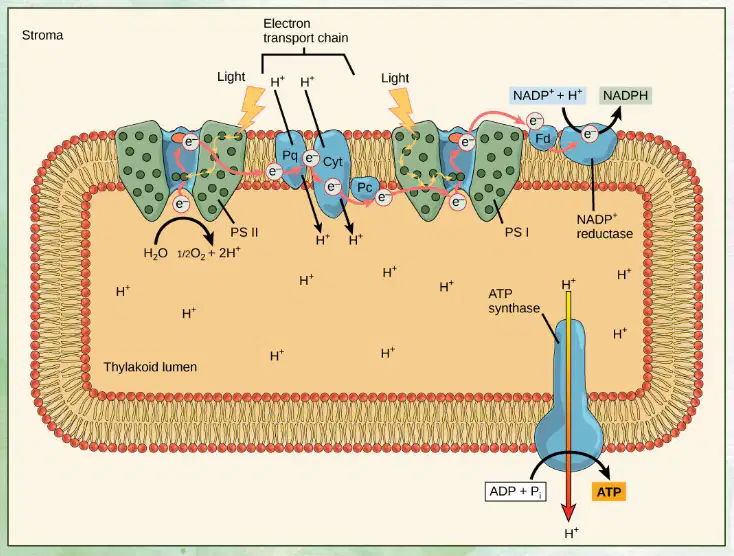
After an electron travels through the electron transport chain, it arrives at ________, where it is re-energized by another photon of light.
Photosystem I
Photosystem II
ATP synthase
NADP+ reductase
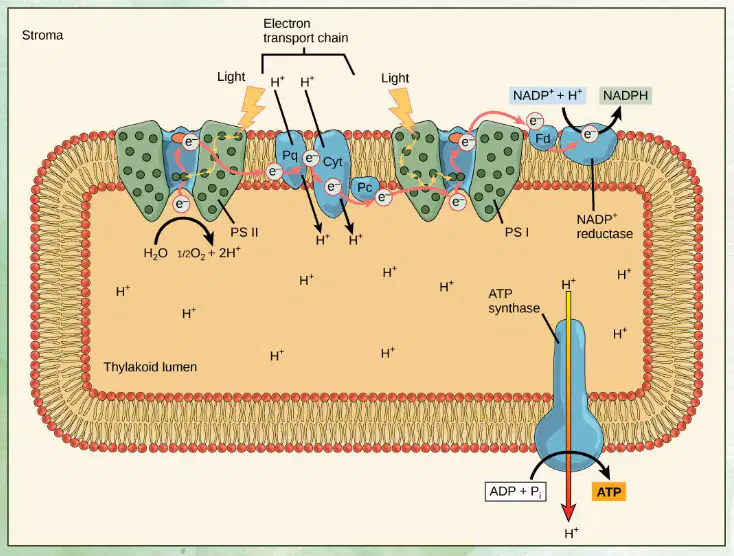
Which molecule is converted into NADPH by the addition of a high-energy electron and a hydrogen ion (H+)?
NADP+
ATP
H2O
O2
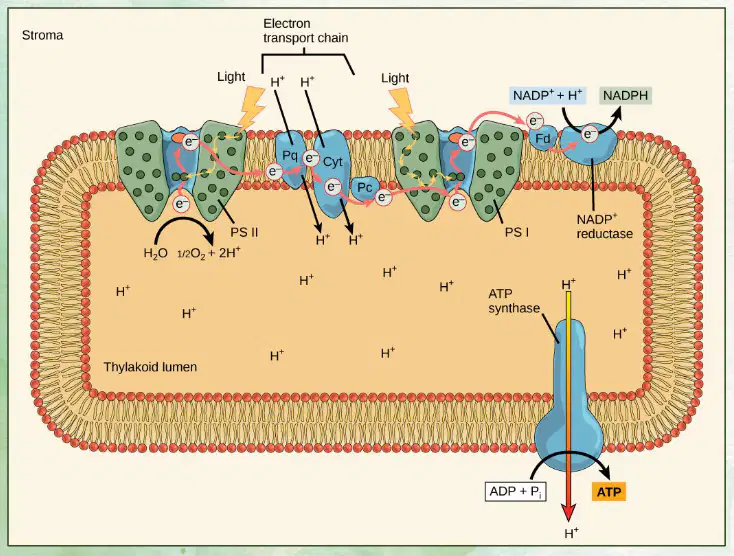
The energy captured from sunlight and stored in ATP and NADPH is ready to be used in the Calvin cycle to help build sugar molecules.
True
False
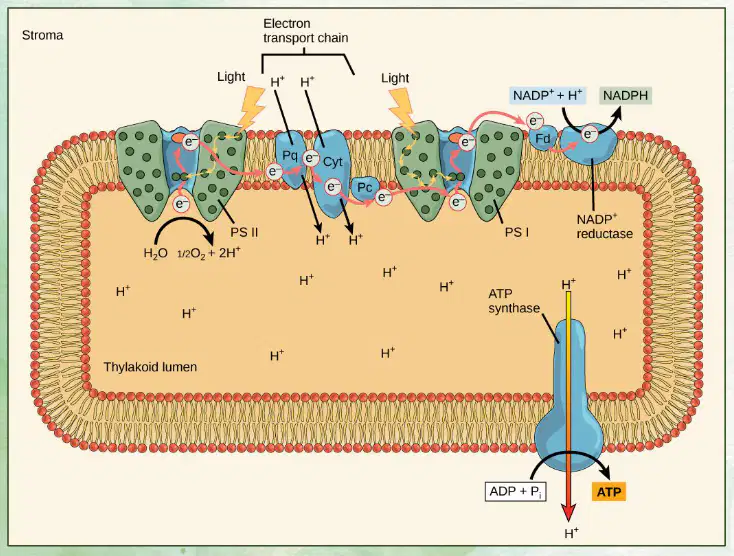
The enzyme that synthesizes ATP from ADP and Pi in the thylakoid membrane is called ________.
ATP synthase
Rubisco
Cytochrome c oxidase
NADP+ reductase

What is the main function of the Calvin cycle in photosynthesis?
To absorb sunlight
To use energy from ATP and NADPH to build glucose and other carbohydrates
To release oxygen
To break down glucose
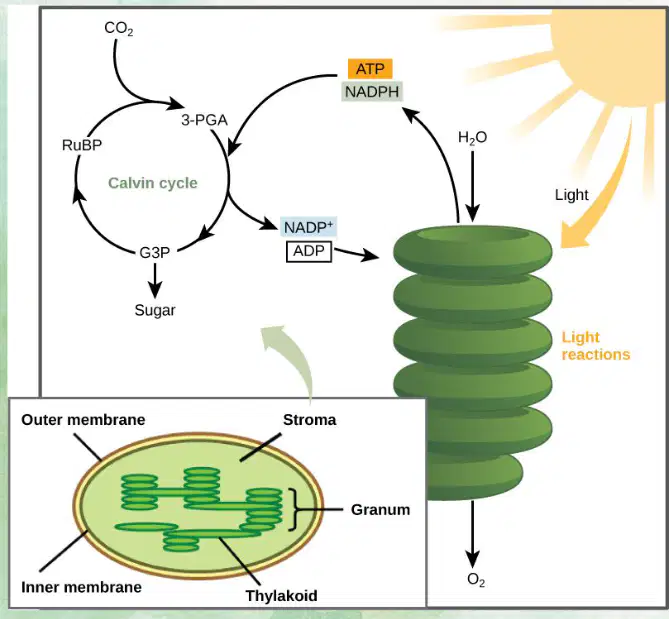
Where does the Calvin cycle take place in the plant cell?
Thylakoid
Stroma of the chloroplast
Cytoplasm
Mitochondria
The Calvin cycle is named after ________, who discovered the process.
Melvin Calvin
James Watson
Gregor Mendel
Louis Pasteur
The Calvin cycle is sometimes called the Calvin-Benson cycle to recognize Andrew Benson as well.
True
False
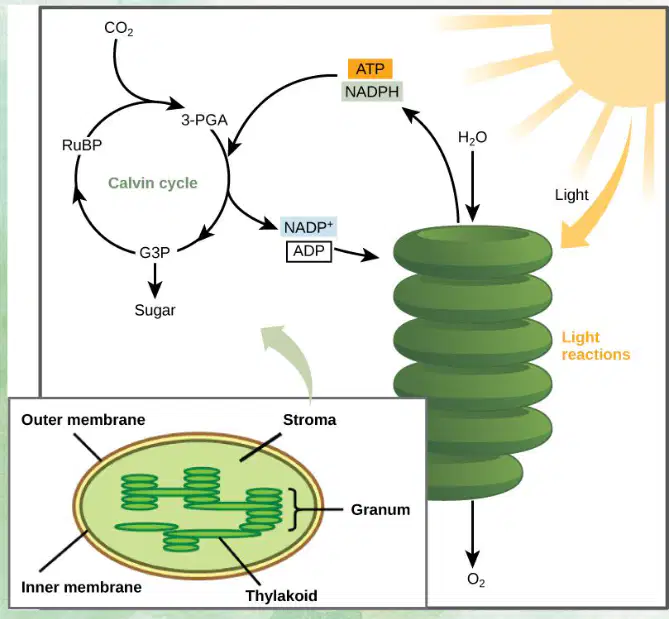
Which molecules provide the chemical energy for the Calvin cycle to synthesize sugars?
CO2 and O2
ATP and NADPH
ADP and NADP+
Glucose and G3P
Photosynthesis is a highly conserved process across all photosynthetic organisms. Which of the following is NOT involved in photosynthesis?
Light absorption by photosystems
Electron transport chains
Calvin cycle
Cellular respiration
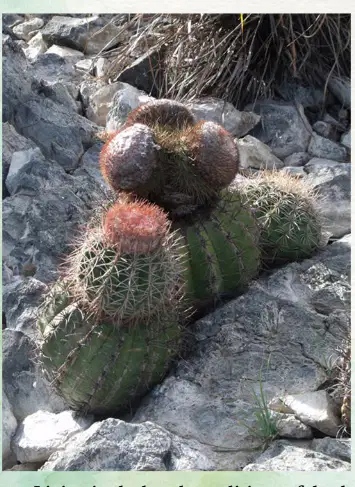
Living in the harsh conditions of the desert has led plants like the cactus to evolve variations in reactions outside the Calvin cycle. These variations increase efficiency and help conserve water and energy. What is one adaptation that allows plants in dry climates to conserve water?
Maximizing CO₂ efficiency
Increasing leaf size
Opening stomata during the day
Reducing root length
Some plants perform Calvin cycle steps at ______, reducing water loss by opening stomata during cooler temperatures.
night
noon
afternoon
dawn
Some plants can carry out minimal photosynthesis without opening stomata, helping them survive extreme drought.
True
False
In eukaryotes, photosynthesis occurs in two stages: Light-dependent reactions and the Calvin cycle, typically within ________.
chloroplasts
mitochondria
nucleus
ribosomes
Which of the following organelles do prokaryotes like cyanobacteria lack?
Chloroplasts
Mitochondria
Nucleus
All of the above
How do some types of prokaryotes (e.g., cyanobacteria) perform photosynthesis?
Using chloroplasts
Using infoldings of their plasma membrane
Using mitochondria
Using vacuoles
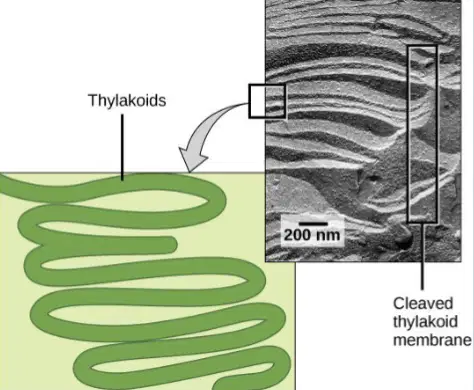
What is the function of the infolded regions of the plasma membrane in photosynthetic prokaryotes?
They function like thylakoids, where chlorophyll is attached and photosynthetic processes take place.
They store genetic material for the cell.
They are responsible for cellular respiration only.
They serve as storage sites for nutrients.
In living systems, how is energy accessed?
Carbohydrates function to provide ____ to organisms for survival.
Even plants break down carbohydrates via ________.
cellular respiration
photosynthesis
fermentation
transpiration
Plants have mitochondria as well as chloroplasts.
True
False
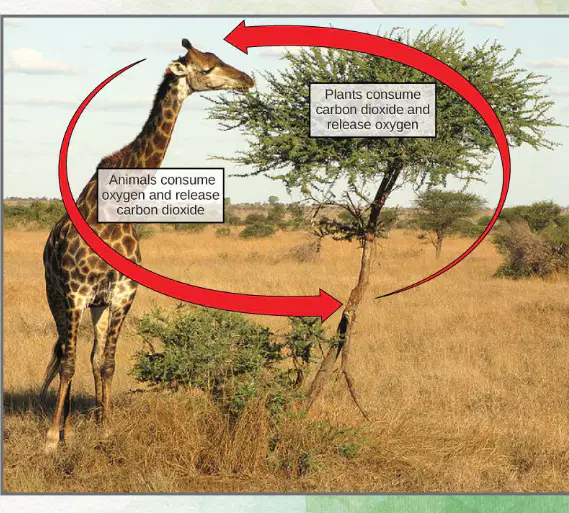
What do animals consume and release in the carbon cycle?
Consume oxygen, release carbon dioxide
Consume carbon dioxide, release oxygen
Consume water, release glucose
Consume glucose, release water

