
NEW
Font size
 Worksheets
Science Test Lessons 1-5
Total questions: 70
Worksheet time: 35mins
Refers to short-term changes in the atmosphere.
weather
climate
Describes what the weather is like over a long period of time.
climate
weather
True or False: A map is a symbolic representation of selected characteristics of a place, usually drawn on a flat surface.
True
False
True or False:
A globe is a spherical model of Earth. It gives us a three-dimensional view of the whole Earth
True
False
How do we know what the earth looks like?
from maps
from satellites
from telescopes
from globes
A small whirlwind or air vortex over land.
dust devil
typhoon
hurricane
What is a model?
a four-dimensional representation
a one-dimensional representation
a two-dimensional representation
a three-dimensional representation
A mobile, destructive vortex of violently rotating winds on land
tornado
vortex
typhoon
hurricane
What is a satellite image?
image taken from a telescope
image taken from space
image taken from places around the continent
A tornado, hurricane, cyclone, dust devil, typhoon, and water spout are all examples of what?
model
precipitation
weather
vortex
Saffir-Simpson Scale is used to measures what?
wind speed of hurricanes
temperature of a tornado
air pressure of a thunderstorm
diameter of a tornado
The enhanced Fujita Scale is used to...
track humidity levels in clouds
measure air pressure
estimate tornado wind speeds based on damage left behind by a tornado
estimate how far lightning travels
Why would asphalt and a swimming pool have different temperatures when receiving the same amount of sunlight?
Choose the best answer.
Swimming pools take longer to heat up than asphalt would.
The variable you change or that varies in an experiment to explore its effects is known as the____________.
dependent variable
independent variable
controlled variable
The variable that is measured or observed and is affected during the experiment is known as the _____________.
controlled
variable
independent variable
dependent variable
the variable that does not change during the experiment.
independent
variable
controlled variable
dependent variable
What is a scientific investigation?
A scientific investigation is the last step to finding out answers to your questions.
A scientific investigation is a plan for asking questions and testing possible answers
Select the correct statement below.
The dependent variable is located on the Y axis and the independent variable is labeled on the X axis on a line graph.
The independent variable is labeled on the Y axis and the dependent variable is labeled on the X axis on a line graph
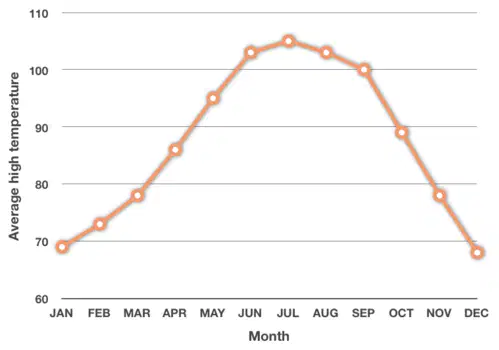
Use the line graph to answer the following question:
What month had the highest temperature?
May
August
July
December
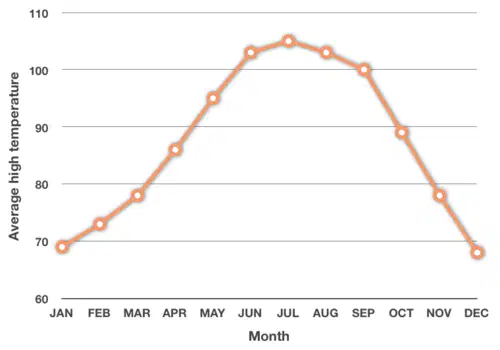
Use the line graph to answer the following question:
What was the highest temperature for the month of May?
100
95
90
85

Use the picture to answer the following question:
What does the blue line represent on the line graph?
Average workday hours of each month in NY
Average daylight on the state of NY
Average water level in NY
Average temperature of NY in Fahrenheit
Which picture represents the 3 ways heat is transferred on the Earth's surfaces?


What is the source of Earth’s heat?
Radiation from the Sun
Humidity from the oceans
From the cloud cover
What are the three ways heat is transferred to the Earth’s surfaces.
Radiation
Conduction
Evaporation
Conduction
Convection
Condensation
Radiation
Conduction
Convection

The transfer of heat through a fluid is known as?
Radiation
Conduction
Convection
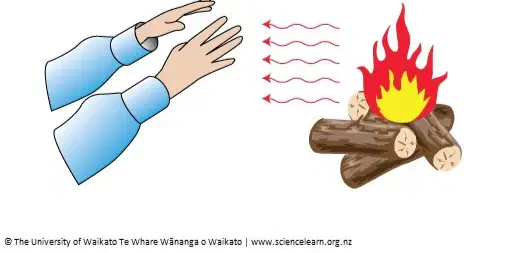
This picture is an example of what kind of heat transfer?
Conduction
Radiation
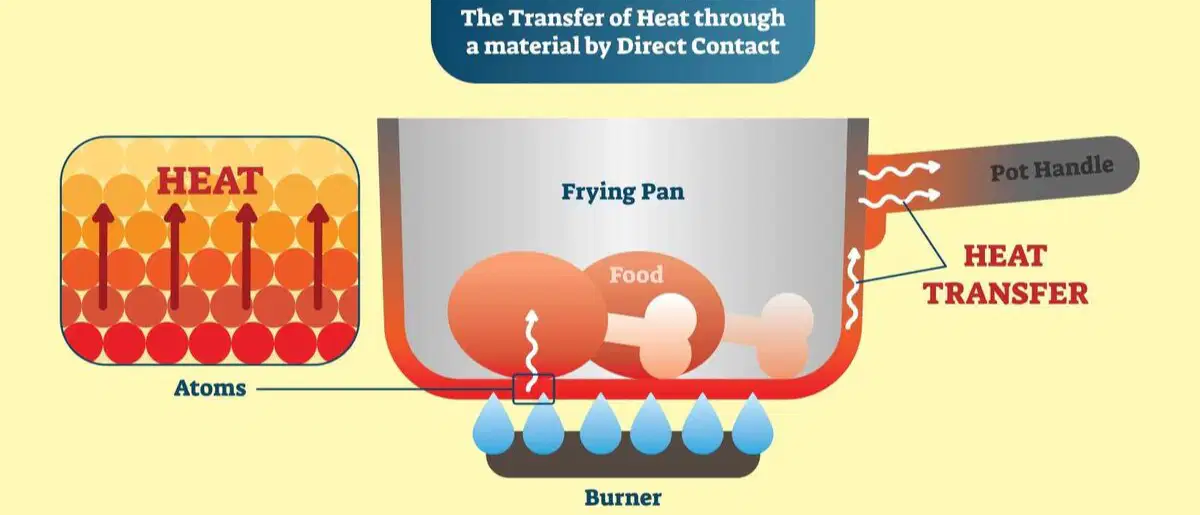
There are three types of heat transfer. The transfer of heat through direct contact is known as ___________.
Conduction
Radiation
Convection
Heat Transfer
The sun heats the ground through_______.
radiation
convection
conduction
The ground heats the air through________.
conduction
radiation
convection
Warm air rising is an example of what kind of heat transfer?
Convection
Radiation
During the day which is hotter the ground or the sea? Why?
The sea. The sea is hotter because it heats up faster than the ground
The ground. The ground is cooler because it heats up slower than the sea.
The ground. The ground is hotter because the ground heats up faster than the sea does.
The sea. The sea is cooler because it gives off heat faster.
True or False: Wind is created by the heating and warming of the Earth's surfaces.
TRUE
FALSE
Wind is created by the heating and cooling of the Earth's surfaces. This process is known as the _____________.
Convection Cycle
Radiation Cycle
Earth's Cycle
Condensation Cycle
Movement caused by differences in temperature produce convection currents. As warm air rises, it becomes less dense, spreads out, and cools.
What does this create?
Heat
Precipitation
Clouds
Wind
An _________ is a large body of air with generally uniform temperature and humidity.
air mass
wind
convection cycle
hurricane
What are the four categories for air masses?
arctic, polar, and tropical
arctic, tropical, polar, and equatorial
equatorial, african, polar, and arctic
Select which statement is TRUE.
Air masses are moist if they form over oceans.
They are moist if they form over continents.
True or False:
Arctic air masses form in the Arctic region and are very cold.
TRUE
FALSE
True or False:
Tropical air masses form in low-latitude areas and are moderately warm.
FALSE
TRUE
True or False:
Polar air masses take shape in high-latitude regions and are warm.
TRUE
FALSE
True or False:
Equatorial air masses develop near the Equator, and are cold.
TRUE
FALSE
What happens when two air masses meet?
They form one air mass
Nothing
Form a front
When two different air masses come into contact, they don't mix. They push against each other along a line called a ________.
Cloud
Air mass
Weather
Front
True or False:
At higher altitudes air pressure is greater.
TRUE
FASLE
True or False:
When a warm air mass meets a cold air mass, the warm air rises since it is lighter.
At high altitude it cools, and the water vapor it contains condenses.
FALSE
TRUE
Why do air masses differ in temperature and levels of humidity?
Because they create a convection current.
Because they are created in different areas around the Earth.
Because they only form over continents.
Because they are formed only on the equator.
True or False:
An air mass can change as it moves into different environments.
TRUE
FALSE
True or False:
If a continental polar air mass moves into warmer areas and over the ocean the air will warm and moisture may evaporate from the ocean surface into the air, adding humidity.
TRUE
FALSE
Which picture represents air masses?
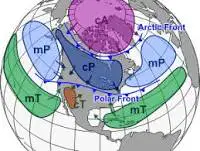


An air mass that forms over the ocean is know as ______________.
An air mass that forms over land is known as a ______________ air mass.
What is the symbol for Continental Tropical air mass?
CT
cT
mP
cP
What is the symbol for Maritime Polar air mass?
pM
Cm
Mt
mP
What are the four types of fronts?
Hot, Cool, Occluded, and Stationary
Warm, Hot, Cool, and Cold
Warm, Cold, Occluded, and Stationary
Hot, Cool, Cut Off, and Frozen
What is a Warm Front?
Forms when a relatively moist, warm air mass slides up and over a cold air mass. As the warm air mass rises, it often condenses into a broad area of clouds.
Forms when a cold air mass pushes into a warmer air mass. Cold fronts can produce dramatic changes in the weather. They move fast, up to twice as fast as a warm front.
Are usually a sign that the parent weather system has reached its mature stage and is decaying
Forms when a cold front or warm front stops moving. This happens when two masses of air are pushing against each other, but neither is powerful enough to move the other.
What is a Cold Front?
Forms when a relatively moist, warm air mass slides up and over a cold air mass. As the warm air mass rises, it often condenses into a broad area of clouds.
Forms when a cold air mass pushes into a warmer air mass. Cold fronts can produce dramatic changes in the weather. They move fast, up to twice as fast as a warm front.
Are usually a sign that the parent weather system has reached its mature stage and is decaying
Forms when a cold front or warm front stops moving. This happens when two masses of air are pushing against each other, but neither is powerful enough to move the other.
What is an Occluded Front?
Forms when a relatively moist, warm air mass slides up and over a cold air mass. As the warm air mass rises, it often condenses into a broad area of clouds.
Forms when a cold air mass pushes into a warmer air mass. Cold fronts can produce dramatic changes in the weather. They move fast, up to twice as fast as a warm front.
Are usually a sign that the parent weather system has reached its mature stage and is decaying
Forms when a cold front or warm front stops moving. This happens when two masses of air are pushing against each other, but neither is powerful enough to move the other.
What is a Stationary Front?
Forms when a relatively moist, warm air mass slides up and over a cold air mass. As the warm air mass rises, it often condenses into a broad area of clouds.
Forms when a cold air mass pushes into a warmer air mass. Cold fronts can produce dramatic changes in the weather. They move fast, up to twice as fast as a warm front.
Are usually a sign that the parent weather system has reached its mature stage and is
Forms when a cold front or warm front stops moving. This happens when two masses of air are pushing against each other, but neither is powerful enough to move the other.

What does this picture represent?
Types of Climates
Types of Local Winds
Types of Heat Transfer
Types of Fronts
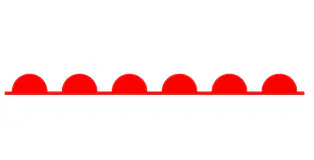
What is the Symbol for a Warm front?
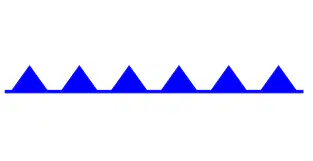
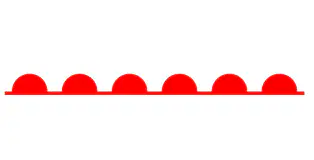


What picture represents a Stationary Front?
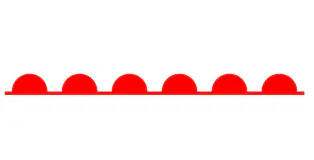
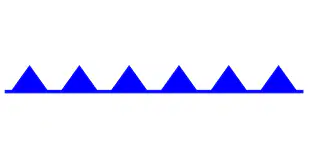

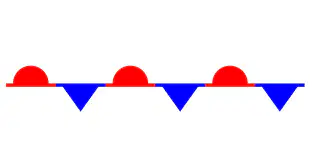
What picture represents a Cold Front?
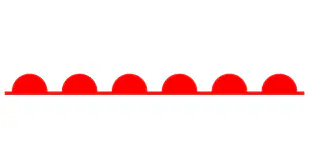
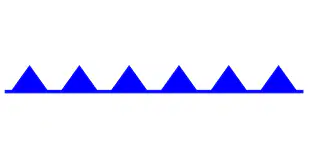

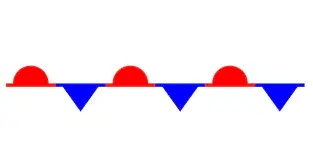
What picture represents an Occluded Front?


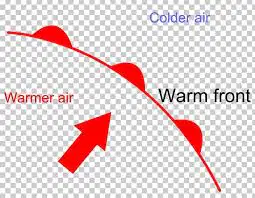
What direction is this Front traveling?
South West
North West
North East
South East
What are the two types of winds?
Local and Global
Transitional and Global
Local and Equatorial
Radial and Occluded
Winds that blow over a limited or small area?
Local
Global
This wind system includes polar easterlies, westerlies, horse latitudes, trade winds, and the doldrums. This wind system also drives the ocean's surface currents.
Local Winds
Global Winds
True or False:
Large global wind systems are created by the uneven heating of the Earth's surface. These global wind systems, in turn, drive the ocean's' surface currents.
TRUE
FALSE
True or False:
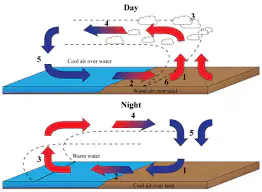
Local winds are winds that blow over a limited area. Local winds blow between small low and high pressure systems. They are influenced by local geography. Nearness to an ocean, lake, or mountain range can affect local winds
TRUE
FALSE

What does this picture represent?
Local Winds
Global Wind Systems
Convection Currents
Global Fronts

