
 Worksheets
Unit 1 & 2 Review
Total questions: 70
Worksheet time: 35mins

How does the body maintain homeostasis when it is cold outside? SELECT ALL THAT APPLY.
The body begins to shiver.
Vasocontriction.
The body begins to sweat.

How do the digestive system and the circulatory system work together?
They help regulate body temperature.
They absorb nutrients and remove waste from the body.
They help the body with transporting materials across the cell membrane.
Only the digestive sytem moves substances throughout the body.

How do fish regulate the amount of salt or water in their body?
Osmosis
Active Transport
Endocytosis
Exocytosis

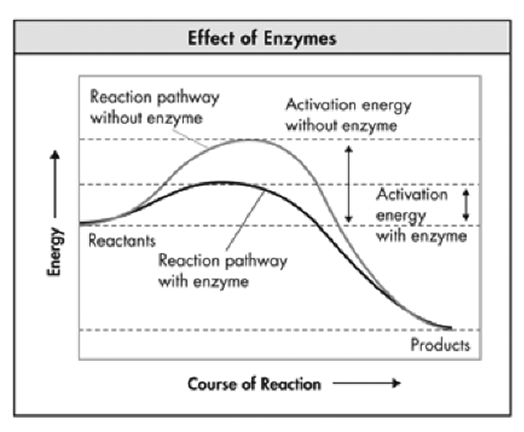
Looking at the graph above, what does an enzyme do?
It increases the activation energy.
It decreases the number of products produced.
It increases the number of reactants needed.
It speeds up the reaction by reducing the energy needed to run the reaction.

Which of the following are represented by the picture above? SELECT ALL THAT APPLY.
Hypotonic
Isotonic
Hypertonic
Active transport

How does the cell regulate what goes into it and out of it?
Cell membrane
Mitochondria
Nucleus
DNA
Protects the body, regulates body temperature
Integumentary
Nervous
Skeletal
Muscular
Carries oxygen and nutrients to all parts of the body.
Integumentary
Nervous
Circulatory
Respiratory
Allows movement in the body
Integumentary
Nervous
Skeletal
Muscular
Receives stimuli and transports impulses, coordinates actions and reactions in the body
Integumentary
Nervous
Circulatory
Respiratory
Supports and provides structure for the body
Skeletal
Muscular
Circulatory
Respiratory
Supplies blood with oxygen and rids the body of carbon dioxide
Integumentary
Nervous
Circulatory
Respiratory
Main Organs: Heart and blood vessels
Integumentary
Nervous
Circulatory
Respiratory
Main Organs: Skin
Integumentary
Nervous
Skeletal
Muscular
Main Organs: Muscles
Integumentary
Nervous
Skeletal
Muscular
Main Organs: Brains, spinal cord, nerves
Integumentary
Nervous
Circulatory
Respiratory
Main Organs: Bones and joints
Skeletal
Muscular
Circulatory
Respiratory
Main Organs: Lungs
Integumentary
Nervous
Circulatory
Respiratory
Which organic molecule would a long-distance runner most likely choose to eat two hours before a race?
A protein, because it builds muscle mass.
A lipid because it provides long term energy storage.
A carbohydrate because it releases energy quickly.
A protein, because it transports oxygen into the blood stream.
Monosaccharides are the building blocks of which group of biomolecules?
protein
lipid
carbohydrate
nucleic acid
Which biomolecules transport oxygen and other substances and also form part of most organelles?
Lipids
Carbohydrates
Proteins
Nucleic Acids
Amino Acids are the monomers of __________.
Nucleic Acids
Proteins
Carbohydrates
Lipids
Glycerol and fatty acids are the monomers of _________.
Lipids
Carbohydrates
Proteins
Nucleic Acids
Which biomolecules contains your genetic information?
Proteins
Lipids
Carbohydrates
Nucleic Acids
The monomer of Nucleic Acids is known as _________.
Amino Acid
Fatty Acid
Nucleotide
Saccharide

What was the independent variable?

Particle of movement from an area of lower concentration to an area of higher concentration.
Active transport
Passive transport
Which type of transport does not use energy to transport substances?
Active transport
Passive transport
Which type of passive transport focuses on the movement of water through the membrane?
Facilitated diffusion
Osmosis
Diffusion
Which type of solution has the same solute concentration inside of and outside of the cell?
Hypertonic
Hypotonic
Isotonic

The cell shows water moving in and out equally, which means it was placed in a ___ solution.
Isotonic
Hypertonic
Hypotonic

The cell expanded in size to the point of lysing (bursting), which means it was placed in a ____ solution.
Isotonic
Hypertonic
Hypotonic

The cell shrunk in size, which means it was placed in a ____ solution.
Isotonic
Hypertonic
Hypotonic
what is osmoregulation?
Control of water and salt in the body
Control of blood pressure in the body
Control of blood glucose in the body
During osmosis
water moves from high to low concentration
large or oddly shaped molecules move across a cell membrane
water moves when energy is used
proteins are built

If the dots represent sugar what direction will the water flow?
Into the cell
Out of the cell
Both equally (equilibrium)
When you are hot, your body sweats to cool you down. This means your temperature went above normal and your body sweats to counteract that change to bring you back to normal. What kind of feedback loop would this be?
Negative Feedback Loop
Positive Feedback Loop
Neutral Feedback Loop
Linear Feedback Loop
How do covalent bonds form?
By donating and receiving valence electrons between atoms.
Scientists still aren't sure.
Opposite slight charges attract each atom in the compound.
Sharing valence electrons between atoms

What is used or released when ATP becomes ADP?
phosphate released / energy used
phosphate used / energy released
phosphate released / energy released
phosphate used / energy released

What is used / released when ADP becomes ATP?
phosphate released / energy used
phosphate used / energy used
phosphate released / energy released
phosphate used / energy released

What is ATP used for?
It is recharged to be used later.
As a backbone for DNA.
Special cell actions that require large amounts of energy.
Any cellular process requiring energy.
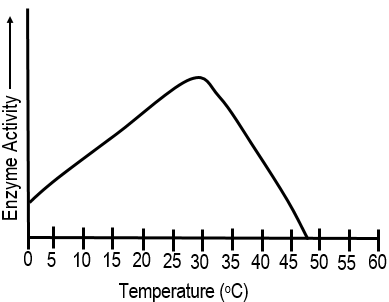
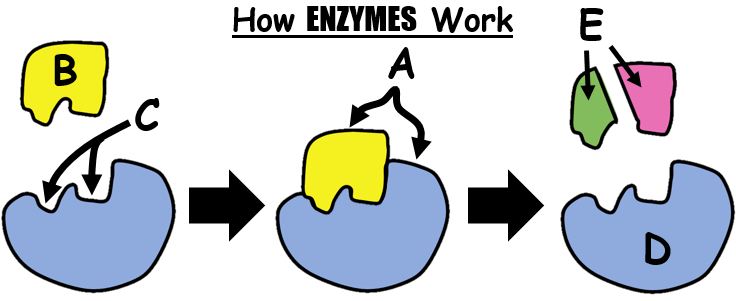
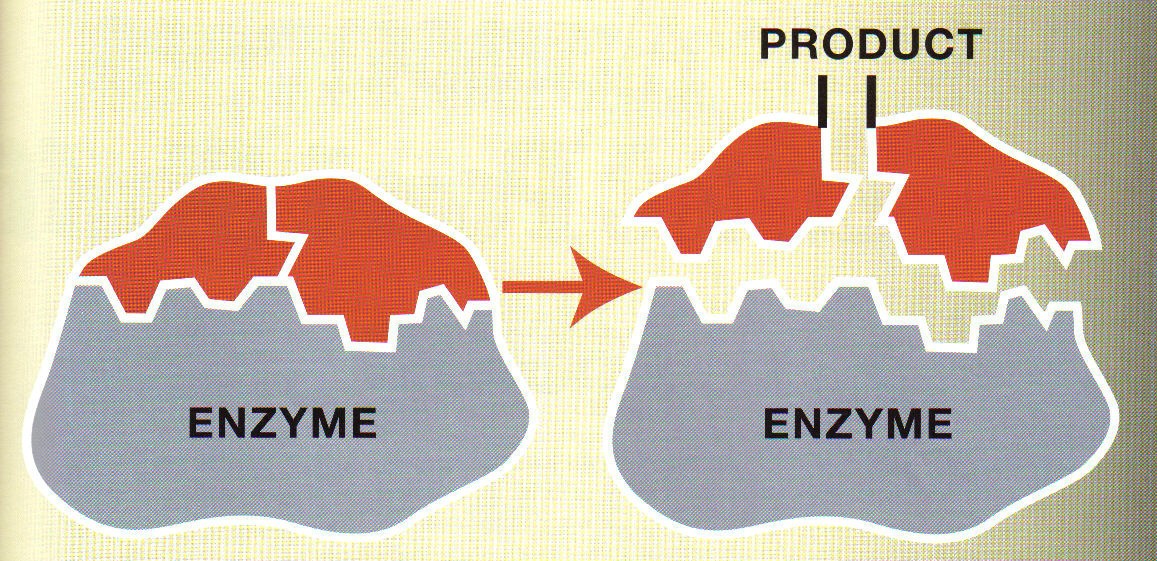
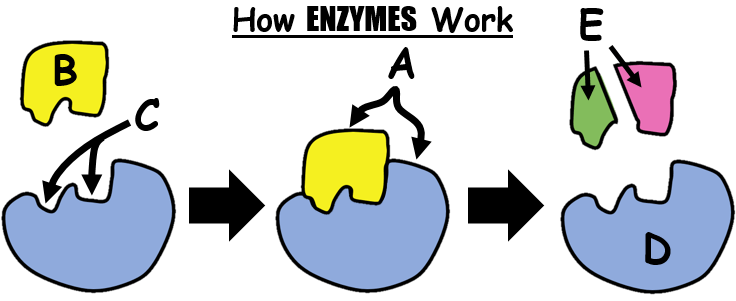
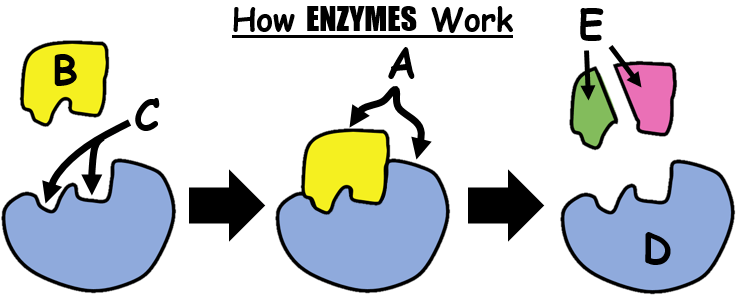
What happens when enzymes are heated to a high temperature?
The enzymes die.
The shapes of the enzyme are altered.
The enzymes' amino acid sequence changes.
The enzymes remain the same

How many bonds will a C atom form?
1
2
3
4

