
 Worksheets
Matter and Energy Review
Total questions: 55
Worksheet time: 41mins
If two groups performing the same experiment obtain different results and conclusions, what should take place next?
Which of the following parts should be modified if an experiment disproves the hypothesis?
the analysis
the observation
the conclusion
the hypothesis
How can a hypothesis be valuable if it is not supported by the data collected during the experiment?
It teaches students to think more carefully when forming their hypothesis.
It allows students to practice their procedures.
It could provide data that leads to further investigation of the subject being studied.
A hypothesis is not valuable if it is not supported by the data collected.
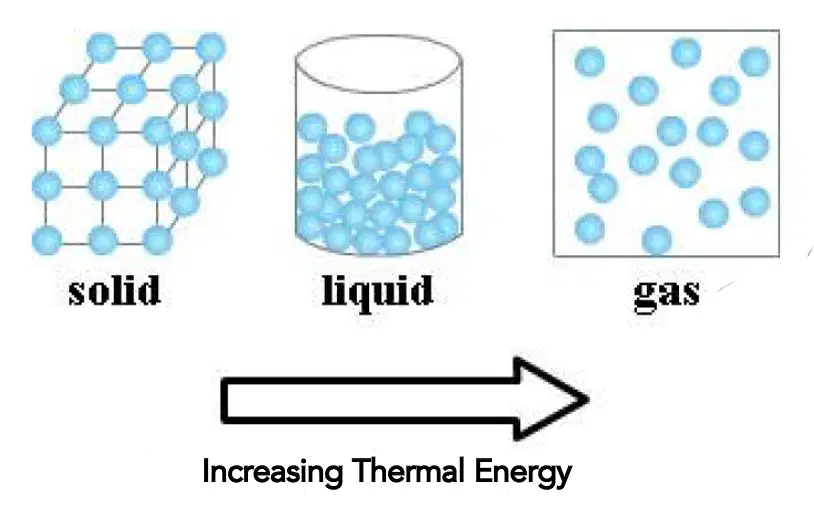
As thermal energy is added to a substance, the substance changes phase, as shown in the model.
How does the motion of the particles change as the thermal energy increases?
The motion of the particles increases as the substance changes from solid to liquid to gas.
The motion of the particles increases as the substance changes from liquid to gas only.
The motion of the particles decreases as the substance changes from liquid to gas only.
The motion of the particles decreases as the substance changes from solid to liquid to gas.
Which model below is most likely a solid?


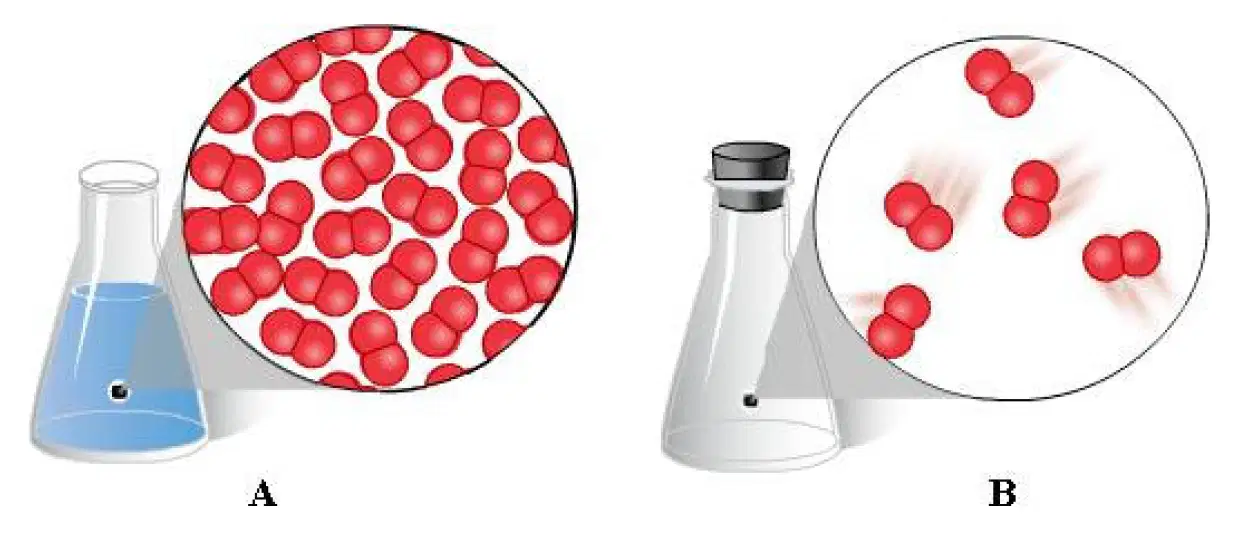
Analyze models A and B.
Based on the models, what is the best conclusion?
The particles in a liquid move farther and faster than those in a gas.
The particles in a solid move farther and faster than those in a gas.
The particles in a gas move farther and faster than those in a liquid.
The particles in a solid move farther and faster than those in a liquid.
Which statement is true about heat?
Heat is calculated using the average velocity of the atoms or molecules.
Heat is the average kinetic energy of a substance.
Temperature and heat are the same thing.
Heat always flows from a hot object to a cold object.
Adding or releasing _______________ can cause a change in _______________ without changing the state of a substance.
Which choice below correctly completes the sentence?
energy; heat
heat; structure
heat; temperature
temperature; energy
Ms. Smith has a thermometer on her garden wall.
As the sunshine makes the wall warmer during the day, what will happen?
The thermometer will get as hot as the sun.
The temperature on the thermometer will go up.
The temperature on the thermometer will stay the same.
The temperature on the thermometer will go down.
A cold piece of metal is placed into a beaker of boiling water
Which happens at the molecular level as the temperature of the metal increases?
the atoms of the metal release kinetic energy to the water molecules
the atoms of the metal increase molecular bond strength
the molecules of the metal gain kinetic energy
the molecules of the metal absorb the water molecules
When water is put into a freezer, heat is removed from the water.
What happens to the molecules in the water?
they combine to form larger molecules forming a solid
they begin to move more quickly and spread out, forming a gas
they begin to move more slowly and get closer together, forming a solid
they break apart to form smaller molecules and remain a liquid
Which material will conduct electricity?
Wood
Rubber
Aluminum
Glass
Which object will stick to a magnet?
a glass marble
a paper airplane
a iron nail
a rubber ball
A student dissolved a small amount of blue powder in alcohol in a glass container by stirring it with a metal rod.
Which of the materials is soluble?
the metal rod
the alcohol
the blue powder
the class container
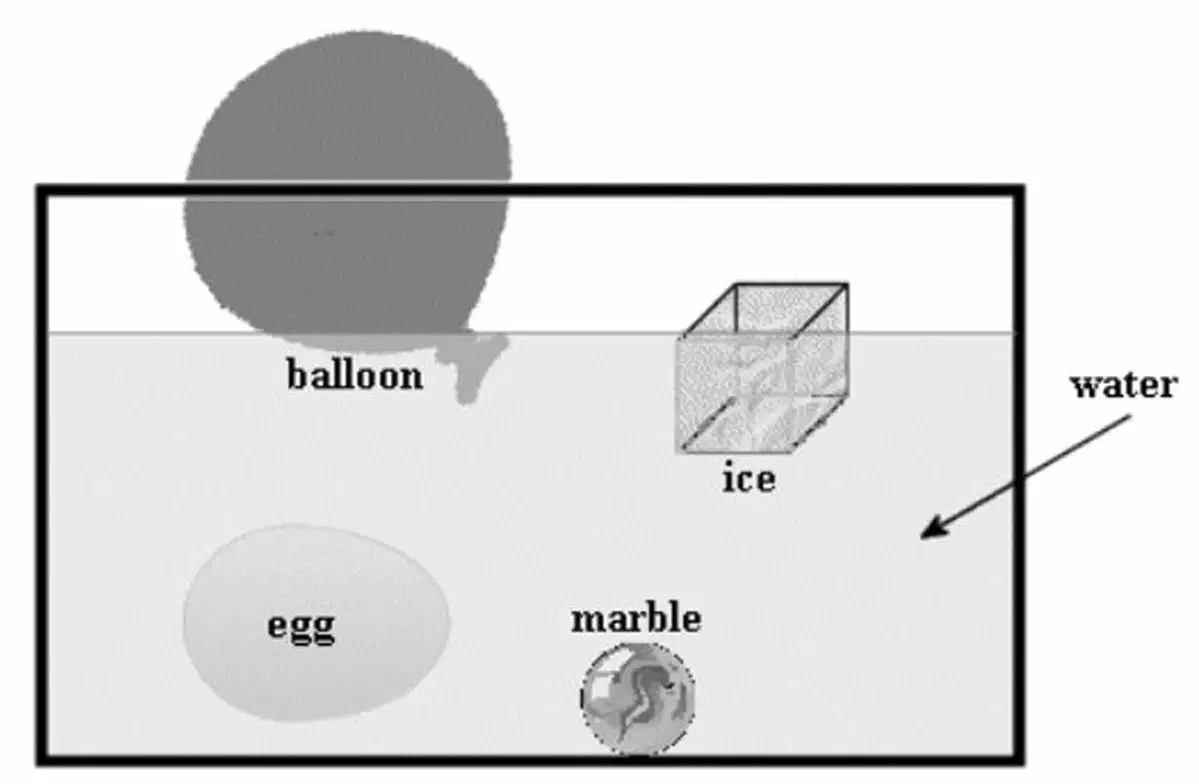
Sid put four objects into a tank of water as shown.
What can he conclude about the objects?
The balloon is the least dense.
The egg and the marble have the same density.
The marble is the least dense.
The balloon and the ice have the same density.
A student was measuring the density of an unknown substance in the lab. He weighed the substance and found that 6 mL of the substance weighed 12 g.
What is the density of the unknown substance?
Why is it important to have only one tested (independent) variable in an experiment?
How can a hypothesis still be valuable, even when the data fails to support it?
It can lead to new questions
Why does scientific knowledge change?
Because the government demands it
Can a scientific theory become a scientific law?
Which state of matter has a definite shape?
which state of matter has no definite shape or volume?
In what direction does heat flow?
Do the particles of a solid move?
the temperature at which a substance transforms from liquid to gas is called
The temperature at which a substance transforms from solid to liquid is called
How can the physical properties of a substance help us identify unknown substances?
By comparing the physical properties of the unknown substance with those of known substances
Physical properties can only help us identify substances if we also know their chemical properties
How do the physical properties of a substance compare when you have two different sized samples
they change with the size of the sample
they remain the same regardless of the size of the sample
they are inversely proportional to the size of the sample
they are directly proportional to the size of the sample
the temperature at which a substance transforms from gas to liquid is called
How does temperature affect the rate at which a substance dissolves into another substance?
How would a copper wire and a copper pan compare if they were both used as electrical conductors?
The copper wire would conduct electricity better because it is thinner
The copper pan would conduct electricity better because it has a larger surface area
They would conduct electricity equally well because they are both made of copper
Neither would conduct electricity because copper is not a good conductor
the density of an object is
How can you determine a substance's physical properties?
chemical properties can be observed by
what can you determine by comparing the density of an object to the density of water?
If you have a gold ring and a larger gold necklace, how would the densities of the two objects compare?
If you break a piece of concrete in half, what would happen to the density?
you can find the volume of weirdly shaped objects by
submerging the object in water and measuring the displaced water
What is an example of a scientific question that can be tested?
Why isn't the sky green?
What if gravity didn't work?
Which must be true of any hypothesis for it to be useful in a scientific investigation?
it must be supported by data
it must be used to develop a theory
it must lead to further investigations
it must be developed without depending on prior investigations
Why is it useful to organize data on a graph?
It is not useful, it's just for looks
Which is a true statement about the theory of evolution?
it was accepted by all scientists without question
it proved what most scientists already believed at the time
it had no significant impact on scientific thought and society
it was developed using large amounts of empirical evidence
Which is a true statement about scientific laws?
scientific laws are the same as facts
scientific laws can explain a wide range of events
scientific laws can change in light of new evidence
scientific laws are the foundations of scientific theories
which physical property is the rate at which a substance transfers heat?
boiling point
density
electrical conductivity
thermal conductivity
Lisa is using a magnet to pick up various objects. Which object is not attracted to her magnet?
cobalt
iron
nickel
wood
which is true about density?
the unit of density is grams
liquid gold is denser than solid gold
density is found by multiplying mass and volume
the density of a substance is the same regardless of the sample size
scientists collect and record _______
_______ are changed in a scientific study
________ is anything that has mass and takes up space
what is malleability?
Ability of a substance to be rolled or pounded into various shapes
______ is a measure of the gravitational force acting on an object
Mass
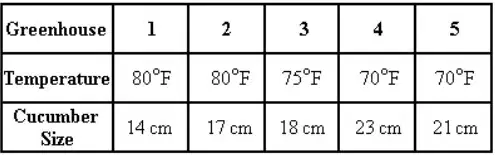
Kelsey formed the hypothesis that cucumbers will grow larger in greenhouses with temperatures above 75 °F (23.89 °C) than in greenhouses with temperatures below 75 °F (23.89 °C). She recorded her data in the table shown after completing the experiment.
They do not support her hypothesis, so the experiment is not valuable.
They do not support her hypothesis, but indicate the best temperature for growing cucumbers.
They support her hypothesis, but do not provide useful information.
They support her hypothesis about the best temperature for growing the biggest cucumbers.
Manuel wants to know the boiling point of milk. One cookbook tells him the boiling point for 1 cup (0.24 liters) of milk. However, Manuel is boiling 4 cups (0.95 liters) of milk.
At what temperature will his milk boil?
492 °F
246 °F
It will not boil because he is using too much milk.
123 °F
The atomic theory has changed several times since it was first proposed.
The older versions of the theory are still in textbooks, so they have to be taught.
This demonstrates how theories are modified as new evidence is discovered.
People like to read about outdated versions of theories.
So that the scientists who worked on older versions can get credit for their work.
_________ is the amount of matter in an object

