
 Worksheets
Cell Structure & Function & Transport
Total questions: 34
Worksheet time: 17mins
Name
Class
Date
1.
Which of the following is an energy rich molecule that is made of the elements carbon, hydrogen, and oxygen. Sugars and starches are examples of these molecules.
a)
lipids
b)
carbohydrates
c)
protein
d)
nucleic acid
2.
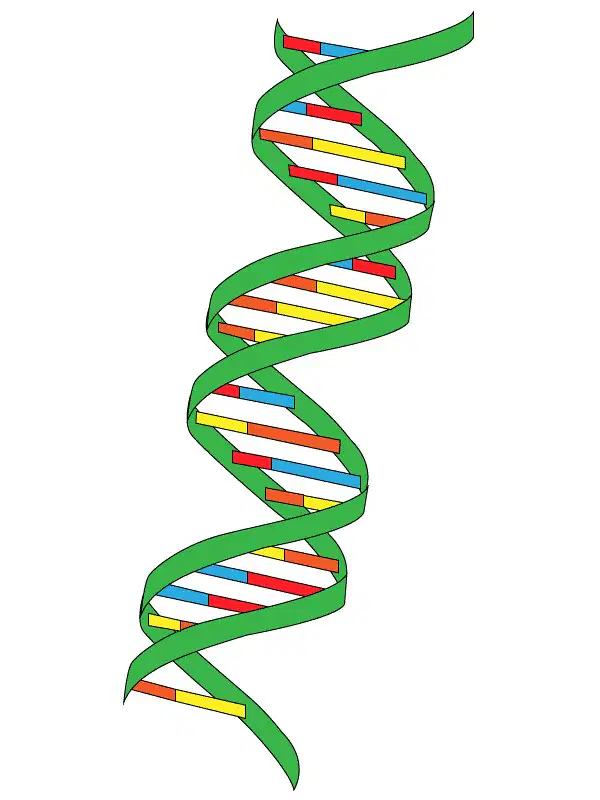
What shape is used to describe a molecule of DNA?
a)
double helix
b)
spiral string
c)
twisty curl
d)
triple felix
3.
Which of the following is an INORGANIC compound?
a)
carbohydrates
b)
lipids
c)
nucleic acid
d)
water
4.
Which of the following requires energy to transport materials across the cell membrane?
a)
facilitated diffusion
b)
osmosis
c)
active transport
d)
passive transport
5.
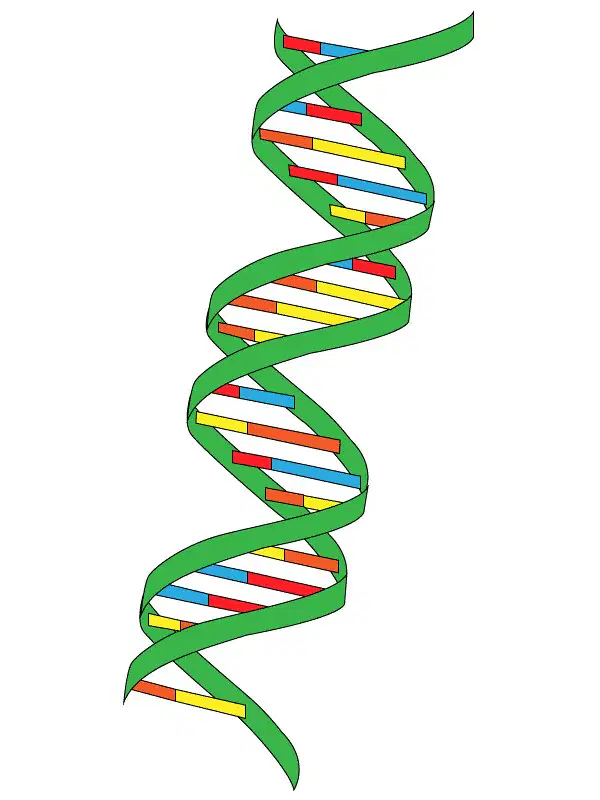
What is the name of this molecule?
a)
Phosopholipid bilayer
b)
Seletively permeable
c)
Deoxyribose nucleic acid
d)
Triple felix
6.
Which of the following would not be found in an animal cell?
a)
chloroplast
b)
cell wall
c)
large vacuole
d)
all of these
7.
An amoeba eating a food particle is an example of which of the following?
a)
passive transport
b)
diffision
c)
endocytosis
d)
exocytosis
8.
What do enzymes do to chemical reactions that take place in cells?
a)
slow them down
b)
speed them up
c)
they do not affect chemical reactions
d)
create cell walls in animal cells
9.
Which of the following is not one of the elements that is found carbohydrates, lipids, nucleic acids, and proteins?
a)
Oxygen
b)
Carbon
c)
Iodine
d)
Hydrogen
10.
In chemistry, what does the word organic mean?
a)
no pesticides
b)
natural
c)
contains carbon
d)
does not contain hydrogen
11.
What are the building blocks of living things that serve as the basic units of structure and function?
a)
chemicals
b)
energy
c)
cells
d)
organs
12.

This chloroplast is responsible for which of the following.
a)
Collecting sunlight energy and changing it to stored chemical energy for the cell.
b)
Releasing energy for the cell to use.
c)
Control center of the cell and directs all cell activities.
d)
Controls what materials can enter and leave the cell.
13.
Which chemical process occurs in the chloroplasts of plant cells?
a)
Cellular Respiration
b)
Protein Synthesis
c)
Photosynthesis
d)
DNA Transcription
14.
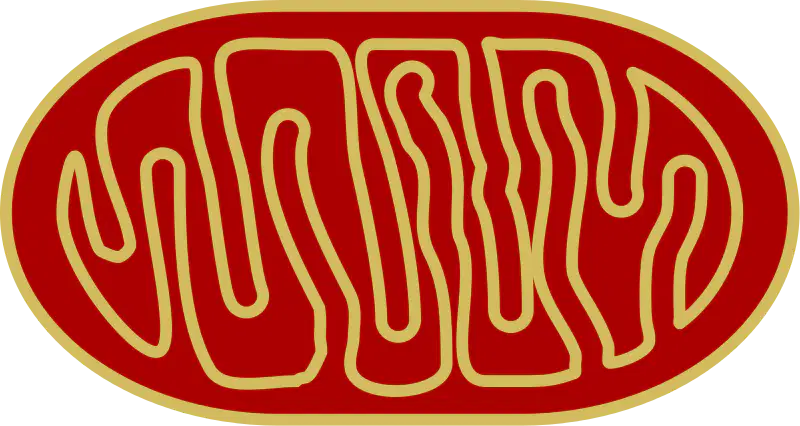
What role does the mitochondria play for the cell?
a)
Makes proteins
b)
Releases energy
c)
Makes food
d)
Houses DNA
15.
Which of the following is the job of the vacuole?
a)
Collects sunlight
b)
Stores materials for the cell
c)
Releases energy
d)
Controls what enters and leaves the cell
16.
Which organelle is described as thick, gel-like fluid that fills cells.
a)
cell membrane
b)
cell wall
c)
nucleus
d)
cytoplasm
17.
What is the job of the cell membrane?
a)
controls the chloroplast
b)
controls what materials can enter/leave the cell
c)
controls DNA
d)
controls the temperature of the cell
18.
What is the job of the nucleus?
a)
Controls how much energy the mitochondria produces
b)
Controls how green the chloroplast appears
c)
Controls what materials may enter/leave the cell
d)
Controls the cell and directs all activities inside the cell
19.
Which of the following is true about vacuoles in plant cells?
a)
They are smaller than vacuoles in animal cells
b)
There are more vacuoles in plant cells than in animal cells
c)
The vacuole takes up more space in plant cells than in animal cells
d)
Vacuoles may be nonexistent in plant cells.
20.
Since muscle cells require lots of energy, it is logical to expect that muscle cells would have several __________ present in their cells.
a)
Nuclei
b)
Chromosomes
c)
Vacuoles
d)
Mitochondria
21.
What is the role of the cell wall?
a)
Provides structure and support for the plant cell
b)
Provides structure and support for the animal cell
c)
Provides structure and support for both plant and animal cells.
d)
Gives plant cells their green color.
22.
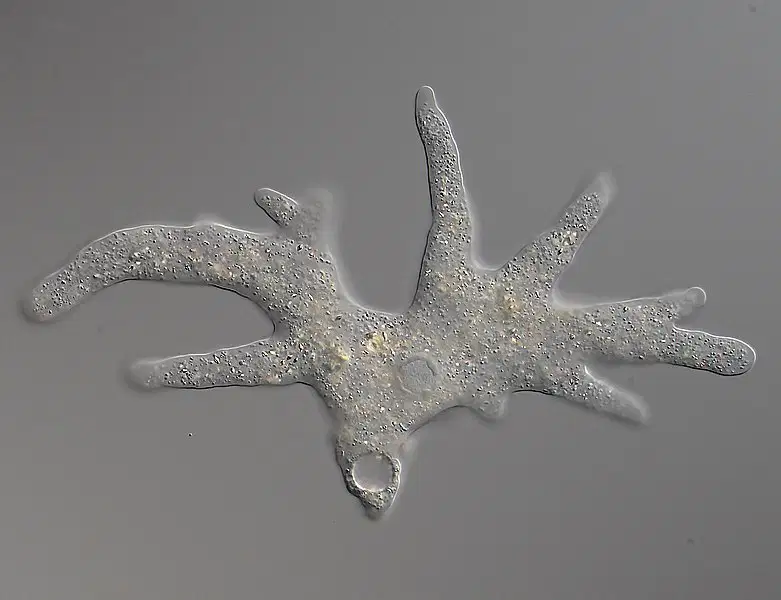
Which of the following statements about the amoeba is NOT true?
a)
The amoeba is unicellular.
b)
The amoeba needs energy to survive.
c)
The amoeba does not respond to changes in its environment.
d)
The amoeba has the ability to reproduce asexually.
23.
In life science, when we use the word structure, we are referring to which of the following?
a)
a building made of wood
b)
the way something is shaped or arranged
c)
a multicelluar autotroph
d)
a task
24.
___________________: a change in an organism's surroundings that causes the organism to react.
a)
function
b)
growth
c)
energy
d)
stimulus
25.
Which of the following is the most abundant chemical in cells?
a)
carbon dioxide
b)
water
c)
amino acids
d)
oxygen
26.
All living things have which of the following in common?
a)
They come from other living things.
b)
They rely on oxygen to breathe.
c)
They have a heartbeat.
d)
They are multicellular.
27.
______________: the scientific study of how organisms are classified
a)
biology
b)
taxonomy
c)
anatomy
d)
binomial nomenclature
28.

Which of the following is the scientific name of the organism pictured below.
a)
Canis lupus
b)
Gray Wolf
29.

Which of the following living things would be most closely related to the gray wolf (Canis lupus)?
a)
Canis latrans
b)
Panthera leo
c)
Felis domesticus
d)
Turdus migratratorius
30.
Which level of classification is the most specific?
a)
domain
b)
kingdom
c)
genus
d)
species
31.
Which of the following scientists was the first to claim that all animal cells are made of cells?
a)
Matthias Schlieden
b)
Theodor Schwann
c)
Sir Isaac Newton
d)
Robert Hooke
32.
Who was the first scientist to observe living cells under a microscope?
a)
Anton van Leeuwenhoek
b)
Matthias Schlieden
c)
Robert Hooke
d)
Albert Einstein
33.
Which of the following does not require energy to transport materials across the cell membrane
a)
passive transport
b)
osmosis
c)
diffusion
d)
all of these
34.
Which organelle houses the DNA of a cell?
a)
Nucleus
b)
Mitochondria
c)
Vacuole
d)
Lysosome
100 %

