Worksheets
PMA 1 Review Quizziz
Total questions: 51
Worksheet time: 38mins

At what time did the SpaceX rocket reach its highest altitude according to the launch data?
60 seconds after launch
80 seconds after launch
100 seconds after launch
120 seconds after launch

In what year is it expected that India will overtake China as the worlds largest population
2022
2025
2050
2100

Which quarter had the highest engagement in social media?
quarter 1
quarter 2
quarter 3
quarter 4


The pH scale measures the acidity or the basicity of a solution. Solutions that have a pH below 7 are acids. Solutions that have a low pH are more acidic than solutions that have a higher pH. The graph below shows the pH of four common fruit juices.
A student studying acidity of juices did a taste test and determined that the orange juice was the sweetest juice and the lemon and lime juices were the sourest. Based on this information, and the data shown in the bar graphs, which is the best inference the student could make about acidity?
Juices with more sugar content have a lower pH.
Higher acidity causes juices to taste more sour.
Juice that tastes sour has a lower pH than juice that tastes sweet.
Grapefruit juice tastes more sour than lime juice.
A student wants to view a live S. enterica cell as it reproduces. What microscope should the student use to examine the cell?
Light Microscope
Scanning Electron Microscope
Transmission Electron Microscope
Dissecting Microscope

Which is a true statement about the relationship between pH and enzyme action?
All enzymes work best at a neutral pH
Adding more acid does not affect the rate of activity of an enzyme
Enzymes function only in a pH range of 4.0 to 5.5
The activity of an enzyme is affected by pH

This graph represents changes in human population over a period of 2,000 year.
What can be concluded from the graph?
Human population grew at a constant rate over the last 2,000 years
Human population grew exponentially over the past 200 years
Human population reached its carrying capacity around the year 1900
Human population will begin to level off around 2010

What can be concluded from this graph?
Salivary amylase works the best at a pH range of 1 to 4
All enzymes work best at 25C or room temperature
Alkaline Phosphatase works the best at a pH range of 1 to 4
The activity of an enzyme is affected by the pH
If you were a scientist and wanted to look at pollen on a pollinator such as a bee, which microscope would you use?
Compound Microscope (Light Microscope)
Dissecting Microscope
Scanning Electron Microscope (SEM)
Transmission Electron Microscope (TEM)
Which of the following is an example of COHESION?
water sticking to water
water sticking to glass
oil sticking to plastic
hydrogen sticking to oxygen
Which of the following is the CORRECT list of water's properties?
Read Carefully!
adhesion, cohesion, high specific heat, universal solvent
adhesion, cohesion, low specific heat, universal solvent
adhesion, no cohesion, low specific heat, universal solute
no adhesion, cohesion, high specific heat, universal solute

You body sweats to help prevent you from overheating. How does water regulate temperature?
it lets heat pass through it
it absorbs a lot of heat, then decreases in temperature
it absorbs a lot of heat, but only increases a little in temperature
heat is afraid of water and avoids it
Water is polar. What does that mean?
it is a molecule with opposite charges on opposite ends
it is a molecule with no charge
it is a molecule with identical charges on opposite ends
it is a molecule with too many protons
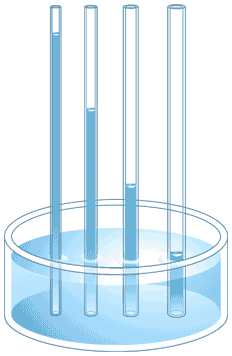
What is the term for water's ability to defy gravity and climb up a tube?
Capillary Action
Specific Heat
Universal Solvent
Magic
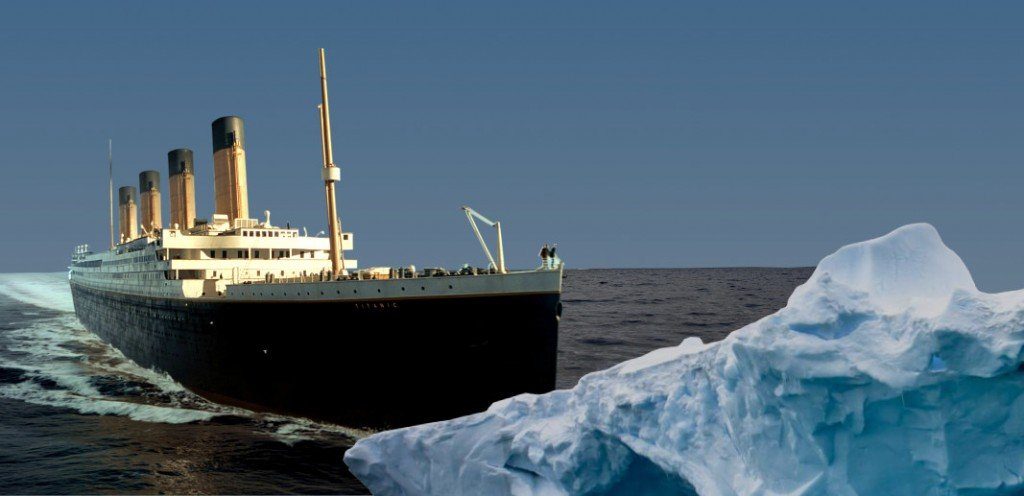
Why does ice float?
water expands when it freezes, making ice less dense than water
water compacts when it freezes, making ice more dense than water
hydrogen bonds in water push the ice to the surface
ice is afraid of water, and avoids it

What are the bonds called between a slightly positive hydrogen in a polar molecule and a negatively charged atom?
Hydrogen Bonds
Water Bonds
Covalent Bonds
Bail Bonds

A water strider can skate along the top of a pond because:
covalent bonds result in water cohesion (surface tension)
hydrogen bonds result in water cohesion (surface tension)
water striders have adapted to take advantage of water cohesion
water striders are afraid of water and avoid it


Which best describes what a food chain shows you?
Energy flow through an ecosystem
Food flowing through an ecosystem
Consumers going into other consumers
Who eats who

Where does the energy start in this food chain?
Hawk
Snake
Sun
Fungi
The arrows in a food chain or web represents what?
They point to the organism that is being eaten.
They show what direction the energy is flowing between organisms.
It shows how sunlight flows within an ecosystem.
They represent how water is transferred within a habitat.

An energy pyramid represents what?
How much energy a particular organism needs.
How much sunlight is available for the ecosystem to use.
How much energy is needed to build a pyramid.
The amount of energy available to the next 'feeder' in a food web.

In the energy pyramid here, which organisms have the most energy available?
Top Predator
Herbivores
Carnivores
Producers

Which trophic level has the least amount of energy? 1-producers, 2-primary consumers, 3-secondary consumers, 4-tertiary consumers
1
2
3
4

The owl receives energy from which organisms?
grasshopper and mouse
rabbit and butterfly
mouse and rabbit
butterfly and frog

What would happen to the blue whale population if the krill population went extinct?
the blue whale population eats other things in the food web
the blue whale population would increase
The blue whale population would remain the same.
the blue whale population would also decrease
Biodiversity, aka biological diversity, usually refers to
the number of people on Earth
the variety of species on Earth
the number of animal species in a specific area
the number of plant species in a specific area
Which of the following would be most effective in slowing the loss of biodiversity?
creating large parks/preserves in biodiversity hotspots
requiring every country to maintain a seed bank
Why is biodiversity important to ecosystems?
It helps populations adapt to ecological changes.
It increases at each level of the food chain.
The lionfish is a venomous fish found primarily in the Red Sea and the Indian Ocean. In the 1990s, lionfish were accidentally released into the Atlantic Ocean, where they found abundant resources and favorable environmental conditions. Which of the following scenarios is most likely to result in the lionfish having a major impact on the communities into which they were introduced?
With no natural predators, the lionfish population will become very large.
Some native species of invertebrates will develop a resistance to lionfish venom.