Wayground logo

Free Printable Worksheets

Font size

S
M
L
XL
Worksheets

LSS 1N EOY Revision

Total questions: 76

Worksheet time: 1hrs 18mins

Name
Class
Date
1.

Which is a good example of a hypothesis for the following scientific question, "Does playing violent video games lead to higher blood pressure?"

a)

Playing violent video games gives people higher blood pressure.

b)

If you have higher blood pressure, then you play violent video games.

c)

If you play violent video games you will have higher blood pressure.

d)

If you play violent video games, then you will have higher blood pressure.

2.

What is the purpose of the scientific method?

a)

To solve problems and create experiments

b)

To research new information

c)

To practice safety

d)

To become a scientist

3.

What does a good scientific question need to have?

a)

It needs to have an independent variable

b)

It needs to have a dependent variable

c)

It need to be measurable

d)

All of these are needed in a good scientific question
4.

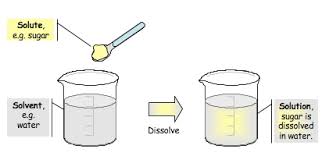
The ability of sugar to dissolve in water is called

a)

malleability

b)

Density

c)

State

d)

solubility

5.
The water is ______ dense than the boat
a)
more
b)
less
6.
The blue ball has ________ mass than the red one.
a)
less
b)
more
7.

Which process changes a gas to a liquid?

a)

freezing

b)

evaporation

c)

melting

d)

condensation

8.

Which of the following statements is true about the arrangement of particles in matter?

a)

The particles in a gas are closer together than the particles in a liquid.

b)

The particles in a liquid are spread farther apart than the particles in a gas.

c)

The particles in a gas are spread farther apart than the particles in a solid.

d)

The particles in a solid are spread farther apart than the particles in a liquid.

9.
In which state does matter completely fill its closed container?
a)
Gas
b)
Liquid
c)
Solid
d)
Ice
10.
Which state of matter has a fixed shape and volume and it's molecules move very slowly?
a)
Liquid
b)
Gas
c)
Solid
d)
Plasma
11.
What two types of measurements make up DENSITY? 
a)
Mass and Volume
b)
Temperature and Mass
c)
Grams and Centimeters
d)
Volume and Weight
12.
Look at this image.  Which object has the LOWEST density in water? How? 
a)
The Ping Pong Ball because it floats to the top 
b)
The bolt because it has sunk to the bottom
c)
The soda cap because it is not just full of air like the Ping Pong ball
13.
Frank has an eraser. It has a mass of 4g, and a volume of 2cm3. What is its density?
a)
8 g/cm3
b)
2 g/cm3
c)
1/2 g/cm3
d)
24 g/cm3
14.
What is the formula for density?
a)
density = mass x volume
b)
density = mass / volume
c)
density = mass + volume
d)
density = mass - volume
15.

A multicellular organism is made of

a)

one cell

b)

multiple cells

c)

unicellular cells

d)

there is no such thing as a "multicellular" organism

16.
a rigid supporting layer that surrounds the cells of plants and some other organisms
a)
cell membrane
b)
cell wall
c)
 nucleus
d)
cytoplasm
17.
In cells a large oval organelle that contains the cells genetic material in the form of DNA and controls many of the cells activities
a)
organelle
b)
ribosome
c)
cell wall
d)
nucleus
18.
What is found in both plant and animal cells but is much larger in plant cells?
a)
Nucleus
b)
Mitochondrion
c)
Chloroplast
d)
Vacuole
19.
What is the name of the genetic material that is inside the nucleus?
a)
ER
b)
ATP
c)
YOLO
d)
DNA
20.

The cell membrane...

a)

is like a wall that blocks everything from going into the cell

b)

controls what can go into or out of a cell

c)

is hard and rigid, and gives the cell its shape, like an exoskeleton

21.

Which part of the cell CONTROLS everything that happens in the cell?

a)

mitochondria

b)

nucleus

c)

cell membrane

d)

vacuole

22.

Which part of the cell STORES water and minerals?

a)

mitochondria

b)

nucleus

c)

cell membrane

d)

vacuole

23.

Chloroplasts...

a)

are NOT in animal cells

b)

are always in animal cells

c)

are sometimes in animal cells, and sometimes in plant cells

24.

Where does PHOTOSYNTHESIS happen in plants?

a)

in the nucleus

b)

everywhere in the cell

c)

in the cytoplasm

d)

in the chloroplasts

25.

What instrument do you need to use to see cells?

a)

A microscope

b)

A telescope

c)

A periscope

26.
When light bounces back it is _____
a)
Reflected
b)
Refracted
c)
Absorbed
d)
Optical Density
27.
........... – the angle between the normal and the reflected ray.
a)
Angle of incidence
b)
Angle of reflection
c)
Angle of coincidence
d)
Angle of direction
28.
What is reflection?
a)
Reflection is the bouncing  of light off the surface that it strikes on.
b)
Reflection is the absorbing of light off the surface that it strikes on.
c)
Reflection is the bending of light off the surface that it strikes on.
d)
Reflection is the scattering of light off the surface that it strikes on.
29.
........... – the angle between the normal and the incident ray.
a)
Angle of incidence
b)
Angle of reflection
c)
Angle of coincidence
d)
Angle of direction
30.
The imaginary line perpendicular to a reflecting surface is called _____.
a)
crooked line
b)
parallel line
c)
angular line
d)
normal line
31.

In the diagram, which letter represents the angle of incidence?

a)

A

b)

B

c)

C

d)

D

32.
Law of reflection state that - The angle of incidence is .................. to the angle of reflection.
a)
equal
b)
double
c)
half
33.
MCQ 08
If a capital letter R is seen in an ordinary mirror, what does it look like?
a)
A
b)
B
c)
C
d)
D
34.
MCQ 020
Which diagram shows the correct image of the key in a plane mirror?
a)
A
b)
B
c)
C
d)
D
35.

If the man is 4 m from the mirror, his image is how far from the mirror?

a)

2 m

b)

4 m

c)

8 m

36.

The man's image appears to be-

a)

upright

b)

inverted

c)

alive

d)

moving at a different rate

37.

The man's image appears to be-

a)

real

b)

virtual

c)

singing about who they are inside

d)

looking for a way out

38.

The man's image appears to be-

a)

larger

b)

smaller

c)

same size

d)

laughing at him

39.

The center of an atom is known as the

a)

nucleus

b)

electron cloud

c)

neutron cloud

d)

mass circle

40.
Protons have this type of charge
a)
positive
b)
negative
c)
neutral - no charge
41.
A particle that orbits around the nucleus is a(n)...
a)
Proton
b)
Neutron
c)
Electron
d)
Quark
42.

What does the nucleus of an atom contain?

a)

Electrons and neutrons

b)

Protons and neutrons

c)

Neutrinos and positrons

d)

Electrons and megatrons

43.
What are the 3 subatomic particles that make-up the atom?
a)
protons, neutrons, and isotopes
b)
neutrons, isotopes, and electrons
c)
positives, negatives, and electrons
d)
protons, neutrons, and electrons
44.
Neutrons have this type of charge
a)
positive
b)
negative
c)
neutral - no charge
45.
The atomic number of an atom is the number of 
a)
protons in its electron cloud
b)
protons in its nucleus
c)
neutrons in its nucleus
d)
electrons and neutrons in the nucleus
46.
Electrons have this type of charge
a)
positive
b)
negative
c)
neutral - no charge
47.

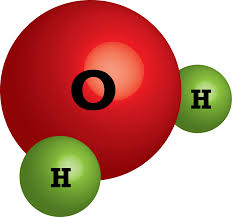
How many atoms are in this molecule?

a)

1

b)

2

c)

3

d)

4

48.
Which letter represents a proton?
a)
A
b)
B
c)
C
d)
D
49.
Which letter represents a neutron?
a)
A
b)
B
c)
C
d)
D
50.

Subatomic particles with a negative charge

a)

Electrons

b)

Neutrons

c)

Protons

d)

Quarks

51.

These are found in the nucleus and have a neutral charge.

a)

proton

b)

electron

c)

neutron

52.

How many protons does sulfur have?

a)

32

b)

16

c)

48

d)

12

53.
How many electrons does potassium K contain? (click to see image)
a)
19
b)
39
c)
20
d)
40
54.

How many neutrons does a Hydrogen atom have?

a)

1

b)

2

c)

3

d)

0

55.
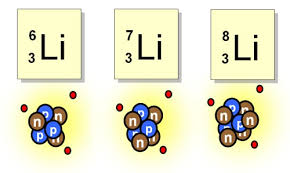
How many neutrons does the isotope of lithium have?
a)
8
b)
3
c)
4
d)
5
56.
which atom has  4 neutrons?
a)
Li-6
b)
Li-7
c)
Li-8
d)
they have the same # of neutrons
57.

Which separation technique is used to obtain pure water from seawater?

a)

Simple distillation

b)

Filtration

c)

Chromatography

d)

Evaporation

58.

For paper chromatography to work,

a)

the dyes must have different boiling points.

b)

the dyes must have different solubilities in the solvent.

c)

the starting line on the chromatogram must be drawn using pen.

d)

the starting line must be below the level of the solvent.

59.

During filtration, the solid that is trapped in the filter paper is called the (a)  

60.

During filtration, the liquid that has passed through the filter paper is called the (a)  

61.

Name the separation technique

a)

Chromatography

b)

Filtration

c)

Distillation

d)

Evaporation

62.

What does the boiling chips do?

a)

Stop water from boiling

b)

Maintain the temperature of the mixture

c)

Smoothen the boiling

d)

Condense the hot vapour

63.

In a salt water solution ...

a)

Salt is the solute and water is the solvent

b)

Salt is the solvent and water is the solute
64.

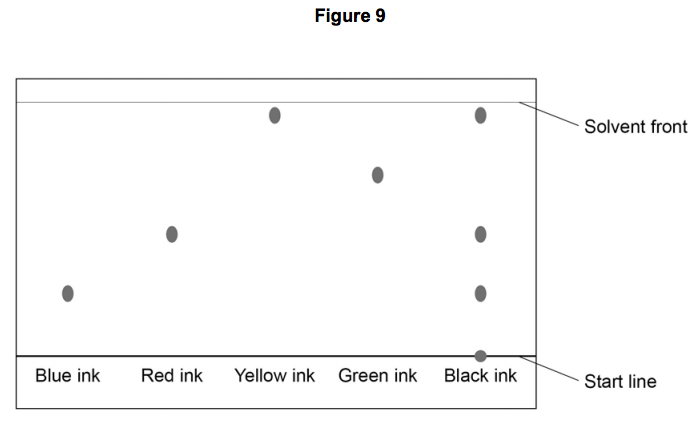
Which ink is most soluble?

a)

Blue

b)

Red

c)

Yellow

d)

Green

65.

Which ink is a mixture?

a)

Blue

b)

Red

c)

Yellow

d)

Black

66.

Which ink is a mixture?

a)

Blue

b)

Red

c)

Yellow

d)

Black

67.

Carbon

a)

CA

b)

C

c)

Ca

d)

Cn

68.

Sn

a)

tin

b)

sulfur

c)

iron

d)

sodium

69.

Zinc

a)

Z

b)

Zi

c)

ZN

d)

Zn

70.

Sulfur

a)

Sf

b)

Su

c)

Sr

d)

S

71.

Copper

a)

CU

b)

Cp

c)

Cu

d)

Cr

72.

Helium

a)

He

b)

Hl

c)

HE

d)

Hm

73.

Potassium

a)

P

b)

K

c)

Pt

d)

k

74.

The electronic configuration of Cl is

a)

2,8,8,1

b)

2,8,6

c)

2,8,8

d)

2,8,7

75.

Which of the following is the electronic Configuration of Sodium

a)

2,8

b)

2,8,1

c)

2,1,8

d)

8,1,2

76.

The atomic number tells you...

a)

the number of protons

b)

the number of neutrons

c)

the number of electrons