Wayground logo

Free Printable Worksheets

Font size

S
M
L
XL
Worksheets

Chemistry Midterm Review2

Total questions: 70

Worksheet time: 2hrs 32mins

Name
Class
Date
1.

Find the average atomic mass for Cl if 75.78% of Cl atoms are 35Cl with a mass of 34.96885271 amu and 24.22% are 37Cl with a mass of 36.96590260 amu. (Round your answer to three decimal places.)

(a)  

2.

There are 2 isotopes of copper that occur naturally; 63Cu and 65Cu. The

63Cu atoms have a mass of 62.929601 amu and the 65Cu atoms have a mass of 64.927794 amu. What is the percent natural abundance for the 65Cu isotope? (Round your percentage to two decimal places and include the % symbol in your answer.)

(a)  

3.
24.1% of all the isotopes of a an element have a mass of 75.23 amu, 48.7% have a mass of 74.61 amu, and 27.2% have a mass of 75.20 amu.
What is the average mass of this element?
a)
74.92 amu
b)
24.97 amu
c)
75.01 amu
d)
74.51 amu
4.
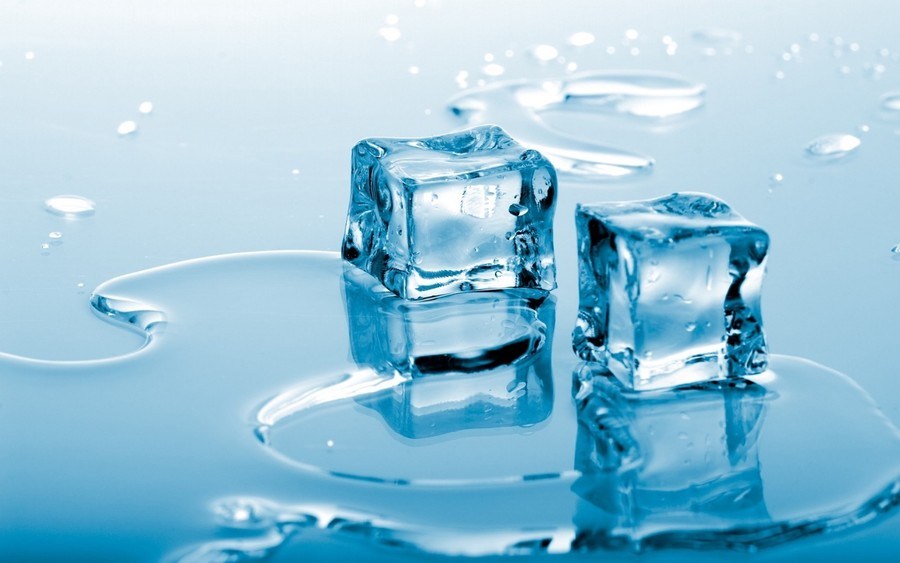
Water freezing into ice is an example of a...
a)
Physical Change
b)
Chemical Change
5.
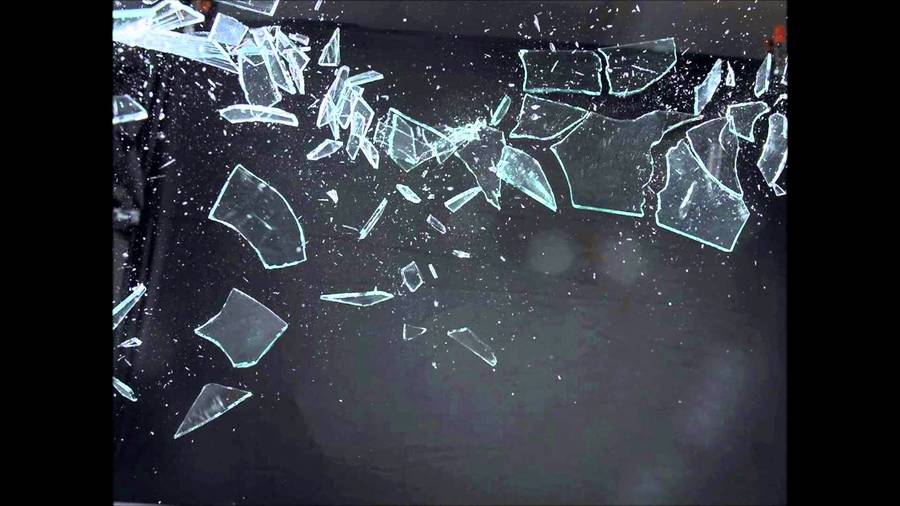
Chemical or Physical?  Glass breaking into tiny shards
a)
Chemical Change
b)
Physical Change
6.
Physical or Chemical Change?  Cutting an orange into wedges.
a)
Physical Change
b)
Chemical Change
7.
Contains only one kind of atom.
a)
Element
b)
Compund
c)
Mixture
8.
The air is a _________. 
a)
element 
b)
mixture 
c)
compound 
d)
energy 
9.
Examples are milk and gasoline.
a)
elements
b)
mixtures
c)
compounds
10.
Is sugar (C12H22O11) an element or a compound?
a)
Element
b)
Compound
11.
Which of the following is not a compound?
a)
HCl
b)
Cl
c)
NaCl
d)
CO2
12.
Name the following ionic compound: MgSO4
a)
magnesium sulfoxide
b)
magnesium sulfide
c)
magnesium sulfate
d)
magnesium oxide
13.
Name the following ionic compound: LiNO3
a)
lithium nitrate
b)
lithium III nitrate
c)
lithium nitride
d)
lithium oxide
14.
What is the charge on the hydroxide ion?
a)
0
b)
-1
c)
-2
d)
-3
15.

What is ionic bonding?

a)

Bonding that is the result of two elements sharing electrons

b)

Bonding involving only one atom

c)

Bonding that is the result of an exchange of electrons between a metal and a nonmetal

d)

Bonding between two metals

16.

Which particle is responsible for bonding?

a)

Protons

b)

Electrons

c)

Neutrons

d)

Nucleus

17.

This Lewis Dot Structure for water is correct

a)

True

b)

False

18.

Water (H2O) is...

a)

Ionic

b)

Covalent

19.

Potassium Sulfate (K2SO4) is...

a)

Ionic

b)

Covalent

20.

Ammonium (NH4) is...

a)

Ionic

b)

Covalent

21.

The name for K2S is

a)

Dipotassium Sulfur

b)

Dipotassium Sulfide

c)

Potassium Sulfide

d)

Potassium Sulfur

22.

What is the correct formula for Calcium Oxide?

a)

CaO

b)

Ca2O

c)

CaO2

d)

CaO3

23.

What element has this electron configuration?

a)

hydrogen

b)

helium

c)

lithium

d)

beryllium

24.

What element has this orbital notation?

a)

lithium

b)

beryllium

c)

boron

d)

carbon

25.

What element has this electron configuration?

a)

helium

b)

lithium

c)

beryllium

d)

boron

26.

What element has this electron configuration?

a)

boron

b)

carbon

c)

nitrogen

d)

oxygen

27.

Which element is represented by this orbital notation?

a)

neon

b)

sodium

c)

magnesium

d)

aluminum

28.

Which of the following is the orbital notation for oxygen?

a)
b)
c)
d)
29.
How many electrons does Si contain? (click to see image)
a)
14
b)
28
c)
2
d)
None of these
30.
What element is represented in this Bohr Model? 
a)
Carbon
b)
Hydrogen
c)
Aluminum
d)
Lithium
31.
How many valence electrons are in Phosphorus?
a)
15
b)
4
c)
5
d)
31
32.
?
a)
Lithium
b)
Boron
c)
Carbon
d)
Neon
33.
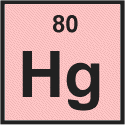
What is the atomic number of this element?
a)
4
b)
80
c)
79
d)
8
34.
What is the symbol for Potassium?
a)
P
b)
K
c)
Pb
d)
Pd
35.
What is the symbol for Carbon?
a)
C
b)
Ca
c)
Cl
d)
H
36.
What is the name of this element?
a)
Helium
b)
Rubidium
c)
Hydrogen
d)
Mercury
37.

On the periodic table, the PERIODS are

a)

the rows that go left to right.

b)

the columns that got top to bottom.

c)

the little spot at the end of a sentence.

38.

The metals are located

a)

to the left of the stair step.

b)

to the right of the stair step.

c)

on and around the stair step.

39.

The metalloids are located

a)

to the left of the stair step.

b)

to the right of the stair step.

c)

on and around the stair step.

40.

Metals are MOSTLY _____ at room temperature.

a)

solid

b)

liquid

c)

gas

41.

Nonmetals are MOSTLY _____ at room temperature.

a)

solid

b)

liquid

c)

gas

42.
How many elements are in C6H12O6?
a)
1
b)
2
c)
3
d)
4
43.

If Selenium (Se) is in Group 16, it will have

a)

16 Lewis dots

b)

6 Lewis dots

44.

The atomic number of this unknown element is

a)

small red numbers = 2 + 2 + 6 + 2 = 12 (Na, Sodium)

b)

large black numbers = 1 + 2 + 2 + 3 = 8 (O, Oxygen)

c)

all numbers 1 + 2 + 2 + 2 + 2 + 6 + 3 + 2 = 20 (Ca, Calcium)
45.
An element has two naturally occurring isotopes. One is 10.013 amu and is 19.9% abundant. The other is 11.01 amu and is 80.1% abundant. What is the average atomic mass? What element is it?
a)
9.012, Beryllium
b)
12.011, Carbon
c)
6.941, Lithium
d)
10.812, Boron
46.
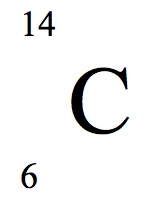
The photo above shows the isotopic notation for which isotope?
a)
Carbon 12
b)
Carbon 13
c)
Carbon 14
d)
Carbon 15
47.

What is the smallest unit of an element that retains its chemical properties?

(a)  
Choose from the below words
Atom
Molecule
Compound
Ion
48.

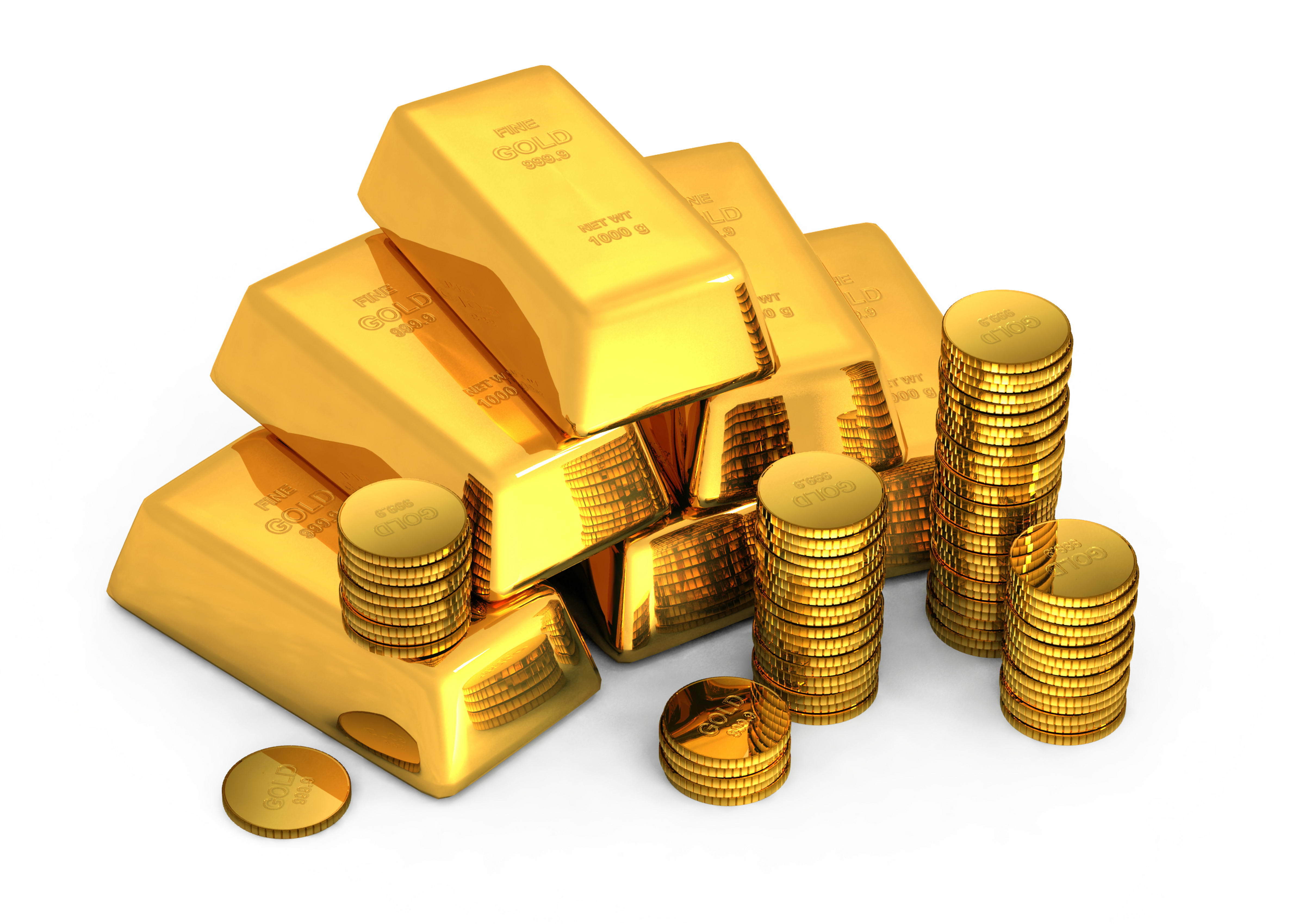
What is this?

a)

A mixture

b)

A compound

c)

An element

d)

A Solution

49.

Carbon is what type of matter?

a)
Element
b)
Compound
c)
Homogeneous Mixture
d)
Heterogeneous Mixture
e)

Moluecule

50.
 Which of the following is a pure substance?
a)
   tea
b)
   brass
c)
   ocean water
d)
 carbon dioxide
51.

Brittle

a)

metal

b)

nonmetal

c)

metalloid

52.
Carbon dioxide (CO2) contains how many atoms of oxygen?
a)
0
b)
1
c)
2
d)
3
53.

Which of these samples shown best represents an element?

a)

A

b)

B

c)

C

d)

D

54.

This picture represents which of the following?

a)

element

b)

compound

55.

Cations

a)

Gain electrons, has an overall positive charge

b)

Lose electrons, has an overall positive charge

c)

Lose electrons, has an overall negative charge

d)

Gain electrons, has an overall negative charge

56.
What is the percent by mass of oxygen in MgO?
a)
20%
b)
40%
c)
50%
d)
60%
57.
What is the percent by mass of sodium in NaCl?
a)
39%
b)
61%
c)
35%
d)
65%
58.
What is the percent by mass of calcium in CaF2 (gram-formula mass = 78 g/mol)?
a)
24%
b)
49%
c)
51%
d)
65%
59.

Who proposed the planetary model of the atom?

a)

J.J. Thomson

b)

James Chadwick

c)

Ernest Rutherford

d)

Niels Bohr

60.

Which subatomic particle was discovered first?

a)

Neutron

b)

Proton

c)

Quark

d)

Electron

61.

What below is NOT considered matter?

a)

Carbon atoms

b)

Gravity

c)

Bacteria

d)

Air

62.

Matter is anything that.....

a)

Has mass and takes up space

b)

Has mass and is visible

c)

Takes up space and has energy

d)

Has energy and is visible

63.

What is an example of a physical property?

a)

Silver is shiny

b)

Alcohols are flammable

c)

Alkali metals are reactive with water

d)

Acids are sometimes corrosive

64.

Is a salad a homogeneous or a heterogeneous mixture?

a)

homogeneous

b)

heterogeneous

65.

Which kind of reaction absorbs heat?

a)

Endothermic

b)

Exothermic

66.

Which of these elements is a nonmetal?

a)

Manganese

b)

Aluminum

c)

Beryllium

d)

Sulfur

67.
What is the ability of a substance to be pulled into a thin strand?
a)
Malleability
b)
Ductility 
c)
Conductivity
d)
Solubility
68.
Nitrogen will ____ valence electrons when forming an ionic bond.
a)
gain 1
b)
lose 1
c)
gain 3
d)
lose 3
69.
Identify Gallium Sulfate
a)
GaSO4
b)
Ga2(SO4)3
c)
Ga3(SO4)2
d)
Ga2SO4
70.
What is the name of Mg(OH)2?
a)
Magnesium Hydride
b)
Magnesium Dihydride
c)
Magnesium Dihydroxide
d)
Magnesium Hydroxide