wayground logo

Free Printable Worksheets

NEW

Font size

S
M
L
XL
Worksheets

Unit 1 Review

Total questions: 65

Worksheet time: 33mins
Name
Class
Date
1.
What is a generator?
a)
A system that turns energy from movement into electricity
b)
A machine that makes an engine run
c)
A system that naturally makes electricity
d)
A system that turns electricity into magnets
2.
Which of these are INPUTS for a generator?
a)
Electricity
b)
Magnets
c)
Movement
d)
Coil
3.
Which of these are OUTPUTS for a generator
a)
Electricity
b)
Magnets
c)
Movement
d)
Coil
4.
What is a component?
a)
The parts within a system that work together
b)
The things that go into a system
c)
The things that go out of a system
d)
The outer limits of a system
5.
What are inputs?
a)
The parts within a system that work together
b)
The things that go into a system
c)
The things that go out of a system
d)
The outer limits of a system
6.
What are outputs?
a)
The parts within a system that work together
b)
The things that go into a system
c)
The things that go out of a system
d)
The outer limits of a system
7.
What is a boundary?
a)
The parts within a system that work together
b)
The things that go into a system
c)
The things that go out of a system
d)
The outer limits of a system
8.
Which of these is an example of an INPUT?
a)
Electricity goes into a TV and is used to make it turn on
b)
A soda comes out of a vending machine
c)
A factory has a conveyer belt in it
d)
A swamp has a fence around it
9.
Which of these is an example of an OUTPUT?
a)
Electricity goes into a TV and is used to make it turn on
b)
A soda comes out of a vending machine
c)
A factory has a conveyer belt in it
d)
A swamp has a fence around it
10.
Which of these is an example of a COMPONENT?
a)
Electricity goes into a TV and is used to make it turn on
b)
A soda comes out of a vending machine
c)
A factory has a conveyer belt in it
d)
A swamp has a fence around it
11.
Which of these is an example of a BOUNDARY?
a)
Electricity goes into a TV and is used to make it turn on
b)
A soda comes out of a vending machine
c)
A factory has a conveyer belt in it
d)
A swamp has a fence around it
12.
What happens if there is no movement in a generator?
a)
No electricity is made
b)
More electricity is made
c)
Less electricity is made
13.
What is electricity?
a)
A form of energy cuased by the movement of electrons
b)
A group of parts working together as a whole
c)
Does not use electrical power
14.
What does off-the-grid mean?
a)
A form of energy cuased by the movement of electrons
b)
A group of parts working together as a whole
c)
Does not use electrical power
15.
What is a system?
a)
A form of energy cuased by the movement of electrons
b)
A group of parts working together as a whole
c)
Does not use electrical power
16.
What type of force is exerted between a north and south pole?
a)
Attraction
b)
Repulsion
c)
Gravitational
17.
What type of force is exerted between a north and a north pole?
a)
Attraction
b)
Repulsion
c)
Gravitational
18.
What type of force is exerted between a south pole and a south pole?
a)
Attraction
b)
Repulsion
c)
Gravitational
19.
Which of these is NOT magnetic?
a)
Paper clip
b)
Nail
c)
Staple
d)
Toothpick
20.
True or False: Every metal is attracted to magnets.
a)
True
b)
False
21.
True or False: A magnet can only have one pole
a)
True
b)
False
22.
Where are the strongest magnetic forces found on a magnet?
a)
Poles of the magnet
b)
Middle of the magnet
c)
Beneath the magnet
d)
Above the magnet
23.
Why does a compass needle always point north?
a)
North is always up
b)
It points to Earth's south magnetic pole
c)
It points to Earth's north magnetic pole
d)
It spins randomly
24.
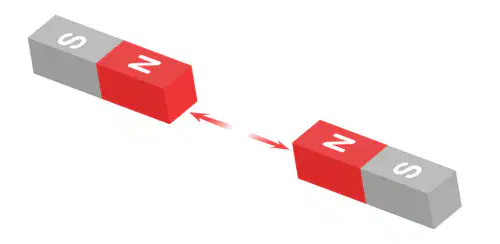
What happens when you bring these magnets close to each other?
a)
Attraction
b)
Repulsion
c)
Turning
d)
Gravity
25.
What happens when you bring these magnets close to each other?
a)
Attraction
b)
Repulsion
c)
Turning
d)
Gravity
26.
Iron, Nickel, and Cobalt are all _____ materials.
a)
Sparkly
b)
Magnetic
c)
Cold
27.
What is a unique property of magnets?
a)
It can "zap" you
b)
It can push or pull objects without touching
c)
It will always be dark and cold
d)
It will fall to the ground when you let go of it
28.
How is the earth similar to a magnet?
a)
It has north and south poles
b)
It extends into space
c)
It is shaped like a horseshoe
29.
What is a unique characteristic of magnetic fields?
a)
It is strongest in the middle
b)
It is an invisible area around the magnet
c)
It is stronger at the north pole than south pole
d)
It is stronger at the south pole than north pole
30.
True or False: When two magnets are close to each other, their magnetic fields will always interact.
a)
True
b)
False
31.
True or False: Like poles attract and opposite poles repel.
a)
True
b)
False
32.
True or False: Every magnet has a north and south pole.
a)
True
b)
False
33.
What is NOT a characteristic of magnets?
a)
Has two poles
b)
Exerts attractive and repsulive forces
c)
Has a magnetic field around it
d)
Can be turned on and off
34.
True or False: Earth's magnetic pole is in the same place as its geographic pole.
a)
True
b)
False
35.
True or False: Strong magnetic fields are shown with lines far apart from each other.
a)
True
b)
False
36.
A magnetic force between two magnets gets weaker the more ___ is between them.
a)
Distance
b)
Attraction
c)
Metal
37.
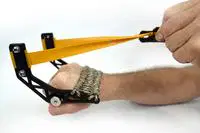
What type of energy is in the picture?
a)
Kinetic
b)
Potential
38.
The faster an object moves, the ___ kinetic energy it has.
a)
More
b)
Less
c)
Impossible to tell
39.
What kind of energy is moving a skateboard?
a)
Kinetic
b)
Potential
40.
A skier stopped at the top of a mountain is an example of...
a)
Kinetic Energy
b)
Potential Energy
41.
What is energy?
a)
Something that takes up space
b)
Anything that has mass
c)
Ability to do work or cause change
d)
Ability to attract or repel
42.
When does an object have NO kinetic energy?
a)
At rest
b)
With no electrical charge
c)
When its moving very slowly
43.
What is kinetic energy?
a)
Energy an object has due to its motion
b)
Energy an object has due to its chemical composition
c)
Energy an object has due to its atomic structure
d)
Energy an object has at rest
44.
What is potential energy?
a)
Energy an object has at rest
b)
Energy an object has due to its chemical composition
c)
Energy an object has due to its atomic structure
d)
Energy an object has due to its motion
45.
In a generator, kinetic energy is transformed into...
a)
Motion
b)
Potential Energy
c)
Electricity
d)
Solar Power
46.
True or False: Energy can be created but not destroyed.
a)
True
b)
False
47.
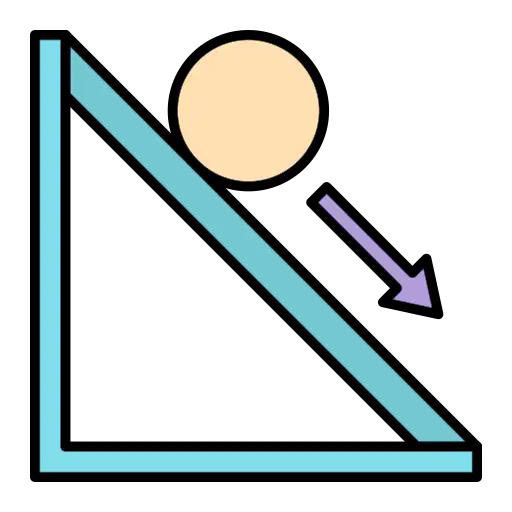
What type of energy is in the picture?
a)
Kinetic
b)
Potential
48.
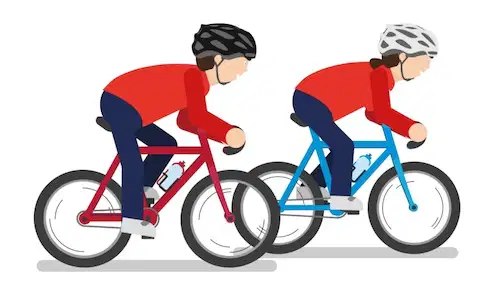
What type of energy is in the picture?
a)
Kinetic
b)
Potential
49.
What type of energy is in the picture?
a)
Kinetic
b)
Potential
50.
Which of these is NOT an example of potential energy?
a)
Running down a hill
b)
A diver on the edge of a diving board
c)
Holding a basketball
51.
When is potential energy transformed into kinetic energy?
a)
When its put into motion
b)
When it is at rest
c)
When it stops
d)
When it is in a higher spot
52.
Energy can be ___ and stored, but cannot be created or destroyed.
a)
Transformed
b)
Gained
c)
Lost
53.
What kind of energy is stored energy?
a)
Kinetic
b)
Potential
54.
What kind of energy is motion?
a)
Kinetic
b)
Potential
55.
What kind of energy is in a rock at the edge of a cliff?
a)
Kinetic
b)
Potential
56.

During an investigation on energy, Seth rolls marbles of four different masses down a ramp.

Which size marble will have the greatest kinetic energy when it reaches the bottom of the ramp?

a)

2 grams

b)

3 grams

c)

5 grams

d)

6 grams

57.
The faster an object moves, the ________ kinetic energy it has. 
a)
more
b)
less
c)
none of the above
d)
all of the above 
58.
What would have the greatest kinetic energy?
a)
A car driving down a hill.
b)
A person running down a hill. 
c)
A ball rolling down a hill. 
59.

The statement that "the energy within a system remains constant and cannot be created or destroyed, only transformed" best sums up _________.

a)

Something Mr. Lance likes to say.

b)

Life

c)

Law of Conservation of Energy

d)

The scientific method

e)

Newton's Third Law

60.

Potential energy depends on the ________ and ________ of the object. 

a)
Height and mass
b)
Friction and movement
c)
Mass and Movement
d)
Height and Friction 
61.

What two factors affect an object's kinetic energy?

a)

area and volume

b)

mass and weight

c)

weight and height

d)

mass and speed

62.

If all objects are moving as the exact same speed, which would have the greatest kinetic energy?

a)

tennis ball

b)

football

c)

notebook

d)

box of 20 textbooks

63.
As mass increases, KE ...
a)
increases
b)
decreases
c)
stays the same
64.

As the speed of an object decreases its KE will...

a)
increase
b)
decrease
c)
stay the same
65.
Why is it harder to stop a four-person bobsled than a three-person bobsled?
a)
the four-person sled has more KE
b)
the four-person sled has less KE