
 Worksheets
Quarter 1 Exam Review (Part 1)
Total questions: 50
Worksheet time: 1hrs 4mins
Which statement describes ALL living things?
They are composed of one or more cells.
They must reproduce sexually.
They have organ systems to carry out the processes of life.
They are capable of making their own food.

The following list represents characteristics of a living thing :
made of cells, has lungs, can reproduce
made of cells, grows and develops, uses energy
has similar chemicals, makes noises, made of cells
Which item listed is NOT a characteristic of life?
adjusting to stimuli
getting and using energy
growing and developing
breathing
Maintaining a stable internal
environment is called
homeostasis
equilibrium
balance
evenness
Green plants produce their own food through the process of photosynthesis. Which characteristic of life does this represent?
All living things use energy
All living things contain cells
All living things maintain homeostasis
All living things grow
Over three years, Tim's height has increased from 5'4" to 5'11". Which characteristic of life does this represent?
All living things contain cells
All living things maintain homeostasis
All living things use energy
All living things grow
Over many hundreds of years, a population of rabbits living in the woods adapts to its surrounding with brown fur. Which characteristic of life does this represent?
All living things adapt to their environment
All living things grow
All living things use energy
All living things have cells
What is the monomer of a lipid?
Amino Acid
Fatty Acid
Monosaccharides
Glucose
Which macromolecule is used as our main source of energy?
Lipids/Fats
Nucleic Acids
Proteins
Carbohydrates
Which macromolecule stores energy?
Carbohydrates
Proteins
Lipids/Fats
Nucleic Acids

Enzymes are an example of
Lipids
Carbohydrate
Protein
Nucleic Acid
A scientist observes membrane-bound organelles in a cell. What kind of cell is it?
bacterium
virus
prokayote
eukaryote
Select all of the following that belong to the domain Eukarya (Eukaryota).
protists
animals
bacteria
plants
thermophiles

Here is a table that shows the level of classification for a dog. What is the correct label for X?
Domain
Genus
Order
Phylum
Here is a table that shows the level of classification for a dog. What is the correct label for Y?
Domain
Genus
Order
Phylum
Here is a table that shows the level of classification for a dog. What is the correct label for Z?
Domain
Genus
Order
Phylum
The scientific name for a human is Homo sapiens. Select the two levels of classification this name represents.
family
order
species
phylum
genus
Two organisms mate and produce infertile offspring (their babies can't have babies). What is the best explanation for their inability to reproduce?
The parents are of a different genus and a different species
The parents are of a different species, but the same genus
The parents are of the same genus and the same species
The parents are of the same speices, but different genus
How are organisms classified as Eukarya different from organisms classified as Archaea and Bacteria?
They are all multicellular
They all reproduce asexually
They all produce their own food
They all have membrane-bound nuclei

What is the correct scientific name for the organism in the table?
Reptilia testudines
Chordata reptilia
Emydidae terrapene
Terrapene carolina
Independent variable
Dependent variable
Conclusion
The type of variable that responds to the experiment and is what you measure or count to determine if your hypothesis is true.
Thomas tests different types of liquids to see which will grow his plants the most. He has water, soda, milk, and no liquid at all. What is the control group?
the one with water
the one with soda
the one with milk
the one with no liquid
Cindy wanted to find out how the amount of sunlight affects the growth of plants. She placed a tomato plant in 6 identical 10 inch pots with the same amount and type potting soil. She watered them ¼ cup each day. 3 plants were placed under a cardboard box and 3 plants were placed in the sunlight. She measured the growth of the plant each week for three weeks.
What is the dependent variable?
Using the same type of plant
Each plant was placed in a 10 inch pot
The growth of the plant
3 plants in the sunlight and 3 plants under a box
Cindy wanted to find out how the amount of sunlight affects the growth of plants. She placed a tomato plant in 6 identical 10 inch pots with the same amount and type potting soil. She watered them ¼ cup each day. 3 plants were placed under a cardboard box and 3 plants were placed in the sunlight. She measured the growth of the plant each week for three weeks.
What is the independent variable?
Using the same type of plant
Each plant was placed in a 10 inch pot
The growth of the plant
3 plants in the sunlight and 3 plants under a box
Mrs. Smith gave an exam on which one student received an A, three students received B's, three students received C's, and one student received a D
qualitative
quantitative
The sample with the baking soda appeared bubbly.
Qualitative data
Quantitative data
The patient complained of aches and pains.
Qualitative data
Quantitative data
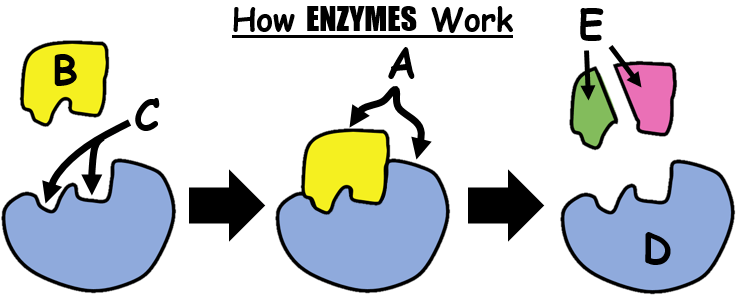
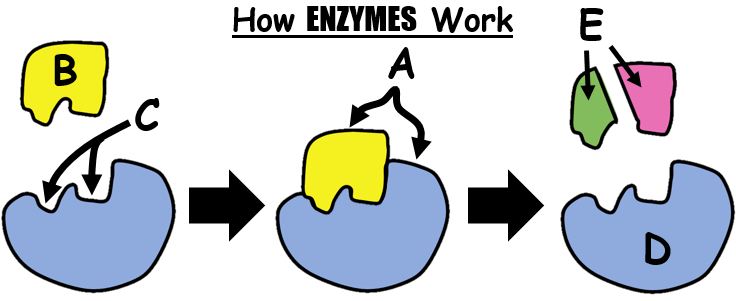
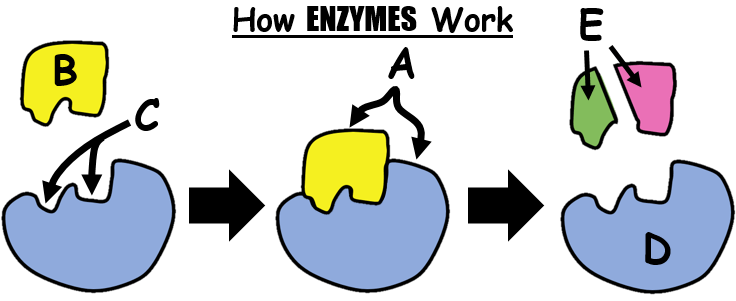
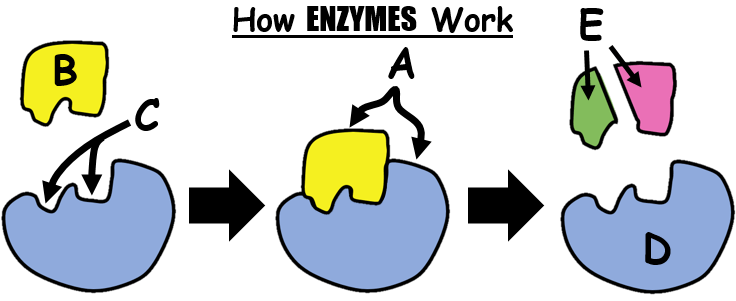
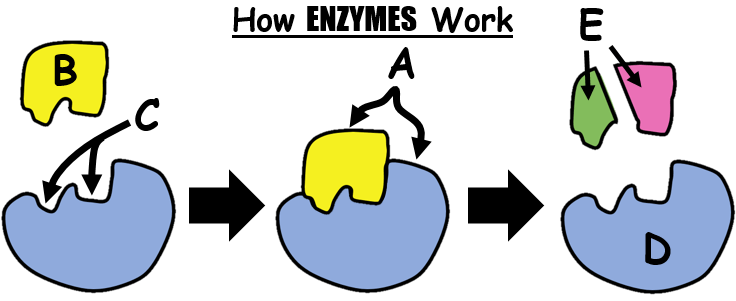
Enzymes are specific. This means that an enzyme only works with molecules that are....
the right size and shape
broken down already
present in water
too big for the body to handle
The ___(1)___ of molecules is determined by its ____(2)____. Therefore, (1) is dependent on (2)
1. Structure
2. Function
1. Function
2. Structure
1. Function
2. Size
1. Size
2. Structure

