wayground logo

Free Printable Worksheets

NEW

Font size

S
M
L
XL
Worksheets

4th Grade Big Idea 6 Quizizz

Total questions: 41

Worksheet time: 2hrs 12mins

Name
Class
Date
1.

What is a nonrenewable resource?

a)

water

b)

wind

c)

coal

d)

biomass

2.

Nonrenewable resources are also known as what?

a)

Fossil Fuels

b)

Renewable

c)

Solar Energy

d)

Hydroelectric Energy

3.

Where does most of Earth`s energy come from?

a)

The sun

b)

Mars

c)

Wind

d)

Water

4.
This renewable energy source requires a sunny climate.
a)
Solar
b)
Hydro
c)
Wind
d)
Geothermal
5.

This energy source requires the movement of water.

a)

hydro

b)

biomass

c)

geothermal

d)

solar

6.
Why is solar energy considered renewable energy?
a)
It's cheaper than fossil fuels
b)

The sun's energy will not run out in our lifetime

c)
Solar energy recharges batteries
d)

The sun's energy will run out in our lifetime

7.

What is one benefit of using renewable energy resources?

a)

renewable energy resources are inexpensive.

b)

solar power is available everywhere.

c)

renewable energy resources require less equipment to operate.

d)

The resources can be replenished within a short amount of time.

8.

Wind, moving water, sunlight, and heat from Earth’s interior are sources of

a)

Alternative energy

b)

Geothermal energy

c)

Renewable energy

d)

Ocean thermal energy

9.
Wind Energy is...
a)
 Energy that comes from harnessing the movement of the air
b)
Energy that comes from the Sun
c)
A source of renewable energy, such as solar, wind, or geothermal energy
d)
Fuel from plant material
10.
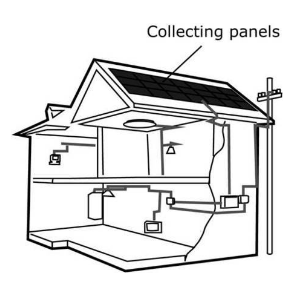
The house illustrated here uses panels on the roof to collect a natural resource and convert it into electricity that can be used.
Which alternative energy source does this house use?
a)
Water
b)
Wind
c)
Solar
d)
Geothermal
11.
Heat transferred from beneath the surface of Earth and used to produce energy for human use is...
a)
Hydropower
b)
Wind Energy
c)
Geothermal Energy
d)
Solar Energy
12.

All of the following are considered renewable energy sources EXCEPT –

a)

Wind

b)

Coal

c)

Water

d)

Solar

13.

What mineral property observes the color of powder a mineral leaves behind?

a)
Gas
b)
Fracture
c)
Streak
d)
Liquid
14.
A naturally formed, inorganic solid that has a crystalline structure is a
a)

Phosphate

b)

Rock

c)
Mineral
d)
Element
15.
_____ is how light bounces off of a mineral.
a)
Color
b)
Hardness
c)
Luster 
d)
Streak
16.
How much a mineral resists scratching is
a)
Streak
b)
Fracture
c)
Hardness
d)
Cleavage
17.
Which of the following must be true for a substance to be considered a mineral?
a)
It must be organic
b)
It must be glassy
c)
It must be a gem
d)
It must be naturally occurring
18.

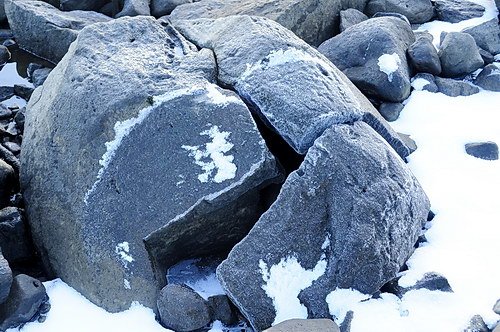
Which mineral property is being shown here?

a)

Luster

b)

Hardness

c)

Cleavage

d)

Streak

19.
The tendency for a mineral to split along specific planes of weakness to form, smooth flat surfaces is called...
a)
Cleavage
b)
Fracture
c)
Crystallization
d)
Habit
20.
What is the scale that is used to indicate hardness of a mineral?
a)
Red Scale
b)
Moh's scale
c)
Einstein's Scale
d)
Fracture Scale
21.

______________ is the least reliable clue of a minerals identity because trace elements could throw off its identity.

a)

Streak

b)

Color

c)

Cleavage

d)

Hardness

22.
Which type of rock is made when magma cools?
a)
sedimentary
b)
igneous
c)
metamorphic
d)

Limestone

23.
Sedimentary rocks are made when layers of _____________ are pressed together.
a)
water
b)
sediments
c)
fossils
d)
limestone
24.
Which type of rock most likely contains fossils?
a)
sedimentary
b)
igneous
c)
metamorphic
d)

Granite

25.
Which type of rock is formed when heat or pressure changes it?
a)
sedimentary
b)
igneous
c)
metamorphic
d)

Phosphate

26.
What do all rocks contain?
a)
salt
b)
magma
c)
sediments
d)
minerals
27.

Which of the following would be a clue that a rock is igneous?

a)

It has crystals.

b)

It has a complete fossil in it.

c)

It has bands.

d)

It is very soft.

28.

Which of the following would be a clue that a rock is sedimentary?

a)

It has gas bubbles throughout.

b)

It has small particles stuck together.

c)

It is very hard.

d)

It came from a volcano

29.

Which of the following would be a clue that a rock is metamorphic?

a)

It has complete fossils in it

b)

It has gas bubbles

c)

It's very soft

d)

It has ribbon-like layers or bands

30.

This type of rock is formed when magma or lava cools and hardens.

a)

Sedimentary

b)

Igneous

c)

Metamorphic

d)

Bedrock

31.

Intense heat and pressure within the Earth's surface forms this type of rock.

a)

Igneous

b)

Metamorphic

c)

Sedimentary

d)

Coal

32.
Wind, water, and ice breaking down rock is called
a)
Erosion
b)
Deposition
c)
Compaction
d)
Weathering
33.
What are the 3 major types of rocks?
a)
Igneous, Metamorphic, Sedimentary
b)
Metamorphic, Igneous, Cementation
c)
Brown, Red, Gray
d)
Streak, Hardness, Breakage
34.

The process by which rocks are broken down

a)

Weathering

b)

Deposition

c)

Erosion

d)

Sedimentation

35.
How does freezing water cause the weathering of rocks?  The freezing water—
a)
keeps the rocks in place.
b)
makes the rocks last longer.
c)
expands cracks and breaks rocks.
d)
causes rocks to fall in landslides.
36.
The process by which water, ice, wind, or gravity moves weathered rock and soil from one place to another.
a)
Weathering
b)
Erosion
c)
Deposition
d)
Crop Rotation
37.

How do plants weather rocks?

a)

During photosynthesis

b)

When the plant moves water from the roots to the leaves, the rock breaks

c)

When roots grow into cracks of rocks and expand, the rock breaks

d)

Plants don't weather rocks

38.
What words do "break it, take it, drop it" match?
a)
weathering, erosion, deposition
b)
sediment, delta, deposition
c)
mechanical weathering, chemical weathering
d)
Erosion, mass wasting, sediment
39.
The diagrams shows a rock with water trapped in the cracks during the day and at night. 

Which statement best explains why this process results in weathering?
a)
frozen water acts as a solute
b)
water expands when it freezes
c)
the mass of water increases when it freezes
d)
frozen water dissolves most types of rock
40.
A cliff formed near the ocean.  Which statement best describes how this cliff formed?
a)
Warm air melted the rock.
b)
Sun rays evaporated the rock.
c)
Ocean waves washed away rock.
d)
Plant roots pushed away the rock.
41.
Which of these is an example of erosion?
a)
Light shining onto a mountain.
b)
Rain breaking down rocks on a mountain into smaller pieces. 
c)
Wind blowing away sediment to a new place on the mountain.
d)
All of the above.