wayground logo

Free Printable Worksheets

NEW

Font size

S
M
L
XL
Worksheets

Sci 8 - Unit 1:Intro to Sci 8 Review

Total questions: 70

Worksheet time: 35mins

Name
Class
Date
1.

Study of life

a)

biology

b)

chemistry

c)

physics

d)

earth science

2.

A zoologist studies about ________.

a)

plants

b)

human body

c)

ocean

d)

animals

3.

Which of the following would study viruses?

a)

bacteriology

b)

marine biology

c)

virology

d)

entomology

4.

A paramecium will move away from direct light.  This is an example of which characteristic of life?

a)

respond to stimuli

b)

maintain homeostasis

c)

made of cells

d)

get energy

5.

A turtle lays a hundred of eggs.

a)

use energy

b)

grow and develop

c)

reproduce

d)

evolve

6.

A human body is made up of many different types of cells.

a)

have DNA

b)

use energy

c)

made of cells

d)

respond to stimuli

7.

The plant  height has increased from 5’1” to 5’3” in two weeks.

a)

maintain homeostasis

b)

grow and develop

c)

evolve

d)

respond to stimuli

8.

The neck of the giraffe changed over time to adapt to the environment

a)

grow and develop

b)

made of cells

c)

use energy

d)

evolve

9.

What characteristic best explains:  The tendency of an organism to maintain a stable internal balance such as temperature or the pH of blood.

a)

grow and develop

b)

maintain homeostasis

c)

respond to stimuli

d)

evolve

10.

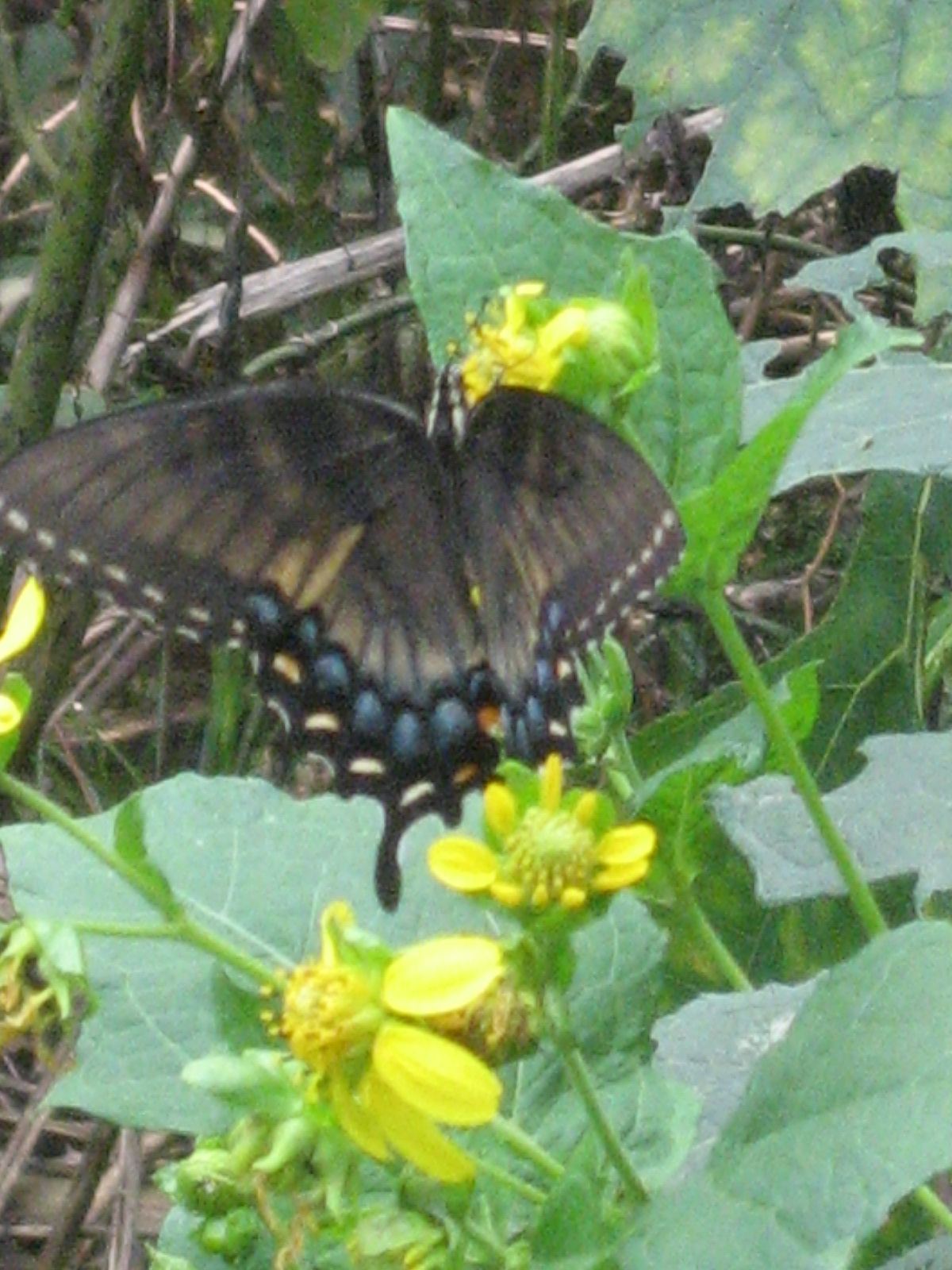
Which characteristic of living things is represented in the picture?

a)

Respond to stimuli

b)

Grow and develop

c)

Evolution

d)

Made of cells

11.

Identify the characteristic: When a dog is too hot, he will sweat through his paws and pant to cool himself down.

a)

Reproduce

b)

Made of cells

c)

Share similar chemicals

d)

Homeostasis

12.
What is an organism that consists of one cell?
a)
unicellular
b)
multicellular
c)
nucleus
d)
organelle
13.
______________________ is the scientific term for a living thing.
a)
organism
b)
cell
c)
photosynthesis
d)
DNA
14.
Type of reproduction that produces two genetically identical offspring from one parent is _________________.
a)
Sexual
b)
Asexual
c)
reproduction
d)
homeostasis
15.
Every organism must pass on its ________________, stored in DNA.
a)
metabolism
b)
response
c)
growth
d)
genetic code
16.
How do consumers get the energy they need to survive?
a)
photosynthesis
b)
eating other organisms
c)
decomposing dead materials
d)
chemosynthesis
17.

A corn field absorbs sunlight to produce glucose.

a)

All living things are made of cells

b)

All living things respond to environmental stimuli

c)

All living things acquire and use energy

d)

All living things are based on a universal genetic code

18.

Is the image of living or nonliving material?

a)

living

b)

nonliving

19.

A rock

a)

Living

b)

Nonliving

20.

Lynx

a)

Living

b)

Nonliving

21.

Sunlight

a)

Living

b)

Nonliving

22.
Which terms best describe heterotrophs?
a)
Plants; producers
b)
Animals; producers
c)
Plants; consumers
d)
Animals; consumers
23.
Which terms best describe autotrophs?
a)
Plants; producers
b)
Animals; producers
c)
Plants; consumers
d)
Animals; consumers
24.
How many parents does asexual reproduction involve?
a)
one 
b)
two
c)
three
d)
four
25.
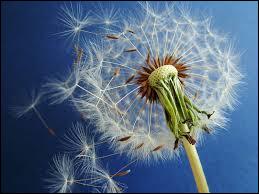
Dandelion, What kingdom does it belongs to?
a)
Plant Kingdom
b)
Animal Kingdom
c)
Fungi Kingdom
d)
Protista Kingdom
26.
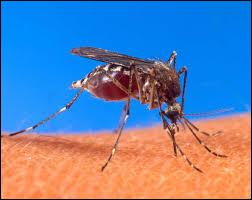
Mosquito  belongs to what kingdom?
a)
Animal Kingdom
b)
Plant Kingdom
c)
Fungi Kingdom
d)
Protista Kingdom
27.
Which of the following organisms are LEAST closely related?
a)
organisms that share a domain
b)
organisms that share a family 
c)
organisms that share a genus 
d)
organisms that share a species 
28.
The 8 levels of classification, most broad to most specific.
a)
Domain, Genus, Family, Order, Class, Phylum, Kingdom, Species
b)
Domain, Species, Kingdom, Genus, Phylum, Family, Class, Order
c)
Domain, Kingdom, Phylum, Class, Order, Family, Genus, Species
d)
Order, Kingdom, Species, Domain, Phylum, Family, Class, Genus
29.
Who first proposed binomial nomenclature as a way of classifying organisms?
a)
Carl Linnaeus
b)
Carl's Jr.
c)
Charles Darwin
d)
Henry Groseclose
30.
The science of describing, classifying, and naming living things is called:
a)
Geology
b)
Biology
c)
Taxonomy
d)
Chemistry
31.
The scientific name for an organism is made from the:
a)
class and family name
b)
genus and species name
c)
domain and kingdom name
d)
kingdom and phylum name
32.
The 2 kingdoms that make up Prokaryotes are?
a)
Animals and Plants 
b)
Protists and Fungi
c)
Archea and Bacteria
33.
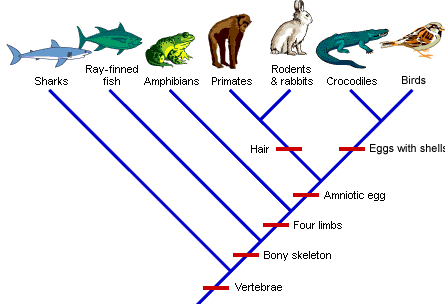
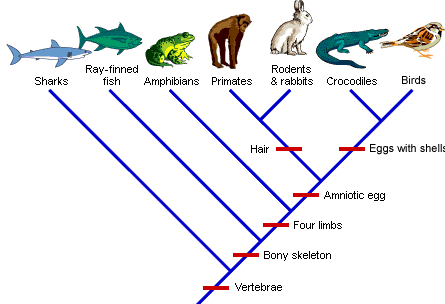
According to this cladogram, sharks are MOST closely related to which organism? 
a)
Amphibians
b)
Ray finned fish
c)
Crocodiles
d)
Birds
34.
Which two organisms have hair? 
a)
Sharks & Ray Finned Fish
b)
Primates & Rodents
c)
Birds & Crocodiles
d)
Rabbits & Birds
35.
According to this cladogram, birds are LEAST related to: 
a)
Amphibians
b)
Sharks
c)
Ray Finned Fish
d)
Crocodiles
36.
If two organisms have similar traits of DNA they are probably
a)
share a common ancestor
b)
share a common environment
c)
share a common population
d)
speciation
37.
 You would find mushrooms in which kingdom?
a)
Plantae
b)
Protists
c)
Fungi
d)
Animalia
38.

What kingdom do unicellular, prokaryotic organisms that live in extreme environments?

a)

Animal

b)

Archaebacteria

c)

Eubacteria

d)

Plant

39.

What would the scientific name of this organism be?

Kingdom: Animalia

Phylum: Chordata

Class: Reptilia

Order: Crocodila

Family: Alligatoridae

Genus: Alligator

species: mississippiensis

a)

alligator Mississippiensis

b)

Crocodila chordata

c)

Alligator mississippiensis

d)

Reptilia crocodila

40.

What would the scientific name of this organism be?

Kingdom: Animalia

Phylum: Chordata

Class: Mammalia

Order: Carnivora

Family:Canidae

Genus: Canis

species: mesomelas

a)

Mammalia carnivora

b)

Canidae mesomelas

c)

Canis mesomelas

d)

Animalia chordata

41.
Attractions between the negative Oxygen atom of one water molecule and the positive Hydrogen atom of another water molecule are called
a)
Covalent bonds
b)
Ionic bonds
c)
Polar bonds
d)
Hydrogen bonds
42.
Water is a universal solvent because it...
a)
It can be found anywhere
b)
It freezes when it gets cold
c)
floats when frozen
d)
Dissolves most substances
43.
Which of the following is LEAST likely to dissolve in water?
a)
nonpolar fats and oils
b)
polar sugar molecules
c)
salt made of a positive sodium ion and a negative chloride ion
d)
all of the substances will dissolve easily in water
44.

Water has _____ specific heat. Meaning, it takes _____ time to warm up a large amount of water.

a)

high/ long 

b)

high/ short

c)

low/long

d)

low/ short

45.
What two elements make up water?
a)
Helium and oxygen
b)
Hydrogen and oxygen
c)
helium and carbon
d)
oxygen and carbon
46.
Large bodies of water, such as lakes and oceans, do not quickly fluctuate in temperature. What is the reason for this phenomenon?
a)
Water is an acid.
b)
Water is a versatile solvent.
c)
Water has a high heat capacity.
d)
 Water acts as a buffer.
47.

What is the chemical formula of water?

a)

H2O

b)

CO2

c)

O2

d)

N2

48.

In a water molecule, Oxygen has a _______ charge.

a)

negative

b)

positive

c)

neutral

49.

In a water molecule, Hydrogen has a _____ charge

a)

positive

b)

neutral

c)

negative

50.

Water's attraction to other substances is called-

a)

sticking

b)

molecule

c)

cohesion

d)

adhesion

51.
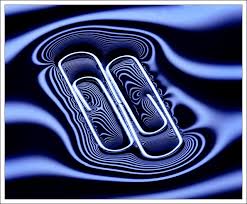
The tightness across the surface of water that enables paper clips to float is ____________.
a)
adhesion
b)
capillary action
c)
surface tension
d)
polarity
52.
Which statement explains why water molecules stick together?
a)
both sides are negative
b)
one side has a positive charge and the other side has a negative charge
c)
one side has a negative charge adn the other side has a neutral charge
d)
both sides are positive
53.
When a molecule has an opposite electrical charge on each end, it is known as what?
a)
cohesion
b)
polar molecule
c)
hydrogen bond
d)
solution
54.
When water molecules stick easily to other water molecules, this is called what?
a)
cohesion
b)
adhesion
c)
solution
d)
polar molecule
55.
Why does ice float?
a)
As water freezes, it expands and its density decreases.
b)
As water freezes, it takes up more hydrogen from the atmosphere, causing it to have a greater buoyancy.
c)
As water freezes, air becomes trapped between the hydrogen bonds of water molecules.
d)
As water freezes, it takes up more oxygen from the atmosphere, causing it to have a greater buoyancy.
56.
Proteins are made of monomers called ___________
a)
Nucleotides
b)
Monosaccharides
c)
Amino Acids
d)
Glycerol and fatty acids
57.
DNA and RNA are examples of 
a)
Carbohydrates
b)
Lipids
c)
Proteins
d)
Nucleic Acids
58.
Nucleotides are monomers of
a)
Carbohydrates
b)
Lipids
c)
Proteins
d)
Nucleic Acids
59.
Monosaccharides are monomers of
a)
Carbohydrates
b)
Lipids
c)
Proteins
d)
Nucleic Acids
60.
Waxes, oils and fats are examples of
a)
Carbohydrates
b)
Lipids
c)
Proteins
d)
Nucleic Acids
61.
What is the function of nucleic acids?
a)
store genetic information
b)
store energy (long-term)
c)
store energy (short-term)
d)
build skin, hair, nails, muscles
62.
Which of the following organic compounds is the main source of energy for living things?
a)
carbohydrates
b)
lipids
c)
nucleic acids
d)
proteins
63.
Which macromolecule stores energy, insulates us, and makes up the cell membrane?
a)
lipids
b)
proteins
c)
carbohydrates
d)
nucleic acids
64.
What are the monomers of DNA?
a)
glycerols
b)
amino acids
c)
fatty acids
d)
nucleotides
65.
Lipids can be digested into what smaller subunits?
a)
nucleic acids
b)
amino acids
c)
fatty acids
d)
glucose
66.
All polymers are made up of...
a)
monosaccharides
b)
monomers
c)
proteins
d)
None of these
67.
All organic compounds contain the element
a)
carbon
b)
nitrogen
c)
phosphorus
d)
sulfur
68.

Enzymes belong to which class of macromolecules?

a)

lipids

b)

carbohydrates

c)

proteins

d)

nucleic acids

69.

DNA belongs to which class of macromolecules?

a)

proteins

b)

nucleic acids

c)

carbohydrates

d)

lipids

70.

Sugar belongs to which class of macromolecules?

a)

proteins

b)

lipids

c)

nucleic acids

d)

carbohydrates