
NEW
Font size
 Worksheets
Properties and Chemical Reactions
Total questions: 72
Worksheet time: 41mins
it takes up space and has mass
mass
volume
matter
liters
the amount of space an object takes up
volume
mass
density
The amount of matter in an object
volume
density
mass
none of these
SI mass unit
pounds
kilograms
ounces
the amount of mass per unit volume
Matter
volume
density
heaviness


Which of the following objects is least dense?
A
B
C
D

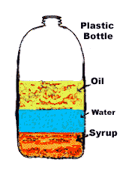
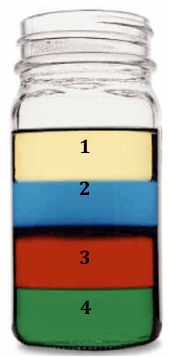

Which of the following objects is most dense?
A
B
C
D


Which of the following substances is more dense? Why?
A - more compact
A - less compact
B - more compact
B - less compact

Which object has the highest density in this picture?
A
B
C

Which object has the lowest density in this picture?
A
B
C
Which of the following is an example of an object with a high density?
Pillow
Bowling Ball
Beach Ball
Which of the following is an example of an object with a low density?
Pillow
Bowling Ball
Brick
Which of the following is the correct units for density?
grams (g)
Newtons (N)
cm3
g/cm3
What is the density of an object if it has a mass of 6g and a volume of 3cm3? (Hint: Density = mass/volume)
6 g/cm3
3 g/cm3
2 g/cm3
1/3 g/cm3
What is the density of an object with a mass of 3g and a volume of 1cm3? (Hint: Density = mass / volume)
1/3 g/cm3
3 g/cm
3 g/cm3

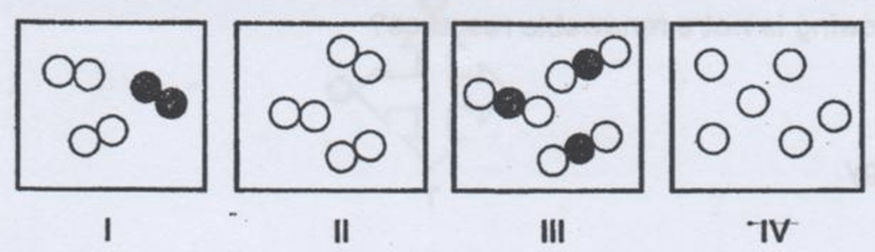
In the diagrams provided, the circles of different colors represent the atoms of different elements. Which diagram represents a mixture?
I
II
III
IV
Beatriz wants to make a mixture out of her bowl of blueberries. Which of the following would turn her bowl of blueberries into a mixture?
adding more blueberries to the bowl
adding raspberries to the bowl
cutting up the blueberries
mashing the blueberries

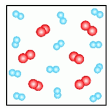


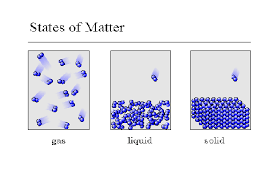
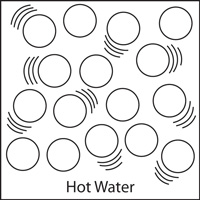
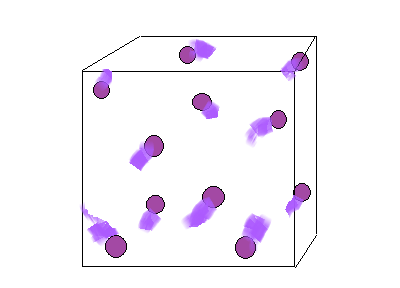
Which phase is represented in the model.
Solids
Liquids
Gas
Carousso

What is a physical property?
How two chemicals react with one another when combined
A property that we can measure or observe with our 5 senses or other tools
When two chemicals react with one another to form a new substance
When a change occurs but it does not result in the formation of a new substance
A green powder is heated & a gas is given off while it turns to a black solid. This describes
Physical Change
Chemical Change
Change in State
Change in Temperature
A Chemical Change is also known as what?
Physical Change
Physical Property
Chemical Reaction
Chemical Property
The difference between a Physical change and a Chemical change is…
Physical change is only a change to the outside appearance.
Chemical change is when matter is changed into something new.
Atoms are rearranged in chemical changes & not in physical.
All are correct.
What does a chemical change result in?
A change in state of the substance (ex. liquid to solid)
A change in texture of the substance.
A change in the way atoms are bonded to each other.
A change in the appearance of the substance.
Which type of change is most often easily reversed?
Chemical
Physical
Both a physical and chemical change.
Neither a physical or chemical change.

Identify what type of change happening in the picture below...
Chemical Change
Physical Change
Endothermic Reaction
Exothermic Reaction

Identify what type of change happening in the picture below...
Chemical Change
Physical Change
Endothermic Reaction
Exothermic Reaction

Identify what type of change happening in the picture below...
Chemical Reaction
Physical Change
Change in State
Change in appearance only
A green powder is heated & a gas is given off while it turns to a black solid. This describes
Physical Change
Chemical Change
Change in State
Change in Temperature
A Chemical Change is also known as what?
Physical Change
Physical Property
Chemical Reaction
Chemical Property
Which of the following could indicate that a chemical change took place?
Change in color
Production of Energy
Formation of Gas
All are correct
The formation of a solid when two liquids combine is called?
Solidification
Freezing
Precipitate
Solubility
The difference between a Physical change and a Chemical change is…
Physical change is only a change to the outside appearance.
Chemical change is when matter is changed into something new.
Atoms are rearranged in chemical changes & not in physical.
All are correct.
What does a chemical change result in?
A change in state of the substance (ex. liquid to solid)
A change in texture of the substance.
A change in the way atoms are bonded to each other.
A change in the appearance of the substance.
Which type of change is most often easily reversed?
Chemical
Physical
Both a physical and chemical change.
Neither a physical or chemical change.
Identify what type of change happening in the picture below...
Chemical Change
Physical Change
Endothermic Reaction
Exothermic Reaction
Identify what type of change happening in the picture below...
Chemical Change
Physical Change
Endothermic Reaction
Exothermic Reaction
Identify what type of change happening in the picture below...
Chemical Reaction
Physical Change
Change in State
Change in appearance only
If the chemical properties of a substance remain unchanged & the appearance or shape of an substance changes it is a...
Chemical Change
Physical Change
Both a physical and chemical change.
Neither a physical or chemical change.
Which of the following is an example of a physical change?
A glass falling and shattering on the floor.
Baking a birthday cake.
Burning a piece of paper.
Baking soda and vinegar mixing together.
When a new substance is formed with different properties than the original substance it is called a...
Chemical change
Physical change
Change in State
Change in appearance only.
Which type of change are irreversible?
Chemical Changes
Physical Changes
Changes in State
Changes in Temperature
Which is not a clue that could indicate a chemical change has occurred?
Change in color
Change in shape
Release of energy
Formation of an odor
During Chemical Reactions, the new substances created are called?
Precipitate
Corrosion
Reactants
Products
During Chemical Reactions, the substances that are used are called?
Precipitate
Corrosion
Reactants
Products

