
 Worksheets
Biology Now Ch. 4-6 Review
Total questions: 65
Worksheet time: 51mins
Which of the following is a part of accepted cell theory?
Every living organism is composed of one or more cells, and all living cells have membrane-enclosed organelles.
All living cells arise from preexisting cells, and all living cells have membrane-enclosed organelles.
All living cells have membrane-enclosed organelles.
Every living organism is composed of one or more cells, and all living cells arise from preexisting cells.
DNA is one of the features common to all known forms of life; it is used to
protect the outer membrane of cells.
transfer information from parents to their offspring.
obtain energy from the environment.
ense changes within the environment.
A species of butterflies gradually becomes darker in color over many generations; this is an example of which characteristic of living organisms?
They reproduce using DNA.
They obtain energy from the environment to support metabolism
They can evolve as groups.
They sense the environment and respond to it.

Which correctly identifies the structure and organization of phospholipids in the cell membrane?
A-hydrophobic heads face each other
B-hydrophilic tails face outward
A-hydrophilic heads face each other
B-hydrophobic tails face outward
A-hydrophilic heads face outward
B-hydrophobic tails face each other
A-hydrophobic heads face outward
B-hydrophilic tails face each other
The permeability of a phospholipid bilayer membrane for a particular substance can be increased with help from transport
carbohydrates.
lipids.
receptors.
proteins.
Cells naturally, without using energy, respond to changes in water concentration through the process of
diffusion
osmosis
facilitated diffusion
endocytosis
The plasma membrane of some white blood cells contain __________ proteins that bind with proteins of cells such as bacteria that have invaded the human body.
channel.
receptor.
transport.
carrier.

Cheryl is in a lab attempting to prepare a slide of cow blood for observation in a wet mount. She places a small drop of the blood on a slide, adds a drop of 3 percent salt solution, and then covers all of it with a coverslip. She observes the slide with her microscope and notices that the blood cells look very shriveled up. Which is a possible explanation of what has happened?
RBCs were hypertonic to the saline; this resulted in net water movement into the RBCs by osmosis.
saline she used was hypertonic to the RBCs; this resulted in net water movement out of the RBCs by osmosis.
saline she used was isotonic to the RBCs; this resulted in no net movement of water into or out of the RBCs.
saline she used was hypotonic to the RBCs; this resulted in net water movement into the RBCs by osmosis.

Which describes diffusion for the image shown?
Water will move from the left side of the membrane to the right.
Water will move from the right side of the membrane to the left.
Sugar will move from the left side of the membrane to the right.
Sugar will move from the right side of the membrane to the left.
Assume that each sugar molecule represents a percentage point of sugar dissolved in the solution. Over time, the solution volume on the left side of the figure would __________. This is because the solution on the left side of the figure is __________ relative to the solution on the right.
increase; hypertonic
decrease, hypotonic
decrease, hypotonic
increase, hypotonic
Ross places carrot sticks into a jar of water and refrigerates the jar overnight. The next day the carrot sticks are crisp and crunchy. The most likely explanation of why they became crunchy after soaking in water is that the water was __________ to the carrot cells, resulting in the net movement of water __________ the cells.
hypertonic; into
hypotonic; out of
hypertonic; out of
hypotonic; into
Which of the following would be likely to move through a plasma membrane by simple diffusion?
water (H2O), carbon dioxide (CO2), and oxygen (O2)
polysaccharides, large protein molecules, and low-density lipoprotein particles
bacteria and yeast
sodium ions (Na+), hydrogen ions (H+), sugars, and amino acids

The processes shown in the image can be identified as methods of ________.
diffusion
active transport
facilitated diffusion
passive transport

Which type of transport is occurring in the image labeled B?
pinocytosis
endocytosis
exocytosis
phagocytosis
Prokaryotes and eukaryotes are primarily distinguished by the absence or presence of
ribosomes.
plasma membranes.
organelles.
cell walls.
A student observes layers of cells that have a definite, rigid, rectangular shape; there appears to be a nucleus in all of the cells and there are many oval-shaped green structures that seem to be moving around inside of the cells in an orderly fashion. What general cell type is most likely being observed?
prokaryotic, plant
prokaryotic, animal
eukaryotic, plant
eukaryotic, animal
Which correctly matches the organelle with its function?
ribsome: makes DNA
mitochondria: creates glucose
lysosome: digests materials
ER: sorts and packages materials

Select the observation that supports endosymbiotic theory.
Nuclear envelopes have small openings called nuclear pores.
Plant cells and many prokaryotes have cell walls surrounding the plasma membrane.
Eukaryotic organisms can be either unicellular or multicellular.
Mitochondria and chloroplasts contain DNA just like prokaryotic cells.

The smooth endoplasmic reticulum
manufactures steroid (lipid) hormones.
produces the energy needed to run chemical reactions in the cell.
converts sunlight into chemical energy.
stores water, nutrients, and enzymes.
Human muscle cells need large amounts of ATP to function in the movement of the body, which is why __________ are especially abundant in muscle cells.
mitochondria
ribosomes
vacuoles
lysosomes

The following illustration indicates that photosynthesis and cellular respiration are both complementary and balanced. An excess of sugars produced fossil fuels like coal and petroleum; this suggests that in the past,
the amount of photosynthesis exceeded the amount of cellular respiration.
sugars were only one of several products of photosynthesis.
reduced carbon-rich molecules could be produced independently from the photosynthetic process.
the energy released from respiration must have exceeded the energy used in photosynthesis.
Chemical reactions that break down lipids are
catabolic.
anabolic.
metabolic.
respiration.

The Calvin cycle functions to
accept electrons and hydrogen ions from energy carriers.
transform carbon from carbon dioxide into sugar.
use energy from sunlight to split water molecules.
transfer chemical energy from pyruvate to energy carriers.
What is the chemical equation for photosynthesis?
6O2 + C6H12O6 --> 6CO2 + 6H2O
6CO2 + C6H12O6 --> 6O2 + 6H2O
6CO2 + 6H2O --> 6O2 + C6H12O6
6O2 + 6H2O --> 6CO2 + C6H12O6
Which colors does chlorophyll reflect? Select all that apply!
Red
Orange
Green
Blue
Light reactions occur in the _____ and the Calvin Cycle occurs in the _____.
Mito matrix ; inner mito membrane
Granum ; thylakoid membrane
Lumen ; stroma
Thylakoid membrane ; stroma
Which type of reaction is shown below?
glucose → lactic acid + ATP
photosynthesis
aerobic respiration
cellular respiration
anaerobic respiration
After an enzyme catalyzes a reaction there is a(n) __________ in the concentration of __________.
increase; reactants
increase; the enzyme
decrease; the enzyme
increase; products
The capture and use of energy by living organisms involves numerous chemical reactions. Collectively these processes are known as
metabolism.
respiration.
anabolic reactions.
catabolic reactions.
The enzyme rubisco is important to the process of
catabolism.
fermentation.
glycolysis.
carbon fixation
Some kinds of drain cleaners use enzymes rather than strong, more dangerous chemicals. These enzymes must be able to
catalyze a catabolic reaction.
raise the energy of the reaction that clears the clog.
create energy that can be used to break up the clog.
catalyze an anabolic reaction.

Which of the following is a product of the light-dependent reactions of photosynthesis?
water
carbon dioxide
oxygen
glucose

The image shown diagrams the action of an enzyme. Notice that the enzyme is depicted as being more tightly wrapped around the substrates in image B than it is in image A. Why is this?
When a substrate locks into the active site of an enzyme, the enzyme changes shape to mold itself around it.
Generally, the size of a substrate is larger than the size of the active site into which it must fit. When the substrate enters the active site, the active site must stretch to fit
Before catalysis can occur, a substrate must change its shape so that it fits into the active site of the enzyme more precisely.
Most active sites are only designed to hold one substrate. In this image, two substrates enter the active site, creating a tighter fit.
A plant cell is mutated so that ATP synthase no longer functions. Which process will be affected?
photosynthesis only
respiration only
both photosynthesis and respiration
neither photosynthesis nor respiration

What is the importance of photosynthesis to organisms other than plants?
All other organisms require carbon dioxide for life processes.
The sugars made during photosynthesis are the direct building blocks of DNA.
All cells must contain chloroplasts in order to survive.
Photosynthesis captures energy that other organisms access when they ingest or absorb nutrients from photosynthetic organisms.
Enzymes can catalyze a reaction only if they
encounter a molecule of ATP.
have a phosphate bound to their active site.
have both products in their active site at the same time.
encounter a substrate that fits their active site.
Carbon dioxide is one product of a metabolic process, which occurs in both plants and animals. This process is called
catalysis.
glycolysis.
respiration.
photosynthesis.
Which of the following events in a cell would require ATP?
passive movement of molecules through the cell membrane
linking together amino acids to form a protein
breaking a carbohydrate into individual sugar subunits
splitting a lipid molecule into smaller parts
Which of the following pairs of processes encompasses the entire eukaryotic cell cycle?
G1 phase and mitosis
G1 phase and G2 phase
interphase and cytokinesis
cell division and interphase

In which phase of the cell cycle does DNA replication occur?
G0
G1
S
G2
M

Which phase of the cell cycle produces daughter cells?
G1
G2
Mitosis
Cytokinesis
Which of the following statements about cell division is correct?
It is the process by which organisms reproduce and grow.
It is no longer necessary once an organism reaches maturity.
In all cells it occurs in two sequential stages: mitosis and meiosis.
It is the process by which fertilization occurs.

A researcher is recording the process of bacterial cell division using time-lapse microscopy. Which of the following processes would be observed?
meiosis
mitosis
binary fission
either meiosis or mitosis, depending on the growth conditions

The circular region near the center of the illustrated replicated chromosome (2) represents
chromatid.
centromere.
centriole.
homologous chromosome.
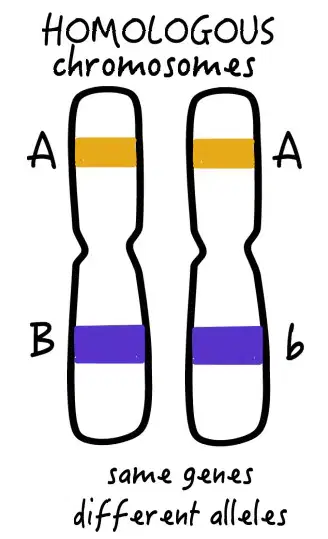
The chromosomes in a homologous pair
both came from the organism’s mother.
both came from the organism’s father.
do not line up together during meiosis.
consist of one maternal and one paternal chromosome.
The centromeres split and the sister chromatids move to opposite ends of the cell during which phase of mitosis?
prophase
metaphase
anaphase
telophase
When examining the rapidly dividing cells of a fish embryo, a researcher notices a cell that seems to contain two nuclei. The middle of the cell is pinched inward. This cell must be in __________ of mitosis.
prophase
metaphase
anaphase
telophase
Which of the following would promote a cell to advance through the G2 checkpoint?
The cell lacks necessary nutrients.
The genetic information has been duplicated.
The cell is too small in size.
A chromosome has been damaged.
Which of the following is a possible consequence of disabling the G2 checkpoint in the cell cycle?
Damaged DNA would be immediately replicated and passed on to the two daughter cells, giving rise to helpful, new alleles.
Incompletely replicated DNA may be passed to the two daughter cells; these cells could be lacking specific genes or chromosomes and would likely not survive.
The cell cycle would pause if cell size or nutrient supply is inadequate, DNA is damaged, or DNA replication is incomplete.
The cell cycle would simply skip mitosis and go directly to G1 to start over.
Which of the following cell types can be produced by meiosis?
skin
muscle
pancreatic
sperm
When a cell has completed both rounds of meiosis, the resulting cells are
diploid, and each of two daughter cells has twice the number of chromosomes as the starting cell.
diploid, and each of four daughter cells has half the number of chromosomes as the starting cell.
haploid, and each of four daughter cells has half the number of chromosomes as the starting cell.
haploid, and each of two daughter cells has twice the number of chromosomes as the starting cell.
If a diploid animal cell has a total of 18 chromosomes, how many chromosomes would be present in each of its gametes?
36
18
9
6
In a sexually reproducing animal, the gametes are produced by meiosis rather than mitosis because
mitosis would produce too many sister cells
meiosis reduces the chromosome number so that the zygotes that are produced will have one full genome.
meiosis doubles the chromosome number so that each gamete has twice the usual number of genes.
meiosis ensures that the gametes are identical to the cell that produced them.
Which two processes combine to create genetic diversity and maintain chromosome number?
mitosis and meiosis
meiosis and independent assortment
binary fission and mitosis
fertilization and meiosis
Select the steps in meiosis that generate genetic diversity.
prophase and metaphase of meiosis I
prophase and metaphase of meiosis II
anaphase and telophase of meiosis I
anaphase and telophase of meiosis II
Which of the following is a form of genetic recombination that occurs naturally within cells?
mitosis
independent assortment
crossing-over
asexual reproduction
Select the correct statement regarding the chemical bisphenol A (BPA).
only disrupts the cell cycle in very large doses
has been replaced with BPS, an alternative demonstrated to be safe
exerts its effects on cell division by mimicking the hormone estrogen
is inactivated with high heat or by microwaving


In humans, the haploid number of chromosomes is ____.
23
46
69
92
Which stage facilitates cell growth and preparation for both mitosis and meiosis?
Interphase
Metaphase
Prophase
Anaphase
These chromosomes result in the biological sex of a human
XX; Female
XY; Male
XX; Male
XY; Female
X; Female
Y; Male

