
 Worksheets
Communication Skills Review
Total questions: 68
Worksheet time: 1hrs 13mins
What is verbal communication?
The act of conveying information or expressing ideas through visual images.
The act of conveying information or expressing ideas through written words.
The act of conveying information or expressing ideas through body language.
The act of conveying information or expressing ideas through spoken words.
Which of the following is an example of nonverbal communication?
Nodding head
Waving hello
Writing a letter
Speaking loudly
What is active listening?
Active listening is a communication technique that involves ignoring the speaker.
Active listening is a communication technique that involves interrupting the speaker.
Active listening is a communication technique that involves multitasking while the speaker is talking.
Active listening is a communication technique that involves fully focusing on, understanding, and responding to the speaker.
Which of the following is a characteristic of effective verbal communication?
Clarity and conciseness
Ambiguity and verbosity
Confusion and rambling
Incoherence and repetition
What is a common nonverbal cue that indicates interest and engagement?
Looking away
Eye contact
Nodding of the head
Crossed arms
Which of the following is an example of active listening?
Looking away, shaking your head, and interrupting the speaker.
Checking your phone, yawning, and ignoring the speaker.
Daydreaming, fidgeting, and not paying attention.
Maintaining eye contact, nodding, and asking clarifying questions.
What is the purpose of verbal communication?
To convey information, express thoughts and feelings, and establish connections and relationships with others.
To hide information and deceive others
To confuse and mislead others
To avoid social interactions
Which of the following is a barrier to effective communication?
Barriers to effective communication include language barriers, physical barriers, emotional barriers, cultural barriers, and noise.
Lack of technology
Clear communication
Open-mindedness
What is a common nonverbal cue that indicates boredom or disinterest?
Yawning
Fidgeting
Looking at the clock
Eye rolling
Which of the following is a way to improve active listening skills?
Interrupting the speaker, checking your phone, and daydreaming.
Avoiding eye contact, multitasking, and not paying attention to the speaker.
Talking over the speaker, not asking questions, and not summarizing what the speaker has said.
Maintaining eye contact, avoiding distractions, asking clarifying questions, and summarizing what the speaker has said.
What is the primary mode of communication in face-to-face conversations?
nonverbal communication
written communication
visual communication
verbal communication
Which of the following is an example of nonverbal communication?
Speaking loudly
Waving hello
Writing a letter
Nodding head
What is a key component of active listening?
Ignoring nonverbal cues
Giving full attention and demonstrating understanding
Daydreaming
Interrupting the speaker
Which of the following is an example of effective verbal communication?
Giving a well-structured and organized presentation to a group of colleagues.
Interrupting and talking over others during a meeting.
Using excessive jargon and technical terms during a presentation.
Mumbling and speaking softly during a conversation.
What is a common nonverbal cue that indicates disagreement or disapproval?
Thumbs up
Nodding the head up and down
Clapping hands
Shaking the head from side to side
The person who transmits a message or messages is called the...
sender
receiver
The person who accepts the message is the...
sender
receiver
When a difference between the sender's verbal and nonverbal messages occur, the receiver gets a...
mixed message
withdrawal
Freely expressing your thoughts, ideas, and feelings respectfully and allowing others to do the same is...
aggressive communication
assertive communication
passive communication
Aiming to hurt or put down other people and showing disrespect is...
aggressive communication
assertive communication
passive communication
If you are unwilling to say what you feel, think, or desire and want to avoid all conflict
aggressive communication
assertive communication
passive communication
Words, gestures, actions, and facial expressions all convey messages to others.
True
False
Taking ownership is when a person takes responsibility for his or her own feelings and behaviors rather than blaming others.
True
False
What do you have to do to be an active listener?
''Nonverbal'' cues could be:
Eye contact
Open arms
Nodding
All of the above

An example of verbal communication is:
Phone conversation
Posture
Eye contact
Writing an email
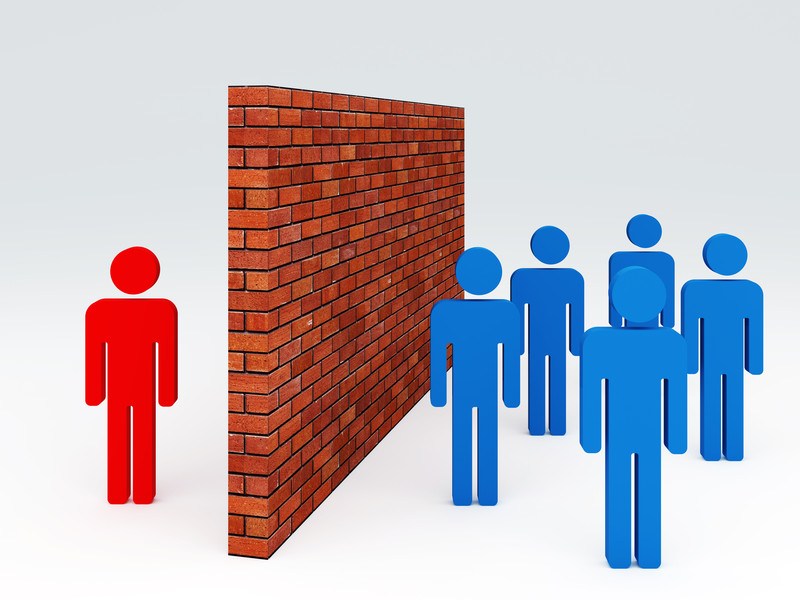
Which of the following is a barrier to communication?
Message is not clear
Not listening
Lack of language skills
All of the above
shy, not clearly stating what they want or how they feel
Passive
Passive-Aggressive
Aggressive
Assertive
What is Body Language?
Your words say one thing but your body language say another.
The exchange of information through the use of words.
Postures, gestures, and facial expressions.
Speak from your point of view.
Which of these is a best way to ask questions?
Use open questions that encourage a full response
Ask only a question that requires yes/no response
Use leading words to suggest the response you require
Ask something that you wouldn't want to answer
Which of the following are parts of active listening? Tick whichever applies.
Clarifying
Interrupting
Rephrasing
Being quiet
A friend tells you,"I'm afraid my classmate is telling bad things about me behind my back. I don't know what to do. I am so upset about this." Which of the following response is a paraphrase?
You are feeling very upset because your close friend has betrayed you.
Dont be hasty. First confirm if the information is true and then you can confront him. It might be a rumor.
You are afraid that your classmate is telling bad things about you behind your back. You dont know what to do and you are very upset about this.
I think you have very low self esteem. That is why you think others are talking behind you. You need to be more confident about yourself.
If Meena had come, she would have won.
If she hadn't won, she'd have come.
Meena did not win because she did not come.
When Meena came, she always won.
Meena didn't come, but she won anyway.
Which of these is not a communication barrier?
language
visual perception
voice moderation
environmental factors
Which of these is a "do" of discussion etiquette?
use loud tone
argue unnecessarily
listen to others
be close-minded
What are verbal and non-verbal responses to messages called?
Communication
Feedback
Verbal
Message
The speaker should always give non-verbal cues while giving a speech?
True
False
Which is not a part of the communication cycle?
encoding
decoding
encrypting
feedback
Communication is a part of
Soft skills
Hard skills
Short skills
Rough skills
The information which is transferred to the receiver has to be interpreted this process is called
Encoding
Closing
Opening
Decoding
Which of the following is the process of sending a message in the form of text, signs, symbols which the receiver has to decode to find its actual meaning?
Feedback
Decode
Communication
Encoding
Some nonverbal cues are beyond people's control.
true
false
Nonverbal cues can be hard to interpret.
true
false
What role do verbal communication skills play in the workplace/
What is appropriate telephone, cell phone, & social media usage in the workplace?
What are the strategies for giving a successful presentation & holding an effective meeting?
What does the term "gender neutrality" mean?
What is proxemics & what are the types AND significance of personal territory?
Does the credentials committee of the medical staff have the authority to grant medical staff membership or privileges' to doctors?
No, can only make recommendations
Yes! the are the specialists
No, are you crazy! The president does this!
Yep always
What is the Code Blue Book definition of Bankruptcy?
Why does Wes care about Managed Care and what is Managed Care?
What is a Medical Director according to the Code Blue Blook?
(a) makes you more employable because you can help your employer reach goals more effectively.
Why is TEAMWORK important?
Working effectively and efficiently with others
empathy
initiative
networking
teamwork

_____________________ skills such as writing, speaking and body language are important work ethics so that you can be clear in your messages to others
Communication
Catching
Performance
Mental
inflammation
(a)
gum/s
(a)
stomach
(a)
hypo-
(a)
hyper-
(a)
CA
(a)
AMI
(a)
What does the Medical Term HEP / HEPAT mean in English?
Brain
Liver
Kidney
Stomach
None of the Answers are Correct
What does the Medical Term CARDI / Cardi Mean ?
Liver
Enlarged
Heart
Kidney
None of the Answers are Correct
What does the medical term ANGI / Angi mean ?
Gland
Blood Vessel
Tumor
Kidney
Nose
What is medical term ARTHR / Arthritis
Joint
Eyelid
Nose
Gums
Intestine

