wayground logo

Free Printable Worksheets

NEW

Font size

S
M
L
XL
Worksheets

Small Engine Parts & Function of Selected Parts

Total questions: 63

Worksheet time: 23mins

Name
Class
Date
1.

What is the function of this engine component? 

a)
Provides inertia to keep the crankshaft spinning during the four-stroke cycle
b)
Allows liquid fuel to enter the combustion chamber 
c)
Sends an electrical arc to the spark plug to ignite the air-fuel mixture in the combustion chamber
d)
Opens and closes the valves 
2.

What is the function of this engine component? 

a)
Opens and closes the valves in sequence
b)
Applies upward force to the rocker arms in order to open the valves
c)
Regulates the air-fuel mixture that enters the combustion chamber 
d)
Attaches the piston and the crankshaft in order to transfer linear motion into rotary motion
3.
What is the function of this engine component? 
a)
Makes contact with the magneto to produce an electric arc 
b)
Used to start the combustion process in a small engine
c)
Compresses the air-fuel mixture that enters the combustion chamber
4.
What is the function of this engine component? 
a)
Maintains engine speed under load 
b)
Opens to allow the air-fuel mixture to enter the combustion chamber 
c)
Regulates the air-fuel mixture that enters the combustion chamber 
5.

What is the function of this engine component? 

a)
Directs motion from the camshaft to the push rods 
b)
Applies pressure to the camshaft 
c)
Allows exhaust gases to exit the combustion chamber 
6.

What is the function of this engine component? 

a)
Provides a seal between the  piston and cylinder bore
b)
Creates an electrical arc to start the combustion process
c)
Opens and closes the valves as a result of force from the push rods 
7.

What is the function of this engine component? 

a)
Attaches to the tip of the valve stem 
b)
Rotates in conjunction with the crankshaft to open and close valves 
c)
Provides a resisting force to close valves after they have been opened
8.
What is the function of the engine component? 
a)
Provides inertia to keep the engine in operation during the four-stroke cycle 
b)
Converts rotary motion into linear motion 
c)
Converts linear motion into rotary motion
9.
What is the function of this engine component? 
a)
Applies force to the rocker arms as a result of rotating motion from the crankshaft 
b)
Works in conjunction with the crankshaft to open and close valves 
c)
Opens to allow exhaust gases to exit the combustion chamber 
10.

What is the function of this engine component? 

a)
Transfers motion from the camshaft to the push rods 
b)

Interacts with the magnets in the flywheel to create electricity.

c)
Provides inertia to keep the crankshaft turning during the four-stroke cycle 
11.
What is the function of the exhaust valve? 
a)
Opens to allow air-fuel mixture to enter the combustion chamber 
b)
Opens to allow exhaust gases to exit the combustion chamber 
c)
Regulates the flow of air-fuel mixture to the combustion chamber 
12.
What is the function of this engine component? 
a)
A sheet metal or composite component that encompasses a fan to direct cooling air to a cylinder block and cylinder head 
b)
An engine component that attaches to the flywheel that helps reduce engine temperatures when air circulates across hot engine surfaces
c)
Provides inertia to keep the crankshaft turning during the four-stroke cycle
13.

What is the function of this engine component? 

a)
Opens to allow the air-fuel mixture to enter the combustion chamber 
b)
Attaches the crankshaft and the piston together
c)
Rotates in conjunction with the crankshaft to open and close valves
14.
What is the function of the intake valve? 
a)
Regulates the air-fuel mixture that enters the combustion chamber 
b)
Opens to allow air-fuel mixture to enter the combustion chamber
c)
Opens to allow exhaust gases to exit the combustion chamber
15.
What is the function of this engine component? 
a)
Houses and aligns the crankshaft 
b)
Houses the primary components of the combustion chamber such as the spark plug, valves, valves springs, etc. 
c)
Provides the spark necessary to ignite the air-fuel mixture in the combustion chamber 
16.
What is the function of this engine component? 
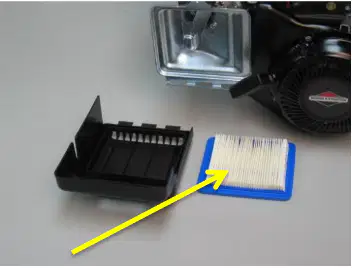
a)
Fastens the valve and valve spring into the cylinder head
b)
Attaches to the tip of the valve stem 
c)
Provides a resisting force to close valves after they have opened
17.

Identify this part.

a)
Pleated Paper Filter
b)
Foam Paper
c)
Oil Foam Filter
d)
Sump 
18.

Identify the configuration of this engine based on the location of the valves.

a)
L - Head
b)
Over Head Valves
c)
Reed Valves
d)
Intake Stroke
19.

Identify this part.

a)
Carburetor
b)
Oil Slinger
c)

Tappet Chamber Cover or Breather Valve

d)
Connecting Rod Cap
20.

Identify this part.

a)
Cylinder Head Bolts
b)
Connecting Rod
c)
Reed Valve
d)

Valve

21.

Identify this part.

a)
Counter Weights
b)
Compression Release
c)
Cam Lobes
d)
Crankshaft
22.

Name the "bumps" located on the camshaft.

a)
Piston Rings
b)
Compression Release
c)
Cam Lobes
d)
Crankshaft
23.

Identify this part.

a)
Recoil Starter Pulley
b)
Recoil Gear Pulley
c)
Restart Pulley
d)
Flywheel
24.

Identify this part.

a)
Armature
b)
Flywheel
c)
Camshaft Gear
d)

Crankshaft Gear for Camshaft timing

25.

Identify this part.

a)
Crankshaft Gear
b)
Oil Slinger
c)
Starter Pulley
d)

Mechanical Governor

26.

Identify this part.

a)

Shroud or blower housing

b)
Flywheel
c)
Starter Pulley
d)
Grass Screen
27.

Identify this part.

a)
Flywheel Key
b)
Woodruff Key
c)
Cam Key
d)
Governor
28.

Identify this part.

a)
Air Vane / Mechanical Gear Governor 
b)
Oil Spalsher / Pneumatic Governor 
c)
Air Vane / Pneumatic Governor 
d)
All of the above
29.

Identify this part.

a)
Cylinder Head
b)
Crankcase Breather Gasket
c)
Crankcase Cover Gasket
d)
Cylinder Head Gasket
30.

Identify this part.

a)
Valve Spring Washer
b)
Tappet Retainer
c)
Valve Spring Retainer
d)

Valve

31.

Identify this part.

a)
Cylinder Head
b)
Shroud
c)
Starter Pulley
d)

Grass Screen or finger guard

32.

Identify this part.

a)
Crankcase Cover
b)
Crankcase Screen
c)
Cylinder Head
d)
Crankcase
33.

Identify this part.

a)
Piston Rings
b)
Cylinder
c)
Flywheel
d)
Grass Cover
34.

Identify this part.

a)
Flywheel
b)
Crankshaft
c)
Crankcase
d)
Camshaft
35.

Identify this part.

a)
Flywheel
b)
Crankshaft
c)
Crankcase
d)
Camshaft
36.

Identify this part.

a)
Cylinder Head
b)
Flywheel
c)
Crankcase Cover
d)
Sump
37.

Identify this part.

a)
Lobes
b)

Valve

c)
Tappet
d)
Sparkplug
38.

Identify this part.

a)
Spark Plug
b)
Grass Cover
c)
Coil
d)
Valve Springs
39.

Identify this part.

a)
Piston
b)
Piston Pin
c)

Valve

d)
Oil Slinger
40.

Identify this part.

a)

Flywheel with cooling fins

b)
Grass Cover
c)
Valve Cover
d)
Piston
41.

Identify this part.

a)
Piston Pin
b)
Connecting Rod
c)
Piston
d)
Tappet
42.

Identify this part.

a)
Crankshaft
b)
Tappet
c)
Cam Lobes
d)

Valves

43.

Identify this part.

a)
Flywheel
b)
Electric Starter
c)
Spark Plug
d)

Armature or Coil

44.

Identify this part.

a)
Spark Plug Wire
b)
Spark Plug 
c)
Tappet
d)
Armature
45.

Identify this part.

a)
Crankcase
b)
Cylinder Head
c)
Oil Sump Case
d)
Crankcase Cover
46.

Identify this part.

a)
Fuel Tank
b)
Crankcase Breather
c)
Carburetor
d)
Armature
47.

Identify this part.

a)
Carburetor
b)
Piston And Connecting Rod
c)
Cylinder Head Bolt
d)
Filler Cap with Dip Stick
48.

Identify this part.

a)

Engine Block

b)

Cylinder

c)

Piston

d)

Valve Guide

49.

Identify this part.

a)
Oil Dipper
b)
Cylinder Head
c)
Cylinder Head Gasket
d)
Oil Slinger
50.

Using old gas can prevent your engine from starting. How new should gas be?

a)

Less than 1 month old

b)

Less than 6 month old

c)

Less than 1 year old

d)

Less than 6 years old

51.

What will happen to your engine if there is too little oil?

a)

The engine will seize

b)

The engine may over heat

c)

Causes wear on the internal parts of the engine

d)

All of the above

52.

There is no oil filter on a four stroke engine so tiny particles circulate with oil. How often should the oil be changed?

a)

every year

b)

every 5 hours of engine operation

c)

every 25 hours of engine operation

d)

every 40 hours of engine operation

53.

What Octane Gas is Typically Used in a 4-Cycle Small Engine?

a)

89 Octane

b)

87 Octane

c)

92 Octane

d)

The gas specified in the owner's manual.

54.

How long will gas WITHOUT fuel stabilizer will last in the gas can?

a)

10 days

b)

30 days

c)

60 days

d)

120 days

55.

In the Owner's manual, this symbol with the word “danger” next to it means.

a)

A hazard which, if not avoided, will result in death or serious injury.

b)

A hazard which, if not avoided, could result in death or serious injury.

c)

A hazard which, if not avoided, could result in minor or moderate injury.
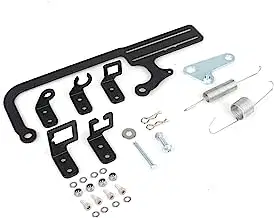
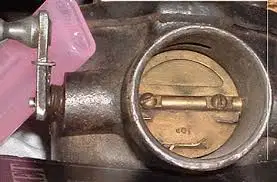
56.

The parts displayed in this picture are used with the ____?

a)

carburetor

b)

throttle

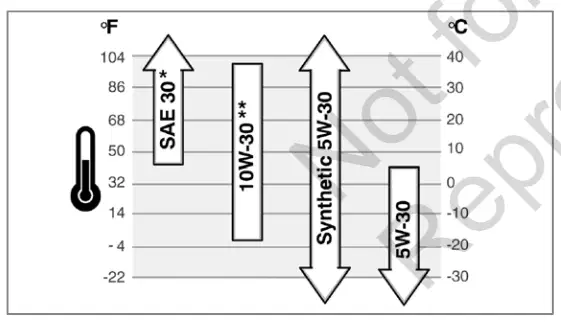
57.

Which of these grades of oil has the greatest operating range?

a)

SAE 30

b)

10W-30

c)

Synthetic 5W-30

d)

5W-30

58.

Which part on a small engine can “kick back” resulting in possible injury to the operator?

a)

flywheel

b)

recoil starter

c)

cylinder

d)

piston

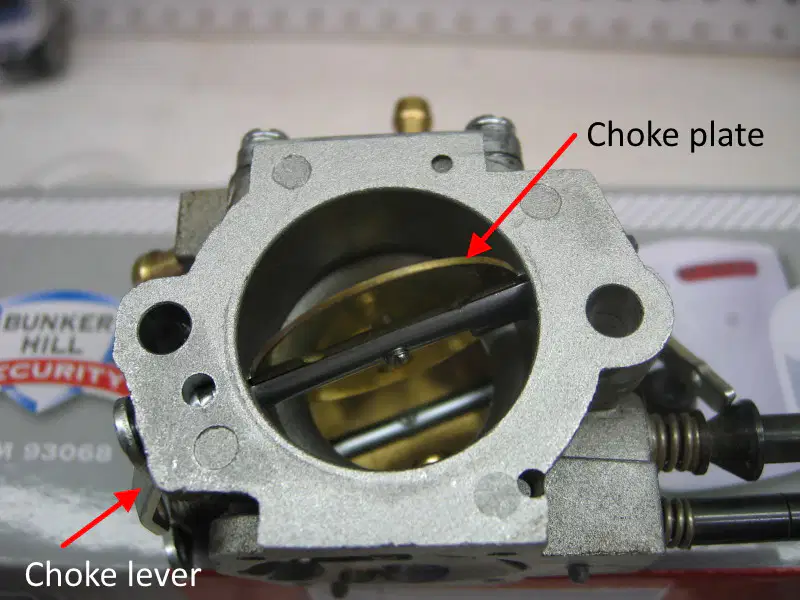
59.

When is the choke is closed?

a)

when the engine is started hot

b)

when the engine is started cold

60.

When is the choke is open?

a)

when the engine is started hot

b)

when the engine is started cold

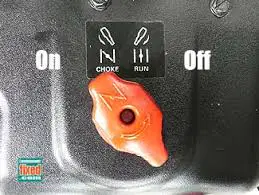
61.

What does this engine selection control?

a)

choke position

b)

throttle position

c)

piston position

d)

governor position

62.

A small engine is said to be running “rich” when what occurs?

a)

when there is more gas being fed into the carburetor than air

b)

when there is more air being fed into the carburetor than gas

c)

when the governor is open

d)

when the RPM are controlled by the governor

63.

A small engine is said to be running “lean” when what occurs?

a)

when there is more gas being fed into the carburetor than air

b)

when there is more air being fed into the carburetor than gas

c)

when the governor is open

d)

when the RPM are controlled by the governor