
Font size
 Worksheets
Periodic Table of Elements - Science Enhancement
Total questions: 67
Worksheet time: 34mins

What are the vertical columns on the periodic called?
groups
periods
nonmetals
metals
metalloids

The periodic table is organized in horizontal rows called...
Groups
Periods
Families
Chemical Symbols


Metals are found on the ______________ side of the periodic table.
nonmetals
left
right
metals
The following elements belong to the same group EXCEPT?
Argon
Calcium
Helium
Krypton

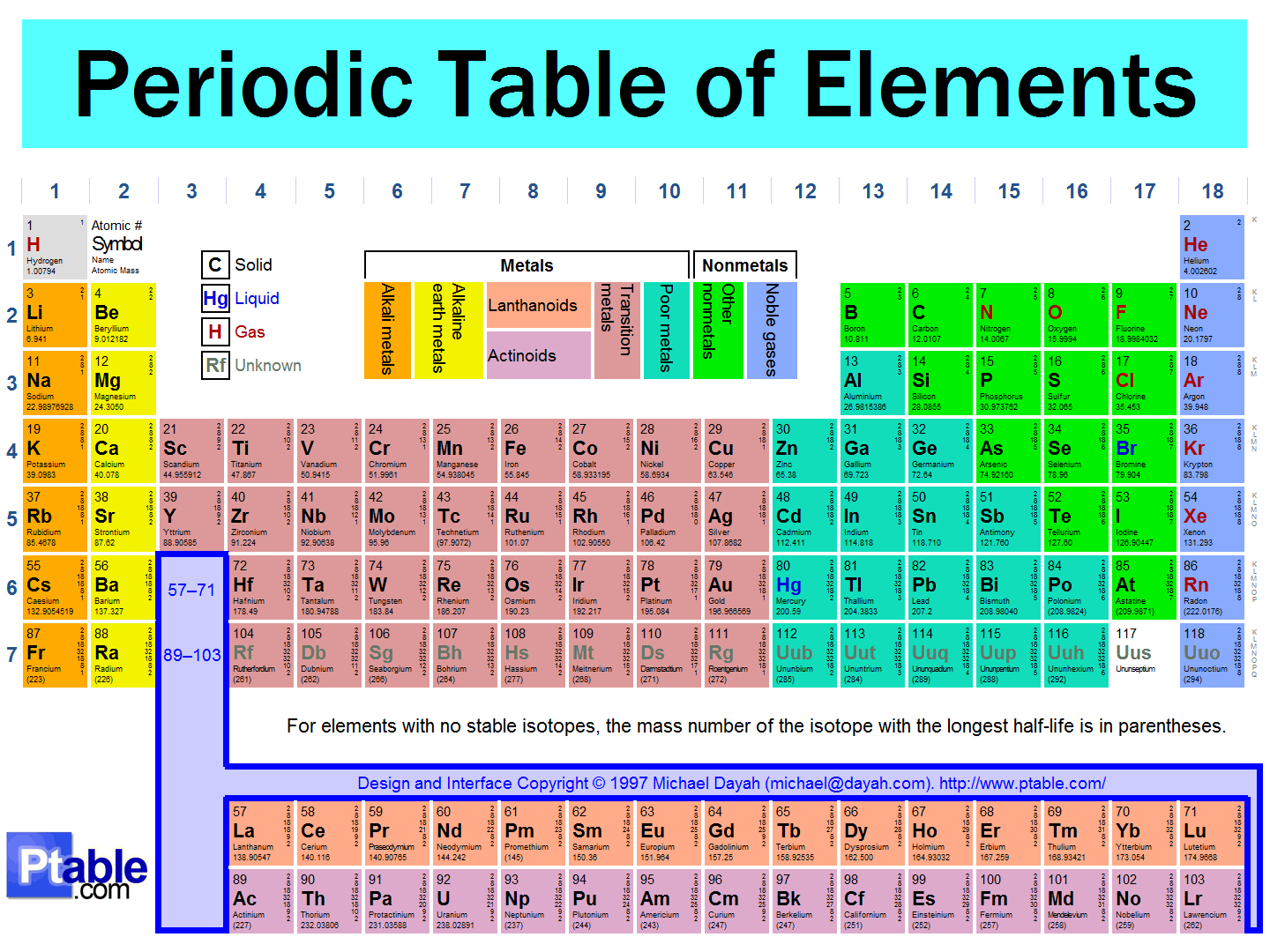
Metals are found on the ______________ side of the periodic table.
nonmetals
left
right
metals
Copper is a common metal. Which of the following properties does this metal most likely have?
High conductivity, high malleability, and low luster
Low conductivity, low malleability, and low luster
High conductivity, high malleability, and high luster
Low conductivity, high malleability, and high luster
What is the organizational system or chart for elements?
Atomic weight
Families
Periodic table
Atomic number
What do you call the horizontal row of elements in a periodic table of elements?
Group
Family
Period
Column
How many groups or families and periods does a Periodical Table have?
There are 17 groups or families and 7 periods.
There are 18 groups or families and 7 periods.
There are 7 groups or families and 18 periods.
There are 18 groups or families and 6 periods
Which of the following are the three major groups of elements in the periodic table?
Metals, non-metals, metalloids
Metals, conductors, metalloids
Metals, conductors, insulators
Non-metals, conductors, insulators
What are Group 1 elements known as?
Alkali metals
Transition elements
Alkaline earth metals
Inner transition elements
The following elements belong to the same group EXCEPT?
Argon
Calcium
Helium
Krypton

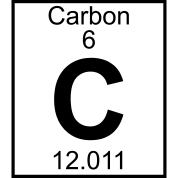
What does the C represent?
atomic mass
atomic number
element name
chemical symbol

What does the 6 represent?
atomic mass
atomic number
element name
chemical symbol

What does 12.011 represent?
atomic mass
atomic number
element name
chemical symbol
The Modern Periodic Table of Elements is arranged by
atomic mass
atomic number
valence electrons
number of isotopes
Which group of the periodic table is Neon a part of?
answer choices
alkali metals
alkaline earth metals
halogens
noble gases
Which is a halogen?
Helium
Chlorine
Oxygen
Neptune
I am a nonmetal
I am in period 2
I am in group 16
Ba
Si
O
S
I am a metal
I am in group 2
I am in period 6
I am…
Mo
Re
S
Ba

Who invented the Periodic Table?
Mendeleev
Bohr
Lewis
Democritus
What does the 6 represent?
atomic mass
atomic number
element name
chemical symbol


Write the symbol of the element Helium.
(a)
Write the symbol of the element Hydrogen.
(a)
Write the symbol of the element Carbon.
(a)
Write the symbol of the element Boron.
(a)
Write the symbol of the element Neon.
(a)
Write the symbol of the element Sodium.
(a)
Write the symbol of the element Calcium.
(a)
Write the symbol of the element Potassium.
(a)
Write the symbol of the element Calcium.
(a)
Write the symbol of the element Iron.
(a)
Write the symbol of the element Zinc.
(a)
Write the symbol of the element Copper.
(a)
Write the symbol of the element Nickel.
(a)
Write the symbol of the element Titanium.
(a)
Write the symbol of the element Manganese.
(a)
Write the symbol of the element Magnesium.
(a)

A
Proton
B
Neutron
C
Electron
D
Shell
E
Nucleus
What is the atomic number of Oxygen (O)?
1
8
16
What is an element?
A pure substance that cannot be broken down
A mixture of different types of atoms
A compound substance that can be broken down
A complex substance that can be broken down
Who started the Periodic Table of Elements?
Dmitri Mendeleev
Niels Bohr
Ernest Rutherford
Democritus

Compound or Mixture?
Compound
Mixture

Compound or Mixture?
Compound
Mixture
Positively charged subatomic particle
proton
neutron
electron
voltron
a negatively charged subatomic particle that orbits the nucleus of an atom
proton
neutron
electron
matter
Which statement is true?
Protons orbit around the nucleus and are positive
Neutrons are found inside of the nucleus and are negative
Electrons have a negative charge and orbit around the nucleus
Neutrons have a neutral charge and orbit around the nucleus
What part of the atom makes up most of the mass?
Nucleus
Electron Cloud
Protons
Neutrons

