
 Worksheets
Structure and Properties of Matter REVIEW
Total questions: 56
Worksheet time: 1hrs 20mins
Anything that has mass or takes up space.
mass
matter
volume
state
Whether something is attracted to a magnet
solubility
conductivity
mass
magnetism
Measured using a thermometer.
mass
volume
temperature
atmospheric pressure
Measured in grams.
mass
volume
A property of matter that can be measured or observed using the 5 senses.
states of matter
physical properties of matter
Whether something is a solid, liquid, or gas.
properties of matter
states of matter
How much matter is in something.
mass
volume
Whether something will sink or float.
mass
volume
density
solubility
How hot or cold something is.
volume
mass
temperature
Measured in degrees Celsius.
temperature
mass
volume
Measured in liters (or milliliters).
mass
volume

_____ have molecules that are packed together and hardly move.
solids
liquids
gases
plasma
____ have a definite volume and molecules that are spread out and can move past one another.
solids
liquids
gases
plasma
____ have molecules that can spread out far from each other and move quickly.
solids
liquids
gases
plasma
____ keep their size but not their shape.
solids
liquids
gases
plasma
Which phase of matter has a definite volume and definite shape?
solid
liquid
gas
___ is anything that takes up space and has mass.
Density
Weight
Volume
Matter
____ is the amount of space an object takes up.
Matter
Volume
Density
Mass
Which tool would you use to measure the temperature of a cup of sand?
thermometer
balance
graduated cylinder
ruler
Which property of matter would stay the same after a crayon is melted.
shape
state
texture
mass
Atoms always have the same form.
True
False
Which phase of matter has no definite shape and no definite volume?
solid
liquid
gas
Which phase of matter has a definite volume but not a definite shape?
solid
liquid
gas
Atoms are a basic unit of matter.
True
False
Atoms are too small to see without magnification.
True
False
Atoms combine to form molecules.
True
False
Atoms help us understand the nature of all matter.
True
False
A material's ___ does not change if you cut it up or change its shape.
weight
mass
volume
density


One of the fundamental states of matter with a definite volume but no definite shape.
Solid
Gas
Liquid
Mass
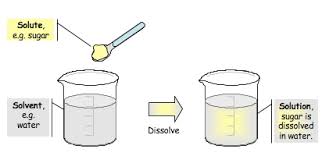
The ability of sugar to dissolve in water is called
malleability
Density
State
solubility

True or false. Your mass would change if you went to another planet.
True
False

If an ice cube is left out in a room it will change from one state of matter to another. Which is the correct order of State of Matter that the ice cube will go through?
What type of change can be easily reversed?
chemical change
physical change
both chemical and physical changes
neither physical or chemical changes
Which of the following examples is a physical change but NOT a change of state of matter?
logs burning
water freezing into ice cubes
candle wax melting
paper being cut

Three students at Mountain Park Elementary were given an assignment by their science teacher to plan and carry out experiments where chemical changes would occur. The chart shows each student’s plan and the results he or she recorded. Which statement is true about the experiments?
Student A was the only one to create an experiment where a color change occurred. This shows evidence of a chemical change.
Student A, Student B, and Student C all created experiments where chemical changes occurred. Student A observed a color change, Student B saw bubbles, and Student C was able to dissolve salt.
Student B and Student C created experiments were chemical changes occurred. Student A just dyed her water. Student B and Student C both changed their substances to prove that they had chemical changes. Student B created a gas while Student C got rid of the salt.
Student B was the only one to create an experiment with evidence of a chemical change. She created a new substance, a gas.

Which of the following is a correct statement about the investigations?
All of the situations are examples of physical changes because all of the investigations exhibit changes to the physical properties.
None of the situations are examples of physical changes because they all involve a color change.
Situation 2 is a physical change because rust forming is a natural process.
Situations 1 and 3 are physical changes because no new substances are formed.
Which picture shows a chemical change?


Select the Chemical Reaction.


What diagram shows what a Neutron is.


Which is an example of a PHYSICAL CHANGE?


Which of the following is true about the particles that make up matter?
They can only be found in solid substances.
They are too small to be seen with only our eyes.
They are the same size in all substances.
They are locked into regular arrangements.
All matter has physical and chemical ____________ .
For example: shape, size, color, smell.
particles
properties
microscope
states of matter
Matter is made up of small _____________ that are too small to be seen by the human eye.
particles
microscope
properties
states of matter

