
 Worksheets
Phy Y10Y11 C24 Astrophysics Earth, Gravity & the Solar System
Total questions: 80
Worksheet time: 1hrs 4mins
The explosion that sent the universe flying out is called _____.
The Big Bang
The Milky Way
The Solar System
The Sun
Since the Big Bang, and even today, the universe is still _____.
Expanding
Shrinking
Cooking
Spinning
As galaxies move away from our galaxy
a shift on the electromagnetic spectrum
(EMS) is noticed. This phenomena is
called _____________.
redshift
blueshift
unshift
blackshift
the ending of the life cycle of all super massive stars in the universe.
a massive system of stars, gas, dust, and dark matter bound together by gravity.
a visible body of liquid or frozen crystal droplets suspended above a planetary surface.
the visible path of a meteoroid as it enters Earth’s atmosphere.
A formation of a galaxy
An explosion of a huge star
The outer portion of a black hole
A type of star

When a Red Giant runs out of fuel, it become a:
Supernova
Nebula
White Dwarf
Main Sequence Star

What is a protostar?
A star that has died
A smaller than average star
A big, blue star that is on the main sequence of the HR diagram
A contracting mass of gas which represents an early stage in the formation of a star

What is a red giant?
It is what happens when a star begins fusing helium into carbon.
It is a star on the main sequence of the HR diagram.
It is a star that has died and is no longer fusing any material.

A neutron star is
The end phase of a massive star.
A star made up of only protons.
The type of star you have before it turns into a black hole.
light
heat
energy
hydrogen

star size
star temperature
star color
star luminosity
When a star is in the main sequence, what can be said about the forces acting inside the star?
The outward pressure is greater than the gravitational pull.
The gravitational pull is greater than the pressure from the fusion reactions.
All the forces acting on the star are unbalanced.
The inward gravitational attraction is equal to the outward pressure from the fusion reactions.
How might it be noticeable that a star is now fusing helium rather than hydrogen atoms?
The star cools and becomes a white dwarf.
The star shrinks then expands to form a red giant.
A black hole is created.
The star stops glowing.
Which of the following describes how a star much greater in mass than the Sun might end its life?
It will cool and collapse, forming a white dwarf.
It will cool and become a neutron star.
It will cool and become a supergiant which will then explode into a supernova, leaving a black hole.
It will remain stable for too long for us to know what might happen.
A large ensemble of stars, all interacting through the gravitational force and orbiting around a common center is called
Constellation
Galaxy
Star cluster
Star show
365 days
24 hours
24 hours + 6 hours
28 days
It is a planet
It is a satellite
It is a star
It is a comet
It is a satellite
It is a Star
It is a comet
It is a planet
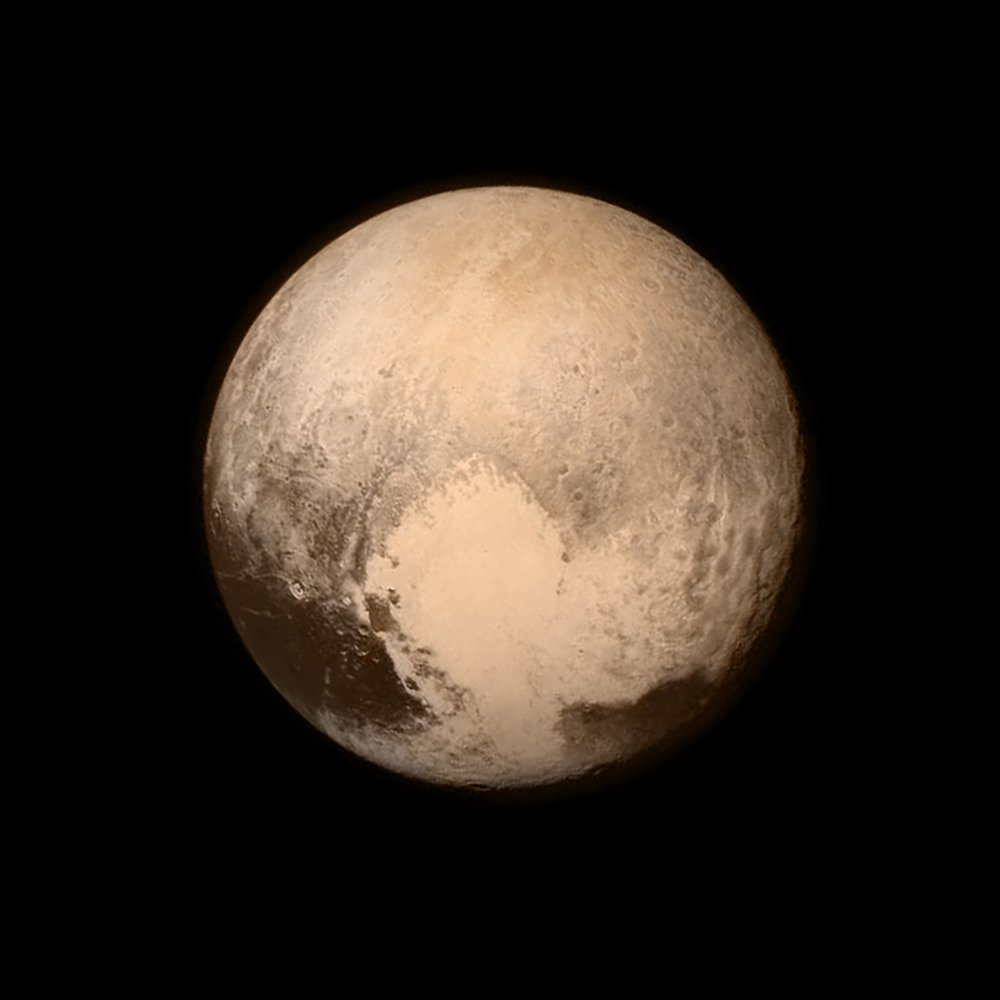
An asteroid
A planet
A dwarf planet
It doesn't exist
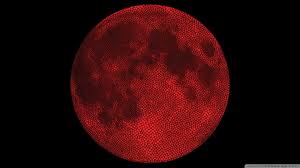
What´s the red planet ?
Mars
Saturn
Venus
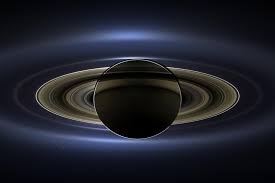
what is the planet ?
Uranus
Venus
Saturn

What is the position of the earth in the solar system?
The first
The second
The third
The last

The moon is the satellite of...
Mercury
Earth
Venus
Mars
Mercury is the smallest planet in the Solar System.
True
False
Earth is colder than Mars.
True
False

Andromeda
Orion
The Rosy Way
The Milky Way

Jupiter
Saturn
Uranus
Neptune

Which planet in the Solar System is the hottest?
Mars
Venus
Saturn
Earth

they take longer to orbit the sun.
they orbit the sun faster.

Inner Planets- select all that apply
dense core
rocky
few moons
thin atmosphere
smaller than outer planets

Mars,Venus,Earth, Mercury,Saturn Jupiter, Uranus, Neptune
Earth,Venus,Mars Jupiter, Neptune, Mercury,Saturn, Uranus
Mercury,Venus,Earth Mars,Jupiter, Saturn,Uranus Neptune
Mercury, Earth, Venus, Mars, Saturn, Jupiter, Neptune, Uranus

Outer Planets- select all that apply
small inner cores
larger
gaseous
many moons
temperatures are colder than inner planets

Which planet has a big red spot?
Mars
Jupiter
Earth
Saturn

Which planet has surface temperatures
closest to Earth's?
Venus
Mars
Neptune
Mercury

Which planet is Earth's “sister” planet?
Mercury
Venus
Earth
Mars

Which Planet is shown?
Neptune
Uranus
Mercury
Earth

Which planet is shown?
Neptune
Uranus
Jupiter
Venus
Which of the following are caused by gravity? (check all that apply)
tides
craters
planetary orbits
eclipses
The more massive an object, the (a) its gravitational pull.
True or false: objects have more gravity when they are farther apart.
True
False
Why does the Moon revolve around the Earth and not the Sun?
The Moon revolves around the Earth and (a) on its own axis.

Which planet orbits the Sun fastest?
Mars
Neptune
Mercury
Jupiter
Which planet orbits the Sun slowest?
Mars
Neptune
Mercury
Jupiter
Neap tides occur when the Sun, Moon, & Earth form a _________________.
circle
right angle
ellipse
straight line
What causes spring tides?
the spring season
when the Sun is in between the Moon & Earth
when the Earth, Moon, & Sun form an acute angle
when the Earth, Moon, & Sun form a straight line
What do you think would happen if Earth collided with a huge meteor?
Increases
Decreases
Stays the same

Based on the table, which planet in our solar system will have the fastest orbital speed?
Venus
Earth
Saturn
Mercury
According to Kepler’s discoveries, planets orbit around the Sun:
in a figure 8.
in perfect circles.
in an ellipse.
in a rectangular shape.
circular
cylindrical
elliptical
none of these

Where is the planet moving faster?
around segment A
around segment B
around either segment - the speed doesn't change
impossible to know

The orbital path of a satellite is shown in the sketch. Use the sketch to answer the question.
In which of the positions A through D does the satellite have the least speed ?
A
B
C
D
A planet moves __________ when it is farthest from the Sun.
faster
slower
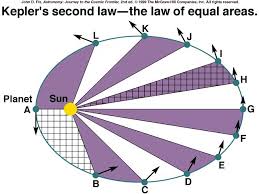
Where is the planet moving fastest?
Position A to B
Position B to C
Position H to I
Position I to J

The table shows orbital radius (R) and period (T). Which ratio is constant for these planets?
TR
TR2
T2R2
T2R3

The hot, dense center of a collapsing gas cloud (before a star forms) is called a ____.
prestar
priorstar
protostar
protonstar

In the core of a star, Hydrogen atoms join to form Helium and energy in a process called thermonuclear _______.
fishin'
fission
bombardment
fusion

Star formation begins in a ______.
nebula
nimbus
nova
nodule

Reorder the following from the beginning of the stellar formation to the end.
nebula
protostar
star
planetary system
Stars are swirling balls made up of...
fire and ash.
plasma and liquid.
gas and dust.
fire and plasma.
A collection of gas and dust that can form a star is called a...
Stellar Nebula.
Planetary Nebula.
Globular Cluster.
Stellar Nursery.
red dwarf
main sequence
protostar
white dwarf
nebula
protostar
main-sequence
red giant
Nebula
Protostar
Main-sequence star
Red giant
What stage in a stars life cycle is this describing?
The birth of a star
The death of a star
Black Hole
Stellar Nebula
Neutron Star
Black Hole
Black Dwarf
Supernova

nuclear fusion
gravity
hydrogen
friction

The formula above can be used to calculate the orbital velocity v of any object. It can be re-arranged to find the radius of the orbit.
Which of the following has been correctly re-arranged?


The Earth orbits the Sun in 1 year, which is 3.2 x 10⁷ seconds. The radius of the Earth's orbit is about 150 million kilometres. What is the orbital velocity of the Earth?
4.6 x 10³ m/s
29 m/s
4.6 m/s
2.9 x 10⁴ m/s
The radius of the Earth's orbit is about 150 million kilometres. In standard form, and given in metres, this is...
1.5 x 10⁸ m
1.5 x 10¹⁰ m
1.5 x 10¹¹ m
1.5 x 10¹² m
An apparent change in frequency of a wave due to the relative motion between a wave source and an observer
When sound changes pitch
When light changes color
An apparent change in the amplitude of a wave due to the relative motion between a wave source and an observer.
Moving towards the Earth
Moving away from the Earth
This is a trick question that cannot be answered
It isn't a star, it is a very large blueberry.

It is not moving
It is moving away from Earth (Redshift)
It is moving towards Earth (Blueshift)
It is moving towards Earth (Redshift)

It is not moving relative to Earth
It is moving away from Earth (Redshift)
It is moving towards Earth (Blueshift)
It is moving towards Earth (Redshift)

It is not moving relative to Earth
It is moving away from Earth (Redshift)
It is moving towards Earth (Blueshift)
It is moving towards Earth (Redshift)
Aphelion
perihelion
maximum ellipse
minimum elipse
aphelion
perihelion
minimum ellipse
maximum ellipse

