
 Worksheets
Newtons Laws of Motion Exam
Total questions: 85
Worksheet time: 7hrs 5mins
What is the unit for FORCE? (a)

Balanced or Unbalanced? (a)

Forces that have a net force of zero (a)

What is the net force? (a)
When Izzy and Zoe pull on the rope with the same amount of force, the forces are (a) .
A force of 40 N acts upon a 2 kg block. Calculate the acceleration of the object. (a)
An object with a mass of 100 kg is observed to accelerate at the rate of 5 m/s2. Calculate the force required to produce this acceleration. (a)
Stacy is rowing a boat. She wants the boat to move forward. According to Newton's Third Law, in which direction should she move her paddle in the water?
Backwards
Above her head
Forward
East
An archer shoots an arrow. The action force is the bowstring against the arrow, the reaction force is...
Air resistance against the bow
the arrow's push against the bowstring
the grip of the archer's hand on the bow
Mathematician, Astronomer, & Physicist who discovered gravity, laws of motion, calculus, reflecting telescope. (a)

A student inflates a balloon attached to a plastic straw. A string is threaded through the straw and tied to opposite ends of the room. When the air in the balloon is released, the balloon travels the length of the string. Which of Newton's laws explain this? (a)

If a 40 kg student is pushed in a rolling chair with a force of 30 N, what is the student's acceleration?
(a)
A car driving down the road runs out of gas. Which of Newton's laws explains why the car continues to move without gasoline? Be able to explain why. This will be a constructed response question.
(a)
Which of the following would be a good example of Newton's third law of motion?
An air freshener hanging from the rear-view mirror of a car hangs still while the car moves forward with a constant acceleration
A carbon dioxide-fueled rocket launches upward into the air as carbon dioxide gas accelerates toward the ground below the rocket
Two balls of different masses are rolled with the same force, resulting in the ball with larger mass stopping faster than the ball with the smaller mass.
All of the above
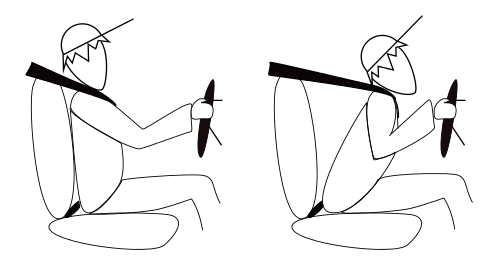
Match the following Law of motion with the correct example
Newton's 1st law of motion
Roll a ball across smooth/rough surfaces. The ball rolls faster on smooth because less fiction
Newton's 2nd law of motion
Hit a ball with 2 different forces, the ball will have greater acceleration due to larger force
Newton's 3rd of motion
Bouncing the ball on the court is the action, the floor pushing the ball back up is the reaction
The risk of injury in a car accident is much greater if occupants do not wear a seat belt. Which of Newton's laws explain why this is true?
Law of force and acceleration
Law of gravity
Law of action and reaction
Law of inertia
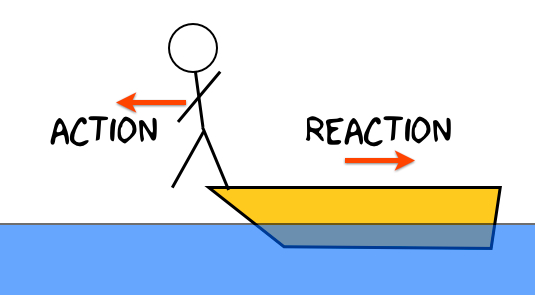

Read the example given in the picture. Drag and drop correct answer to each box. Not all answers will be used.
These (a) are an example of the law (b) .
Which best explains the law of force and acceleration (Newton's 2nd Law of Motion)
Restraints keep passengers from falling out of a roller coaster
Riders must be certain heights so they have enough mass to ride
A larger force will be required to accelerate a roller coaster with more people
A roller coaster that goes up must also come down due to the force of gravity
This law of motion states that heavier objects need a larger force to make them move.
Newton's First Law of Motion
Newton's Second Law of Motion
Newton's Third Law of Motion
All of the Above

When the force on a car is doubled, the acceleration is doubled.
Newton's 1st Law
Newton's 2nd Law
Newton's 3rd Law

A skater pushes another skater forward, but the one pushing moves backwards.
Newton's 1st Law
Newton's 2nd Law
Newton's 3rd Law

The harder you hit a baseball, the faster it accelerates.
Newton's 1st Law
Newton's 2nd Law
Newton's 3rd Law

You push against a wall and the wall is pushing back on you.
Newton's 1st Law
Newton's 2nd Law
Newton's 3rd Law
An object in motion stays in motion and an object at rest stays at rest UNLESS
acted on by a balanced force.
acted on by an unbalanced force.
Force is related to mass and acceleration. Which law is this?
Law 1
Law 2
Law 3
The momentum of an object depends upon the object's ___________&_____________.
size and shape
mass and speed
mass and veloctiy
mass and energy


Which would increase the kinetic energy of a wagon? Select all that apply.
add mass to the wagon
decrease the mass of the wagon
increase the speed of he wagon
decrease the speed of the wagon
A kite stuck in a tree has ______ energy due to its position.
potential
kinetic
chemical
thermal
If there are two forces going in opposite directions how would you find the net force?
Subtract
Add
Neither
Multiply


Newtons law states that for every action, there is an_________ reaction
unequal and opposite
stronger and opposite
equal and similar
equal and opposite
A baseball bat hits a baseball with a force of 100 Newtons. What is the force and its direction exerted by the ball on the bat?
100 Newtons, same direction
100 Newtons, opposite direction
200 Newtons, opposite direction
200 Newtons, same direction
A rocket blasting off is an example of?
1st Law
Law of Inertia
2nd Law
Law of Acceleration
3rd Law
Law of Action-Reaction
4th Law
A rocket blasting off is an example of?
1st Law
Law of Inertia
2nd Law
Law of Acceleration
3rd Law
Law of Action-Reaction
4th Law
A car accelerating faster than a truck is an example of?
1st Law
Law of Inertia
2nd Law
Law of Acceleration
3rd Law
Law of Action-Reaction
4th Law
A pencil on a table will stay there unless moved by an unbalanced force.
1st Law
Law of Inertia
2nd Law
Law of Acceleration
3rd Law
Law of Action-Reaction
4th Law
A pencil on a table will stay there unless moved by an unbalanced force.
1st Law
Law of Inertia
2nd Law
Law of Acceleration
3rd Law
Law of Action-Reaction
4th Law
You push back, but you move forward while paddling a canoe is an example of?
1st Law
Law of Inertia
2nd Law
Law of Acceleration
3rd Law
Law of Action-Reaction
4th Law
It requires more force to lift a book than a sheet of paper.
1st Law
Law of Inertia
2nd Law
Law of Acceleration
3rd Law
Law of Action-Reaction
4th Law
A ball will continue to roll until gravity and friction stops it.
1st Law
Law of Inertia
2nd Law
Law of Acceleration
3rd Law
Law of Action-Reaction
4th Law
An empty grocery cart requires less force to push than a full grocery cart.
1st Law
Law of Inertia
2nd Law
Law of Acceleration
3rd Law
Law of Action-Reaction
4th Law
A picture hanging on the wall is an example of?
1st Law
Law of Inertia
2nd Law
Law of Acceleration
3rd Law
Law of Action-Reaction
4th Law
The air is let out of a balloon and it flies around the room is an example of?
1st Law
Law of Inertia
2nd Law
Law of Acceleration
3rd Law
Law of Action-Reaction
4th Law
Pushing a child on a swing is easier than pushing an adult on the same swing, because the adult has more mass and inertia.
1st Law
Law of Inertia
2nd Law
Law of Acceleration
3rd Law
Law of Action-Reaction
4th Law
A soccer ball accelerates more than a bowling ball when thrown with the same force.
1st Law
Law of Inertia
2nd Law
Law of Acceleration
3rd Law
Law of Action-Reaction
4th Law
A soccer player kicks a ball with their foot and their toes are left stinging.
1st Law
Law of Inertia
2nd Law
Law of Acceleration
3rd Law
Law of Action-Reaction
4th Law
You sit in a chair and don't fall to the ground.
1st Law
Law of Inertia
2nd Law
Law of Acceleration
3rd Law
Law of Action-Reaction
4th Law
When you are sitting in the car and the driver slams on the brakes and you continue to move forward.
1st Law
Law of Inertia
2nd Law
Law of Acceleration
3rd Law
Law of Action-Reaction
4th Law
Sliding down a slide, as you reach the bottom the friction causes you to slow down and stop.
1st Law
Law of Inertia
2nd Law
Law of Acceleration
3rd Law
Law of Action-Reaction
4th Law
A small car can speed up to 65mph much faster than a fully loaded tractor trailer can.
1st Law
Law of Inertia
2nd Law
Law of Acceleration
3rd Law
Law of Action-Reaction
4th Law
A man pulls down on a rope causing his body to lift upward and rise along the rope.
1st Law
Law of Inertia
2nd Law
Law of Acceleration
3rd Law
Law of Action-Reaction
4th Law
Jumping off a diving board is an example of? (Your force is directed toward the board but your body moves away from the board)
1st Law
Law of Inertia
2nd Law
Law of Acceleration
3rd Law
Law of Action-Reaction
4th Law
When you give your friend a ride with you on your bike you have to pedal faster to keep the same speed you had when you where on the bike alone.
1st Law
Law of Inertia
2nd Law
Law of Acceleration
3rd Law
Law of Action-Reaction
4th Law
An object will continue on doing whatever it's doing unless an unbalanced force affects it.
1st Law
Law of Inertia
2nd Law
Law of Acceleration
3rd Law
Law of Action-Reaction
4th Law
An object with more mass will require more force to move.
1st Law
Law of Inertia
2nd Law
Law of Acceleration
3rd Law
Law of Action-Reaction
4th Law
All forces happen in pairs.
1st Law
Law of Inertia
2nd Law
Law of Acceleration
3rd Law
Law of Action-Reaction
4th Law

