
 Worksheets
2.6-2.7 APES
Total questions: 40
Worksheet time: 28mins
what is an adaptation?
a change in behavior or physical aspect of an organism in order to be better suited to survive in a particular environment.
a change that an organism quickly develps to survive
a unique characteristic that makes an organsism more dominant
a shift in an organisms behavior
Adapatations lead to...
Unique organisms
Evolution
Mutations
Stronger Organsisms
Which would be an adaptation useful in a cold biome?
Being of a smaller size
Being active during the cooler times of day
Blubber/fat
Having dark fur
What would be the most useful adaptation for a rabbit in the snow...
camoflauge
having long ears
having strong legs
strong teeth
Which of the following examples are of behavioral adaptations?
Migration
Claws
Teeth
Eyes
Which of the following are examples of structural adaptations?
Hibernation
Migration
Eyes
Mating calls

What is the best definition of animal adaptation?
Changes to an animal's diet.
Characteristics that help animals survive.
Characteristics of an animal's habitat.
Skills learned in order to hunt.
Some animals are able to copy other animals in order to look more dangerous to get away from predators. What is this called?
Hibernation
Camouflage
Mimicry
Migration


If farmers use a controlled burn to prevent forest fires, what would most likely be the first plants to return?
trees
shrubs
mosses
grasses
Breaking News! A new island has formed off of Hawaii! What must occur for it to become an ecosystem?
Secondary Succession
Aquatic succession
Primary Succession
Ferns must grow
Which would result in primary succession?
volcano destroying habitat leaving only soil and ash
Tornado destroying a crop leaving very little soil
Glacier retreating exposing bare rock
limiting factors
Primary succession occurs in areas with:
very little soil
lots of soil
no soil
soil that has been disturbed
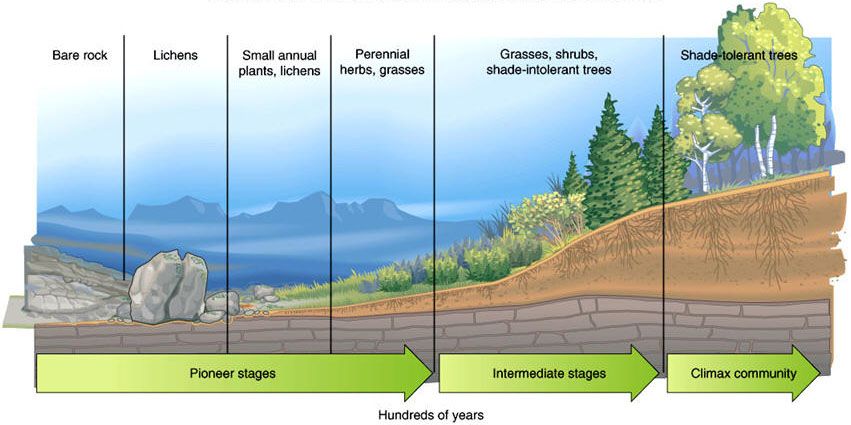
The picture shows what type of succession?
primary
secondary
tertiary
quadanary
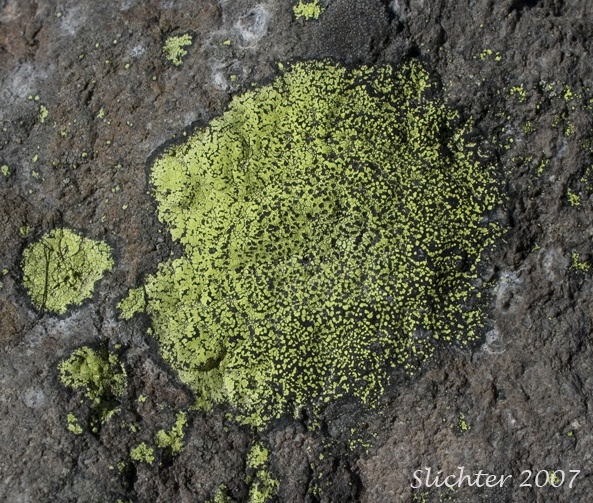

A species that plays a critical role in the health, maintenance, growth, or definition of an ecosystem.
keystone
invasive
engineer
predator
Why are bees considered a keystone species?
The honey they make supports the bear population
They pollinate flowers that produce fruit which supports the ecosystem
They sting when threatened
They live in hives
Why are some sharks considered a keystone species?
Because they are a top predator
They scare off smaller fish that may overgraze an area of sea grass
They are tertiary consumers
They are cartilaginous
Which one of the following keystone examples play a vital role in the health of coastal kelp forests?
starfish
sea otters
beavers
wolves
elephants
A life form that is very sensitive to environmental changes in its ecosystem. They can give us early-warning messages that a habitat is suffering.
Indicator Species
Flagship Species
Predators
Ecosystem Engineers


What do the arrows represent in a food chain?
Separation of trophic levels
Flow of energy
Transfer of matter
Feeding niches
keystone species
a system of interlocking and interdependent food chains.
All the living organisms that inhabit an environment
A series of steps in which organisms transfer energy by eating and being eaten
a species on which other species in an ecosystem largely depend, such that if it were removed the ecosystem would change drastically.
trophic cascade
All the living organisms that inhabit an environment
The number of different species in an area
indirect effects in a community that are initiated by a predator
Each step in a food chain or food web

What is a keystone species?
A species that helps to hold an ecosystem together
A species that lives in or around rocks
Keys and stones have nothing to do with ecology
A keystone isn't a living thing, it's just a stone

A side-effect when a certain species that usually helps to keep the entire ecosystem balanced is reduced or removed. When their numbers are changed there is an ecological imbalance.
trophic level
trophic cascade
food web
food chain
One of the defining characteristics of a (a) species is that it fills a critical (b) role that no other (c) can. Without them, the entire (d) would radically change-or cease to (e) altogether.

Sea otters are key to protecting coastal kelp forests but consuming sea urchins. Sea otters are which type of keystone species?
predator
prey
plant
ecosystem engineer
Keystone species are a (a) because they help to control (b) .
in 1995 Wolves were reintroduced to Yellowstone National Park. Which answer below most accurately describes a possible trophic cascade the could result from the reintroduction of wolves?
wolves reintroduced-> deer population increased -> tree and vegetation cover decreased
wolves reintroduced-> beaver population decreased -> tree and vegetation cover increased
wolves reintroduced-> deer population decreased -> tree and vegetation cover increased -> beaver population increased
wolves reintroduced-> deer population decreased -> beaver population decreased -> songbird population increased

A species that helps to manage prey populations, which in turn controls the ecosystem's producers (vegetation).
predator
keystone
engineer
mutualist
The primary cause of the introduction of invasive species introduction is ---
too much food.
human action.
weather events.
asteroids.


