
 Worksheets
Earth Science Q1 EQE Review
Total questions: 32
Worksheet time: 29mins
How many arcseconds are there in a degree?
(a)
Which of the reference lines for mapping the Earth run from North to South but measure East to West?
(a)
What is the latitude of the Equator?
(a)
What is another term for Latitude?
(a)
What is the Tropic to the North of the Equator?
(a)
Which type of azimuthal projection uses a light source from infinity?
(a)
What is the shape of the map resulting from an azimuthal map projection?
(a)
Which part of the Earth is the most distorted in a 1-standard parallel cylindrical map?
(a)
What is the Mercator map mainly used for?
(a)
What 3D shape was used for the Dymaxion map projection?
(a)
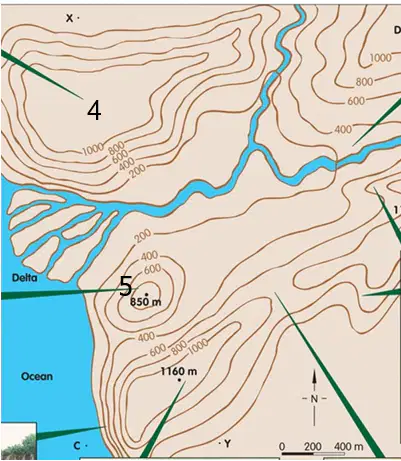
What is the landform labeled 4?
(a)
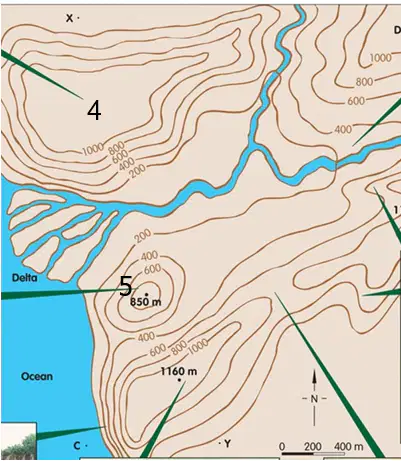
What is the landform indicated by the number 5?
(a)
What do the dashed lines in a topographical map mean?
(a)
What landform has overlapping contour lines?
(a)
What landform is landform is found between 2 peaks?
(a)
What theory describes the deformation of rocks that result in earthquakes?
(a)
Which of the materials from the strike-slip experiment models the ability of rocks to bend and store energy?
(a)
Which of the materials from the strike-slip experiment models the high friction between rocks?
(a)
What is the effect of lower weight in the strike-slip experiment model?
more movement
less movement
What is the effect of adding sandpaper in the strike-slip experiment model?
more movement
less movement
What is the term used for the fractures in the Earth's crust?
(a)
Which of the following does not describe an earthquake?
Ground shaking
Vibration of the Earth
Rapid release of energy
Ground opening
Which of the following sequences happens to rocks that describe how an earthquake happens?
Deformation - Breaking - Spring Back
Breaking - Deformation - Spring Back
Spring Back - Deformation - Breaking
Spring Back - Breaking - Deformation
What type of faults occur in areas experiencing compression stress only?
Normal
Reverse
Strike-Slip
Oblique
What type of stress occurs at a strike-slip fault?
tension
compression
shearing
What is the point inside the crust where the earthquake happens?
(a)
Which wall moves up at a reverse fault?
hanging wall
foot wall
What is the point on the surface of the Earth above the hypocenter of the earthquake?
(a)
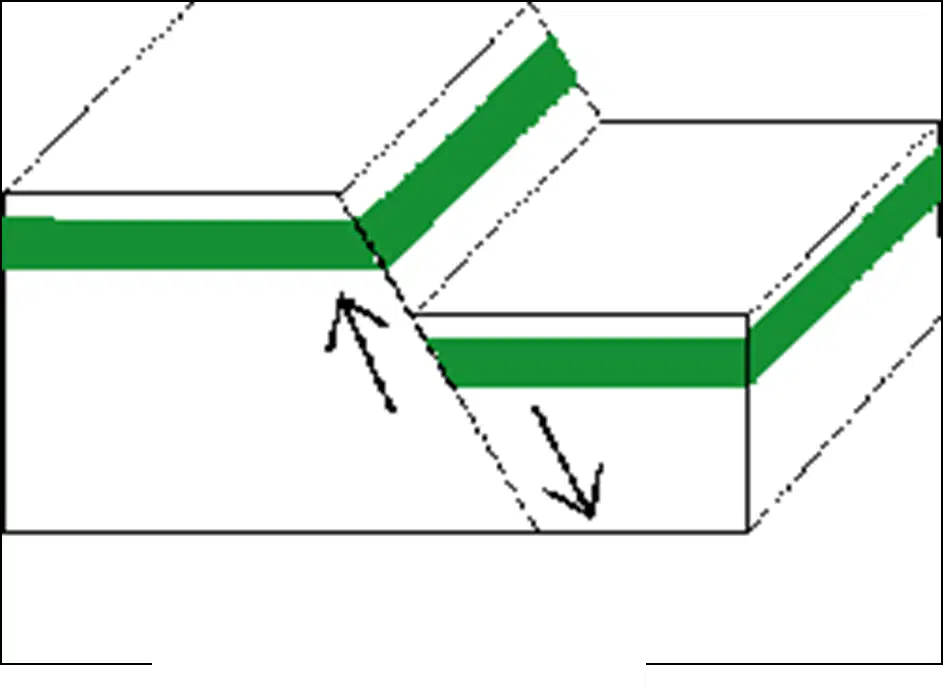
What kind of fault is in the graphic?
(a)
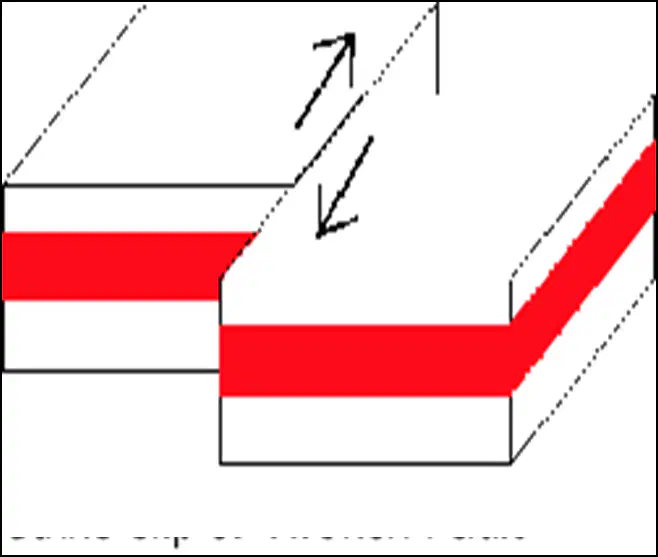
What kind of stress is experienced in this graphic?
(a)
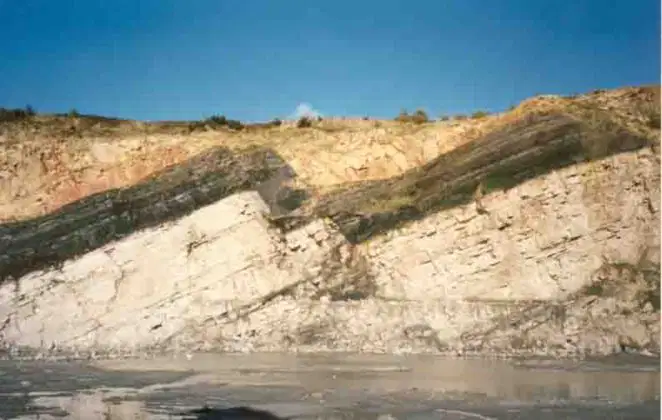
What kind of fault can be found in this photo?
(a)
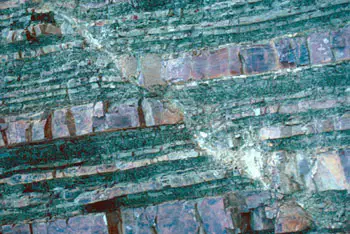
What kind of stress caused the fault on the photo?
(a)

