
Font size
 Worksheets
UNIT 6 ― The Newborn
Total questions: 153
Worksheet time: 1hrs 19mins
What are classifications of newborns ACCORDING TO AOG?
Preterm / Term / Postterm
NBW / ABW / LBW / VLBW / ELBW
SGA / AGA / LGA
What are classifications of newborns ACCORDING TO WEIGHT?
NBW / ABW / LBW / VLBW / ELBW
SGA / AGA / LGA
Preterm / Term / Postterm
What are classifications of newborns ACCORDING TO AOG & WEIGHT?
SGA / AGA / LGA
Preterm / Term / Postterm
NBW / ABW / LBW / VLBW / ELBW
ACCORDING TO AOG, what is a baby born at 20-37 weeks classified as?
Preterm (𝚊𝚔𝚊 Premature)
Term
Postterm (𝚊𝚔𝚊 Postmature)
ACCORDING TO AOG, what is a baby born at 38-42 weeks classified as?
Term
Postterm (𝚊𝚔𝚊 Postmature)
Preterm (𝚊𝚔𝚊 Premature)
ACCORDING TO AOG, what is a baby born ≥ 43 weeks classified as?
Postterm (𝚊𝚔𝚊 Postmature)
Preterm (𝚊𝚔𝚊 Premature)
Term
ACCORDING TO WEIGHT, what is a baby born weighing 2,500-3,500 grams classified as?
Normal Birth Weight (NBW)
Average Birth Weight (ABW)
Low Birth Weigh (LBW)
Very Low Birth Weight (VLBW)
Extremely Low Birth Weight (ELBW)
ACCORDING TO WEIGHT, what is a baby born weighing exactly 3,000 grams classified as?
Average Birth Weight (ABW)
Low Birth Weigh (LBW)
Very Low Birth Weight (VLBW)
Extremely Low Birth Weight (ELBW)
Normal Birth Weight (NBW)
ACCORDING TO WEIGHT, what is a baby born weighing less than 2,500 grams classified as?
Low Birth Weigh (LBW)
Very Low Birth Weight (VLBW)
Extremely Low Birth Weight (ELBW)
Normal Birth Weight (NBW)
Average Birth Weight (ABW)
ACCORDING TO WEIGHT, what is a baby born weighing less than 1,500 grams classified as?
Very Low Birth Weight (VLBW)
Extremely Low Birth Weight (ELBW)
Normal Birth Weight (NBW)
Average Birth Weight (ABW)
Low Birth Weigh (LBW)
ACCORDING TO WEIGHT, what is a baby born weighing less than 1,000 grams classified as?
Extremely Low Birth Weight (ELBW)
Normal Birth Weight (NBW)
Average Birth Weight (ABW)
Low Birth Weigh (LBW)
Very Low Birth Weight (VLBW)
ACCORDING TO AOG & WEIGHT, what is a baby born weighing below the 10th percentile of babies born at the same gestational age classified as?
Small for Gestation Age (SGA)
Appropriate for Gestation Age (AGA)
Large for Gestational Age (LGA)
ACCORDING TO AOG & WEIGHT, what is a baby born weighing between the 10th - 90th percentile of babies born at the same gestational age classified as?
Appropriate for Gestation Age (AGA)
Large for Gestational Age (LGA)
Small for Gestation Age (SGA)
ACCORDING TO AOG & WEIGHT, what is a baby born weighing above the 90th percentile of babies born at the same gestational age classified as?
Large for Gestational Age (LGA)
Small for Gestation Age (SGA)
Appropriate for Gestation Age (AGA)
When taking an ANTHROPOMETRIC MEASUREMENT of a newborn, the normal range for BIRTH WEIGHT would be?
2,500-3,500 grams
1,500-2,500 grans
3,500-4,500 grams
When taking an ANTHROPOMETRIC MEASUREMENT of a newborn, the normal range for BIRTH LENGTH would be?
48-53 cm
43-48 cm
53-58 cm
When taking an ANTHROPOMETRIC MEASUREMENT of a newborn, the normal range for HEAD CIRCUMFERENCE (HC) would be?
33-35 cm
30-33 cm
35-37 cm
When taking an ANTHROPOMETRIC MEASUREMENT of a newborn, the normal range for CHEST CIRCUMFERENCE (CC) would be?
30-33 cm
33-35 cm
35-37 cm
When taking an ANTHROPOMETRIC MEASUREMENT of a newborn, the normal range for ABDOMINAL CIRCUMFERENCE (AC) would be?
30-33 cm
33-35 cm
35-37 cm
In a newborn's anthropometric measurement, the HEAD CIRCUMFERENCE (HC) is __________ the CHEST CIRCUMFERENCE (CC).
greater than
less than
approximately equal (to)
In a newborn's anthropometric measurement, the HEAD CIRCUMFERENCE (HC) is __________ the ABDOMINAL CIRCUMFERENCE (AC).
greater than
less than
approximately equal (to)
In a newborn's anthropometric measurement, the CHEST CIRCUMFERENCE (CC) is __________ the HEAD CIRCUMFERENCE (HC).
less than
greater than
approximately equal (to)
In a newborn's anthropometric measurement, the ABDOMINAL CIRCUMFERENCE (AC) is __________ the HEAD CIRCUMFERENCE (HC).
less than
greater than
approximately equal (to)
In a newborn's anthropometric measurement, the CHEST CIRCUMFERENCE (CC) is __________ the ABDOMINAL CIRCUMFERENCE (AC).
approximately equal (to)
greater than
less than
What is the normal range of a newborns RESPIRATORY RATE?
30-60 CPM
12-20 CPM
20-30 CPM
What is a newborn's normal range for RESPIRATORY RATE?
30-60 CPM
12-20 CPM
20-30 CPM
What is a newborn's normal range for PULSE RATE?
120-160 bpm
60-100 bpm
100-120 bpm
What is a newborn's normal range for BODY TEMPERATURE?
36.5-37.5 ℃
35.5-36.5 ℃
37.5-38.5 ℃
TRUE or FALSE: Newborns are obligate nose breathers.
TRUE
FALSE
TRUE or FALSE: Newborns are abdominal (diaphragmatic) breathers.
TRUE
FALSE
TRUE or FALSE: Newborns are non-obligate nose breathers.
FALSE
TRUE
TRUE or FALSE: Newborns are periodic breathers.
TRUE
FALSE
TRUE or FALSE: Newborns are non-abdominal (diaphragmatic) breathers.
FALSE
TRUE
TRUE or FALSE: Newborns are non-periodic breathers.
FALSE
TRUE
NEWBORNS are __________. On the other hand, ADULTS are __________.
obligate nose breathers / nose and mouth breathers
nose and mouth breathers / obligate nose breathers
NEWBORNS are __________. On the other hand, ADULTS are __________.
abdominal breathers / chest breathers
chest breathers / abdominal breathers
Which pulse site is the most accurate and preferred for regular monitoring?
Apical Pulse
Brachial Pulse
Radial Pulse
Carotid Pulse
Temporal Pulse
Which pulse site is the most accessible and useful in emergency situations?
Brachial Pulse
Apical Pulse
Radial Pulse
Carotid Pulse
Temporal Pulse
The APICAL PULSE of a newborn is in the __________?
4th ICS, left mid-clavicular line
4th ICS, right mid-clavicular line
5th ICS, left mid-clavicular line
5th ICS, right mid-clavicular line
The APICAL PULSE of an adult is in the __________?
5th ICS, left mid-clavicular line
5th ICS, right mid-clavicular line
4th ICS, left mid-clavicular line
4th ICS, right mid-clavicular line
In BTemp measurement, what is the "MOST ACCURATE" route?
Rectal
Axillary
Tympanic / Forehead
Oral
In BTemp measurement, what is the "MOST CONVENIENT" route?
Axillary
Tympanic / Forehead
Oral
Rectal
In BTemp measurement, what is the "FASTEST" route?
Tympanic / Forehead
Oral
Rectal
Axillary
In BTemp measurement, what is the "NOT RECOMMENDED" route in newborns due to their lack of ability to cooperate and hold the thermometer in place?
Oral
Rectal
Axillary
Tympanic / Forehead
In BTemp measurement, what is the "MOST ACCESSIBLE" route in adults?
Oral
Rectal
Axillary
Tympanic / Forehead
Within which BTemp measurement is a LOW-GRADE FEVER classified?
≥ 37.6 ℃
≥ 38.0 ℃
≥ 39.0 ℃
Within which BTemp measurement is a MODERATE-GRADE FEVER classified?
≥ 38.0 ℃
≥ 39.0 ℃
≥ 37.6 ℃
Within which BTemp measurement is a HIGH-GRADE FEVER classified?
≥ 39.0 ℃
≥ 37.6 ℃
≥ 38.0 ℃
Which VS is generally not routinely assessed on newborns?
BP
RR
PR
BTemp
SpO2
What does a pulse oximeter provides?
SpO2 (Peripheral Oxygen Saturation)
SaO2 (Arterial Oxygen Saturation)
When the nurse applies a pulse oximeter, the client asks what information the device provides. What is the best response by the nurse?
"The percentage of oxygen bound to hemoglobin and your heart rate."
"The partial pressure of oxygen in your blood and your respiratory rate."
"The total amount of oxygen in the blood and your blood pressure."
"The amount of carbon dioxide in the blood and your pulse pressure."
How is Vitamin K administered?
0.1 mL via IM @ 🅁 Vastus Lateralis
0.5 mL via IM @ 🄻 Vastus Lateralis
0.05 mL via ID @ Deltoid
How is Hepatitis B vaccine administered?
0.5 mL via IM @ 🄻 Vastus Lateralis
0.05 mL via ID @ Deltoid
0.1 mL via IM @ 🅁 Vastus Lateralis
How is Bacillus Calmette-Guérin (BCG) vaccine administered?
0.05 mL via ID @ Deltoid
0.1 mL via IM @ 🅁 Vastus Lateralis
0.5 mL via IM @ 🄻 Vastus Lateralis
This was the original cornerstone of the Philippine Department of Health's immunization efforts, launched in 1976.
Expanded Program on Immunization (EPI)
National Immunization Program (NIP)
This is the official designation for the comprehensive vaccination program today, which has grown far beyond the original scope of the previous program.
National Immunization Program (NIP)
Expanded Program on Immunization (EPI)
The "Respiratory Center" of the brain is the...?
Medulla Oblongata
Hypothalamus
The "Cardiovascular Center" of the brain is the...?
Medulla Oblongata
Hypothalamus
The "Thermoregulation Center" of the brain is the...?
Hypothalamus
Medulla Oblongata
The functional units for gas exchange before birth are the...?
Chorionic Villi
Alveoli
The functional units for gas exchange after birth are the...?
Alveoli
Chorionic Villi
These are lipoproteins produced by the lungs that prevent the alveoli from collapsing and making it easier to inflate the lungs.
(a)
The synthesis (or production) of pulmonary surfactant starts at which week AOG?
24
34
20
30
Meconium is passed usually within __________ after birth.
24-48 hrs
24-48 mins
48-72 hrs
48-72 mins
Which of the following stools is considered to be "DARK GREEN" in color?
Meconium
Transitional Stool
Mature Stool
Which of the following stools is considered to be "BROWNISH GREEN" in color?
Transitional Stool
Mature Stool
Meconium
Which of the following stools is considered to be "YELLOWISH GREEN" in color?
Mature Stool
Meconium
Transitional Stool
This is the enzyme needed to conjugate bilirubin?
UGT
UDT
UGDT
This is the enzyme needed to conjugate bilirubin?
(a)
This is the form of bilirubin that is fat-soluble.
Unconjugated Bilirubin (UCB)
Conjugated Bilirubin (CB)
This is the form of bilirubin that is water-soluble.
Conjugated Bilirubin (CB)
Unconjugated Bilirubin (UCB)
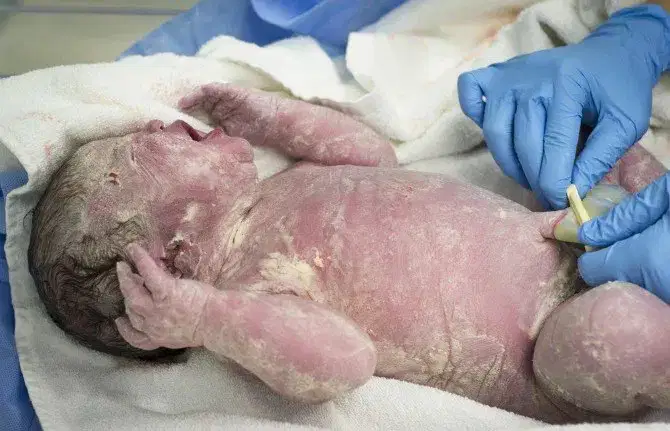
These are white, cheesy substance that serves for protection, lubrication, and thermoregulation in utero and immediately after birth.
Vernix Caseosa
Lanugo
Desquamation
Erythema Toxicum Neonatorum
Mottling

These soft, fine hair that covers the fetus and often remains on the shoulders, back, and ears of newborns, particularly premature infants.
Lanugo
Desquamation
Erythema Toxicum Neonatorum
Mottling
Vernix Caseosa

This is the peeling (exfoliation) of the skin which is especially noticeable in post-term newborns due to prolonged exposure to amniotic fluid.
Desquamation
Erythema Toxicum Neonatorum
Mottling
Vernix Caseosa
Lanugo

These are benign, common rashes appearing as blotchy red with small, yellow-white papules or pustules surrounded by redness.
Erythema Toxicum Neonatorum
Mottling
Vernix Caseosa
Lanugo
Desquamation
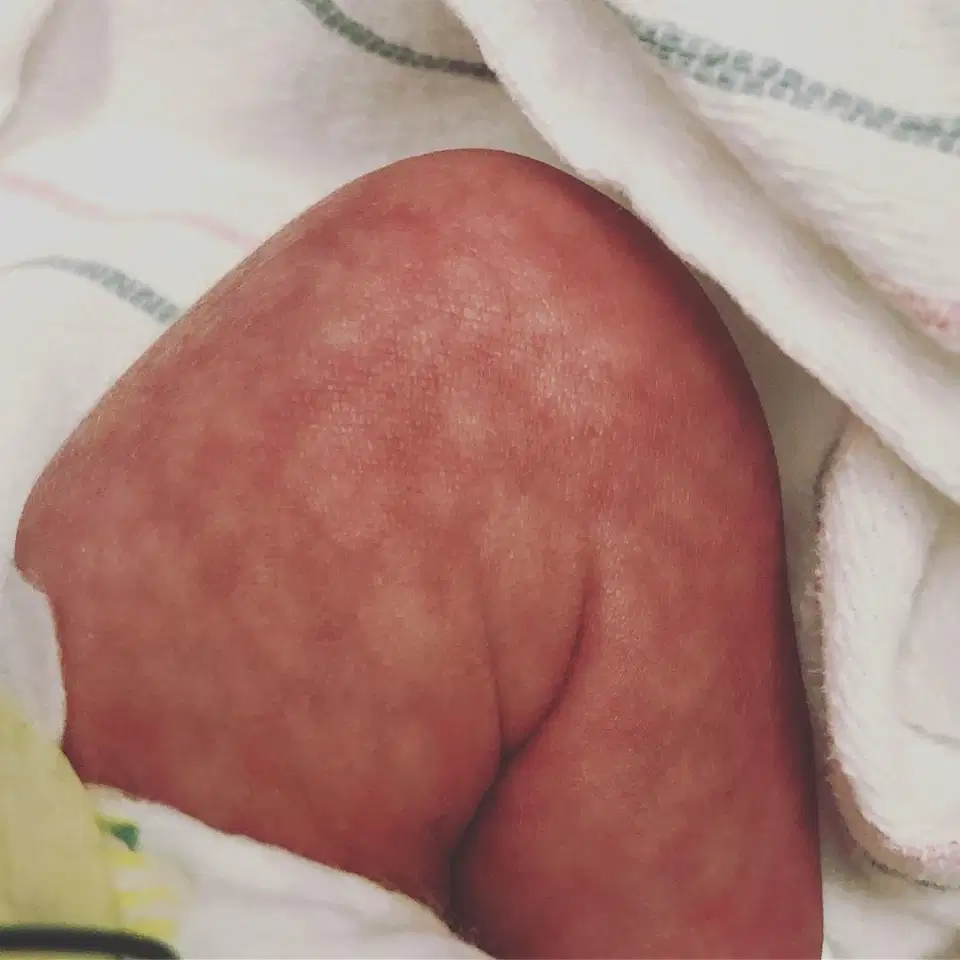
This is a patchy, marbled appearance on the skin, often seen when a newborn is cold.
Mottling
Vernix Caseosa
Lanugo
Desquamation
Erythema Toxicum Neonatorum
This is a type of jaundice that occurs after 24 hrs post-delivery.
Physiologic Jaundice
Pathologic Jaundice
This is a type of jaundice that occurs within the first 24 hrs post-delivery.
Pathologic Jaundice
Physiologic Jaundice
These birthmarks are caused by an abnormal formation or overgrowth of blood vessels.
Vascular Birthmarks
Pigmented Birthmarks
Which of the following are Vascular Birthmarks?
Stork Bites / Strawberry Hemangiomas / Port-Wine Stains
Café-au-lait Spots / Melanocytosis / Congenital Melanocytic Nevus
Which of the following are Pigmented Birthmarks?
Café-au-lait Spots / Melanocytosis / Congenital Melanocytic Nevus
Stork Bites / Strawberry Hemangiomas / Port-Wine Stains
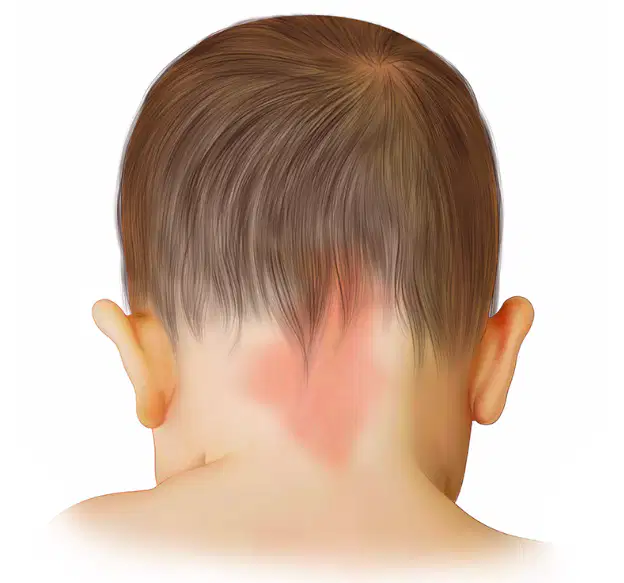
Stork Bites (𝚊𝚔𝚊 Telangiectatic Nevi) are __________ vascular birthmarks.
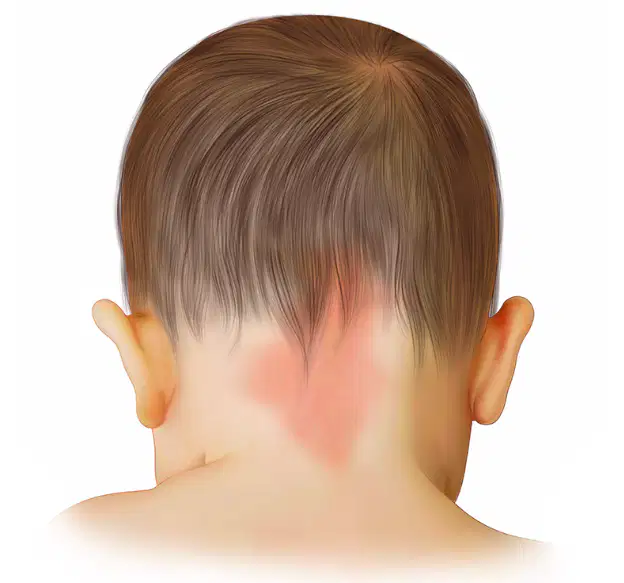
Light Red / flat
Light Red / flat
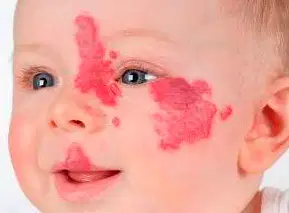
Bright Red / raised
Bright Red / raised
Deep Red / flat
Deep Red / flat
Strawberry Hemangiomas are __________ vascular birthmarks.
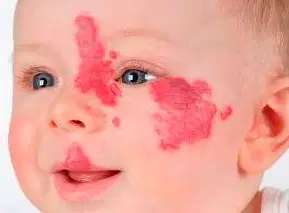
Bright Red / raised
Bright Red / raised
Deep Red / flat
Deep Red / flat
Light Red / flat
Light Red / flat
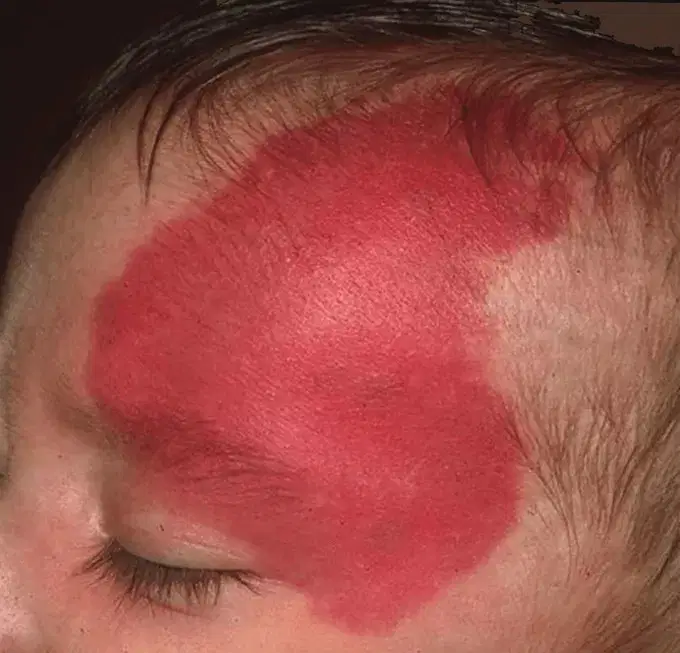
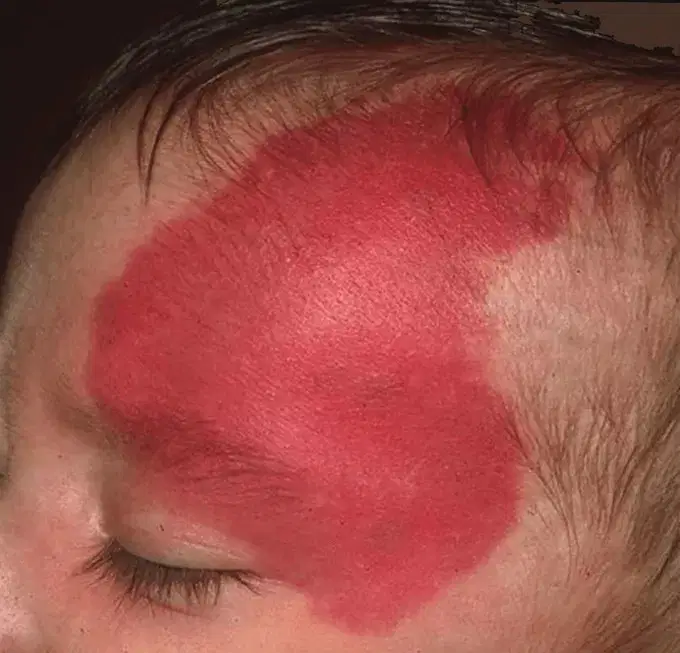
Port-Wine Stains (𝚊𝚔𝚊 Nevus Flammeus) are __________ vascular birthmarks.
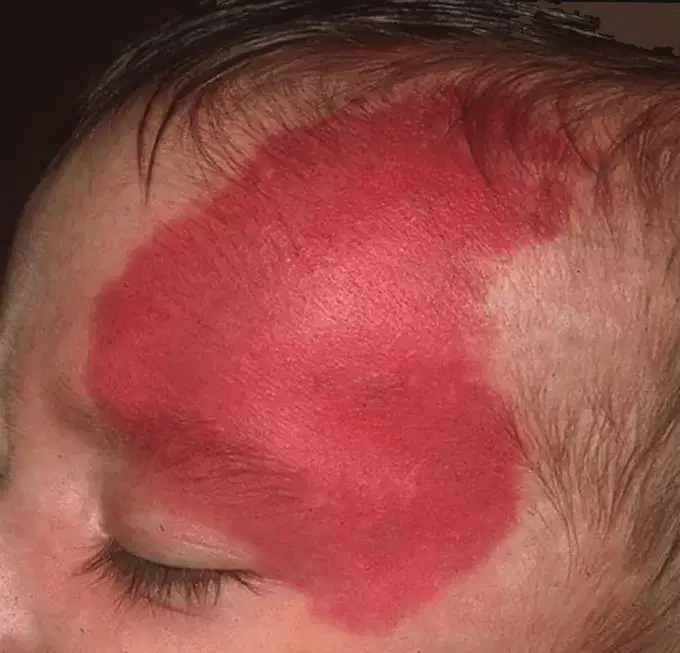
Deep Red / flat
Deep Red / flat
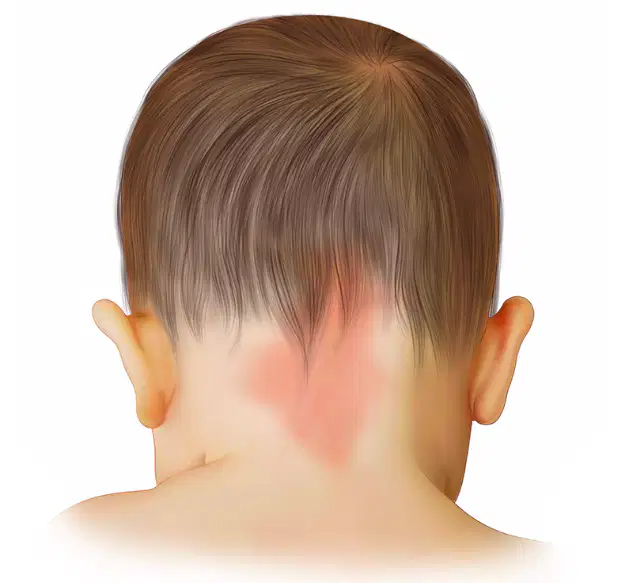
Light Red / flat
Light Red / flat
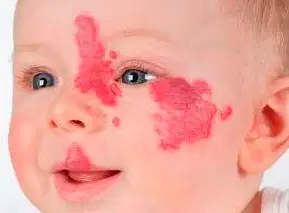
Bright Red / raised
Bright Red / raised
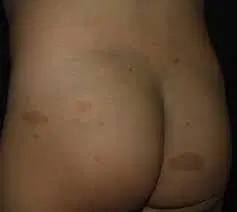
Café-au-lait Spots are __________ pigmented birthmarks.
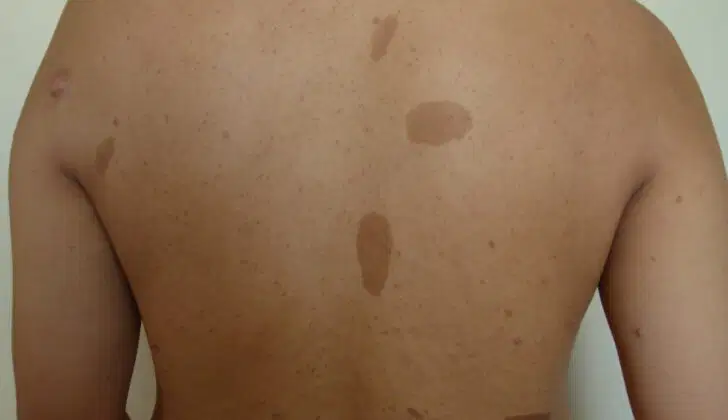
light brown
light brown
blue-gray
blue-gray

brown to black
brown to black
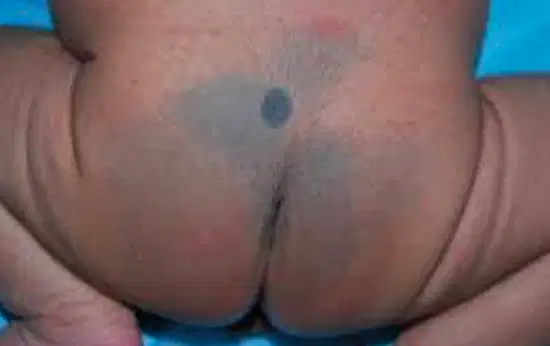
Melanocytosis (𝚊𝚔𝚊 Mongolian Spots) are __________ pigmented birthmarks.
blue-gray
blue-gray
brown to black
brown to black
light brown
light brown
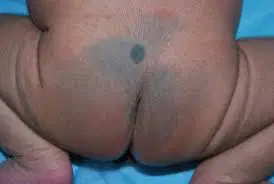
Congenital Melanocytic Nevus (CMN) are __________ pigmented birthmarks.
brown to black
brown to black
light brown
light brown
blue-gray
blue-gray

This is the premature fusion of the skull bones leading to an abnormally shaped head.
Craniosynostosis
Cephalohematoma
Caput Succedaneum
Craniotabes
Cradle Cap
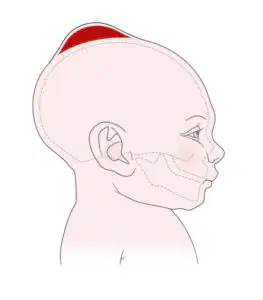
This is a firm collection of blood that does not cross suture lines.
Cephalohematoma
Caput Succedaneum
Craniotabes
Cradle Cap
Craniosynostosis
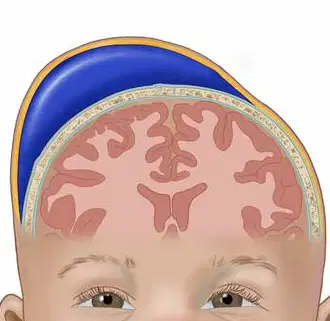
This is a swelling of the scalp caused by the accumulation of fluid that crosses suture lines.
Caput Succedaneum
Craniotabes
Cradle Cap
Craniosynostosis
Cephalohematoma
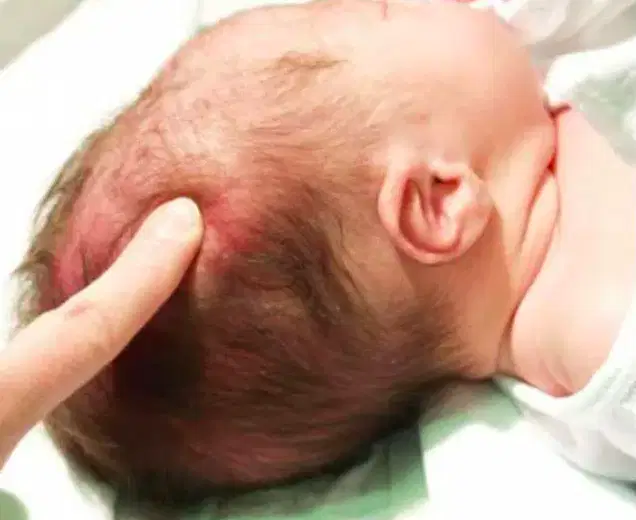
This is the softening of the cranial bones usually the parietal and occipital bones.
Craniotabes
Cradle Cap
Craniosynostosis
Cephalohematoma
Caput Succedaneum
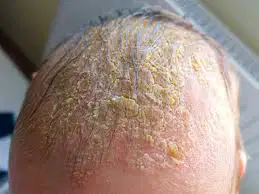
This is a common, harmless skin condition in infants that appears as greasy, yellowish, or brownish scales and crusts on the scalp. It is caused by overactive sebaceous glands under hormonal influence and it is easily treated with gentle washing and oil application.
Cradle Cap
Craniosynostosis
Cephalohematoma
Caput Succedaneum
Craniotabes
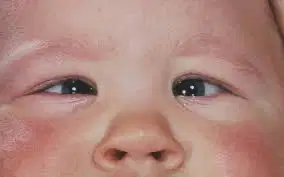
This is the medical term for crossed eyes, where the eyes are misaligned and do not look in the same direction at the same time.
Strabismus
Exophthalmos
Anisocoria
Corneal Opacity
Icteric Sclera
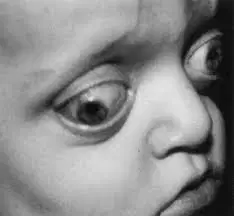
This is an abnormal bulging or forward displacement of the eyeballs from the eye socket (orbit), giving the appearance of protruding eyes.
Exophthalmos
Anisocoria
Corneal Opacity
Icteric Sclera
Strabismus

This is a condition characterized by unequal pupil size, where one pupil is visibly larger or smaller than the other.
Anisocoria
Corneal Opacity
Icteric Sclera
Strabismus
Exophthalmos
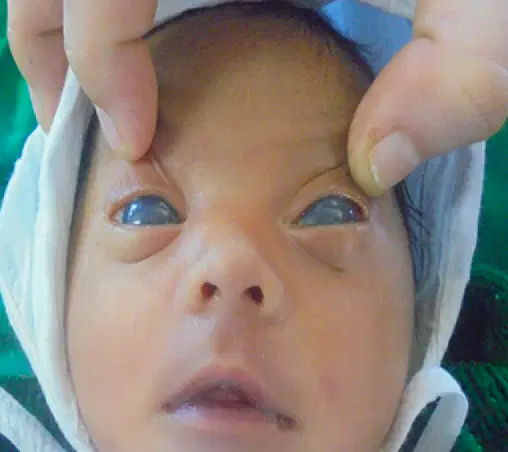
This is a condition where the normally clear, outermost layer of the eye becomes hazy or white impairing vision.
Corneal Opacity
Icteric Sclera
Strabismus
Exophthalmos
Anisocoria
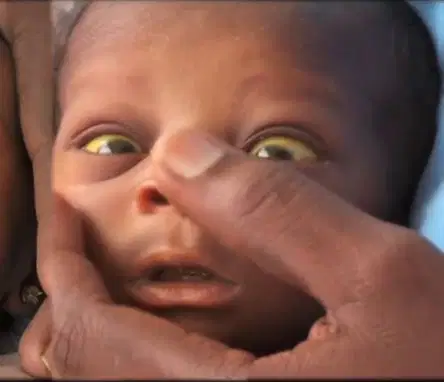
This is the term for the abnormal yellow discoloration of the sclera.
Icteric Sclera
Strabismus
Exophthalmos
Anisocoria
Corneal Opacity
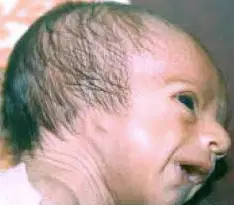
This is a condition characterized by the complete absence of the external ear.
Anotia
Ankyloglossia
Athelia
Amastia
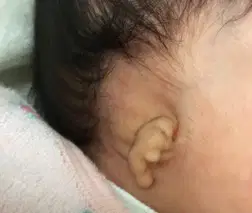
This is the congenital condition characterized by the abnormally small or underdeveloped size of the external ear (pinna).
Microtia
Macrotia
Anotia
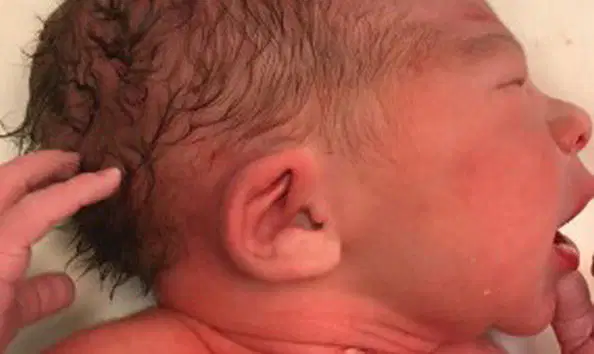
This is the condition characterized by the abnormally large size of the external ear (pinna).
Macrotia
Anotia
Microtia
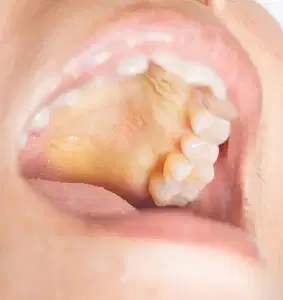
This is the clinical finding characterized by a distinct, deep-yellow discoloration of the mucous membranes particularly visible in the frenulum of the tongue and the palate.
Mucosal Jaundice
Microglossia
Macroglossia
Ankyloglossia
Candidiasis

This is a congenital condition defined as the presence of an abnormally small, underdeveloped tongue relative to the oral cavity.
Microglossia
Macroglossia
Ankyloglossia
Candidiasis
Mucosal Jaundice

This is a condition defined by the presence of an abnormally large tongue that protrudes or is disproportionately large for the oral cavity.
Macroglossia
Ankyloglossia
Candidiasis
Mucosal Jaundice
Microglossia
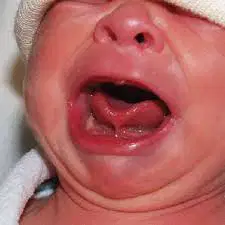
This is a condition where the lingual frenulum is abnormally short, thick, or tight.
Ankyloglossia
Candidiasis
Mucosal Jaundice
Microglossia
Macroglossia
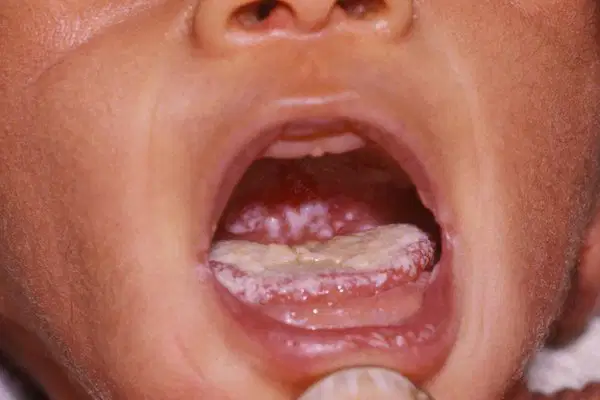
This is a condition that presents as creamy white or yellowish patches or plaques on the tongue and buccal mucosa.
Candidiasis
Mucosal Jaundice
Microglossia
Macroglossia
Ankyloglossia
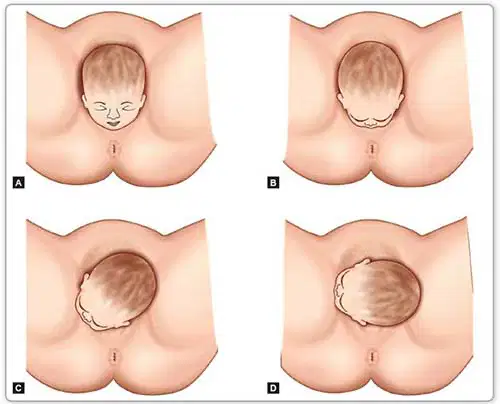
Fracture of which bones is/are the most common fracture sustained during the birthing process in a newborn, often occurring during difficult deliveries, especially those involving shoulder dystocia.
Clavicle
Scapula
Skull
Radius and/or Ulna
Tibia and/or Fibula
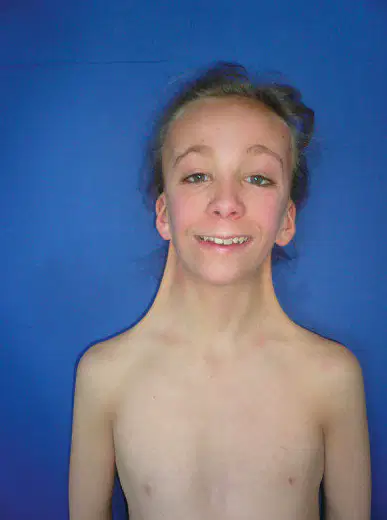
This is also known as Webbed Neck which is a congenital deformity characterized by excessive, loose folds of skin extending laterally from the sides of the neck down to the shoulders.
(a)
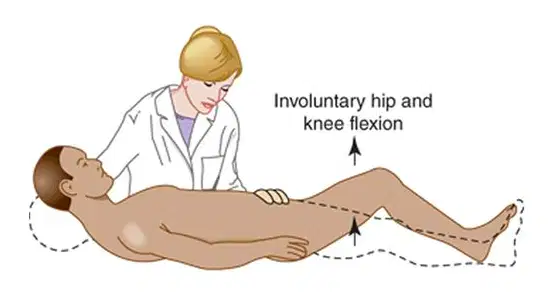
This is a clinical finding where passive, gentle flexion of the patient's neck leads to a reflexive, involuntary flexion (bending) of the patient's hips and knees.
(+) Brudzinski's Sign
(+) Kernig's Sign
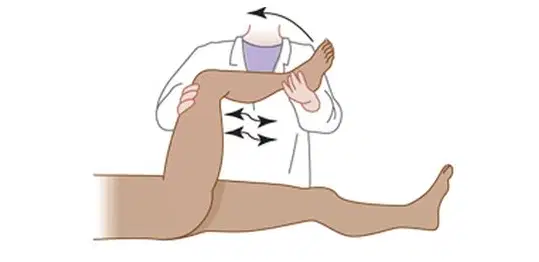
This is a clinical finding where, with the patient lying supine, the hip and knee are first flexed to 90 degrees, and then passive extension of the knee causes significant resistance and/or pain that restricts the movement.
(+) Kernig's Sign
(+) Brudzinski's Sign
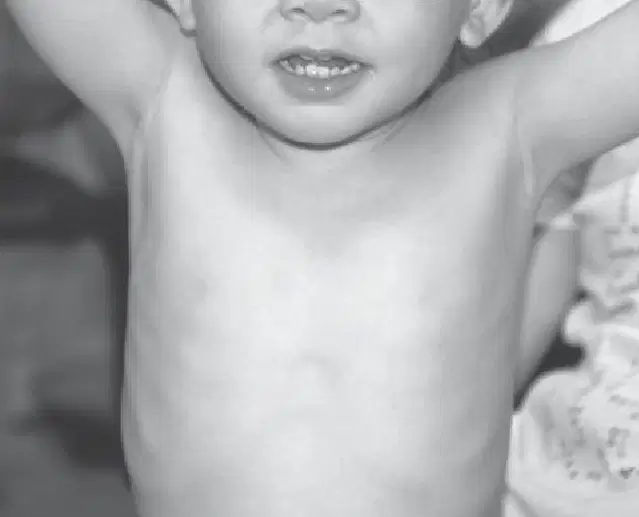
This is congenital anomaly characterized by the complete absence of the nipple.
Athelia
Polythelia
Amastia
Polymastia

This is the congenital presence of one or more extra nipples.
Polythelia
Amastia
Polymastia
Athelia

This is a congenital anomaly defined as the complete absence of all breast tissue.
Amastia
Polymastia
Athelia
Polythelia
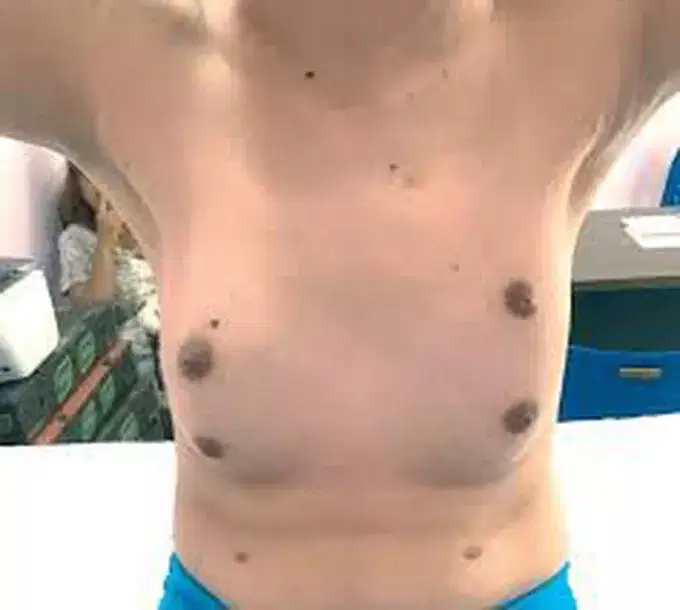
This is the congenital presence of fully developed, functional extra breast tissue.
Polymastia
Athelia
Polythelia
Amastia
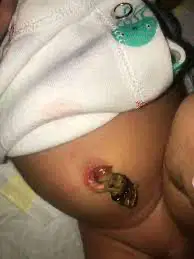
This is the infection of the umbilical stump manifested by foul odor, purulent discharge, redness and swelling.
(a)
What is Kyphosis?

Outward curvature of the spine
Outward curvature of the spine

Inward curvature of the spine
Inward curvature of the spine

Sideways curvature of the spine
Sideways curvature of the spine
What is Lordosis?
Inward curvature of the spine
Inward curvature of the spine
Sideways curvature of the spine
Sideways curvature of the spine

Outward curvature of the spine
Outward curvature of the spine
What is Scoliosis?
Sideways curvature of the spine
Sideways curvature of the spine
Outward curvature of the spine
Outward curvature of the spine

Inward curvature of the spine
Inward curvature of the spine
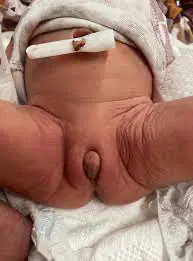
This is characterized by an abnormally large clitoris.
Clitoromegaly
Labial Hypertrophy
Labial Adhesion
Ambiguous Genitalia
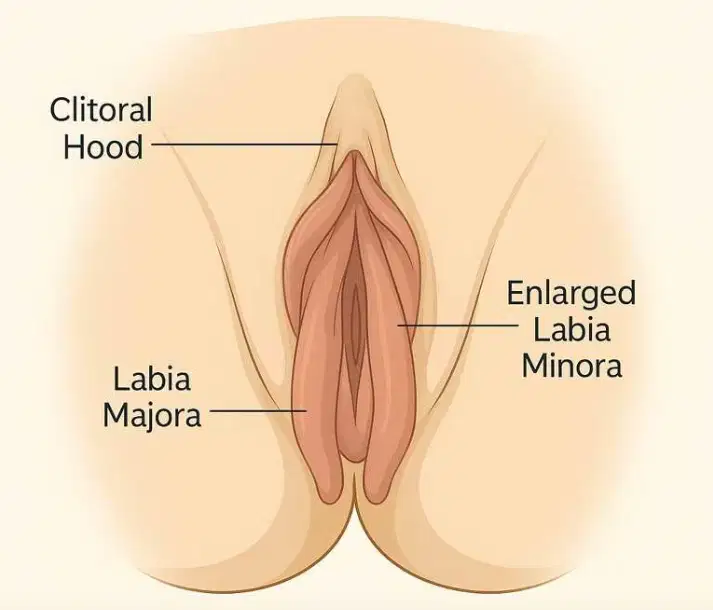
This is a condition where the labia minora are excessively enlarged or prominent, often appearing larger or extending beyond the labia majora.
Labial Hypertrophy
Labial Adhesion
Ambiguous Genitalia
Clitoromegaly

This is a condition where the labia minora are partially or completely fused together.
Labial Adhesion
Ambiguous Genitalia
Clitoromegaly
Labial Hypertrophy
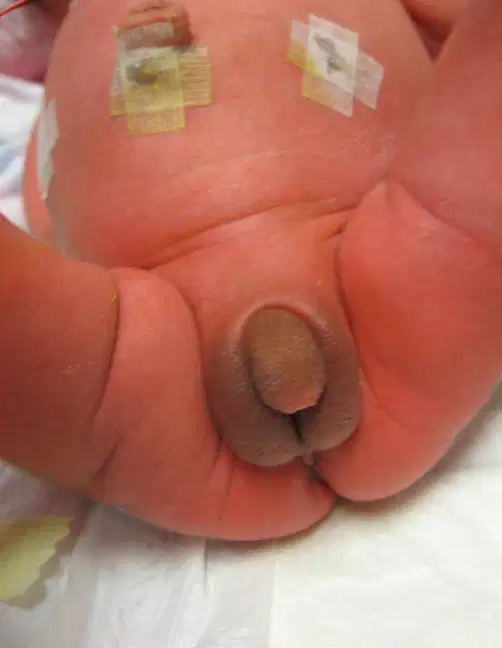
This is a rare congenital condition where a newborn's external reproductive organs are not clearly identifiable as strictly male or strictly female.
Ambiguous Genitalia
Clitoromegaly
Labial Hypertrophy
Labial Adhesion
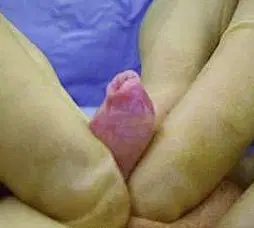
This is a condition where the prepuce is too tight to be retracted back over the glans of the penis.
Phimosis
Hypospadias
Epispadias
Cryptorchidism
Hydrocele
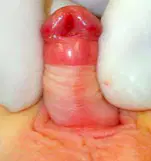
This is a congenital birth defect where the urethral opening (meatus) is not at the tip of the penis, but is instead located on the underside of the shaft or near the scrotum.
Hypospadias
Epispadias
Cryptorchidism
Hydrocele
Phimosis
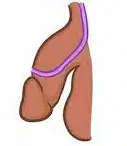
This is a congenital birth defect where the urethral opening is located on the top side of the penis.
Epispadias
Cryptorchidism
Hydrocele
Phimosis
Hypospadias
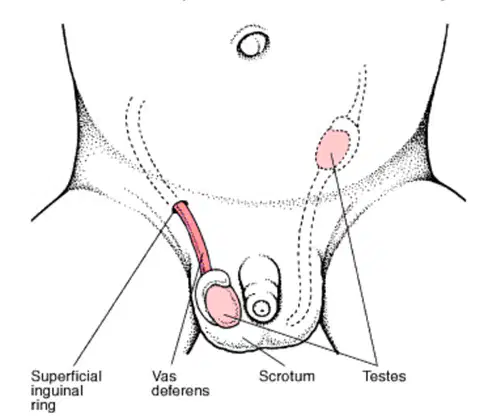
This is a common condition, particularly in premature infants, defined as the failure of one or both testicles (testes) to fully descend from the abdomen into the scrotum.
Cryptorchidism
Hydrocele
Phimosis
Hypospadias
Epispadias
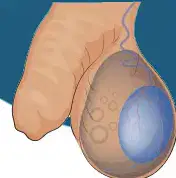
This is a condition characterized by the accumulation of fluid in the scrotal sac causing swelling.
Hydrocele
Phimosis
Hypospadias
Epispadias
Cryptorchidism
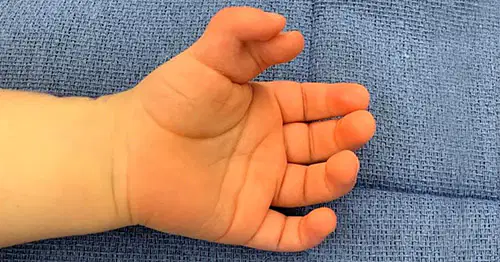
This is a congenital anomaly characterized by the presence of more than the typical number of fingers or toes on the hands or feet.
Polydactyly
Ectrodactyly
Syndactyly
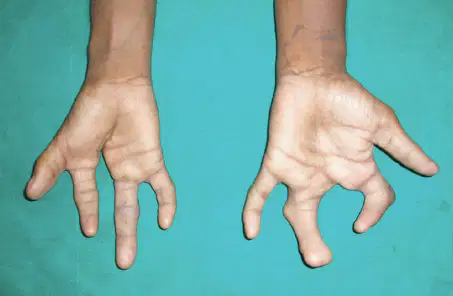
This is a congenital anomaly involving the absence or severe deficiency of one or more central digits of the hand or foot
Ectrodactyly
Syndactyly
Polydactyly
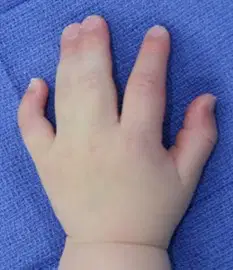
This is a congenital anomaly where two or more fingers or toes are joined or fused together.
Syndactyly
Polydactyly
Ectrodactyly
This reflex protects the eye from potential harm by causing rapid blinking when the eye is exposed to bright light or an object moves near it.
Blinking (𝚊𝚔𝚊 Corneal) Reflex
Pupillary Reflex
Doll's Eye Reflex
Glabellar Reflex
Sneeze Reflex
This reflex regulates the amount of light entering the eye by causing the pupil to constrict when the eye is exposed to bright light.
Pupillary Reflex
Doll's Eye Reflex
Glabellar Reflex
Sneeze Reflex
Blinking (𝚊𝚔𝚊 Corneal) Reflex
This reflex helps the baby track objects and orient themselves in their environment by ensuring the eyes remain fixed in the forward position when the baby's head is turned to one side.
Doll's Eye Reflex
Glabellar Reflex
Sneeze Reflex
Blinking (𝚊𝚔𝚊 Corneal) Reflex
Pupillary Reflex
This reflex protects the eyes from potential harm by causing the baby to blink rapidly when the glabella (bridge of the nose) is tapped.
Glabellar Reflex
Sneeze Reflex
Blinking (𝚊𝚔𝚊 Corneal) Reflex
Pupillary Reflex
Doll's Eye Reflex
This reflex clears the nasal passages of irritants or obstructions by causing the baby to sneeze when the nasal passages are irritated or obstructed.
Sneeze Reflex
Blinking (𝚊𝚔𝚊 Corneal) Reflex
Pupillary Reflex
Doll's Eye Reflex
Glabellar Reflex
This reflex helps the baby find the nipple for feeding by causing the baby to turn their head towards the touch and open their mouth when the baby's cheek is stroked.
Rooting Reflex
Sucking Reflex
Extrusion Reflex
Cough Reflex
Gag Reflex
This reflex prevents the baby from swallowing foreign objects by causing the baby to push their tongue out when the baby's tongue is touched.
Extrusion Reflex
Cough Reflex
Gag Reflex
Rooting Reflex
Sucking Reflex
This reflex clears the airway of irritants or obstructions by causing the baby to cough when the baby's respiratory tract is irritated.
Cough Reflex
Gag Reflex
Rooting Reflex
Sucking Reflex
Extrusion Reflex
This reflex prevents choking and aspiration by causing the baby to gag when the baby's throat is stimulated.
Gag Reflex
Rooting Reflex
Sucking Reflex
Extrusion Reflex
Cough Reflex
This reflex provides a sense of security and protection by causing the baby to extend their arms and legs outward, then bring them back in when the baby hears a sudden loud noise or experiences a sudden movement.
Moro (𝚊𝚔𝚊 Startle) Reflex
Trunk Incurvation Reflex
Crawl Reflex
This reflex prepares the baby for crawling and walking by causing the baby's hips to curve towards the side being stimulated when the baby's back is stroked along the spine.
Trunk Incurvation Reflex
Crawl Reflex
Moro (𝚊𝚔𝚊 Startle) Reflex
This reflex helps the baby develop coordination and muscle control by causing the baby to make crawling movements with their arms and legs when the baby is placed on their tummy.
Crawl Reflex
Moro (𝚊𝚔𝚊 Startle) Reflex
Trunk Incurvation Reflex

This reflex helps the baby develop coordination and muscle control by causing the baby's arm and leg on the same side to extend, while the opposite arm and leg flex when the baby's head is turned to one side.
Fencing (𝚊𝚔𝚊 Asymmetric Tonic Neck) Reflex
Palmar Grasp Reflex
Placing Reflex
Step (𝚊𝚔𝚊 Walking) Reflex
Plantar Grasp Reflex
This reflex helps the baby develop hand-eye coordination and grip strength by causing the baby to grasp it when the baby's palm is touched with an object.
Palmar Grasp Reflex
Placing Reflex
Step (𝚊𝚔𝚊 Walking) Reflex
Plantar Grasp Reflex
Babinski Reflex
This reflex helps the baby develop balance and coordination by causing the baby to lift their leg as if to step onto the surface when the baby's dorsal side of their foot is placed against a hard surface while being held upright.
Placing Reflex
Step (𝚊𝚔𝚊 Walking) Reflex
Plantar Grasp Reflex
Babinski Reflex
Palmar Grasp Reflex
This reflex prepares the baby for walking by causing the baby to make stepping motions with that leg when the baby's sole of the foot touches a hard surface while being held upright.
Step (𝚊𝚔𝚊 Walking) Reflex
Plantar Grasp Reflex
Babinski Reflex
Palmar Grasp Reflex
Placing Reflex
Grasp ReflexThis reflex helps the baby develop foot control and coordination by causing the baby's toes to curl around it when the baby's sole of the foot is touched with an object.
Plantar Grasp Reflex
Babinski Reflex
Palmar Grasp Reflex
Placing Reflex
Step (𝚊𝚔𝚊 Walking) Reflex
This reflex indicates the proper development of the nervous system by causing the baby's toes to fan out and curl upward when the baby's sole of the foot is stroked from heel to toe.
Babinski Reflex
Palmar Grasp Reflex
Placing Reflex
Step (𝚊𝚔𝚊 Walking) Reflex
Plantar Grasp Reflex
Which is a tool used to quickly assess the immediate adaptation of a newborn at 1 and 5 minutes after birth to determine ⑴ how well they tolerated the birthing process and ⑵ how well they are adjusting to life outside the uterus?
APGAR Scoring
Silverman-Anderson Respiratory Severity Scoring
New Ballard Scoring
Which is a tool used to quantify the severity of respiratory distress in a newborn by observing five specific signs to determine the level of breathing difficulty?
Silverman-Anderson Respiratory Severity Scoring
New Ballard Scoring
APGAR Scoring
Which is a tool used to estimate the gestational age of a newborn particularly useful when the mother's LMP is unknown or the physical exam suggests an age different from the calculated date?
New Ballard Scoring
APGAR Scoring
Silverman-Anderson Respiratory Severity Scoring
APGAR Scoring is a tool used __________.
To quickly assess immediate adaptation of a newborn
To quantify the degree of respiratory distress in a newborn
To estimate the gestational age of a newborn
Silverman-Anderson Respiratory Severity Scoring (RSS) is a tool used __________.
To quantify the degree of respiratory distress in a newborn
To estimate the gestational age of a newborn
To quickly assess immediate adaptation of a newborn
New Ballard Scoring is a tool used __________.
To estimate the gestational age of a newborn
To quickly assess immediate adaptation of a newborn
To quantify the degree of respiratory distress in a newborn

