
Font size
 Worksheets
Atomic Theory Unit Review
Total questions: 115
Worksheet time: 4hrs 28mins
What did Thomson's atomic theory model look like?
A ring with gold foil in the middle.
Electrons orbiting the nucleus like the planets around the sun.
A cloud of electrons floating around the nucleus.
A scoop of chocolate chip ice cream. It had electrons scattered within a ball of positive charge.
The cloud model is what we use for the atomic theory now. What does the cloud model look like?
A ring with gold foil in the middle.
Electrons orbiting the nucleus like the planets around the sun.
A cloud of electrons floating around the nucleus.
A scoop of chocolate chip ice cream. It had electrons scattered within a ball of positive charge.
What did Bohr's atomic theory model look like?
A ring with gold foil in the middle.
Electrons orbiting the nucleus like the planets around the sun.
A cloud of electrons floating around the nucleus.
A scoop of chocolate chip ice cream. It had electrons scattered within a ball of positive charge.
What did Rutherford discover about atoms?
An atom is always negatively charged.
An atom is mostly empty space, but has a dense positively charged center(nucleus).
An atom is always positively charged.
All particles will pass straight through gold foil with no change in path.
What is the mass of a proton?
1840 amus
1 amu
1/1840 amus
It has no mass.
What is a particle with no charge?
neutron
electron
proton
atom
What is a negatively charged particle?
neutron
electron
proton
atom

What two particles would you find in the nucleus of an atom?
Protons and electrons
Neutrons and electrons
Protons and neutrons
Electrons and negatrons
Which scientist discovered the electrons?
Dalton
Thomson
Atristotle
Bohr
Rutherford and his students did experiments that showed
Atoms contain negative particles, now called electrons.
Atoms are mostly empty space.
Neutrons are located in the nucleus.
Matter cannot be lost or gained.
Subatomic particles with a negative charge
Electrons
Neutrons
Protons
Quarks
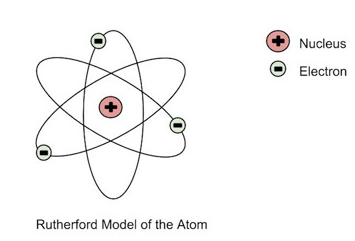
Idea that matter cannot be created nor destroyed
Rutheford's Rule
Mendeleev's Mandate
Law of Conservation of Matter
The Periodic Law
Person that discovered electrons using the cathode ray experiment. He created the plum pudding model
Neils Bohr
Ernest Rutherford
JJ Thomson
Dmitri Mendeleev
Choose the correct description of J. J. Thomson's Model of an Atom.
The model is a indivisible and indestructible sphere
The model is a sphere in which negatively charged particles - electrons- immersed in a positively charged space of the sphere.
The model is a sphere in which negatively charged particles - electrons- move around the center of an atom creating an electron cloud
The model is a sphere in which negatively charged particles - electrons - move around the nucleus of an atom in a defined passes, called orbits, like planets around the sun
What is an alpha particle?
It is a dominant particle in a subatomic world
It is a particle that has 2+ charge
It is a particle that has 2- charge
It is a helium atom without a charge
What results did Rutherford expect to see if the Plum-Pudding model is correct?
He expected that most of alpha particles would go through a gold-foil and small number of particles would deflect sightly
He expected that most of alpha particles would not go through a gold-foil and will stop on one side of a foil.
He expected that most of alpha particles would ricochet back after hitting a gold-foil
What results did Rutherford observe in his Gold-Foil experiment?
He observed that all alpha particles did go through a gold-foil in straight lines
He observed that most alpha particles did not go through a gold-foil and stopped on one side of the gold foil.
He observed that a small number of alpha particles bounced off the gold-foil at very large angles
He observed that all alpha particles slightly deflected from the straight line when going through a gold-foil
Choose one of the conclusions that Ernest Rutherford made based on the experimental results of his Gold-Foil experiment
He concluded that the atom is indivisible
He concluded that the atom is mostly empty space
He concluded that the atom has neutrons
He concluded that the atom is tightly packed with subatomic particles all mixed together
Choose one of the conclusions that Ernest Rutherford made about the mass of the atom, based on the experimental results of his Gold-Foil experiment
He concluded that almost all mass of the atom is distributed evenly among subatomic particles
He concluded that almost all mass of the atom is distributed among electrons
He concluded that almost all mass of the atom is concentrated in a small region, in a center of an atom, that has a positive charge
He concluded that almost all mass of the atom is concentrated in a small region, in a center of an atom, that has a negative charge
Based on the experimental results of his Gold-Foil experiment, Ernest Rutherford concluded that
The very dense center of the atom has a positive charge
The very dense center of the atom has a negative charge
The very dense center of the atom has no charge
The atom doesn't have a center and all particles are distributed evenly like in a chocolate chip cookie
What subatomic particles are in the nucleus of an atom?
Only protons
Protons and neutrons
Only neutrons
Only electrons
Protons and electrons
If the atom has 25 electrons, how many protons does it need to have to be neutral?
5 protons
25 protons
it doesn't need protons
15 protons

The path of cathode ray ( shown in the figure ) proves that _____
electrons have negative charge
electrons have positive charge
electrons have no charge
electrons have both negative and positive charge

The path of cathode ray ( shown in the figure ) proves that _____
electrons are charged particles
electrons are NOT charged particles
electrons are inside nucleus
Place each part of the atom in its correct location.
Proton
Neutron
Electron
Using a periodic table, what is the atomic number of Aluminum (Al)?
26.98
27
13
14
Using a periodic table, what is the atomic mass of Krypton (Kr)?
36
84
83.80
48
What two values are added together to create the mass number of an atom?
Protons
Electrons
Neutrons
Atomic Mass
Which of the following are a pair of isotopes?
A carbon with 6 protons and a carbon with 7 protons
A nitrogen with 7 neutrons and a carbon with 7 neutrons
A nitrogen with 7 neutrons and a nitrogen with 10 neutrons
A nitrogen with 7 protons and a carbon with 6 protons
In the gold foil experiment, what conclusion can be drawn from the fact that a portion of the particles bounced right back and others were deflected at large angles?
That the protons in the atom were like a lump of plum pudding
That the protons are located in a small, densely packed nucleus
That the gold foil is too solid for the particles to pass through
That the particles are attracted to electrons
In the gold foil experiment, what conclusion can be drawn from the fact that many of the particles passed straight through the gold foil?
That the protons in the atom were like a lump of plum pudding
That the protons are located in a small, densely packed nucleus
That the gold foil is too solid for the particles to pass through
That the atom is mostly empty space

What explains the path of the cathode ray in the image above?
Gravity pulls the particles down.
The particles are repelled by the positive electrode.
The particles are attracted towards the negative electrode.
The particles are deflected away from the negative electrode and attracted to the positive electrode.


Which part of an atom is used to identify it?
number of protons
number of neutrons
number of electrons
When you have an ion of an atom, O-2 for example, what has changed in the atomic structure?
Number of protons
Number of neutrons
Number of electrons
When you have a negative ion of an atom, O-2 for example, do you have a higher number of protons or electrons?
Number of protons
Number of electrons
Which of the following is correct?
Protons are positive, electrons are negative, neutrons are neutral.
Protons are neutral, electrons are negative, neutrons are positive
Protons are negative, electrons are positive, neutrons are neutral
Protons are positive, electrons are neutral, neutrons are negative
Iodine-131
The -131 tells you the
number of protons.
mass number
charge of the atom.
What two subatomic particles must be equal for an atom to have no charge (neutral).
protons and neutrons
protons and electrons
electrons and neutrons

An ion is a charged atom. A negative ion has ____________electrons and a positive ion has ___________electrons.
lost, lost
lost, gained
gained, lost
gained, gained

What do these isotopes of carbon all have in common? Click on the image for a bigger, clearer view.
neutrons & mass number
atomic number and neutrons
atomic number and electrons
protons, atomic number, and mass number
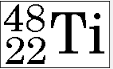

Aluminum-27
An atom with 14 protons and 13 neutrons
The atomic mass of an element is the ___.
average of the mass number and the atomic number for the element
weighted average of the masses of the isotopes of the element
total mass of the isotopes of the element
total number of subatomic particles in the nucleus

Which has more protons?
neither
carbon - 12
carbon - 13
Which has more electrons?
neither
carbon - 12
carbon - 13
Which has more neutrons?
neither
carbon - 12
carbon - 13

What is the most abundant isotope? (answer in hyphen notation)
(a)

What is the most abundant isotope? (answer in hyphen notation)
(a)

How many neutrons?
36
17
18
19
How many electrons?
36
17
18
19

How many protons?
9
4
5
2
How many neutrons?
9
4
5
2
How many electrons?
9
4
5
2
How are emission spectra formed?
When photons are absorbed and electrons return to a lower energy level
When photons are absorbed and electrons are promoted to a higher energy level
When photons are emitted and electrons are promoted to a higher energy level
When photons are emitted and electrons return to a lower energy level

What subatomic particle is responsible for the spectral lines seen in emission spectra diagrams? (a)

In order to go from ground state to an excited state, an electron must
emit energy
absorb energy
wiggle
When an electron returns to ground state from an excited state, the atom will (a)

If an electron moves from n=4 to n=2 it ____
absorbs energy
releases energy

In which state does an electron have the least amount of energy?
Excited state
Ground state
Orbital
Bohr model


Lines on the emission spectrum are produced when electrons move from lower to higher energy levels
true
false

True or False: The ground state is the highest energy state of an atom.
True
False


The unknown emissions spectra belongs to the element
Hydrogen
Mercury
Neon
Sodium

The unknown emissions spectra belongs to the element
Hydrogen
Mercury
Neon
Sodium
Valence electrons are located...
inside the nucleus
in outer space
on the outermost orbit of an atom

14
4
3
28

10
2
8
18

This is a correct dot diagram for fluorine (F)
true
false

This is a correct dot diagram for oxygen (O)
true
false
When a ground state electron in an atom moves to an excited state, the electron
(1) absorbs energy as it moves to a higher energy state
(2) absorbs energy as it moves to a lower energy state
(3) releases energy as it moves to a higher energy state
(4) releases energy as it moves to a lower energy state
An excited potassium atom emits a specific amount of energy when one of its electrons moves from
(1) the fi rst shell to the fourth shell
(2) the second shell to the fourth shell
(3) the fourth shell to the fi fth shell
(4) the fourth shell to the second shell
A specific amount of energy is emitted when excited electrons in an atom in a sample of an element return to the ground state. This emitted energy can be used to determine the
Mass of the element
The volume of the element
The identity of the element
the density of the element.
Which electron configuration represents the electrons of a phosphorus atom in an excited state?
(1) 2-8-5
(2) 2-8-6
(3) 2-7-6
(4) 2-7-4
A bromine atom in an excited state could have an electron configuration of
(1) 2-8-18-6
(2) 2-8-18-7
(3) 2-8-17-7
(4) 2-8-17-8
Which electron configuration represents the electrons of a sulfur atom in an excited state?
(1) 2-6-6
(2) 2-7-7
(3) 2-8-4
(4) 2-8-6

This could be the dot diagram of
Mg
Cl
C
O
What are valence electrons?
The total number of electrons in an atom
The number of electrons in the outermost shell
The number of electrons in the second shell
The number of protons in the outermost shell


This could be the dot diagram of an element with the atomic number
8
31
19
36

How many valence electrons would there be if we made a dot diagram?
2
6
8
What is a cation?
A negatively charged ion
An atom with no charge
A positively charged ion
A stable atom on the periodic table
What is an anion?
A negatively charged particle
An atom with no charge
A positively charged ion
A stable atom found on the periodic table
True or False. The highest energy level in an atom is closer to the nucleus.
True
False
If 3 electrons are gained, the particle now has 3 more electrons than protons, so the charge is...
2+
2-
3+
3-
If 2 electrons are lost, the ion now has 2 more positive protons than negative electrons, so the charge is...
2+
2-
1+
1-
Which Lewis electron-dot diagram is correct for an S2- ion?


Which electron configuration is correct for a sodium ion?
2-8-1
2-8
2-8-2
2-8-8
Which part of a calcium atom in the ground state is represented by the dots in a Lewis dot diagram?
the electrons in the first shell
the electrons in the fourth shell
the protons in the nucleus
the neutrons in the nucleus
Which of the following would be the Lewis Dot Diagram for an aluminum ion, Al+3?


Which of the following would be the Lewis Dot Diagram for an ATOM of Aluminum?


Which of the could represent an ATOM of sulfur?


Which of the following would be the correct diagram for Br-?


Which of the following shows a lewis dot diagram for a neutral atom with 32 protons?



