
 Worksheets
Muscles and Joints
Total questions: 36
Worksheet time: 31mins
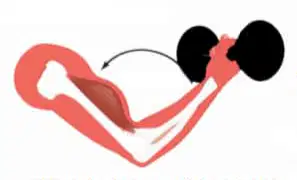
doesn't change

Name this muscle
Bicep
Quadricep
Tricep
Hamstring

Name the highlighted muscle
Gluteus Maximus
Rectus femoris
Gluteus Medius
External Oblique

Name the highlighted muscle
Pectoralis major
Tricep Brachii
Bicep Brachii

Name the highlighted muscle
transvers abdominals
rectus abdominals
external obliques
internal obliques

Name the highlighted muscle
pectorals
deltoid
trapezius
latissimus dorsi
Which molecule supplies energy for the flexing of the myosin head "power stroke".
calcium
ATP
sodium
Which type of muscle tissue is attached to the skeleton and is responsible for the movement of bone around joints or movement of some organs?
cardiac muscle
skeletal muscle
smooth muscle
What is the name of the theory of how actin and myosin filaments slide past each other to produce muscle contractions?
action potential
cross bridge
sliding filament
What type of muscle is responsible for automatic movements, is not under conscious control and its cells are spindle shaped?
smooth muscle
cardiac muscle
skeletal muscle
What element is important in directly triggering contraction?
Potassium
Calcium
Sodium
Chloride

Name the highlighted muscle
Vastus medialis
Soleus

Identify the muscle
gastrocnemius
semitendinosis
biceps femoris
semimembranosis


which skeletal muscle is represented in the image?
rectus femoris
vastus lateralis
vastus medialis
sartorius

The skull is an example of what type of joint?
Cartilaginous (amphiarthrosis)
Synovial (diarthrosis)
Fibrous (synarthrosis)


What type of joint is this?
Hinge
Saddle
Ellipsoid
Pivot
Gliding

What type of joint is this?
Ball and Socket
Saddle
Ellipsoid
Pivot
Gliding

This joint allows for a hinge type movement in two directions, example in Humans is the joints that connects finger to palm in Humans.
Ball and Socket
Condyloid
Gliding
Hinge
Which type of joint is characterized by containing synovial fluid in the space around it to reduce friction and is the most common type of joint in the body?
Fibrous joint
Cartilaginous joint
Synovial joint
Immovable joint
Which type of joint has hyaline cartilage present in the space between articulating bones and allows for some motion?
Fibrous joint
Synovial joint
Cartilaginous joint
Ligamentous joint
Type of cartilage that is highly bendable:
Hyaline cartilage
Elastic cartilage
Fibrocartilage

What is muscle #2?
Trapezius
Zygomaticus
Temporalis
Muscles work in pairs.
True
False

