
 Worksheets
Crime & Justice Unit 2: The Courts
Total questions: 88
Worksheet time: 52mins
These courts are for hearing evidence & determining the facts of a case
trial courts
appellate courts
The party bringing legal action in a civil trial
plaintiff
prosecutor
defendant
judge
The state or federal attorney who initiates a criminal case
plaintiff
prosecutor
defendant
judge
The party responding to the plaintiff in a civil case or prosecution in a criminal case
plaintiff
prosecutor
defendant
judge
Responsible for maintaining order during a trial, instructing the jury with regard to the law, & pronouncing a sentence after conviction
plaintiff
prosecutor
defendant
judge
Judicial system which functions as a sort of contest in which both sides present their best arguments & show the weakness of the other side's case
adversarial system
inquisitorial system
Judicial system in which the judge plays an active role in questioning witnesses & controlling the court process, including gathering & presenting evidence.
adversarial system
inquisitorial system
One criticism of this system is that the goal becomes victory rather than truth or justice
adversarial system
inquisitorial system
In a bench trial, who decides the verdict?
judge
jury
clerk
bailiff
This amendment protects your right to trial by jury in criminal cases & applies to both federal & state courts
1st
5th
6th
7th
This amendment protects your right to trial in civil cases & only applies in federal courts; many states still provide this protection also though
1st
5th
6th
7th
Most criminal cases are never brought to trial because of what?
plea bargains
settlements
double jeopardy
self-incrimination
A plea bargain is an agreement between which TWO parties?
defendant
prosecutor
plaintiff
judge
U.S. citizen, at least 21 years of age, able to speak & understand English, resident of the state
requirements to serve on a jury
requirements to be a federal judge
requirements to be a prosecuting attorney
requirements to be a state judge
Which of the following factors might provide an exemption from jury service? Mark all that apply.
certain occupations such as clergy, firefighters, etc
mental disability
physical disability
can show "undue hardship" or "extreme inconvenience"
Which factor could outright disqualify you (not just provide an exemption) from serving on a jury?
certain occupations such as clergy, firefighters, etc
mental or physical disability
convicted of a felony
can show "undue hardship" or "extreme inconvenience"
A pre-trial process during which lawyers question prospective jurors regarding their biases
voir dire
plea bargain
oral arguments
judicial conference
When a lawyer requests that a potential juror be removed because they appear incapable of rendering a fair & impartial verdict they are using what?
removal for cause
peremptory challenge
plea bargain
During voir dire, each lawyer has a limited number of these opportunities to remove a potential juror without providing a specific reason.
removal for cause
peremptory challenge
plea bargain
indictment
Federal criminal cases require this number of jurors
6
8
10
12
All verdicts in federal & state criminal cases must be settled by what type of vote?
majority
unanimous
2/3 majority
1/4
These courts review decisions of the lower court to determine if an error of law was made
trial courts
appellate courts
Who is present during appellate proceedings? Mark all that apply.
defendant
jurors
judge
lawyers
Trial court decisions are always eligible for appeal.
True
False
Trial court decisions may be appealed when an argument is made that there was what?
error of law
double jeopardy
peremptory challenge
precedent
Courts play a role in "making law" by establishing what?
precedents
settlements
limited jurisdiction
preponderance of the evidence
Who is required to follow precedent?
all lower courts within the jurisdiction of the ruling appellate court
all state & federal courts, both above & below the ruling appellate court
only state courts
only federal courts
The formal opinion of the appellate court
majority opinion
dissenting opinion
concurring opinion
An explanation from appellate judges who agree with the majority outcome, but for different reasons
majority opinion
dissenting opinion
concurring opinion
An explanation of the reasons certain appellate judges disagree with the official ruling; may be used in the future to overturn precedent
majority opinion
dissenting opinion
concurring opinion
Established the precedent that racial segregation in railroad cars was constitutional as long as facilities for whites & African Americans were "separate but equal"
Plessy v. Ferguson (1896)
Brown v. Board of Education (1954)
Gideon v. Wainwright (1963)
Betts v. Brady (1942)
Supreme Court ruling that the "separate but equal" doctrine was unconstitutional
Plessy v. Ferguson (1896)
Brown v. Board of Education (1954)
Gideon v. Wainwright (1963)
Betts v. Brady (1942)
State courts have this type of jurisdiction, which allows them to hear cases involving both state & federal law
general jurisdiction
limited jurisdiction
Federal courts have this type of jurisdiction, meaning they cannot rule on matters of state law
general jurisdiction
limited jurisdiction
Superior, County, District, & Municipal Courts are other names for what?
state trial courts
state appellate courts
federal appellate courts
federal trial courts
Courts which deal with issues of divorce, separation, child custody, juvenile issues, etc
family courts
traffic courts
criminal courts
probate courts
small claims courts
Courts which deal with motor vehicle violations
family courts
traffic courts
criminal courts
probate courts
small claims courts
Courts which deal with offenses punishable by jail time
family courts
traffic courts
criminal courts
probate courts
small claims courts
Courts which deal with wills & estate claims
family courts
traffic courts
criminal courts
probate courts
small claims courts
Courts which deal with financial disputes involving amounts below $500
family courts
traffic courts
criminal courts
probate courts
small claims courts
Match each type of court with its jurisdiction
Trial Courts
Original Jurisdiction
Appellate Courts
Appellate Jurisdiction
State Courts
General Jurisdiction
Federal Courts
Limited Jurisdiction
Match each party with its description
Defendant
party being sued in a civil case
Plaintiff
party bringing a civil case
petitioner/appellant
party who files an appeal
appellee/respondent
argues that courts made correct decision
Missouri has this many district trial courts
1
3
12
46
Missouri has this many appellate court districts
1
3
12
46
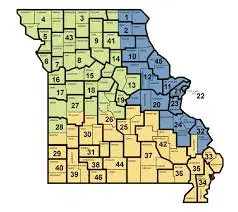
Which state judicial circuit do we live within?
1st
25th
30th
46th
Which state appellate circuit do we live within?
northern
southern
western
eastern
Order the following chronologically in the order that decisions would be made.
MO 25th Judicial Circuit
MO Court of Appeals, Southern District
MO Supreme Court
U.S. Supreme Court
The highest court that issues of MO state law can be appealed to is what?
MO Court of Appeals, Southern District
MO Supreme Court
U.S. Supreme Court
U.S. Circuit Court of Appeals, 8th District
The highest court that issues of federal law can be appealed to is what?
MO Court of Appeals, Southern District
MO Supreme Court
U.S. Supreme Court
U.S. Circuit Court of Appeals, 8th District
There are ______ federal judicial districts.
46
94
12
6
_____ of the Constitution creates a Supreme Court & gives Congress the authority to create lower courts
Article III
Amendment 1
Amendment 5
Article X
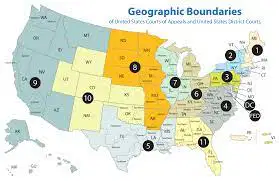
Missouri falls within the ______ circuit of the U.S. Court of Appeals
8th
1st
9th
2nd
These courts handle the highest case load each year
state courts
federal courts
MO judges are selected through which process?
popular vote by residents of the state
merit-based non-partisan selection process
nominated by the Governor & approved by the Senate
nominated by the legislature & approved by the Governor
Requirements to be a judge within the state of Missouri. Mark all that apply.
At least 30 years of age
Hold a MO law license
U.S. Citizen at least 15 years
Residency within MO
There are NO formal criteria within the U.S. Constitution for federal judges
True
False
Federal judges are nominated by
the President
the Senate
the citizens
the current federal judges
Federal judges are approved by
the President
the Senate
the citizens
the current federal judges
Federal judges hold office until what? Mark all that apply.
they resign
they retire
they die
they are impeached for inappropriate behavior
Who can impeach & remove a federal judge from office for inappropriate behavior?
the President
Congress
other federal judges
the citizens
How many justices make up the Supreme Court?
1
3
5
9
How many Supreme Court justices must vote to review a case?
all of them
a majority
4 of the 9
7 of the 9
Each party has this much time to present their arguments to the Supreme Court justices.
30 minutes
1 hour
3 hours
1 week
The Supreme Court receives approximately ______ requests to review cases each year.
7,000-8,000
70-80
7-8
The Supreme Court grants around _______ requests for oral argument per year.
7,000-8,000
70-80
7-8
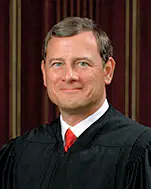
The current Chief Justice of the Supreme Court is
John G. Roberts
Clarence Thomas
Samuel A. Alito
Neil M. Gorsuch
Ketanji Brown Jackson, Amy Coney Barrett, Elena Kagan, & Sonia Sotomayor all have what in common?
They are all Supreme Court Associate Justices.
They have all previously served as the Supreme Court Chief Justice.
They have all been impeached during their term as Supreme Court Justice.
They were all nominated to the Supreme Court by former President Donald Trump.
Place the following in order according to the steps in a trial. (This is not an exhaustive list of all the steps.)
Opening Statements
Direct Examination
Cross-Examination
Jury Instructions
Verdict
Which party delivers the opening statement & closing statement first?
the plaintiff or prosecutor
the defendant
Which party calls their witnesses first?
the plaintiff or prosecutor
the defendant
During this stage of the trial, if the prosecution's or plaintiff's basic case has not been established from the evidence introduced, the judge can end the case if a request is made by the defendant's attorney.
Opening Statements
Cross-Examination
Motions
Jury Instructions
What follows direct examination by the defense of witnesses called by the defense?
Direct Examination of witnesses called by the prosecution.
Cross-Examination of those same witnesses by the prosecution.
Motions
Closing Statement by the prosecution or plaintiff.
Match each player in the trial with their role
Prosecutor
Attorney representing the government
Bailiff
Provides security in the courtroom
Clerk
Takes care of administrative procedures
Reporter
Produces a transcript of the trial
Witness
Offers personal or expert testimony
This type of jury decides whether there is enough evidence to put a person on trial.
grand jury
petit jury
If a grand jury issues a(n) ________, the case will proceed to trial.
Indictment
Verdict
If a petit jury issues a(n) ________, the case will proceed to sentencing (if guilty) or the defendant will be released (if acquited).
Indictment
Verdict
Civil law involves all of the following EXCEPT
disputes between individuals or organizations
disputes over torts (liability), contracts, property, family, etc.
awarding compensation to the victor
charges of murder, assault, arson, kidnapping, rape, extortion, etc.
Criminal law involves all of the following EXCEPT
disputes between individuals or organizations
crime & legal punishment for offenses against the government
assigning fines or prison time to guilty defendants
charges of murder, assault, arson, kidnapping, rape, extortion, etc.
Jurors can not declare a defendant guilty unless they are convinced beyond a reasonable doubt in which cases?
civil
criminal
A preponderance of the evidence is the burden of proof in ______ cases.
civil
criminal
Which has a heavier burden of proof? (In other words, more difficult to achieve.)
civil
criminal
Which is a heavier burden of proof? (In other words, more difficult to achieve.)
preponderance of the evidence
beyond a reasonable doubt
This Supreme Court case set the precedent that indigent clients have NO right to a state appointed attorney.
Betts v. Brady (1942)
Gideon v. Wainwright (1963)
Argersinger v. Hamlin (1972)
Brown v. Board of Education (1954)
This Supreme Court case set the precedent that indigent clients have the right to legal counsel if they are charged with a felony.
Betts v. Brady (1942)
Gideon v. Wainwright (1963)
Argersinger v. Hamlin (1972)
Brown v. Board of Education (1954)
This Supreme Court case set the precedent that indigent clients have the right to legal counsel if charged with a misdemeanor involving jail time.
Betts v. Brady (1942)
Gideon v. Wainwright (1963)
Argersinger v. Hamlin (1972)
Brown v. Board of Education (1954)
Match the following options for appellate courts to their description.
uphold the lower court's decision
affirm
overturn the lower court's decision
reverse
send the case back to the trial court for a new trial or to correct an error
remand
Which of the following is also called a trial jury?
grand
hung
petit
grand
Match each item to its description.
orders a lower court to deliver its record in a case so that the higher court may review it
writ of certiorari
a written argument which highlights and clarifies certain information to persuade the court to rule a certain way
brief
"let the decision stand" - courts will adhere to precedent in making their decisions
stare decisis
legal agreement to end a civil dispute
settlement
defendants agree to plead guilty to some or all of the charges against them in exchange for concessions from the prosecutor
plea bargain

