
 Worksheets
REVIEW: Biology NOW Ch. 4-8
Total questions: 70
Worksheet time: 1hrs 4mins
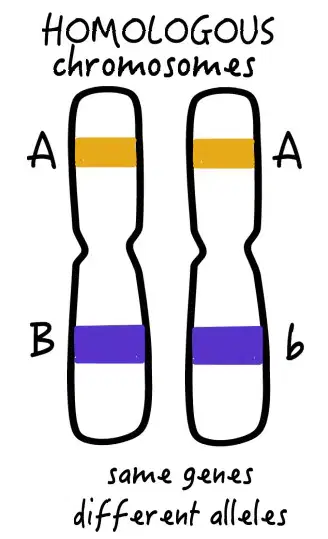
The chromosomes in a homologous pair
both came from the organism’s mother.
both came from the organism’s father.
do not line up together during meiosis.
consist of one maternal and one paternal chromosome.
The centromeres split and the sister chromatids move to opposite ends of the cell during which phase of mitosis?
prophase
metaphase
anaphase
telophase
When examining the rapidly dividing cells of a fish embryo, a researcher notices a cell that seems to contain two nuclei. The middle of the cell is pinched inward. This cell must be in __________ of mitosis.
prophase
metaphase
anaphase
telophase
Which of the following would promote a cell to advance through the G2 checkpoint?
The cell lacks necessary nutrients.
The genetic information has been duplicated.
The cell is too small in size.
A chromosome has been damaged.
Which of the following is a possible consequence of disabling the G2 checkpoint in the cell cycle?
Damaged DNA would be immediately replicated and passed on to the two daughter cells, giving rise to helpful, new alleles.
Incompletely replicated DNA may be passed to the two daughter cells; these cells could be lacking specific genes or chromosomes and would likely not survive.
The cell cycle would pause if cell size or nutrient supply is inadequate, DNA is damaged, or DNA replication is incomplete.
The cell cycle would simply skip mitosis and go directly to G1 to start over.
Which of the following cell types can be produced by meiosis?
skin
muscle
pancreatic
sperm
When a cell has completed both rounds of meiosis, the resulting cells are
diploid, and each of two daughter cells has twice the number of chromosomes as the starting cell.
diploid, and each of four daughter cells has half the number of chromosomes as the starting cell.
haploid, and each of four daughter cells has half the number of chromosomes as the starting cell.
haploid, and each of two daughter cells has twice the number of chromosomes as the starting cell.
If a diploid animal cell has a total of 18 chromosomes, how many chromosomes would be present in each of its gametes?
36
18
9
6
In a sexually reproducing animal, the gametes are produced by meiosis rather than mitosis because
mitosis would produce too many sister cells
meiosis reduces the chromosome number so that the zygotes that are produced will have one full genome.
meiosis doubles the chromosome number so that each gamete has twice the usual number of genes.
meiosis ensures that the gametes are identical to the cell that produced them.
Which two processes combine to create genetic diversity and maintain chromosome number?
mitosis and meiosis
meiosis and independent assortment
binary fission and mitosis
fertilization and meiosis
Select the steps in meiosis that generate genetic diversity.
prophase and metaphase of meiosis I
prophase and metaphase of meiosis II
anaphase and telophase of meiosis I
anaphase and telophase of meiosis II
Which of the following is a form of genetic recombination that occurs naturally within cells?
mitosis
independent assortment
crossing-over
asexual reproduction
Select the correct statement regarding the chemical bisphenol A (BPA).
only disrupts the cell cycle in very large doses
has been replaced with BPS, an alternative demonstrated to be safe
exerts its effects on cell division by mimicking the hormone estrogen
is inactivated with high heat or by microwaving


In humans, the haploid number of chromosomes is ____.
23
46
69
92
Which stage facilitates cell growth and preparation for both mitosis and meiosis?
Interphase
Metaphase
Prophase
Anaphase
These chromosomes result in the biological sex of a human
XX; Female
XY; Male
XX; Male
XY; Female
X; Female
Y; Male


(E= 3 eyes, e= 1 eye)
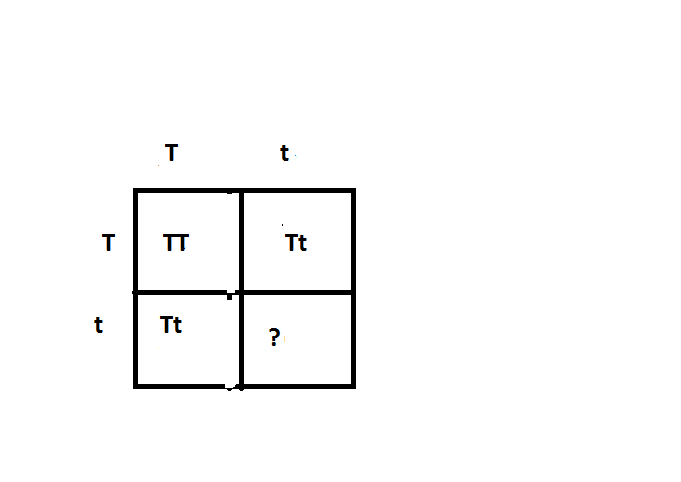
In the Punnett square below, what belongs in the missing square

In the Punnett square, what is the probability for white fur?

Which of the following genotypes is homozygous recessive?
RR
Rr
rr
Brown eyes (B) are dominant over blue eyes (b). Mr. Mallin has blue eyes. What is his genotype?
BB
Bb
bb
Brown eyes (B) are dominant over blue eyes (b). Assume Mr. Ward is homozygous dominant for brown eyes. What is his son’s phenotype?
Brown eyes
Blue eyes
Bb
BB
Free earlobes (E) are dominant over attached earlobes (e). Ms. Palmeri’s phenotype is free earlobes and her genotype is heterozygous (Ee). Which of these statements is true?
Both of her parents have attached ear lobes
At least one of her parents has free earlobes
Both of her parents are homozygous recessive

Polygenic Inheritance
an inheritance pattern in which an offspring’s phenotype is a
combination of the parent’s phenotypes
an inheritance pattern in which both alleles can be observed in a phenotype
an inheritance pattern in which multiple genes determine the
phenotype of a trait
If all F1 generation is Aa, then the expected crossing between parents' genotypes are
AA x Aa
AA x aa
Aa x Aa

The A in both chromosomes represent
phenotype
gene
genotype
locus
A segment of a DNA that codes for a particular phenotype is called
genotype
phenotype
gene
locus
Two Martians fall in love and marry. One Martian is homozygous for red eyes and the other is heterozygous. The recessive eye color is purple. What are the chances that the alien couple will have a child with red eyes?
100%
50%
75%
25%
Alleles segregate independently of other alleles because…………………
maternal and paternal chromosomes line up randomly on either side of the equator during metaphase I
separation of sister chromatids during anaphase I
homologous chromosomes moves to the opposite poles of the cell
crossing over during prophase I
Which type of inheritance results in the color pink in snapdragon flowers?
dihybrid inheritance
incomplete dominant alleles inheritance
codominant alleles inheritance
monohybrid inheritance
If your genotype is Bb, then you can only pass a B or b to your child but you can't pass both.
Law of Dominance
Law of Segregation
Law of Independent Assortment
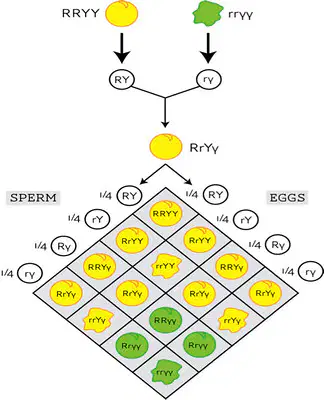
Which states that different traits are inherited independently of each other (usually applied when more than one trait is being analyzed)?
Law of independent assortment
Law of Segregation
Law of Dominance

Codominance occurs in calico cats, which allows for the Black and Tan colors to show. What percentage of the offspring will be calico (black and tan spotted)?
25
50
75
100

Incomplete dominance occurs in cats, which allows them to be Black, White, or gray as shown on this Punnett square. What percentage of the offspring will be black?
25
50
75
100
Name the proteins on the surface of red blood cells.
Antibodies
Antigens
Plasma
Collagen
What type of antigens can be found on the surface of RBC's when someone has blood type O?
A
B
AB
none


Red blood cells will do this if they encounter the wrong antibodies...
swell
agglutinate
dehydrate
no reaction will occur
This determines whether a person's blood type is positive or negative...
Rh factor
platelets
D antibodies
plasma
What is the possible blood types for the offspring produced by a type “AO” mother and a type “BO” father.
AB, AO, BO, OO
AO, BO
OO
AB, OO

Assuming a trait is AUTOSOMAL DOMINANT, what genotypes could make a person AFFECTED?
AA
Aa
aa
XAY
XaY

Assuming a trait is X-LINKED RECESSIVE, what are the genotypes of an AFFECTED person?
XAY
XaY
XAXA
XAXa
XaXa


What does A indicate?
A male that has the trait.
A female that has the trait.
A female that does not have the trait.
A male that does not have the trait.

In the diagram, individual II-1 indicates
a female with no freckles
a male with no freckles
a male with freckles
a female with freckles
What is the Genotype of individual I-1?
FF
Ff
ff
Can't know for sure
What is the Genotype of individual II-6?
FF
Ff
ff
Can't know for sure

This genetic disorder causes red blood cells to exhibit an irregular shape. Symptoms of this disorder can include joint pain, poor circulation, and a shorter lifespan. It is highly prevalent in African and African American populations.
Anemia
Albinism
Turner syndrome
Sickle-cell Anemia

The karyotype diagram below represents a human female with the genetic disorder known as Turner syndrome. Chromosomal analysis of this karyotype reveals the mutation is a result of
a missing X chromosome
a missing Y chromosome
an extra 21 chromosome
missing chromosome #9


Describe this karyotype.
Male with no obvious disorder
Female with no obvious disorder
Female with disorder
Male with disorder
A piece of a chromosome is lost
deletion
duplication
inversion
translocation
A piece of a chromosome is copied and remains within the chromosome
deletion
duplication
inversion
translocation
A piece of one chromosome detaches and reattaches to a different chromosome
deletion
duplication
inversion
translocation

The chromosomal mutation shown in the image is a
deletion
duplication
inversion
translocation

