
NEW
Font size
 Worksheets
Chapter 2 Intro to Cells Review
Total questions: 61
Worksheet time: 1hrs 1mins


All living things are made of one or more...
electrons
atoms
molecules
cells

Who first used the term "cell" to describe the empty "rooms" he saw in his microscope?
Leeuwenhoek
Virchow
Pasteur
Hooke

The ___ is the basic unit of structure and function of organisms
atom
cell
matter
all other answers are correct

What scientist proposed that all cells come from preexisting cells
Theodor Schwann
Robert Hooke
Rudolf Virchow
Matthias Schleiden
Who looked at pond water and coined the term "animalcules"?
Janssen
Schleiden
Leeuwenhoek
Hooke
What does "structure" and "function" mean?
Structure is how something looks and function is what it does to help the organism.
Structure is how it helps the organism and function is how it looks.
Structure is when its being rebuilt and function is how its rebuilt.
Cells are too small to have actual function.
What organelle stores all the energy for the cell? (the powerhouse)
The mitochondria
The ribosomes
The nucleus
The Golgi Complex
What is the correct order of cellular organization from smallest to biggest?
Organism, Cell, Organ, Tissue
Organism, Organ, Tissue, Cell
Tissue, Organ, Cell, Organism
Cell, Tissue, Organ, Organism
What did Leeuwenhoek call the bacteria he saw under the microscope?
baby animals
animal-like
animal-esque
animacules

1. All living things are made of cells
2. Cells are the basic unit of structure and function to living things
3. ???

Controls what enters/leaves a cell
Cell membrane
Ribosomes
Cell Wall
Cytoplasm
What organelle is like a storage tank for food, water, & waste?
Chloroplast
Ribosome
Vacuole
Lysosome
Which organelle is the control center of the cell? (It is the BOSS.)
Nucleus
Nucleolus
Golgi Body
Mitochondria
Which organelle breaks down waste & is similar to the "clean up crew?"
cell membrane
Ribosome
Lysosome
Smooth ER

Name of this organelle structure.
chloroplast
mitochondria
vacuole
cytoplasm
nucleus

Large organic compound made of carbon, hydrogen, oxygen, nitrogen and sometimes sulfur.
carbohydrates
proteins
lipids
nucleic acids
Sugars and starches are two examples of _______.
carbohydrates
lipids
proteins
nucleic acids
Carbohydrates are made of the elements ________.
phosphorous and nitrogen
hydrogen, oxygen, and nitrogen
carbon, hydrogen, and oxygen
hydrogen, oxygen, and phosphorous
_______ are an energy rich organic compounds that help to make up cell membranes.
Oroteins
Lipids
Carbohydrates
Nucleic acids
_______ contain the instructions that cells need to carry out all the functions of life.
proteins
lipids
nucleic acids
carbohydrates
Type of protein that speeds up a chemical reaction in a living organism.
amino acids
enzymes
lipids
DNA
RNA
One kind of nucleic acid that is passed from parent to offspring which directs all of the cell's functions.
amino acids
enzymes
nucleic acids
DNA
RNA
What does the word lipid mean?
Fats, oils, and waxes
sugars and starches
enzymes and amino acids
Oxygen
Salt (NaCl)
All of the following are compounds EXCEPT:
hydrogen
sodium chloride
water
carbon dioxide

Small, grain shaped organelles that produce proteins are called what
Chromatin
Ribosomes
Nucleus
Mitochondria
This is the UPS of the cells, it receives proteins and other newly formed materials from the ER, packages them, and distributes them to other parts of the cell or to the outside is called...
Golgi Apparatus
Vacuole
Cell Wall
Cell

Animal cells do not have me....I am a green structure that captures sunlight and change it to a form of energy cells can use in making food
Chlorophyll
Magnesium
Cell walls
Chloroplasts

Plants and animals (including you) are...
Unicellular
Multicellular
11. In a many-celled organism, cells are specialized to perform different ______________.
functions
writing samples
rock making processes
Which type of specialized cell carries oxygen from the lungs all over the body?
red blood cells
squamous (skin) cells
muscle cells
white blood cells (macrophages)
nerve cells (neurons)


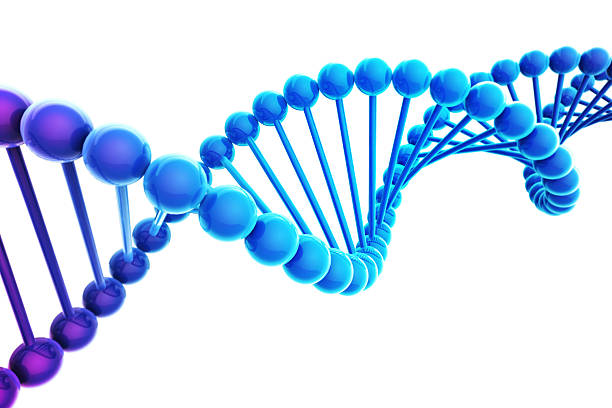
A double stranded helix that holds the code for all the cells in the body.
RNA
DNA
Chromatin
Nucleus
Energy rich organic compound which provides long term energy. Also contains more energy than carbohydrates.
carbohydrates
lipids
proteins
nucleic acids
Large organic compound made of carbon, hydrogen, oxygen, nitrogen and sometimes sulfur.
carbohydrates
proteins
lipids
nucleic acids

Living things need carbohydrates, lipids, proteins and nucleic acids which are part of which group?
inorganic compounds
organic compounds
earthly compounds
water compounds

Energy rich organic compound, such as sugar or starch, that is made of elements carbon, hydrogen, and oxygen
carbohydrate
lipid
protein
nucleic acid
water

This helps cells keep their shape and size
protein
lipids
carbohydrates
water
Water moves out of the cells of a saltwater fish and into the ocean.
Osmosis
Diffusion
Exocytosis
Endocytosis
Oxygen moves from the lungs into the bloodstream.
Exocytosis
Osmosis
Diffusion
Endocytosis
How does active transport differ from passive transport?
Is the movement that no requires cellular energy.
Is the movement that requires cellular energy.
What makes the cell membrane selectively permeable?
The cell membrane's double lipid layers means that some materials can pass through it but others cannot
The cell membrane's double lipid layers means that some materials cannot pass through it but others cannot
Exocytosis
the process by which large molecules are engulfed by a cell
the process by which molecules tend to move from an area of higher concentration to an area of lower concentration
the process by which large molecules are expelled from a cell
the process by which water moves across a selectively permeable membrane
Endocytosis
the process by which large molecules are engulfed by a cell
the process by which molecules tend to move from an area of higher concentration to an area of lower concentration
the processs by which large molescules are expelled
the processs by which water moves across a selectively permeable membrane
Glucose enters a liver cell through a protein channel
difussion
facilitated difussion
osmosis
active transport

