wayground logo

Free Printable Worksheets

Font size

S
M
L
XL
Worksheets

Short story unit exam

Total questions: 42

Worksheet time: 21mins

Name
Class
Date
1.
"There Will Come Soft Rains" Why is no one home?
a)
Everyone is at work or school.
b)
No one lives in the house because it is for sale.
c)
The house is too expensive to operate.
d)
Everyone has been killed.
2.
The house identifies the Teasdale poem as Mrs. McClellan's favorite. What does this poem suggest about Mrs.. McClellan?
a)
She valued human achievements more than natural beauty.
b)
She thought about the potential destruction of himankind.
c)
She enjoyed listening to poems on rainy days.
d)
She was fascinated by the latest technology in house building.
3.
Which of the following statements is an example of personification in the story?
a)
The fire is compared to an avalanche.
b)
The dog is described as a pitiful creature.
c)
The house is described as quivering at every sound.
d)
The house is compared to a giant computer.
4.
Based on this story, Bradbury (author) would most likely be in favor of
a)
increasing our stockpile of nuclear weapons
b)
automating all houses
c)
people doing their own housework.
d)
nuclear disarmament
5.
How does the house seem to come alive?
a)
The house tries to save its own life.
b)
The house cries when its inhabitants leave.
c)
The house has a full range of human emotions.
d)
The house can do anything a person can do.
6.
Read the sentence from paragraph 5 of "The Lottery" Every year, after the lottery, Mr. Summers began talking again about a new box, but every year the subject was allowed to fade off without anything’s being done. What message does this sentence imply?
a)
There isn’t enough leadership in the village to organize the building of a new box.
b)
Since everyone is busy with farming, none of the villagers have time for other projects.
c)
No one wants to challenge the tradition, so the villagers don’t make necessary changes.
d)
People are reluctant to replace the original lottery box built by the first settlers of the village.
7.
Which two excerpts best show how the author uses character behavior to develop suspense and a feeling of uneasiness?
a)
Soon the men began to gather, surveying their own children, speaking of planting and rain, tractors and taxes. (paragraph 3)
b)
The villagers kept their distance, leaving a space between themselves and the stool, and when Mr. Summers said, “Some of you fellows want to give me a hand?” there was a hesitation before two men, Mr. Martin and his oldest son, Baxter, came forward . . .
c)
Mr. Summers was very good at all this; in his clean white shirt and blue jeans, with one hand resting carelessly on the black box . . . (paragraph 7)
d)
The people separated good-humoredly to let her through; two or three people said, in voices just loud enough to be heard across the crowd, “Here comes your Missus, Hutchinson,” and “Bill, she made it after all.” (paragraph 9)
e)
The people had done it so many times that they only half listened to the directions; most of them were quiet, wetting their lips, not looking around. (paragraph 21)
8.
Which sentence from the story conveys a tone of ridicule toward the villagers?
a)
They stood together, away from the pile of stones in the corner, and their jokes were quiet and they smiled rather than laughed.
b)
There was a great deal of fussing to be done before Mr. Summers declared the lottery open.
c)
Mrs. Hutchinson craned her neck to see through the crowd and found her husband and children standing near the front.
d)
They grinned at one another humorlessly and nervously.
9.
This question has two parts. First, answer Part A. Then, answer Part B. Part A What can the reader infer about the culture of the village?
a)
The citizens look forward to the lottery each year.
b)
The society holds older people in high regard.
c)
The citizens have limited food resources.
d)
The society is controlled by males.
10.
Part B Which two excerpts from the story best support your answer to Part A?
a)
“Me, I guess,” a woman said, and Mr. Summers turned to look at her. “Wife draws for her husband,” Mr. Summers said. “Don’t you have a grown boy to do it for you, Janey?”
b)
“Now, I’ll read the names—heads of families first—and the men come up and take a paper out of the box. Keep the paper folded in your hand without looking at it until everyone has had a turn. Everything clear?”
c)
“Seems like there’s no time at all between lotteries any more,” Mrs. Delacroix said to Mrs. Graves in the back row.
d)
“First thing you know, we’d all be eating stewed chickweed and acorns. There’s always been a lottery,” he added petulantly.
e)
“Seventy-seventh year I been in the lottery,” Old Man Warner said as he went through the crowd.
11.
Based on the details of the story, the reader can infer that —
a)
most of the people in the village know each other
b)
Mr. Summers enjoys watching the outcome of the lottery
c)
Mrs. Hutchinson is usually running late on the day of the lottery
d)
the older people in the village refuse to listen to the younger people
12.
The change in Mrs. Delacroix’s behavior toward Mrs. Hutchinson seen in paragraphs 8 and 74 is significant because —
a)
it reveals Mrs. Delacroix’s secret feelings of resentment toward Mrs. Hutchinson
b)
it illustrates the critical importance of staying on schedule to the culture of the village
c)
it emphasizes the idea that people can be manipulated by society into doing horrific acts
d)
it suggests that Mrs. Delacroix wants to end Mrs. Hutchinson’s suffering as quickly as possible
13.
Which statement best explains why the people of the village carry out the lottery?
a)
They want approval from the other people in their society.
b)
They fear that they will be cast out of the village if they refuse.
c)
They believe that participating in the tradition will keep them safe.
d)
They think they need to limit the number of people living in the village.
14.
"Harrison Bergeron" What can be inferred about the society in the story?
a)
No one ever needs to work.
b)
No one disagrees with the laws.
c)
Everyone appreciates the equality.
d)
Everyone is forced to be the same.
15.
Read this sentence from paragraph 23. "It was such a doozy that George was white and trembling, and tears stood on the rims of his red eyes." What is the effect of the imagery and personification used in this sentence?
a)
It illustrates how hard George tries to regain control of his mind.
b)
It emphasizes how much pain the loud sounds cause George.
c)
It describes George’s appearance in an objective way.
d)
It suggests that George is weaker than other people.
16.
What piece of text evidence best supports the inference that the Handicapper General is skilled and above average?
a)
Hazel, as a matter of fact, bore a strong resemblance to the Handicapper General, a woman named Diana Moon Glampers.
b)
“I think I’d make a good Handicapper General.”
c)
She fired twice, and the Emperor and the Empress were dead before they hit the floor.
d)
Diana Moon Glampers loaded the gun again.
17.
Which statement best explains why the discussion about President Keith in the opening scene is important to the success of the story’s plot?
a)
The discussion about President Keith’s election sets the plot in motion, so it is important for the reader to learn about it prior to learning about the time travel.
b)
The discussion demonstrates that President Keith won and that his opponent is monstrous, which is necessary to know to understand the final scene’s significance.
c)
It is revealed at the end that the government is at odds with the safari company, so knowing that members of the company support President Keith is important.
d)
Information about President Keith’s election serves to foreshadow the story’s dramatic ending.
18.
The scene that depicts how horrifying the dinosaur is contributes to the plot by —
a)
making the careless actions Eckels takes seem believable despite the risks they pose
b)
demonstrating why adventurous people would want to sign up for the safari
c)
explaining why Travis and the desk clerk warn Eckels about the danger of the hunt
d)
indicating that hunting a dinosaur is more challenging than hunting other game
19.
Which two details best support the inference that significant changes have taken place in the present day by the end of the story?
a)
The butterfly from the prehistoric age is dead.
b)
The sign on the wall reveals that language conventions are different.
c)
The election has all the same candidates that it did before the hunt.
d)
The air tastes and feels slightly different.
e)
The office furniture seems very different.
20.
What does the time Eckels spends in the past reveal about him?
a)
It reveals that he is as comfortable in a setting he knows as he is in a past era.
b)
It reveals that he is unable to handle hunting large game without skilled guides.
c)
It reveals that he underestimates the past and overestimates his adaptability.
d)
It reveals that he romanticizes the past and does not appreciate his own era enough.
21.
This question has two parts. First, answer Part A. Then, answer Part B. Part A Which conclusion can a reader draw about Eckels, based on his characterization in the selection?
a)
He doesn’t think through his actions to analyze their possible consequences.
b)
He is a rule follower and he is concerned about the safety of others.
c)
He is a pompous rich man, but he respects Mr. Travis’s authority.
d)
He is a timid person who doesn’t want to take any risks.
22.
Part B Which two quotes from the selection best support the answer to Part A?
a)
He shook his head. “Makes you think. If the election had gone badly yesterday, I might be here now running away from the results.”
b)
“I’ve hunted tiger, wild boar, buffalo, elephant, but now, this is it,” said Eckels.
c)
The rifle in his hands seemed a cap gun. “We were fools to come. This is impossible.”
d)
“I didn’t realize it would be this big,” said Eckels. “I miscalculated, that’s all. And now I want out.”
e)
“Don’t look at me,” cried Eckels. “I haven’t done anything.”
23.
Maggie’s shyness arises mainly from —
a)
her fear of her sister
b)
the sudden attraction she feels toward Hakim-a-barber
c)
a trauma she suffered when the house burned down
d)
the ridicule her family heaps on her
24.
Dee probably changes her name because she —
a)
wants to get back at her family
b)
wants to connect with her African roots
c)
never liked the sound of it
d)
thinks a new name will enhance her career
25.
Why does the mother finally decide to give the quilts to Maggie instead of to Dee?
a)
The mother thinks Dee will sell them
b)
Hakim-a-barber makes insulting remarks about them
c)
Dee changes her mind about wanting them
d)
She is touched by Maggie’s vulnerability and deep sense of family.
26.
Which of the following traits does Dee share with her mother?
a)
Neither of them likes the family house.
b)
Both women are strong-willed.
c)
Both of them love their country.
d)
Neither of them went to high school.
27.
When Dee tells her mother, “You just don’t understand,” the statement shows the reader that —
a)
it’s actually Dee who doesn’t understand
b)
Dee is cleverer than her mother
c)
Dee thinks her mother is being mean
d)
Dee understands her mother and Maggie
28.

Which of the following is an example of first-person point of view?

a)

He, she, it

b)

They, them, their

c)

I, me, my

d)

We, us, our

29.

What is theme?

a)

The main idea or message of a literary work

b)

The sequence of events in a story

c)

The perspective from which a story is told

d)

The process of analyzing characters in a story

30.

Which of the following is an example of a theme?

a)

The setting of the story

b)

The protagonist's name

c)

Love conquers all

d)

The order of events in the story

31.

What is third-person limited point of view?

a)

The narrator knows the thoughts and feelings of all characters

b)

The narrator is a character in the story

c)

The narrator knows the thoughts and feelings of only one character

d)

The narrator is an outside observer

32.

What is the purpose of theme analysis?

a)

To understand the sequence of events in a story

b)

To identify the main idea or message of a literary work

c)

To analyze the setting of a story

d)

To determine the point of view of a story

33.

Which of the following is an example of third-person omniscient point of view?

a)

She knew what they were thinking.

b)

He ran as fast as he could.

c)

I walked to the store.

d)

They laughed at the joke.

34.

Which term means "the writer's attitude"?

a)

mood

b)

point of view

c)

feeling

d)

tone

35.

Mood is...

a)

the genre of the text

b)

the attitude of the writer

c)

the point of view

d)

the feeling a text gives the reader or wants the reader to feel

36.

The tone is determined by the

a)

descriptions, words and dialogue

b)

descriptions in the text

c)

length of a written text

d)

words and dialogue

37.

The tone in this quote is...

a)

depressing

b)

melancholy

c)

motivational

d)

pessimistic

38.

Which sentence has the most energetic tone?

a)

It's raining heavily, and I don't have an umbrella!

b)

It's raining heavily; I can't believe that I don't have an umbrella!

c)

It's raining heavily, and I don't have an umbrella; lets splash and have fun!

d)

It's raining heavily, and I hate it!

39.

The mood in this passage is...

"My enemy was making his way down the hall, bursting open door after door. I needed to break through this window in two tries to make it out in time."

a)

pessimistic

b)

cheerful

c)

scary

d)

sad

40.

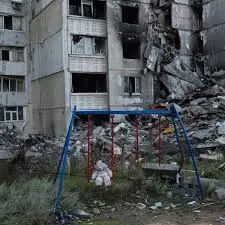
The best word to describe the mood in this picture is...

a)

calm

b)

optimistic

c)

peaceful

d)

depressing

41.

What are the words which represent the tone in the following passage:

"Although I had tried hard and had followed the steps of the scientific method, my experiment didn't work. I dragged myself into class and slouched in my seat, not raising my hand."

a)

dragged, slouched

b)

raising my hand

c)

method, class

d)

experiment, science

42.

What words show that the mood in this scene is positive?

"Grinning, Cole pulled on his tennis shoes and gloves, and picked up his hammer. He worked hard all day."

a)

picked up

b)

grinning, hard

c)

tennis shoes, gloves

d)

Cole, tennis shoes