
 Worksheets
Cell Organelles 2023
Total questions: 55
Worksheet time: 1hrs 18mins
True or False:
Chloroplasts are found in both plant and animal cells.
True
False
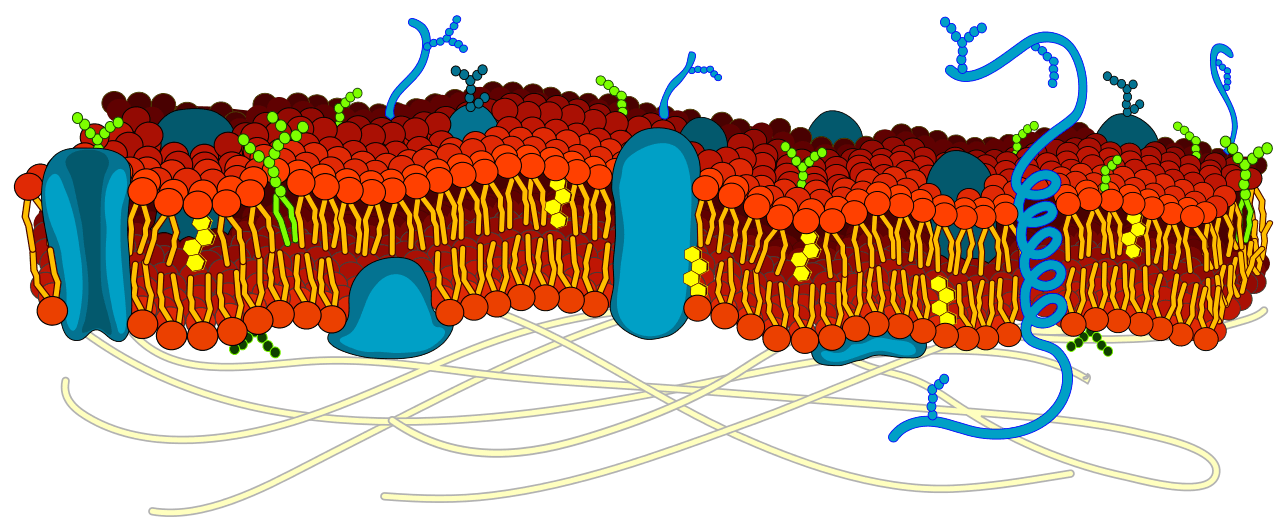
Which photo shows the mitochondrion of the cell?


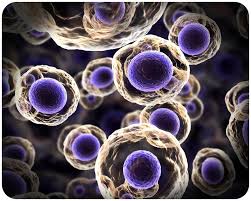
The purple organelle in photo depicts which organelle?
Nucleus
Endoplasmic Reticulum
Lysosome
Ribosome

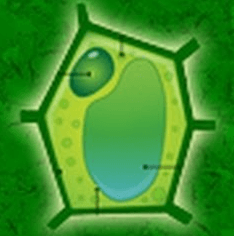
Identify the structure that is indicated by the arrow in the image.
cell wall
central vacuole
chloroplast
cell membrane
Which of these organelles is not found in a animal cell?
Cell Membrane
Nucleus
Mitochondria
Cell Wall
This organelle is responsible for disposing of waste in the cell.
Mitochondria
Nucleus
Cell Wall
Lysosome
Which organelle serves as an internal transport system, and can be either "rough" or "smooth"?
Nucleus
Mitochondria
Cell Wall
Endoplasmic Reticulum
Which organelle makes proteins?
Mitochondria
Chloroplast
Ribosome
Lysosome

What is the function of the cell membrane?
To control what comes in and out of the cell
To break down food inside the cell
to serve as a barrier
to eat the cells food

Which organelle receives proteins and materials from the ER, packages them and distributes them
Vacuoles
Golgi Bodies
Nucleus
Chromatin

Chromatin is
tiny strands inside the nucleus that contain the instructions for directing the cell's function
found inside the nucleus
needed to make proteins
Which is true of prokaryotic and eukaryotic cells?
Prokaryotic cells are larger than eukaryotic cells.
Eukaryotic cells do not have nuclei, and prokaryotic cells do have nuclei.
Prokaryotic cells lack membrane-bound organelles, and eukaryotic cells contain membrane-bound organelles.
Eukaryotic cells are simpler than prokaryotic cells.
A cell has mitochondria, ribosomes, smooth ER, and other parts. Based on this information, it could NOT be:
a cell from a pine tree
A grasshopper cell
an animal cell
a bacterial cell
A cell has mitochondria, ribosomes, smooth ER, and other parts. Based on this information, it could NOT be:
a cell from a pine tree
A grasshopper cell
an animal cell
a bacterial cell
Which of the following structures would a prokaryote use for attaching to surfaces?
pili
flagella
cilia
anchoring junctions
Long strands of DNA in a non-dividing cell are called
chromatin
nucleolus
ribosome
lysosomes
The job of the nucleolus is
to make polypeptides.
to make ribosomes
to digest items inside the cell
to store chromatin
The plasma cell produces thousands of antibodies (proteins) per second. What type of cell structure would you expect to find a lot of in the cell if it produces lots of proteins?
nucleus
rough ER
mitochondria
microtubule
In prokaryotic cells, the genetic material is found in…
the DNA & RNA
the nucleoid
the nucleus
the nucleolus
In the kidneys, the concentration of water is higher in the renal tubules than it is in the blood. The absorption of water from the blood into the renal tubules is achieved through:
active transport
diffusion
osmosis
passive transport
Which organelle contains genetic material?
Endoplasmic Reticulum
Golgi Complex
Nucleolus
Nucleus




The tough outer barrier of some cells, holds the shape and protects the cell
Mitochondria
Cell Wall
Nucleus
Ribosomes

Name this organelle
Ribosomes
Vacuole
Nucleus
Chloroplast
Stores water in all cells
Cytoplasm
Ribosomes
Cell Membrane
Vacuoles
Transports materials OUTSIDE of the cell
Golgi Body
Cell Wall
Nucleolus
Ribosomes

Name this organelle
Cell Membrane
Ribosomes
Golgi Body
Chloroplast

Name this organelle
Cell Wall
Lysosomes
E.R.
Vacuole
How many vacuoles does a PLANT cell have?
1
2
3
4+
The rough E.R. has what organelle attached to it, making it look rough
Vacuole
Ribosomes
Lysosomes
Cell Wall

The organelle that breaks down lipids, carbohydrates, and proteins into small molecules that can be used by the rest of the cell:
Lysosome
Cytoskeleton
Golgi Apparatus
Chloroplast

The organelle that helps the cell maintain its shape and is also involved in movement:
Mitochondrion
Lysosome
Cytoskeleton
Cell Membrane

The organelle that organizes cell division:
Nucleus
Centrioles
Cytoskeleton
Ribosome

