Wayground logo

Free Printable Worksheets

Font size

S
M
L
XL
Worksheets

Year 7 Revision

Total questions: 89

Worksheet time: 1hrs 5mins

Name
Class
Date
1.

Which of these pieces of equipment is beaker?

a)
b)
c)
d)
2.

What is the name of this piece of equipment?

a)

Beaker

b)

Conical flask

c)

Measuring cylinder

d)

Evaporating Basin

3.

Which piece of equipment should you use to measure out liquids?

a)
b)
c)
d)
4.

I would like to heat a beaker of water over a Bunsen burner flame, I will need...

a)

A tripod, gauze and heatproof mat

b)

Retort stand, heatproof mat and clamp

c)

Nothing else, I'll hold the beaker in my hand.

d)

I can hold the beaker in the flame using tongs.

5.
What protects the eyes from flying objects or chemical splashes?
a)
lab apron
b)
balance
c)
eye dropper
d)
goggles
6.

What is a device used to measure temperature changes?

a)

Temperature

b)

Thermometer

c)

Weather

d)

Measurer

7.

How do you correctly draw a conical flask

a)
b)
c)
d)
e)
8.

What is this piece of equipment?

a)

Conical flask

b)

Beaker

c)

test tube

d)

measuring cylinder

9.

The correct order of the planets is:

a)

Mars,Venus,Earth,

Mercury,Saturn

Jupiter, Uranus, Neptune

b)

Earth,Venus,Mars

Jupiter, Neptune,

Mercury,Saturn,

Uranus

c)

Mercury,Venus,Earth

Mars,Jupiter,

Saturn,Uranus

Neptune

10.

Planets that are further away from the sun...

a)

take more time to orbit

b)

take less time to orbit

11.
Pluto, among others, is known as a ____.
a)
dwarf planet 
b)
planet
12.
The surface of this planet appears red due to rusting iron in the rocks.
a)
Mercury
b)
Mars
c)
Pluto
d)
Venus
13.
This is the largest planet in the solar system.
a)
Saturn
b)
Jupiter
c)
Uranus
d)
Venus
14.
Millions of pieces of rocky material of various sizes orbit the Sun between the orbits of Mars and Jupiter. These objects are known as -
a)
Asteroids
b)
Meteors
c)
Comets
d)
Planets
15.

The scientific study of the universe is called...

a)

Big Bang Theory

b)

Cosmos

c)

Astronomy

d)

Star study

16.

A system that contains billions of stars is called a ...

a)

galaxy

b)

milky way

c)

solar system

d)

Astronomy

17.
Which planet has the shortest orbit around the sun?
a)
Jupiter
b)
Neptune
c)
Earth
d)
Mercury
18.
What does the word terrestrial mean?
a)
Warm planets
b)
planets with moons
c)
planets with ailens
d)
Rocky planets
19.
Compared to the inner planets, the outer planets are...
a)
larger
b)
warmer
c)
denser
d)
better
20.
How many planets are there?
a)
7
b)
8
c)
9
d)
10
21.
The difference between a moon and a planet is...
a)
A moon is made of rock, a planet is made of gas
b)
Moons can only be seen with a telescope
c)

Moons revolve around a planet, planets revolve around a sun

d)
That's no moon... ITS A SPACE STATION!
22.
What are the inner planets composed of?
a)
gases and ice
b)
rock and ice
c)
gases and rock
d)
rock
23.
The right combination of temperature, water, and oxygen
a)
affects Mars’s orbit.
b)
supports life on Earth.
c)
causes gas giants to form.
d)
results in storms on Venus.
24.
____________is a planet similar to Earth in size, mass, and density.
a)
Mercury
b)
Venus
c)
Mars
d)
Neptune
25.
The sun and all the planets and other bodies that revolve around it make up our
a)
universe
b)
galaxy
c)
solar system
d)
neighborhood
26.

What is the second largest planet in our solar system?

a)

Neptune

b)

Jupiter

c)

Uranus

d)

Saturn

27.
________ has the most spectacular rings.
a)
Neptune
b)
Jupiter
c)
Uranus
d)
Saturn
28.

Which planet in our solar system is the largest?

a)

Mercury

b)

Neptune

c)

Jupiter

d)

Uranus

29.

All of the outer planets are known as the _________.

a)

terrestrial giants

b)

titanium planets

c)

helium giants

d)

gas giants

30.
This planets is farthest from the sun
a)
Neptune
b)
Jupiter
c)
Saturn
d)
Mars
31.
The gas giants have so much mass, they exert a much stronger gravitational force.True or False
a)
True
b)
False
c)
Neither
d)
Both
32.
Neptune is twice as far from the sun as Saturn, so it is much warmer. True or False
a)
True
b)
False
c)
Neither
d)
Both
33.
A device that detects radio waves from objects in space is called a(n)
a)
radio telescope.
b)
reflecting telescope.
c)
refracting telescope.
d)
electromagnetic telescope.
34.
Why is the Hubble telescope located in space?
a)
So it can be closer to the stars it magnifies
b)
They have very large optical lenses
c)
So its images arent distorted by Earth's atmosphere 
d)
So it can be operated by astronauts 
35.
In winter, the axis of the earth is pointed away or toward the sun?
a)
towards
b)
up
c)
down
d)
away
36.
Why is the Equator warmest?
a)
Because it is closest to the sun.
b)
Because it receives the most direct sunlight
c)
Because no clouds form here.
d)
Because it is far from the sun
37.
If its ____ in the Northern hemisphere, then its summer in the Southern hemisphere. 
a)
spring
b)
summer
c)
fall
d)
winter
38.
Why does the area around the equator stay the same temperature all year?
a)
The equator rotates slower than the poles.
b)
The equator remains the same distance from the sun.
c)
The equator always receives direct sunlight.
d)
The equator has 18 hour days.
39.
What does the rotation of the earth cause us to experience?
a)
seasons
b)
year
c)
day & night
d)
eclipse
40.

Which of these changes would likely occur if the rate of Earth's rotation on its axis increased?

a)

The length of the seasons would be longer.

b)

The length of the seasons would be shorter.

c)

The length of a day would be shorter.

d)

The length of a day would be longer.

41.
Which body has the greater effect on Earth's tides?
a)
Sun
b)
Saturn
c)
Moon 
d)
Venus
42.
Which moon phase is shown in this diagram?
a)
new moon
b)
first quarter
c)
full moon
d)
last quarter/3rd quarter
43.
What Moon phase is this?
a)
Full Moon
b)
Waxing Gibbous
c)
New Moon
d)
Half Moon
44.

The force that causes objects with mass to attract one another.

a)

Weight

b)

Gravity

c)

Mass

d)

Magnetism

45.

Why do planets orbit the Sun?

a)

The Sun is the only celestial object that has a gravitational pull.

b)

The Sun’s chemical composition makes it attract planets.

c)

Only celestial bodies that emit light, like the Sun, can be at the center of an orbit.

d)

The Sun is the most massive object in our solar system, so it exerts the greatest gravitational pull.

46.

The gravitational attraction between two objects would increase if both masses are –

a)

increased, and the distance between them is increased.

b)

increased, and the distance between them is decreased.

c)

decreased, and the distance between them is decreased.

d)

decreased, and the distance between them is increased.

47.

Gravity can be defined as the –

a)

force of attraction between two or more masses.

b)

friction created when two objects are in contact.

c)

energy given off by stars due to nuclear reactions.

d)

path an object follows as it moves through space.
48.
Any object with mass has gravity.
a)
True
b)
Sometimes
c)
False
d)
Never
49.
A person would weigh less on on the Moon than on the Earth because . . .
a)
Moon has more mass, and therefore more gravity
b)
Moon has less mass, and therefore more gravity
c)
Moon has more mass, and therefore less gravity
d)
Moon has less mass and therefore less gravity
50.
What is a PUSH or PULL of an object?
a)
Motion
b)
Force
c)
Friction
d)
Gravity
51.
If an object is stationary (not moving) the forces acting upon it are _____________
a)
unbalanced
b)
weak
c)
balanced
d)
Hulk Smash!
52.

What force slows objects down and keeps them from moving?

a)

Acceleration

b)

Gravity

c)

Friction

d)

Net Force

53.
Which one is balanced?
a)
top
b)
bottom
c)
both
d)
neither
54.
What Unit do we Measure Force in? 
a)
Newtons
b)
Joules
c)
Force
d)
Kilograms
55.

The more mass an object has, the _______ force it takes to accelerate it.

a)

more

b)

less

56.
How does friction affect speed?
a)
more friction decreases speed
b)
more friction increases speed
c)
less friction decreases speed
d)
less friction doesn't affect speed
57.
Rougher surfaces have ...
a)
greater friction
b)
less friction
c)
the same level of friction
58.

When is having less friction useful?

a)

walking

b)

driving

c)

ice skating

d)

climbing

59.

There is ______ friction on a smooth surface.

a)

more

b)

less

c)

no

d)

lots of

60.

Friction is a type of force. True or False?

a)

True

b)

False

61.
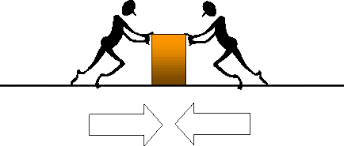
What is the net force?
a)
20 N 
b)
0 N 
c)
400 N 
d)
40 N 
62.
What is the net force?
a)
10 N
b)
0 N
c)
25 N
d)
1 N
63.
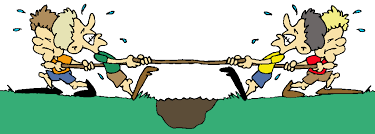
If these teams are pulling with the same amount of force what will happen?
a)
The boy in blue will win.
b)
They will not move at all.
c)
The boy in red will win.
d)
Both will fall down.
64.
Balanced or unbalanced?
a)
balanced
b)
unbalanced
65.
What force holds the planets in motion around the sun?
a)
Magnetic
b)
Electrical
c)
Gravitational
d)
Air Resistance
66.
What force ultimately slows the roller coaster to a stop?
a)
Applied
b)
Normal
c)
Friction
d)
Magnetic
67.

When an object is moving, friction acts in the _______ direction as the motion.

a)

perpendicular

b)

same

c)

opposite

d)

precise

68.

A type of friction that occurs when air pushes against a moving object it to decelerate.

a)

surface area

b)

air resistance

c)

velocity

d)

gravity

69.

A contact force is from

a)

objects physically touching

b)

far apart objects

c)

not touching object

d)

always a pull

70.

The three examples pictured are of

a)

Non-contact Forces

b)

Contact Forces

71.

The force between the phone and the mount is a

a)

contact force

b)

non-contact force

72.

A force is ____.

a)

a push or pull that can cause movement

b)

a magnet

c)

when someone does not work

73.
What are balanced forces?
a)
Forces in the same direction
b)
Forces of the same size
c)
forces of the same size in opposite directions
74.

Looking at the drawing. If you tried to move these 2 magnets closer together, what would you feel?

a)

A Pushing force

b)

A Pulling force

c)

No Force

d)

Let the Force be with YOU

75.

Forces that are equal in size and opposite in direction are _____.

a)

Net forces

b)

Frictional forces

c)

Balanced forces

d)

Gravitational forces

76.

A feather will fall through the air more slowly than a brick because of _____.

a)

Air resistance

b)

Gravity

c)

Terminal velocity

d)

Momentum

77.
A rock formed from fragments of other rocks is a(n)
a)
Metamorphic Rock
b)
Sedimentary Rock
c)
Extrusive Rock
d)
Igneous Rock
78.
If heat and pressure inside the Earth cause a rock to melt, the material that formed would be
a)
Metamorphic
b)
Magma
c)
Sedimentary
d)
Igneous
79.
Which of the following is not a rock
a)
Pumice
b)
Lava
c)
Halite
d)
Sandstone
80.
The three groups of rocks are classified by
a)
How they form
b)
Color
c)
Grain size
d)
Chemical Composition
81.
Fossils are only found in
a)
Sedimentary rocks
b)
Foliated Metamorphic rocks
c)
Igneous Rocks
d)
Nonfoliated Metamorphic rocks
82.

Rock that forms from compressed or cemented layers of sediment

a)

Igneous Rock

b)

Metamorphic Rock

c)

Sedimentary Rock

d)

Classic Rock

83.

Which is not a major kind of rock?

a)

Igneous

b)

Magma

c)

Sedimentary

d)

Metamorphic

84.

Processes by which rock, sand, and soil are broken and carried away

a)

Erosion

b)

Weathering

c)

Deposition

d)

Compaction

85.

A series of processes on the surface and inside Earth that slowly changes rocks from one kind to another

a)

Erosion

b)

Weathering

c)

Rock Cycle

d)

Deposition

86.

Weathering is..

a)

Weather

b)

the breaking down of rocks and other materials on the Earth's surface

c)

Process in which sediment is laid down in new locations

d)

Molten rock rising to the Earth's surface

87.

Rock that has been changed by heat and pressure

a)

Metamorphic rock

b)

Polymorphic rock

c)

Sedimentary rock

d)

Igneous rock

88.

A type of rock that forms from the cooling of molten rock at or below the surface

a)

Metamorphic rock

b)

Igneous rock

c)

Sedimentary rock

d)

Heavy rock

89.

Magma is...

a)

typically a cold substance found in the polar ice caps.

b)

molten rock beneath the earth's surface

c)

found on the earth's surface

d)

a substance that comes from living things