
 Worksheets
Energy Quiz Review 8.1 - 8.6
Total questions: 59
Worksheet time: 2hrs 32mins
When is work done on an object?
When an object has a net force applied to it.
When an object moves while a net force is being applied to it
When an object doesn't move while a net force is applied to it
When an object is moving without a net force being applied to it

When the weightlifter holds the weight above his head he may get incredibly tired, ...
He is getting tired because he is doing work on the barbell of weights
He is getting tired because his muscles are stretching and squeezing to do work on the barbell of weights
He is now the equivalent of a table with weights on it.
He is getting tired because his muscles are stretching and squeezing, but he is not doing work on the barbell of weights

What just happened in this picture?
The weight lifter did work by lifting the barbells from the floor to above his head.
The weight lifter did not do work when lifting the barbells above his head.
The weight lifter did no work because he is just a table for weights.
The barbells did work on the weight lifter when lifted from the ground to above the weight lifters head.
Which of the following examples has NO work being done? (Choose all that apply)
An archer stretches her bowstring.
An ant carries a leaf cutting from a tree to his colony
An athlete does push-ups on the ground
A book sits on the shelf
An asteroid speeds across the solar system
Which of the following examples has work being done? (Choose all that apply)
An archer stretches her bowstring.
An ant carries a leaf cutting from a tree to his colony
An athlete does push-ups on the ground
A book sits on the shelf
An asteroid speeds across the solar system
The units of measurement for work are?
Newton
Newton*meter
Joule
Watt
Joule per second
A kilojoule is how many joules?
1
100
10,000
100,000
1,000
A megajoule is how many joules?
1
100,000
1,000
1,000,000
100
Suppose that you apply a 100 Newton horizontal force to a box on the floor, which pushes the box 10 meters. How much work do you do on the box?
100 J
1 J
1000J
10000J
1 kJ
How do you calculate power?
Amount of work done divided by the time interval during which the work is done.
Amount of net force applied to an object multiplied by the distance the object moves
Mass multiplied by acceleration
Amount of momentum gained multiplied by the time interval in which the momentum was gained
If a newer better engine has twice the power of an older engine, this means that the newer engine can do what? (Choose all that apply)
The engine can do half the work in twice the time.
The engine can do twice the work in the same amount of time.
The engine can do the same amount of work in half the time.
The engine can do twice the work in twice the time.
The engine can do twice the work in half the time.
What are the units of power?
Watts
Joules per second
Joules multiplied by seconds
Newtons multiplied by meters divided by seconds
Horsepower
One kilowatt is equal to how many watts?
1
10
1,000
10,000
100,000
What are the two forms of mechanical energy?
elastic
kinetic
potential
chemical
gravitational
To find gravitational potential energy on Earth we use which of the following equations?
PE = m*g*h
PE = m*v*d
PE = m*g*s
PE = m*g/h
PE = m*v/g
The work required to bring an object up to a final speed from rest is called what?
gravitational potential energy
chemical energy
thermal energy
potential energy
kinetic energy
The work required to slow down an object down to rest from some initial speed is called what?
gravitational potential energy
chemical energy
thermal energy
potential energy
kinetic energy

The kinetic energy of an object increases by what factor if the velocity is doubled?
a factor of one half
a factor of double
a factor of triple
a factor of quadruple
The kinetic energy of an object increases by what factor if the mass is doubled?
a factor of one half
a factor of double
a factor of triple
a factor of quadruple
The units of measurement for potential energy are?
Newton
Newton*meter
Joule
Watt
Joule per second
The units of measurement for kinetic energy are?
Newton
Newton*meter
Joule
Watt
Joule per second
What is energy?
moving energy
stored energy
renewable energy
The ability to do work.
What is potential energy?
moving energy
stored energy
renewable energy
non renewable energy
What is kinetic energy?
moving energy
potential energy
stored energy
renewable energy
Two factors that determine work are
force
acceleration
mass
distance
velocity
units of force are
newtons
grams
joules
meters
units for work are
newtons
joules
meters
seconds
if you push a cart with a force of 60 N for 2 m... how much work have you done
120 J
30 J
120 N
30 N


At which point of the roller coaster is potential energy the greatest?
W
X
Y
Z
The faster an object moves, the ________ kinetic energy it has.
more
less
The acceleration due to gravity (on Earth) is _____
98 m/s2
9.8 m/s2
9.8 m/s
0.98 m/s
A bicycle and a person with a total mass of 80 kg are traveling at a velocity of 7 m/s. What is their kinetic energy?
156,800 J
1,960 J
0.82 J
7,840 J
What is the kinetic energy of a 4kg shotput thrown with a velocity of 13m/s?
676 J
3.25 J
17J
338 J

A cheetah can run briefly with a speed of 31.0 m/s. Suppose a cheetah with a mass of 47.0 kg runs at this speed. What is the cheetah’s kinetic energy?
1457 Joules
22,584 Joules
15 Joules
45,167Joules
The Law of Conservation of Energy states that energy is never __________________ or _________________, only transferred.
created, destroyed
created, subtracted
added, subtracted
destroyed, subtracted
The faster an object moves, the _______________ kinetic energy it must carry.
more
less
constant
varying
A skydiver jumps out of a helicopter. What is happening in terms of energy?
He is gaining potential energy as he falls, and losing kinetic energy.
He is gaining kinetic energy as he falls and losing potential energy.
His kinetic and potential energy is always the same.
He is gaining kinetic and potential energy at the same time.

Where is the car moving fastest?
A
B
C
D

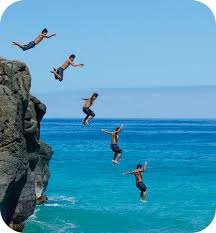
A cliff diver with a mass of 125 kg jumps off a 50m high cliff, how fast will he be traveling just before he hits the water? (His height at this point is 0m)
(HINT: Find PE first.) KE = 1/2mv2
g = 9.8 m/s2
61,250 m/s
980 m/s
31.3 m/s
247.5 m/s
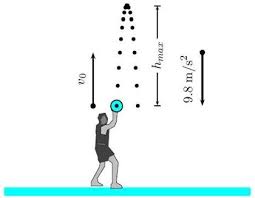
If a 0.5 kg ball is thrown up with 250 J of kinetic energy, how high will it go?
(HINT: At the ball's highest point it has stopped.) KE = 1/2mv2
g = 9.8 m/s2
51 m
25.5 m
12.76 m
31.6 m

