
 Worksheets
Atoms and the Periodic Table
Total questions: 51
Worksheet time: 26mins
What determines the order of elements on today's periodic table?
increasing atomic mass
decreasing atomic mass
increasing atomic number
decreasing atomic number

From this element key of Nitrogen, determine the atomic mass of nitrogen
7
7.01
14.01
21.01
Look at the periodic table. Which list of elements forms a group on the periodic table?
Li, Be, B, C, N, O, F, and Ne
He, Ne, Ar, Kr, Xe, and Rn
B, Si, As, Te, and At
Sc, Ti, V, Cr, Mn, Fe, Co, Cu, Ni, and Zd
Which is NOT a property of metals?
brittleness
conductivity
ductility
luster
What are two properties that make a metal a good choice to use as wire in electronics?
conductivity, malleability
ductility, conductivity
luster, malleability
malleability, high density
Where are most metals on the periodic table?
on the left side only
on the right side only
in the middle only
on the left side and in the middle
Using the periodic table, which element is a metalloid?
carbon
silicon
oxygen
aluminum
Iodine is a nonmetal. What is one property of iodine?
conductivity
dull appearance
malleability
ductility

Which of the following elements is in (period 4 , group 2)
Carbon
Potassium
Calcium
Sodium
Which of the following are found on the left side of the zig zag line on the periodic table?
Non-metals
metalloids
metals
compounds
What type of elements are found on the "staircase" of the periodic table?
Metals
Metalloids
Nonmetals
Where are nonmetals found on the periodic table?
Left Side
The Bottom
Staircase
Right Side
Metals are...
Shiny
Dull
Bad Conductors
Brittle
Nonmetals are...
Shiny
Dull
Good Conductors
Malleable
What does the Atomic Number represent?
Number of Protons
Number of Neutrons
Number of Protons and Neutrons
Malleable means...
Breaks Easily
Gets Hot
Can be hammered into thin sheets or formed into wires.
Can be bent and will not break.
Ductile means...
Breaks Easily
Gets Hot
Can be hammered into sheets or formed into wires.
Can be bent and will not break.

When elements are in the same ROW they are all in the same-
Chemical Symbol
Period
Family

When elements are in the same COLUMN they are all in the same-
Chemical Symbol
Period
Family

What do we call the one or two letter abbreviations for elements on the Periodic Table?
Chemical Symbol
Period
Family
Atoms of different elements have ________ number of protons.
the same
different

What does the atomic number tell us about an element?
number of neutrons
number of protons
number of isotopes
atomic mass

Using this section of the periodic table, what is the chemical symbol for Silicon?
S
Si
C
Cl
Elements in the same ________ have the most similar chemical reactivity.
Chemical Symbol
Period
Family
How are elements on the Periodic Table organized?
Number of Valence Electrons
Number of Isotopes
Atomic Number

What classification of element is Silicon?
Metal
Nonmetal
Metalloid

What classification of element is Bromine?
Metal
Nonmetal
Metalloid

What classification of element is Lithium?
Metal
Nonmetal
Metalloid
The identity of the atom is determined by the ______.
Protons
Electrons
Neutrons
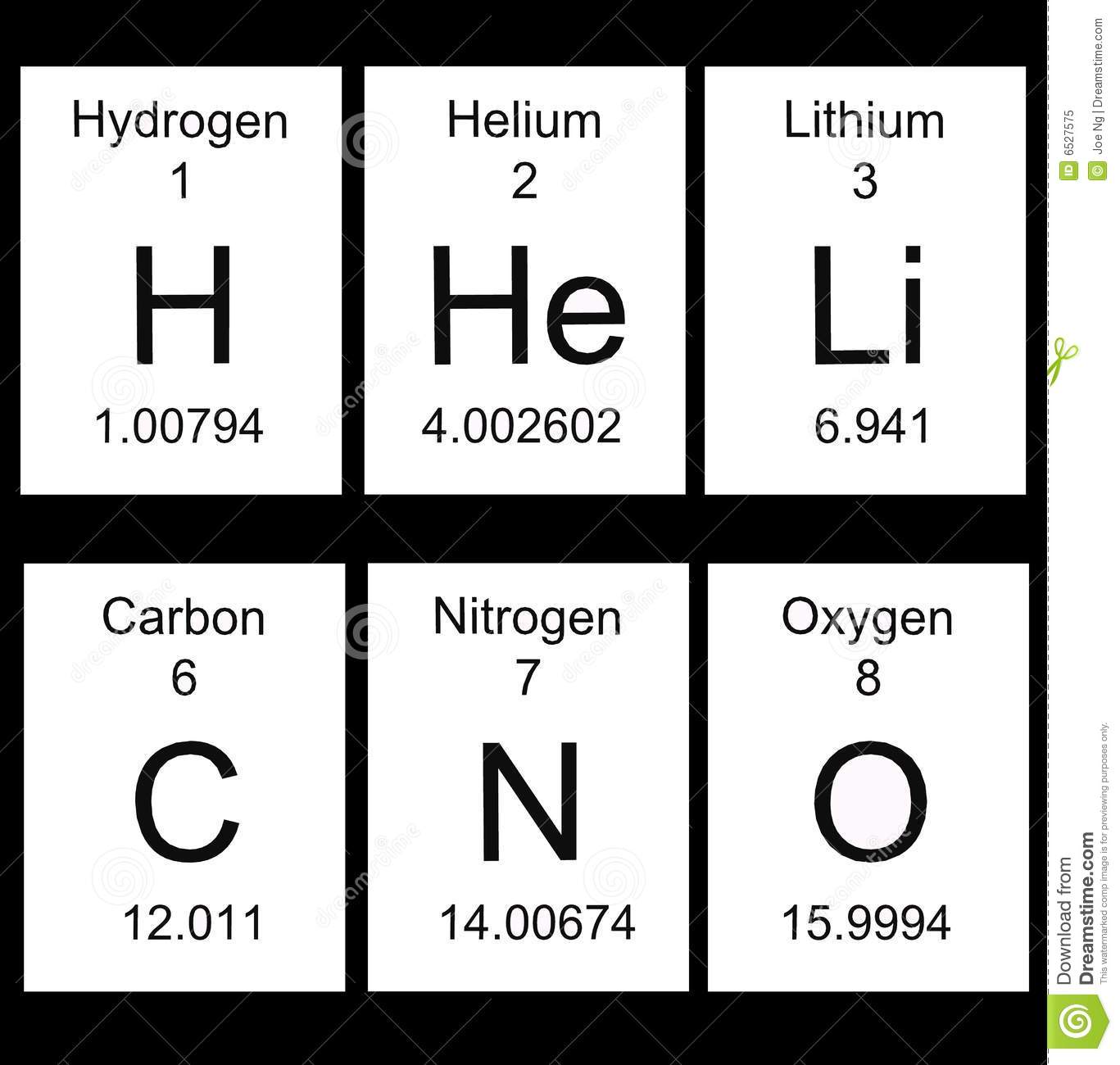


All matter is made of _________.


The subatomic particles that make up an atom.
solid, liquid, gas
electrons, protons, nucleus
energy, protons, nucleus
electrons, protons, neutrons

What part of the atom is the arrow pointing to?
Proton
Neutron
Electron

What part of the atom is the arrow pointing to?
Proton
Neutron
Electron

What part of the atom is the arrow pointing to?
Proton
Neutron
Electron
Each chemical element is made up of only one kind of
atom
molecule
electron
neutron

How many electrons does this oxygen atom have?
16
8
24
6
How many protons does this oxygen atom have?
16
8
24
6

