
 Worksheets
Bonding Exam Practice Review
Total questions: 68
Worksheet time: 2hrs 54mins
How many valence electrons does an atom need to become stable?
2
4
6
8
Ionic Bonds occur between what two types of atoms?
metals and metals
Non metals and Non metals
Metals and Non Metals
unknown
Positively charged Atoms are called?
cations
anions
negatively charged atoms are called?
cations
anions
At atom that GAINS 1 electron will have what charge?
+1
+2
-1
-2
At atom loses 2 electrons, its charge becomes what
+1
+2
-1
-2
When magnesium burns in oxygen it produces MgO. Use the ionic formula to name the compound produced.
Magnesium oxygen
Oxygen magnesium
Magnesium oxide
Oxygen magnesiumide
According to the Octet Rule, atoms of elements react with each other in order to attain ____ electrons in their outermost energy level or shell.
2
4
6
8
10
What is the best definition of valence electrons?
The outermost electron NOT involved in chemical reactions
The innermost electrons involved in chemical reactions
The outermost electrons involved in chemical reactions.
The innermost electrons NOT involved in chemical reactions
Which of the following could NOT form an ionic compound? Check all that apply.
Li+ and Cl-
F- and O2-
Ba2+ and Ag+
Mg2+ and S2-
Lithium is in group 1 of the periodic table, which ion would it form?
Li-
Li2-
Li+
Li2+
Strontium nitride
SrN
Sr3N2
Sr2N3
N3Sr2
BeI2
Beryllium (II) iodide
Beryllium iodine
Beryllium iodide
Beryllium (I) iodide
Aluminum fluoride
AlF
AlF2
Al3F
AlF3
When lithium and oxygen bond the formula is
LiO
OiL
Li2O
LiO2
CuS
copper sulfide
copper (I) sulfide
copper (II) sulfide
copper (i) sulfate
FePO4
iron phosphite
iron (III) phosphite
iron (III) phosphate
iron (II) phosphite
Nickel (II) hydroxide
NiOH2
NiOH
Ni(OH)2
NiO2
Cr2O3
chromium oxide
chromium hydroxide
chromium (II) oxide
chromium (III) oxide
Na3PO4
sodium phosphide
sodium phosphate
sodium phosphite
sodium (III) phosphate
iron (II) chlorate
Fe2ClO3
FeClO3
Fe(ClO4)2
Fe(ClO3)2
NH4NO3
ammonium nitrite
hydrogen nitrate
ammonium oxide
ammonium nitrate
SrS
strontium sulfide
strontium (I) sulfide
strrontium (II) sulfide
strontium sulfite
CuCl
copper chloride
copper (I) chloride
copper (II) chloride
copper (III) chloride
copper (I) sulfide
CuS
Cu2S
CuS2
Cu2S3
iron (II) phosphate
Fe2P3
Fe3(PO3)2
Fe3(PO4)2
Fe2(PO3)2
Li3PO4
lithium phosphate
lithium (I) phosphate
lithium (III) phosphate
lithium phosphite
Which of the following lists of elements contain only metals?
Li, Al, Te
Ni, Pb, H
Na, Os, Ga
Ca, Zn, I
How do covalent bonds form?
Donating & receiving valence electrons between atoms
Oppositely charged ions attract each other & form bonds
Scientists are still not sure how they form
Sharing valence electrons between atoms
The formation of a covalent bond relies on the interaction or bonding of...
2 Nonmetals
1 Nonmetal & 1 Metal
2 Metals
2 Noble Gases

What type of bond will this compound likely form [Na]+ & [Cl]- ?
Ionic compound
Covalent compound
Metallic compound
SiCl6
Monosilicon hexachloride
Silicon hexachloride
Silicon heptachloride
Monosilicon heptachloride
What is the chemical formula for dinitrogen heptachloride?
N2Cl7
2N7Cl
2NCl7
N2Cl5
P4H7
tetraphosphorus heptahydrogide
phosphorus heptahydride
tetraphosphorus heptahydride
tetraphosphorus heptahydrogen

Write the correct name for P8N9.
phosphorus nitride
octaphosphorus nonanitrogen
octaphosphorus nonanitride
octaphosphide nonanitride


pentacarbon decahydride
CH
C5H10
CH10
C6H10
Which is the correct Lewis Structure for oxygen?

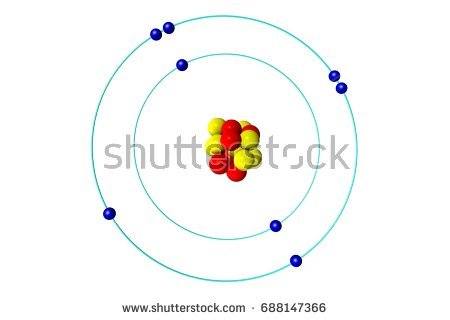
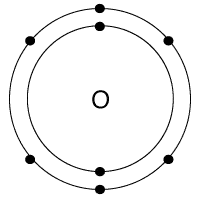
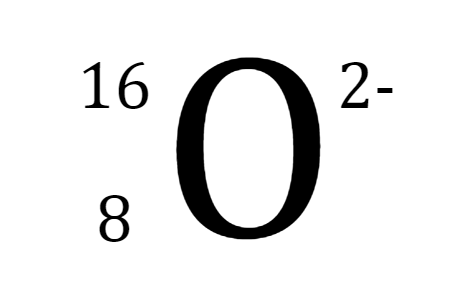
What is the goal of the Lewis Dot Structure?
To determine the electron position.
To show the element's valence electrons & bonding capabilities.
To find the atomic mass of an element.
To search for the number of electrons in an individual atom.

This is a correct dot diagram for nitrogen (N)
true
false

This is a correct dot diagram for neon (Ne)
true
false
How would you draw a Lewis dot diagram for Magnesium?


A metallic bond is a bond between ________.
nonmetals
metals
transition metals
metalloids
What do electrons do in a metallic bond?
They stay on the metal atom.
They are transferred from atom to atom.
They form a covalent bond with another atom.
They float around freely.
What is meant by the term "sea of electrons"?
It's what we call all the free floating electrons in a metal.
It's what we call electrons that are floating in a liquid.
It's the total number of electrons in a metal atom.
It's the total number of electrons in the ocean.
Which type of intermolecular force is the weakest?
Hydrogen bonding
London dispersion force
Ionic bond
Dipole-dipole force
What is the main intermolecular force present in nonpolar molecules?
London dispersion force
Dipole-dipole interaction
Hydrogen bond
Ionic bond
What is the main intermolecular force present in polar molecules?
hydrogen bonding
London dispersion forces
ionic bonding
dipole-dipole interaction
Which type of intermolecular force is present in all molecules?
London dispersion force
Hydrogen bonding
Dipole-dipole force
Ionic bond
Which type of intermolecular force is stronger, dipole-dipole interactions or London dispersion forces?
Hydrogen bonding
dipole-dipole interactions
London dispersion forces
Ionic bonds
What is the difference between intramolecular and intermolecular forces?
Intramolecular forces are within a molecule, intermolecular forces are between molecules.
Intramolecular forces are only in solids, intermolecular forces are only in gases.
Intramolecular forces don't affect substance properties, intermolecular forces determine all properties.
Intramolecular forces are between molecules, intermolecular forces are within a molecule.

What type of bond does H2 form?
Non-polar covalent
polar covalent
ionic

