wayground logo

Free Printable Worksheets

NEW

Font size

S
M
L
XL
Worksheets

Final Review/Chapter 1

Total questions: 38

Worksheet time: 38mins

Name
Class
Date
1.

The prefix BIo- means?

a)

Before, ahead of time

b)

life, living

c)

house

d)

before, ahead of time

2.

All the non-living things in an environment

a)

Biotic

b)

Biome

c)

Abiotic

d)

Biosphere

3.

All living things in an environment

a)

Biotic

b)

abiotic

c)

geographic

d)

community

4.

Which level of ecology is being described:

The Diamondback rattlesnakes in Arizona.

a)

Ecosystem

b)

Community

c)

Population

d)

Species

5.

Which level of ecology is being described:

The grasshoppers, slugs & mushrooms in the yard.

a)

Biome

b)

Population

c)

Community

d)

Ecosystem

6.

Which level of ecology would the desert be?

a)

Ecosystem

b)

Biosphere

c)

Biome

d)

Community

7.
Which is the best description of an ecosystem?
a)
all of the living and nonliving things in an environment
b)
all of the individuals of one species in an area
c)
all of the populations of living things in an area
d)
all of the abiotic factors in an area
8.
What are the ecological levels of organization from smallest to the largest?
a)
organism, population, community, ecosystem, biome, biosphere
b)
organism, community, population, ecosystem, biome, biosphere
c)
organism, population, community, biome, ecosystem, ecosphere.
d)
organism, community, population, biome, ecosystem, ecosphere
9.
The study of organisms and how they interact with one another and their environment is best described as
a)
Biology
b)
Ecology
c)
Zoology
d)
Botany
10.
This sphere includes the continents, the ocean floor, all the rocks on the surface, and all of the sand in the deserts. 
a)
Hydrosphere 
b)
Biosphere 
c)
Atmosphere 
d)
Geosphere 
11.
This system is made up of all the water on or near the earth's surface
a)
Hydrosphere 
b)
Biosphere 
c)
Atmosphere 
d)
Geosphere 
12.
The body of gases surrounding Earth is the...
a)
Hydrosphere 
b)
Biosphere 
c)
Atmosphere 
d)
Geosphere 
13.
Animals, forests, grasslands, and trees all belong to which sphere?
a)
Atmosphere
b)
Biosphere
c)
Lithosphere
d)
Hydrosphere
14.
When plants draw nutrients from the soil, the interaction is between which two spheres? 
a)
The atmosphere and the geosphere 
b)
The geosphere and the hydrosphere 
c)
The hydrosphere and atmosphere 
d)
The biosphere and the geosphere 
15.

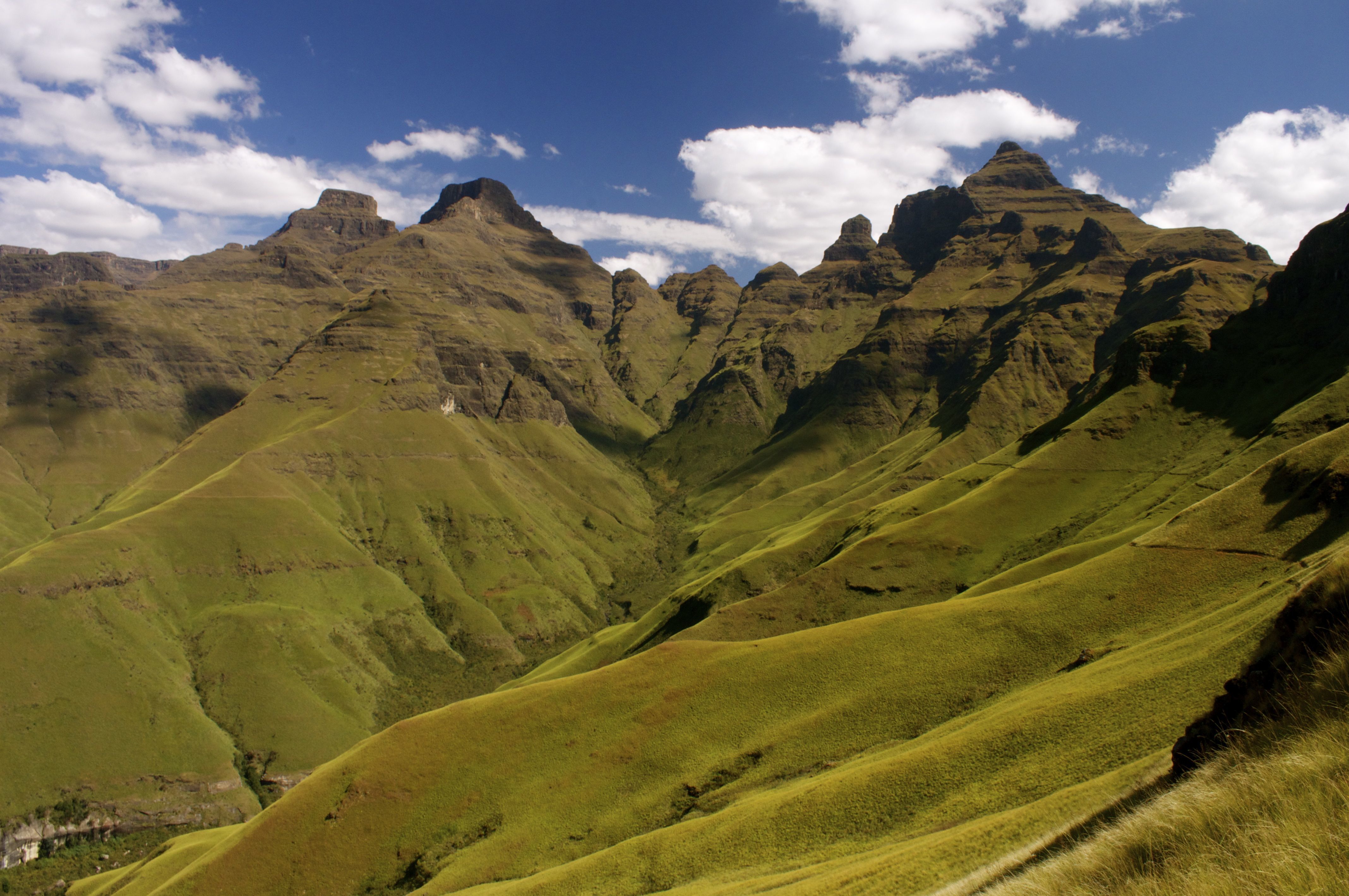
What sphere does the picture belong to?

a)

Lithosphere

b)

Hydrosphere

c)

Atmosphere

d)

Biosphere

16.

The process of obtaining information by using the senses is

a)

hypothesis

b)

experiment

c)

theory

d)

observation

17.
The warming of the atmosphere by the trapping of heat being radiated to space is called
a)
evaporation
b)
condensation
c)
the greenhouse effect
d)
radiation
18.
What happens to the temperature if more greenhouse gases are released into the atmosphere?
a)
Temperature goes up
b)
Temperature goes down
19.

What is an anthrome?

a)

biomes altered by nature

b)

manmade biomes

c)

biomes altered by mankind

20.
the portion of a lake or ocean where there is little or no sunlight;formally defined as the depths beyond which less than 1% of sunlight penetrates.
a)
photic zone
b)
aphotic zone
c)
benthic zone
d)
neritic zone
21.

Upper part of the oceanic zone that receives light

a)

benthic zone

b)

photic zone

c)

aphotic zone

d)

neritic zone

22.
A semi-enclosed area where fresh water from a river meets salty water from the sea.
a)
Watershed
b)
Groundwater
c)

Estuary

d)
oalOcean
23.
Day to day conditions of Earth's atmosphere
a)
Climate
b)
Weather
c)
Metabolism
d)
Excretion
24.
The lithosphere refers to ___________.
a)
all the water on Earth
b)
rocks, soil, and Earth's layers
c)
the envelope of gasses that surrounds Earth
d)
all living things and their environment
25.
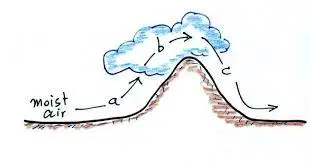
Regional climates can be determined by the transport of heat and moisture by winds and ocean currents and by geographic feautres such as mountain ranges. Which of the areas would see the rainshadow effect of warm, dry air and less rain?
a)
A
b)
B
c)
C
d)
A and C
26.
This type of biome has more species than all the other biomes combined. They have a canopy, an understory, and typically receive two meters of precipitation annualy.
a)
Tropical Rain Forest
b)
Tundra
c)
Taiga
d)
Grassland
e)
Tropical Dry Forest
27.
Consists of all life on Earth and all parts of Earth in which life exists.
a)
Biosphere
b)
Biome
c)
Community
d)
Ecoystem
28.
A group of eagles living around Lake Tahoe would be considered a(n) .
a)
abiotic factor
b)
population
c)
community
d)
ecosystem
29.
Includes producers (plants), consumers (animals) and decomposers (algae/bacteria) as well as soil/dirt, rocks, and water.
a)
Community
b)
Geosphere
c)
Ecosystem
d)
Population
30.
A group of ecosystems that share similair climate, flora (plants) and fauna (animals).
a)
Biosphere
b)
Biome
c)
Population
d)
Community
31.
Average year to year conditions of temperature and precipitation in an area over a long period of time.
a)
Weather
b)
Climate
c)
Greenhouse Effect
d)
Biome
32.
How do the biosphere and the atmosphere interact?
a)
Air contains water
b)
Volcanic ash can enter the atmosphere
c)
Living things need air to survive
33.
How do the geosphere and the atmosphere interact?
a)
Air contains water
b)
Volcanic ash can enter the atmosphere
c)
Living things need air to survive
34.
If two animals can reproduce and produce fertile offspring, then they are members of the same _________.
a)
Ecosystem
b)
Community
c)
Population
d)
Species
35.
_____ is used to test hypotheses. Data will be collected within an experiment to support or disprove a hypothesis.
a)
Observation
b)
Experimentation
c)
Modeling
d)
Focus
36.
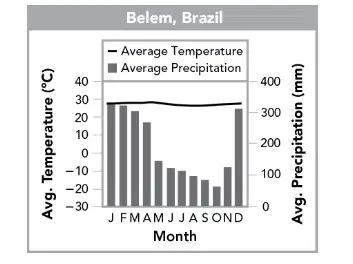
A biome's climate can be described by a graph of its average monthly temperature and average montly precipitation. Which of the following best describes the climate information shown in the graph?
a)
seasonal variation in precipitation, hot temperatures all year l
b)
seasonal variation in temperature, rainy all year long
c)
seasonal variations in temperature and preciptitation levels
d)
rainy in warm summers, snowy in cold winters
37.
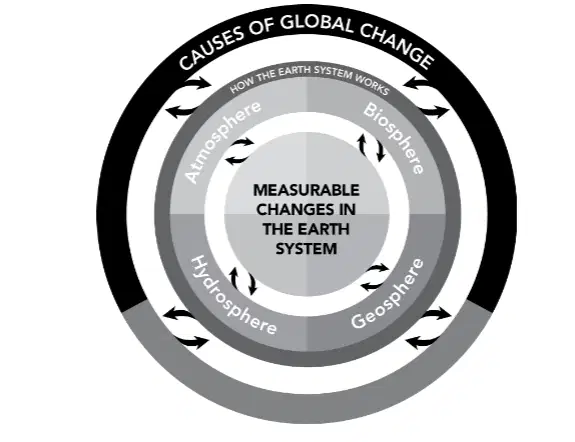
The diagram is a simplified model of Earths sysytem and the changes that there interactions cause. Which statement is MOST USEFUL for explaining or using this model?
a)
The causes and effects of a specific global change are confined to one Earth system only.
b)
Only one Earth system causes a specific global change, but all Earths systems could be affected.
c)
All Earths systems may interact to cause a specific global change, but only one Earth system is afected.
d)
Both the causes and effects of global change may involve all Earths systems
38.
Aquatic ecosystems are defined primarily through salinity, depth, temperature, flow rate and
a)
the number of species of fish
b)
concentration of dissolved nutrients.
c)
the amount of sunlight
d)
size of the waves