
 Worksheets
American Imperialism US History
Total questions: 65
Worksheet time: 2hrs 24mins

The Monroe Doctrine declared that the United States would...
...prevent the establishment of new Europeans colonies anywhere in the world
...help colonies in the North and South America adopt a democratic form of government
...view European interference in the Americas as a threat to the national interest of the United States
...prevent other nations from trading with South American nations
One major result of the Spanish-American War was that the United States...
...formed an alliance with England
...gained recognition as a world power
...repealed the Monroe Doctrine
...decreased the size of its navy
In the 1890s, the main goal of those who supported U.S imperialism was to...
...bring self-government to areas under United States control
...obtain overseas markets and naval bases
...defend against attacks by enemy nations
...spread democracy to Africa and Latin America
Why did construction of the Panama Canal become more important to the United States after the Spanish-American War?
national security came from South America.
Great Britain had plans to purchase the canal zone and colonize the territory.
colonies near the canal route.
between the Atlantic and Pacific Oceans.
President Theodore Roosevelt’s commitment the proverb, “Speak softly and carry a big stick; you will go far,” was most clearly shown when he...
...opposed consumer protection laws
...intervened in Latin American affairs
...promoted the conservation of natural resources
...conducted the Bull Moose campaign of 1912
Which factor is most closely associated with the decision of the United States to declare war on Spain in 1898?
Isolationist policy
Labor union pressure
Yellow journalism
Unrestricted submarine warfare

What is the type of sensational reporting where writers exaggerated or even invented stories?
muckraking
yellow journalism
journalism
reporting
The US blamed the sinking of the USS Maine on Spain

What were the two main locations of fighting during the Spanish-American War?
Alaska and Hawaii
Puerto Rico and Guam
Cuba and the Philippines
Spain and the United States
After the Spanish American War, the U.S. directly controlled all of the following territories EXCEPT
The Philippines
Guam
Puerto Rico
Cuba
Which policy gave US the right to be the "policemen of the Western Hemisphere"
Roosevelt Corollary
Good Neighbor Policy
Open Door Policy
Marshall Plan

Why did Theodore Roosevelt help support a revolt against Columbia?
Columbia refused to comply with trade agreements
He wanted to establish a naval base in Columbia
He wanted to establish a colony in Columbia
He wanted to build the Panama Canal
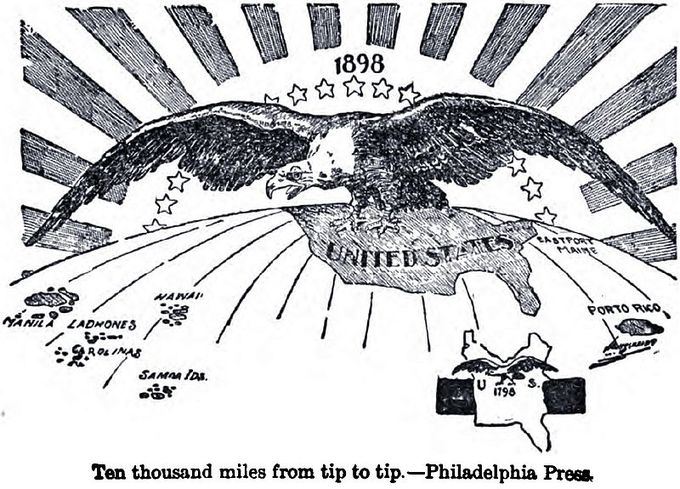
This image is a representation of...
US Exploration
US Diplomacy
US War Relations
US Imperialism
Why is the Spanish American War of 1898 often considered a major turning point in US history?
It revealed the US had become a world power.
It marked the first American victory over a European country.
It demonstrated the need for better communications in wartime.
It showed American support for European economic interests in East Asia.
President Taft's policy of linking and protecting American business interests abroad
Moral Diplomcay
Open Door Policy
Dollar Diplomacy
Big Stick Diplomacy

Policy held by Teddy Roosevelt in foreign affairs; Use military force only when necessary; a way to intimidate countries without actually harming them.
Dollar Diplomacy
Big Stick Diplomacy
Roosevelt Corollary
Open Door Policy
This person, along with Hearst, created the New York Newspaper Wars of the 1890s.
Joseph Pulitzer
Nellie Bly
Charles Foster Kane
William Henderson
Hawaii was taken over by business men lead by...
Sandford B. Dole
Theodore Roosevelt
Grover Cleveland
the Queen of Hawaii
What are Spheres of Influence?
Replacing local leaders with foreigners
Putting local leaders in charge (with guidance from foreigners)
Controlling regions of a country through trade and economy
Removing the government and having anarchy
Which of the following factors contributed to the Boxer Rebellion?
poor treatment of foreigners by Chinese leaders
the breaking of the alliances between Russia and China
Chinese nationalists' anger at their Emperor for foreign involvement in the country
American socialism and its effects on China
America's Great White Fleet was established to do which of the following?
Maintain cleanliness in America's Navy.
Display America's Naval Power to the world.
Encourage countries to declare war on America's Navy.
Conquer the world one ocean at a time.
Filipino Revolutionary who aided US soldiers against Spain but then revolted against American control.
Jose Marti
Cesar Chavez
Emilio Aguinaldo
Woodrow Wilson
President Wilson's foreign policy that utilized the American military to support nations that need aid (food, medical, etc.)
Dollar Diplomacy
Moral Diplomacy
Big Stick Diplomacy
Panama Canal
The view that a nations most "fit" to survive had the right to dominate others
Dominator
Survivalist
Social Darwinism
Winner

The army base Guantanamo Bay, that we created after the Spanish-American War, is in what country?
Cuba
Puerto Rico
Philippines
Spain
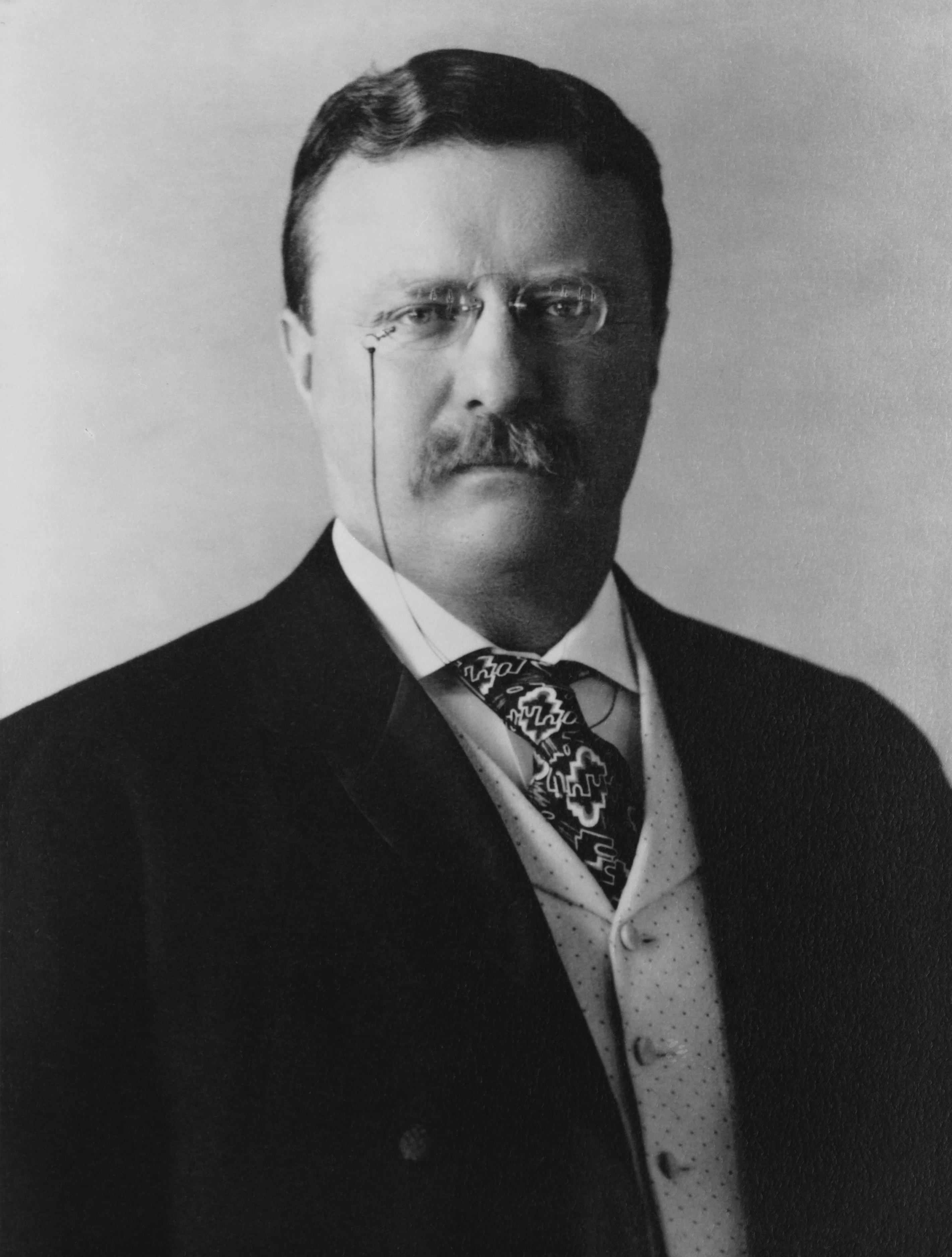

Teddy Roosevelt and the Rough Riders had an important victory in Cuba at-
Pebble Beech
San Juan Hill
Normandy
Havana Harbor
Identify reasons for American Imperialism
Economic Interests
Military Interests
Cultural Superiority
Self Interests
Which American Secretary of State promoted an 'open door ' policy with China?
John Kennedy
John Lennon
John Wayne
John Hay
How did many Americans justify imperialism?
We were spreading democracy
We were spreading Christianity
We were providing loans
We were providing educational opportunities

Colonies provide raw materials & buy goods
Economic motive
Political Motive
Religious Motive
Emotional Motive

Belief in cultural superiority
Economic motive
Political motive
Religious motive

Become a world power
Economic motive
Political motive
Imperial motive
Religious motive
What role did the media (yellow journalism) play in the Spanish American War?
shaped public opinion to go to war
only covered facts of the events of the war
played no role in the war whatsoever
shaped public opinion to give the president war powers to declare war on Cuba
What were the two main locations of fighting during the Spanish-American War?
Alaska and Hawaii
Puerto Rico and Guam
Cuba and the Philippines
Spain and the United States
Most US overseas possessions in 1900 were located in the ___________ Ocean
Pacific
Atlantic
Which statement most accurately summarizes United States policies toward Latin American nations during the late 19th and early 20th centuries?
As sovereign nations, Latin American countries were never occupied by the United States
Emigration from Latin American nations was encouraged
The United States protected its interests in Latin American counties with military and diplomatic actions
The United States discourages American investment in Latin American nations
From 1900 to 1915, a basic aim of United States foreign policy was to
develop close economic ties with African nations
oppose revolutionary movements in western Europe
promote United States influence in Latin America
prevent the spread of communism in western Europe and Asia
"Hawaii Planters Urge American Annexation"
"US and Germany Negotiate for Control of the Samoan Islands"
"US Gains Control of Wake Island and Guam"
Which conclusion can best be drawn from these headlines?
The Anti-Imperialist League strongly influenced Congress
Respect for native cultures motivated United States foreign policy
United States territorial expansion increased in the Pacific Ocean
Construction of a railroad to Alaska was a major policy goal
Which of the below were causes of the Spanish-American War?
SELECT ALL THAT APPLY:
Yellow Journalism
The defeat of the Rough Riders
The sinking of the USS Maine
De Lome Letter
The main focus of Alfred T. Mahan's book, "The Influence of Sea Power Upon History" was . . .
for wealthy individuals to give their money to education.
to stop imperialism and adopt the values of the American Anti-imperialist League.
for countries to give financial aid to countries who were in poverty.
in order to achieve world power, a country needs a powerful navy.
Which of the following gave the U.S. the right to intervene in all Cuban affairs?
Platt Amendent
De Lome Letter
Open Door Policy
Alfred T. Mahan
The US Secretary of State called the Spanish-American War a (a)
As a result of helping Cuba win independence from Spain, the US gained Guantanamo Bay and...
the ability to intervene in Cuba whenever the US saw fit to do so
the ability to have US representatives in the Cuban government
the ability to control the Cuban economy
the ability to annex Cuba
Franklin Roosevelt
John F. Kennedy
Theodore Roosevelt
William Howard Taft
The _______________ was a volunteer regiment that served during the Spanish-American War and was organized by future president ______________ .
Rough Riders; Franklin Delano Roosevelt
Tuskegee Airmen; Theodore Roosevelt
Progressive Party; William Taft
Rough Riders; Theodore Roosevelt
Who was Queen Liliuokalani?
queen of Japan
queen of the Philippines
queen of England
queen of Hawaii
What was the de Lôme letter?
a letter written by Spain's minister to the U.S. which ridiculed McKinley
a letter offering free trade to China
a letter to the queen of Hawaii
a letter to Europe to consider joining the war
Of the following statements, the one that best reflects an anti-imperialist attitude is ___
"It is not necessary to own people to trade with them."
"The expansion of our trade and commerce is the pressing problem."
"Is there no nation wise enough, brave enough to aid this blood-smitten land?"
"Fate has written our policy for us; the trade of the world must and shall be ours..."
______ became a rallying cry for U.S. intervention in Cuba.
Remember the Alamo!
Remember the Maine! Down with Spain!
Yellow Journalism will win this war!
Fight On!
True or False: Americans were initially welcomed into the Philippines, but when it became apparent the US was not going to grant independence, Filipinos rebelled.
True
False

