
 Worksheets
Seasons and Phases practice
Total questions: 51
Worksheet time: 13hrs 45mins
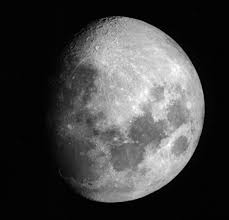
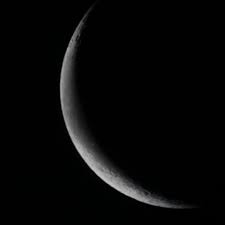
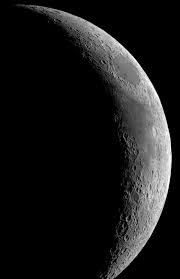
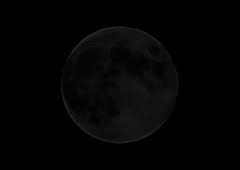
Label the phases of the moon:
New Moon
Waxing Crescent
1st Quarter
Waxing Gibbous
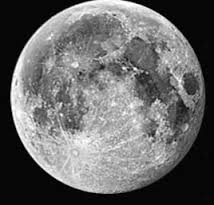
Full Moon
Waning Gibbous
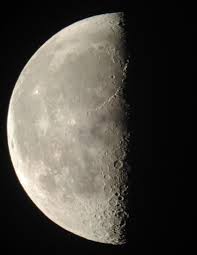
3rd Quarter
Waning Crescent
Put the moon phases in order:

New Moon

Waxing Crescent

1st Quarter

Waxing Gibbous

Full Moon
How long does the moon take to go through its phases?
7 days
8 weeks
28 days
37 days
The earth and moon both ______ around the sun
revolve
drive
rotate
dance
Which two months have Solstices?
June and December
March and September
March and June
September and December
How many degress is the Earth's axis tilted?
30.2
23.5
25.3
24
What is the reason for the seasons?
Earth's tilted axis and rotation
Earth's rotation and size
Earth's tilted axis and revolution
Earth's rotation and revolution
If it is Summer in the Northern Hemisphere, then it is ________ in the Southern Hemisphere.
Spring
Summer
Fall
Winter
What day of the year has the most amount of sunlight?
Spring Equinox
Summer Solstice
Fall Equinox
Winter Solstice

What seasons is taking place in the Northern Hemisphere at Position A?
Spring
Summer
Fall
Winter
What seasons is taking place in the Northern Hemisphere at Position B?
Spring
Summer
Fall
Winter
What seasons is taking place in the Northern Hemisphere at Position C?
Spring
Summer
Fall
Winter
What seasons is taking place in the Northern Hemisphere at Position D?
Spring
Summer
Fall
Winter

Why are countries near the equator warm all year round?
They receive indirect sunlight and the light is spread over a larger area.
They have 4 distinct seasons: spring, summer, fall and winter
They receive very little sunlight.
They receive direct sunlight and get about 12 hours of sunlight per day no matter what time of year.
Which month is the Earth closest to the Sun?
January
July
June
December

Which statement is true based on the diagram?
It is summer in the northern hemisphere.
Its is winter in the southern hemisphere.
It is an equinox.
It is summer in the southern hemisphere and the northern hemisphere is receiving less direct sunlight.

Some students are using objects to model the Earth-Sun-Moon system. They wish to represent the positions of these objects during a solar eclipse. To accurately model the solar eclipse, the golf ball should be placed in which labeled position?
Position W
Position Y
Position Z
Position X


Why don't we have eclipses every month?
The Earth's orbit is tilted 5%.
The Earth's axis is tilted 5%.
The moon's orbit is tilted 5%.
The moon's axis is tilted 5%.

How does a solar eclipse occur?
Part of the Earth is in the moon's shadow.
All of the Earth is in the moon's shadow.
The Earth moves between the sun and moon casting its shadow on the moon.
The moon moves into the Earth's shadow.

What type of eclipse is this?
solar eclipse
lunar eclipse
The length of a year on Earth is a little over 365 days. The length of a year on a planet is
BEST described as the time it takes for which to occur?
the planet to revolve once around the Sun
the seasons to complete a full cycle
the planet to rotate once on its axis
the Sun to rotate once on its axis

Blanca wants to show her class the importance of the tilt of Earth in seasonal changes.
She drew four diagrams on the board. Which diagram correctly shows when it is winter at
Point X?
A
B
C
D

Which model correctly shows the position of the Sun, Earth, and the Moon during a solar
eclipse?
A
B
C
D

The diagram shows the position of Earth when it is summer at Point 1, and winter at
Point 2. Which is the BEST explanation for the difference in seasons between Point 1 and Point
2?
Point 2 is farther from the Sun than Point 1.
Point 2 receives less direct sunlight than Point 1.
Oceans cool the air faster at Point 2 than Point 1.
The atmosphere is thinner at Point 2 than at Point 1.
The main cause of the seasons is ___________.
The revolution around the Earth
The Earth's tilt

Hannah, Evelyn, and Lily are discussing the cycle of seasons they experience in their hometown. What is the correct order of the seasons they experience?
(a)
summer, autumn, winter, spring
winter, spring, summer, autumn
autumn, winter, spring, summer

When the Northern Hemisphere is tilted towards the Sun, we have (a)


About how many days does it take the moon to go through a complete cycle?
7 days
365 days
29 days
20 days

What causes the moon's phases
Where you are standing on Earth
the amt of sunlight reflected onto the moon from the sun
The tilt of Earth
how fast the moon is moving

Why do we always see the same side of the moon from Earth?
because the phases change
because it rotates and revolves at the same rate
because half of the moon always receives sunlight
The moon changes positions

