wayground logo

Free Printable Worksheets

NEW

Font size

S
M
L
XL
Worksheets

AP Biology Unit 2 Gold Quiz

Total questions: 67

Worksheet time: 2hrs 53mins

Name
Class
Date
1.
A ______________ is composed of a phosphate and glycerol head and 2 fatty acid chain tails. 
a)
phospholipid 
b)
Carbohydrate
c)
Cholesterol 
d)
Protein 
2.
___________ allow cells to recognize each other and act like ID tags. 
a)
Carbohydrates 
b)
Proteins
c)
Phospholipids 
d)
Cholesterol
3.
___________ strengthens and stabilizes the cell membrane.
a)
Carbohydrates 
b)
Proteins 
c)
Phospholipids 
d)
Cholesterol
4.
___________ have 2 functions in the cell membrane.
1.) They act like gatekeepers, only let certain things in. 
2.) Enzyme receptors embedded in the membrane.
a)
Carbohydrates 
b)
Proteins 
c)
Phospholipids 
d)
Cholesterol
5.
Something is ___________ ____________
when some molecules can cross the membrane while others cannot. 
a)
Selectively (or Semi) Permeable 
b)
Totally Transparent
c)
Liquid Licorice 
d)
Heavily Patrolled 
6.
A cell in an isotonic solution will
a)
swell
b)
shrink
c)
stay the same size
d)
impossible to tell
7.
Food is moved into the cell by ________________________.
a)
endocytosis
b)
pinocytosis
c)
exocytosis
d)
osmosis
8.
This picture represents which type of cellular transport?
a)
passive transport
b)
endocytosis
c)
exocytosis
d)
osmosis
9.
A cell in a hypotonic solution will
a)
swell
b)
shrink 
c)
stay the same size
d)
impossible to tell
10.
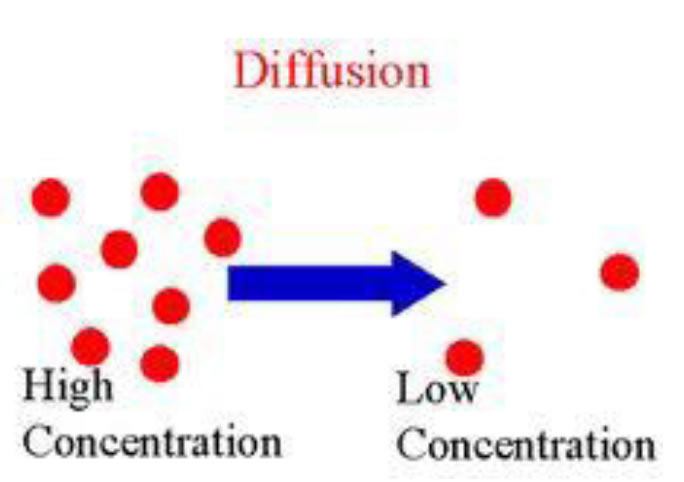
In what direction do particles naturally diffuse?
a)
Up the concentration gradient
b)
Down the concentration gradient
c)
Across the concentration gradient
d)
Over the river and through the woods
11.
Hydrophobic region of the cell membrane?
a)
E
b)
B
c)
C
d)
12.
Hydrophilic portion of cell membrane?
a)
A
b)
C
c)
D
d)
13.

When particles move from low to high concentration

a)

Passive Transport

b)

Active Transport

14.
_______________  requires energy in the form of ATP
a)
Osmosis
b)
Active transport
c)
Facilitated diffusion
d)
Passive transport
15.
In facilitated diffusion, molecules will randomly move through the pores in ______________.
a)
Carrier proteins 
b)
Channel proteins
c)
Ion pumps
d)
All of the above
16.
This picture represents what type of cell transport?
a)
endocytosis
b)
exocytosis
c)
osmosis
d)
passive transport
17.

Your gums are swollen. How will rinsing with warm salt water help the swelling?

a)

swollen gums will absorb the salt

b)

salt lowers the temp

c)

salt goes against the concentration gradient

d)

water in the gums will diffuse out of the cells

18.
Using this image, what organelle is C?
a)
Cell Wall
b)
Mitochondria
c)
Large Cell Vacuole
d)
Chloroplast
19.
I make proteins for the cell. What am I?
a)
ribosome
b)
mitochondria
c)
chloroplast
d)
lysosome
20.
The two kinds of cells are Prokaryotes and Eukaryotes. How are they different?
a)
Prokaryotes have a nucleus.
b)
Eukaryotes have a nucleus.
c)
Prokaryotes are plant cells.
d)
There is no difference.
21.
What cell part is NOT found in all cells?
a)
Cell Wall
b)
Cell Membrane
c)
Cytoplasm
d)
Genetic Material
22.
What does this organism use for movement?
a)
Pseudopod
b)
Cilia
c)
Flagella
d)
legs
23.
What is found in both plant and animal cells but is much larger in plant cells?
a)
Nucleus
b)
Mitochondrion
c)
Chloroplast
d)
Vacuole
24.
Using this image, what organelle is D?
a)
Endoplasmic Reticulum
b)
Flagella
c)
Rough ER
d)
Smooth ER
25.
What is the difference between rough and smooth ER?
a)
There is no difference.
b)
Plants have rough ER, animals have smooth ER.
c)
What type of injuries the Doctors treat.
d)
Rough has ribosomes, smooth does not.
26.

Where are lipids formed?

a)

Rough ER

b)

Smooth ER

c)

Nucleus

d)

Ribosomes

27.

Which of the following cells contain the highest water potential?

a)

A

b)

B

c)

C

d)

D

28.
If a student was going to draw an arrow indicating the solution from the highest water potential to the lowest water potential, the arrow would be pointing 
a)
from the left to the right
b)
from the right to the left
29.
In the membrane section seen, which section would represent the non-polar section of a protein?
a)
A
b)
B
c)
C
d)
D
30.
The area where Na+ ions are actively transported would be 
a)
A
b)
B
c)
C
d)
D
31.
What area would have the lowest water potential?
a)
A
b)
B
c)
C
d)
D
32.
Active transport is happening in 
a)
A
b)
B
c)
C
d)
D nowhere in this pricture
33.
Carrot and potato cores were placed in various sucrose solutions for 24 hours and the % change in mass was recorded and graphed.  The temperature in the room was 24 degrees celcius.  Identify the approximate concentration of sucrose in the potato cells.
a)
0.13 M
b)
0.0 M
c)
0.4 M
d)
0.33 M
34.
Carrot and potato cores were placed in various sucrose solutions for 24 hours and the % change in mass was recorded and graphed.  The temperature in the room was 24 degrees celcius.  Sucrose is too large of a molecule to cross the membrane of potato and carrot cells.  Which molecule caused the change in mass?
a)
water
b)
sucrose
c)
salt
d)
glucose
35.
Carrot and potato cores were placed in various sucrose solutions for 24 hours and the % change in mass was recorded and graphed.  The temperature in the room was 24 degrees celcius.  Sucrose is too large of a molecule to cross the membrane of potato and carrot cells.  Calculate the water potential for the carrot cells.  The ionization constant for sucrose is 1.0 M.  The pressure potential is 0.
a)
-8.1 bars
b)
-8.1 M
c)
8.1 bars
d)
-3.5 bars
36.
What is the approximate sucrose concentration in the potato core?
a)
.43 M
b)
.30 M
c)
0.0 M
d)
1.0 M
37.

The _____ is a densely packed area in a cell that contains the genetic material - DNA - for controlling the cell's activities.

a)

Chloroplast

b)

Nucleus

c)

Mitochondria

d)

Vacuole

38.

These organelles convert the energy in food molecules to a form the cell can use.

a)

Chloroplasts

b)

Mitochondria

c)

Lysosomes

d)

Ribosomes

39.

These tiny cell structures assemble protein molecules from amino acids.

a)

Carbohydrates

b)

Lipids

c)

Nucleic Acids

d)

Ribosomes

40.
What are tiny organelles that convert glucose into ATP?
a)
Ribosomes
b)
Vesicles
c)
Cytoskeleton
d)
Mitochondria
41.
Movement of particles from high to low concentration. 
a)
Passive Transport
b)
Active Transport
42.
What is it called when molecules move across the cell membrane from an area of high concentration to an area of low concentration through a carrier protein?
a)
Diffusion
b)
Osmosis
c)
Active Transport
d)
Facilitated Diffusion
43.
Solutes move with the concentration gradient, therefore no energy is used. 
a)
Passive Transport
b)
Active Transport
44.
The cell below is in a _________ solution.
a)
Hypotonic
b)
Hypertonic
c)
Isotonic
45.
The cell below is in a _____________ solution.
a)
Hypertonic
b)
Hypotonic
c)
Isotonic
46.
Which way would the purple molecules move through the semi permeable membrane?
a)
From the  A side  to the B-side
b)
From the B side to the A side
c)
None of the purple molecules would move
47.
This shows:
a)
Facilitated diffusion
b)
Osmosis
c)
Endocytosis
48.
This shows:
a)
Equilibrium
b)
Hypertonic solution
c)
Hypotonic solution
49.
The inner membrane of this organelle is highly folded.  What is the advantage of this folding?
a)
It increases the amount of light absorbed by the organelle.
b)
It increases the structural support of the organelle.
c)
It increases the surface area, allowing greater ATP production.
d)
It increases the surface area and the rate of glucose production.
50.
Which of the following is responsible for getting large or charged (polar) molecules across the cell membrane?
a)
E
b)
B
c)
C
d)
D
51.
Which molecule is too large to cross the cell membrane?
a)
water
b)
glucose
c)
O2
d)
starch
52.

What is the following equation used to find: -iCRT

a)

water potential

b)

solute potential

c)

cell potential

d)

electrical potential

53.

In an open container, the pressure potential is _____________.

a)

1

b)

2

c)

3

d)

0

54.

For a cell in an open container, the solute potential is _____________ the water potential.

a)

less than

b)

greater than

c)

equal to

d)

not related to

55.

If a plant cell’s ΨP=3.2 bars and its ΨS=-4.3 bars, what is the resulting Ψ?

a)

-1.1

b)

1.1

c)

7.5

d)

13.76

56.

The value for Ψ in root tissue was found to be -1.2 bars. If you place the root tissue in a 0.1 M solution of sucrose at 20°C in an open beaker, what is the Ψ of the solution? (R=0.0831 liter-bars/mole K, K=C +273)

a)

-2.43

b)

2.43

c)

1.43

d)

-0.33

57.

The plant cell with a Ψ of -1.1 is placed in a beaker of sugar water with ΨS of -2.3 bars. In which direction will the net flow of water be?

a)

inside the cell

b)

outside the cell

c)

no direction because the cell is at equilibrium

d)

There is not enough information to answer this question.

58.

The value for Ψ in root tissue was found to be -1.2 bars. If you place the root tissue in a 0.1 M solution of sucrose at 20°C in an open beaker, what is the Ψ of the solution, and in which direction would the net flow of water be? (R=0.0831 liter-bars/mole K, K=C +273)

a)

inside the roots

b)

outside the roots

c)

The roots are at equilibrium with the solution.

d)

There is not enough information to calculate the solution to this problem.

59.

Which way will the water move if the Ψ inside the cell is -3.8 and the Ψ outside the cell is -1.2?

a)

outside the cell

b)

inside the cell

c)

The water will not move because the cell is at equilibrium with its environment.

d)

There is not enough information to answer this question.

60.

Which way will the water move if the Ψ inside the cell is -2.2 and the Ψ outside the cell is -1.2?

a)

outside the cell

b)

inside the cell

c)

The water will not move because the cell is at equilibrium with its environment.

d)

There is not enough information to answer this question.

61.

Which way will the water move if the Ψ inside the cell is -2.2 and the Ψ outside the cell is -2.2?

a)

outside the cell

b)

inside the cell

c)

The water will not move because the cell is at equilibrium with its environment.

d)

There is not enough information to answer this question.

62.
During diffusion
a)
substances (things) moves from high to low concentration
b)
water moves when energy is used
c)
large or oddly shaped molecules move across a cell membrane
d)
water moves from high to low concentration
63.
Ideally, your cells should be in a(n) _______ solution
a)
isotonic
b)
hypertonic
c)
hypotonic
d)
isometric
64.
The movement of water through a semi-permeable membrane is called?
a)
cell membrane
b)
respiration
c)
osmosis
d)
diffusion
65.
In a solution, salt is considered the _______.
a)
solvent
b)
solute
c)
solution
66.
If a cell is placed in a hypotonic solution, the cell will _______.
a)
stay the same
b)
swell (get bigger)
c)
shrink (get smaller)
67.
The cell wall________.
a)
is a selectively permeable membrane
b)
is involved in protection and structure in plants
c)
is found in plants and animals