
 Worksheets
Minerals Unit Summative in English--Academic & EL Earth Science
Total questions: 57
Worksheet time: 3hrs 51mins

A yellow nonmetallic mineral that smells like rotten eggs, has a hardness of 2 and a density of 2.1g/mL. Use your Mineral Key to identify it.

This mineral is nonmetallic, clear, with a rhombus crystal shape, a density of 2.7 g/mL and a hardness of 3. Use your mineral key to identify it and name one of its unusual properties.
quartz; has fracture
calcite; reacts to acid
fluorite; changes colors in sunlight
halite; breaks into perfect cubic crystal shapes


This is a pink nonmetallic mineral that has a density of 2.6 g/mL and a hardness of 6. Use your mineral key to identify the mineral AND identify its streak color.
pink
clear
no streak
white

This is a pink mineral with a glassy luster. It is one of the color variations common to this mineral with a hardness of 7 and hexagonal crystal shapes. Use your mineral key to identify it.

Did you brush your teeth today? This green or purple mineral helps harden teeth when dissolved in water and is a common ingredient in toothpaste. Use your mineral key to identify it: glassy/nonmetallic luster, pyramid/irregular crystals, a density of 3.2 g/mL, and a hardness of 4 on the Mohs Scale.

This is one of a few minerals that will attract a magnet. It's metallic, with a black streak and density of 5.2 g/mL. Use your mineral key to identify it.
magnetite

A mineral has a white streak, nonmetallic luster, and a density of 2.6 g/mL. Will it be possible to identify it on your mineral key from these properties only? Why?
Look at your mineral key to guide your answer choice.
Yes; all minerals have a characteristic density.
No; there are several minerals with these same characteristics. More information is needed.
A mineral has a white streak, nonmetallic luster, and a density of 2.6 g/mL. Will it be possible to identify it on your mineral key from these properties only? What information do you also need to test?
Look at your mineral key to guide your answer choice.
Density; all minerals have a characteristic density.
Hardness; the minerals with these same characteristics have different hardness levels on the Mohs Scale.

What property do minerals B and P have in common?


The tendency for a mineral to break along curved, irregular shaped surfaces refers to?

Use your mineral key to identify this sample: Metallic gray cubes, hardness of 2-4, high specific gravity (feels very heavy for its size).


The table provides information on both pyrite and gold. Pyrite is sometimes confused with gold. Some of the properties listed could help someone distinguish between pyrite and gold. Gold will be the mineral that has which of the following properties?


Why is coal not a mineral?
It's not a solid
It is man-made
It is organic.
It is made of carbon
How do you test the hardness of a mineral?
taste it
light reflection
scratching the mineral on tools using Moh's hardness scale
look at it's color


A mineral has _____ if it breaks into smooth flat layers.
fracture
cleavage
streak

Which indicator would not be good as the ONLY indicator when identifying a mineral?
Color
Breaking Pattern
Specific Gravity
Hardness

Atoms in a mineral are arranged In a specific repetitive pattern. The pattern is what determines whether a mineral will have _______ along flat planes (straight sides) instead of fracture.
conchoidal fracture
cleavage
a circular pattern
a wavy line
What can you infer about graphite from the fact that you can scratch it with just your fingernail?
It's not very lustrous
It's not very hard
Its streak is black-colored
It has fracture
Why do you need to run several tests before you can identify a mineral with 100 percent certainty?
Minerals all have the same chemical structure
Many minerals share physical properties in common
Minerals' physical properties can change very quickly
A mineral can only be subjected to a few tests before it degrades
What property of a mineral indicates that it has cleavage?
A milky-white color
The ability to be scratched by a steel file
The fact that it sizzles in the presence of hydrochloric acid
Smooth faces
The properties of a mineral are primarily a result of its _____
hardness
luster
chemical composition
color
This yellow mineral is used in cleaning products
pyrite
gold
sulfur
galena
What tools do you need to find density?
Graduated cylinder and balance (triple beam or electronic)
Which of the following is NOT a SAFE way to identify a mineral?
What are the two most useful tests when identifying a mineral?
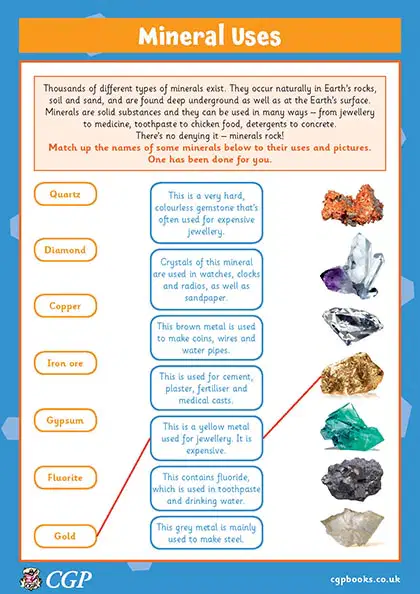
Which mineral is found in both glass and electronics (computers, watches, clocks, TVs)?
apatite
calcite
gypsum
quartz
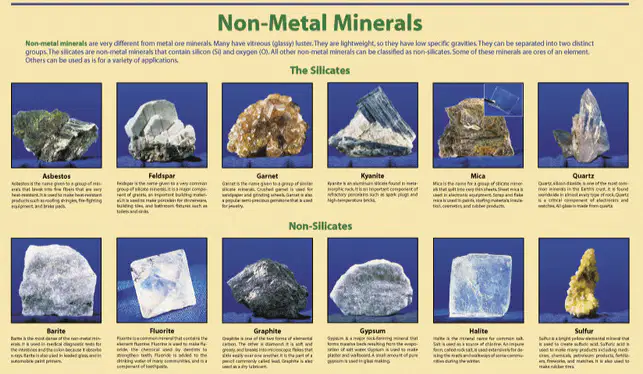
Look at the chart carefully!
What do halite and sulfur have in common?
(How are they alike?)
They are metals with no minerals.
They are cost less than silicates.
They are non-metal, non-silicate minerals.
They can be used in cooking.
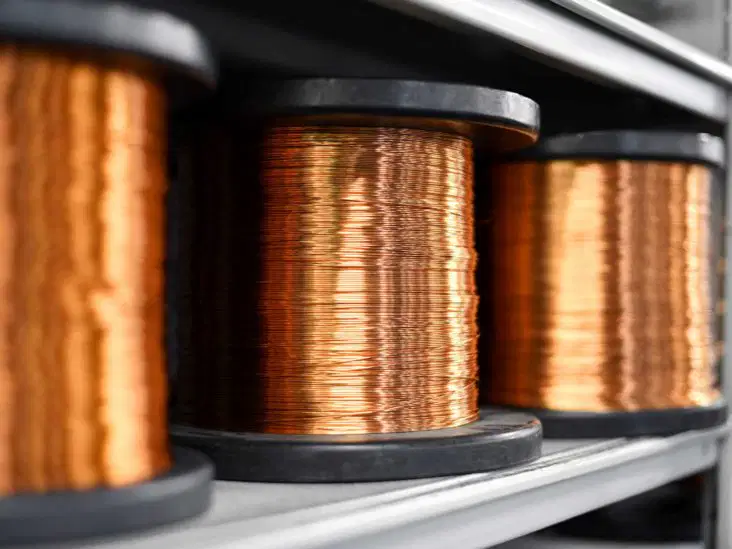
Why is copper used in wiring for buildings and electronics?
Check all answers that are correct.
Copper conducts electricity.
Copper is used in jewelry.
Copper can be stretched thin and shaped.
Copper is not valuable. That's why pennies are made of it.

Which common mineral is used BECAUSE it is soft--as both pencil "lead" and machine lubricant?
gypsum
graphite
sphalerite
talc
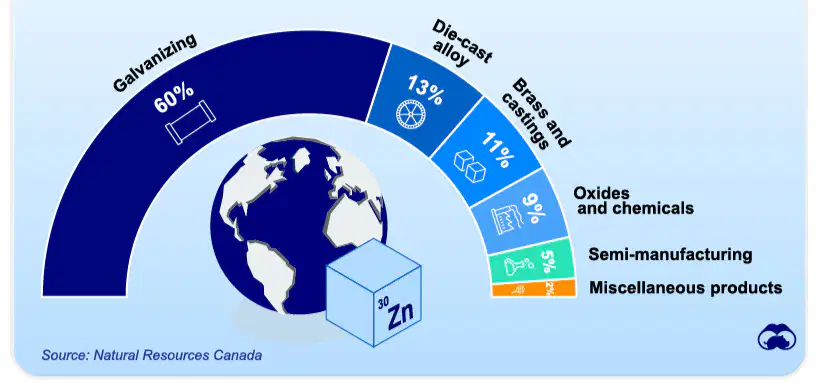
Which mineral is used in sunscreen to block UV rays, to prevent other metals from rusting, and in some cold remedies?
zinc
silicon
quartz
beryl
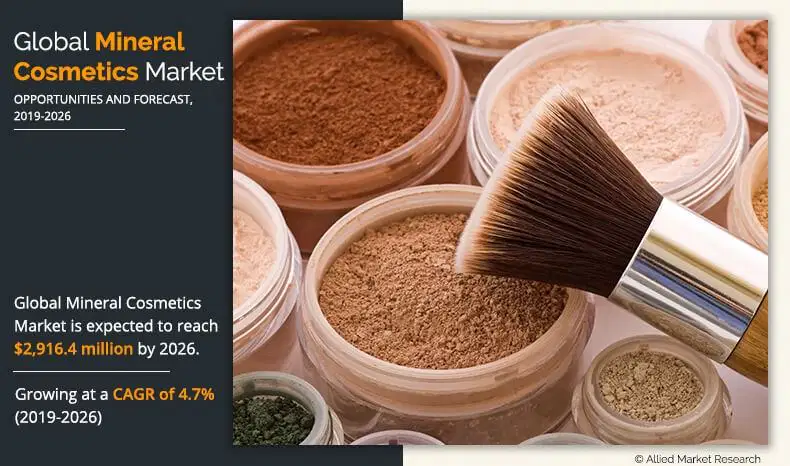
Which 3 minerals are common ingredients in cosmetics and make-up?
hematite
muscovite mica
talc
mercury
What are the advantages of using these minerals that are common ingredients in cosmetics and make-up?
It is used to create red colors.
It is used to make sparkles and glitter flakes.
it creates a soft, powdery texture.
It is used to give a silver color, but only in small amounts because very toxic.

