
 Worksheets
Unit 3 Review
Total questions: 86
Worksheet time: 2hrs 33mins

What is the function of the cell membrane?
To control what comes in and out of the cell
To break down food inside the cell
to serve as a barrier
to eat the cells food

Which organelle produces the energy a cell needs to carry out its function
Mitochondria
Golgi Bodies
Cytoplasm
Nucleus

What is the function of the Vacuoles
Store food, water and waste
Receive proteins
Assembles amino acids
Found inside the nucleus

Which cell contains Chloroplasts?
Animal
Plant
Which organelle contains genetic material?
Endoplasmic Reticulum
Golgi Complex
Nucleolus
Nucleus

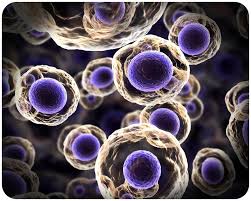
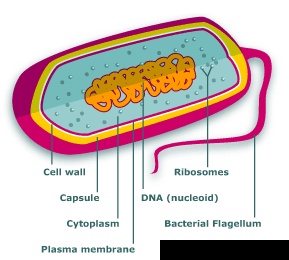

x-rays
computers
the light microscope
the scanning electron microscope
Plants have cells but animals do not.
They are both made of one or more cells.
They both come from the same kind of cell.
They both come from a non-living organism.
When a scientist makes a quick guess about something, it is called a scientific theory.
True
False
A scientific theory explains how or why things happen in nature.
True
False
Which statement was NOT included in cell theory?
All living things are composed of cells.
Living cells come only from other living cells.
Each cell contains a cell membrane, cytoplasm, nucleus, mitochondria, and endoplasmic reticulum.
Cells are the smallest structure of living things that can perform the functions necessary for life.
Which instrument is credited for helping scientists develop cell theory?


All cells -----
come from other dead cells
come from other living cells
crystallize out of the air
Which of the following is the function of the cell membrane? Select all that apply.
Provides instructions to the cell and other organelles.
Regulates compounds in and out fo the cell.
Allows cells to communicate and interact with other cells.
Breaks down wastes and other compounds.
Protects the cell from its environment.
Muscle cells have a lot of (a) because they need a lot more (b) energy than other body cells.
What does "Selective Permeability" mean?
It means the cell membraned select the cells they want to surround.
It means that cells only allow certain things in and certain things out.
It is an organization the selects permeable membranes.
It is an idea that is either selected or rejected.
Which of the following describes the phosphate head, at the top of a phospholipid? Select ALL that apply.
hydrophilic
hydrophobic
charged
not charged
polar
To survive, cells MUST
convert nutrients to energy (ie ATP)
maintain homeostasis
respond to stimuli
excrete toxins
all of these
In multicellular organisms, specialized cells that work together toward the same function are called
organs
organ systems
tissues
species
The two broad categories of cell transport are ...........
(select all correct answers)
passive transport
road transport
food transport
active transport
In passive transport, .............
energy is required
energy is not required
In active transport, .............
energy is required
energy is not required
Which biomolecule makes up MOST of the cell membrane?
proteins
carbohydrates
phospholipids
nucleic acids
Which biomolecule helps LARGE molecules cross the membrane?
phospholipids
carbohydrates
nucleic acids
proteins

The cell membrane can separate the inside of the cell from the outside because of its phospholipids, which are
Passive transport (a) require energy because it moves (b) the concentration gradient, from (c) .
Active transport (a) require energy because it moves (b) the concentration gradient, from (c) .
Facilitated diffusion and protein pumps are similar because
They both involve the movement of molecules through proteins
What happens during osmosis?
Movement of small molecules from high concentration to low concentration
Movement of water molecules from an area of high water concentration to an area of low water concentration
Which of the following images show transport that REQUIRES ENERGY? (more than one answer is correct!)


Which of the following images show transport that DOES NOT require energy? (more than one answer is correct!)
The main difference between passive and active transport is that one requires (a) , while the other does not.
What would happen to a cell placed in a hypertonic solution
The cell would shrink
The cell would expand and possibly burst
The cell would remain the same
The cell would dance and do the Nay Nay!
What is the term for maintaining equilibrium within your body(cell) despite the external forces outside you body (cell)?
Osmosis
Diffusion
Homeostasis
Transport

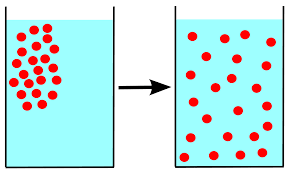
What gas does photosynthesis release?
carbon dioxide
glucose
oxygen
water
What gas does cellular respiration release?
carbon dioxide
glucose
oxygen
water
What organelle performs cellular respiration (breaking down glucose into usable energy, ATP)?
Nucleus
Endoplasmic Reticulum
Chloroplast
Mitochondria
What organelle performs photosynthesis (converting light energy into chemical energy, or glucose)?
Nucleus
Endoplasmic Reticulum
Chloroplast
Mitochondria
How are photosynthesis and cellular respiration related? (2 correct answers)
The products of photosynthesis are the reactants of cellular respiration.
The products of photosynthesis are the products of cellular respiration.
The products of cellular respiration are the reactants of photosynthesis.
The reactants of cellular respiration are the reactants of photosynthesis.
What molecule stores the energy needed for all of our cellular functions?
ATP
Phosphorus
Water
DNA
Photosynthesis happens in:
All Eukaryotic Cells
Plant Cells
Animal Cells
All Prokaryotic Cells
The reactants of photosynthesis
CO2
CO2, H2O
CO2, H2O, Sunlight
none of the above
The products of cellular respiration
CO2
CO2, H2O
CO2, H2O, glucose
CO2, H2O, ATP
Occurs in animals
photosynthesis only
cellular respiration only
cellular respiration and photosynthesis
all of the above
The reactants of cellular respiration
CO2, H2O, sunlight
O2, glucose
CO2, glucose
H2O, sunlight
The products of photosynthesis
CO2, H2O, sunlight
CO2, H2O, ATP
O2, Glucose
CO2, Glucose
What is one of the three products of cellular respiration?
nitrogen
oxygen
glucose
ATP

A solution outside of a cell that contains a higher water concentration than the cytoplasm of a cell is called:
solution
hypertonic
hypotonic
isotonic


If the semipermeable membrane allows the green chemical to pass through it freely, where will the green chemical move?
right to left
left to right
up and down

The concentration of red molecules outside the cell is higher than the concentration inside the cell. The red molecules cannot penetrate the cell. The cell is inside a ______.
hypotonic solution
hypertonic solution

The membrane does not allow the green molecules to pass through it. What will happen next?
Water will flow into side A.
Water will flow into side B.
Water will stay still.

