wayground logo

Free Printable Worksheets

Font size

S
M
L
XL
Worksheets

Unit 5 Review - Astronomy

Total questions: 29

Worksheet time: 23mins

Name
Class
Date
1.

Which EM waves have the longest wavelength?

a)

radio

b)

x-rays

c)

ultraviolet

d)

gamma rays

2.

Which EM waves have the shortest wavelength?

a)

radio

b)

x-rays

c)

ultraviolet

d)

gamma rays

3.

Which EM waves are have the lowest frequency?

a)

radio

b)

none

c)

infrared

d)

x-rays

4.

Which EM waves are have the highest energy & are the most dangerous?

a)

radio

b)

gamma rays

c)

infrared

d)

x-rays

5.

Which color waves have the shortest wavelength?

a)

red

b)

yellow

c)

green

d)

violet

6.

What happens to frequency when wavelength decreases?

a)

stays the same

b)

decreases

c)

increases

d)

There is no relationship between wavelength & frequency.

7.

The diagram shows a person observing a thunderstorm located several kilometers away. The person hears the thunder several seconds after seeing the lightning. Which statement accurately explains the difference in observations of sound and light by the observer?


a)

Human eyes see light faster than their ears can hear sound.

b)

The medium the waves are traveling through is different for each type of wave.

c)

Light waves travel faster than sound waves.

d)

Sound waves travel faster than light waves.

8.

How does the hazard level of electromagnetic waves change as the frequency of the waves increases?

a)

Energy and wavelength increase; it becomes more hazardous.

b)

Energy and wavelength decrease; becomes less hazardous.

c)

Energy decreases, wavelength increases; it becomes less hazardous.

d)

Energy increases, wavelength decreases; it becomes more hazardous.

9.
Select the correct order of waves on the EMS 
a)
Radio, Micro, Infra, Visible, Ultra, X-ray, Gamma
b)
Gamma, X-ray, Ultra, Vis, Infra, Micro, Radio
c)
Vis, Micro, Infra, Ultra, X-ray, Gamma, Radio
d)
Micro, Radio, Vis, Infra, Ultra, X-ray, Gamma
10.
The bending of light through a lens is called _____
a)
reflection
b)
refraction
c)
diffraction
d)
absorption
11.

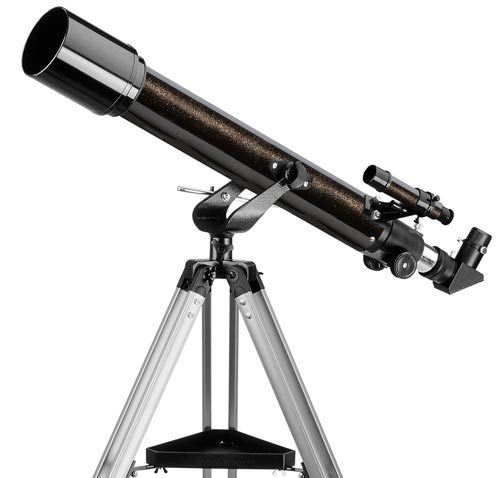
A refracting telescope uses _______ to focus light.

a)

Lenses

b)

Mirrors

c)

Lasers

d)

Water

12.

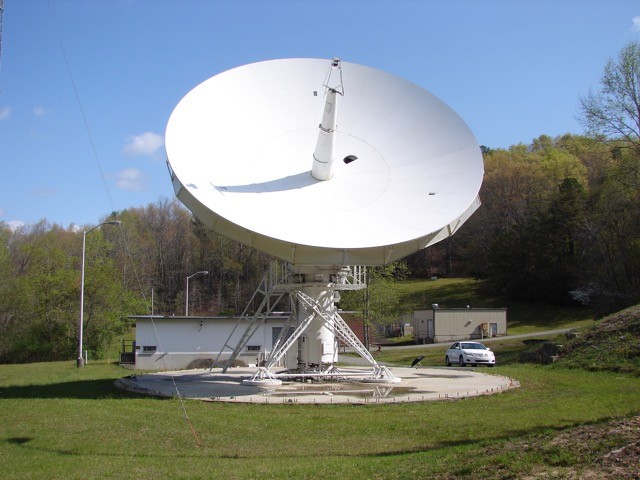
What type of telescope can work 24 hours a day and even be used in the rain?

a)

Refracting Telescope

b)

Radio Telescope

c)

Newtonian Telescope

d)

Solar Telescope

13.
A telescope that uses lenses and mirrors to collect and focus visible light is called an...
a)
Refracting Telescope
b)
Reflecting Telescope
c)
Optical Telescope
d)
Radio Telescope
14.
Why is the Hubble telescope located in space?
a)
So it can be closer to the stars it magnifies
b)
They have very large optical lenses
c)
So its images arent distorted by Earth's atmosphere 
d)
So it can be operated by astronauts 
15.

Gamma rays-X Rays-Ultraviolet-Visible-Infrared-Microwave-Radio

a)

EM radiation

b)

EM spectrum - long to short wavelength

c)

EM spectrum - short to long wavelength

16.
How can you describe the image formed by a plane mirror?
a)
inverted and reversed
b)
inverted and not reversed
c)
upright and reversed
d)
upright and not reversed
17.
How would you describe the image formed by a convex mirror?
a)
upright and larger than object
b)
upright and smaller than object
c)
inverted and larger than object
d)
inverted and smaller than object
18.
Microscopes use ____ lenses.
a)
one
b)
two
c)
three
d)
four
19.

An object that can magnify should be

a)

transparent and convex

b)

flat and translucent

c)

round and thick

d)

solid and clear

20.
The major problem with refracting telescopes is: 
a)
Using convex lens
b)
Creating larger images
c)
Distortion
d)
Reflection
21.
The telescopes that receive long wavelengths from space. 
a)
Space probes
b)
Space satellites
c)
Space landers
d)
Radio 
22.

A refracting telescope uses which type of lens?

a)

convex lens

b)

concave mirror

23.

A reflecting telescope uses which type of mirror?

a)

convex lens

b)

concave mirror

24.
What particles make up light?
a)
Photons
b)
Neutrons
c)
Protons
25.
Light behaves like both a particle and a ______.
a)
Mass
b)
Wave
c)
Current
26.
What is the speed of light in air?
a)
140,000 miles/sec
b)
186,000 miles/sec
c)
60 miles/hour
d)
120 miles/hour
27.
What color has the shortest wavelength, or the highest frequency?
a)
yellow
b)
blue
c)
red
d)
violet
28.
What is this a picture of?
a)
reflection
b)
refraction
29.
EM waves have the same speed but different:
a)
frequency & medium 
b)
wavelength & frequency
c)
medium & wavelength
d)
color & medium