
 Worksheets
Biology 2023 Fall Sem Review #4
Total questions: 90
Worksheet time: 1hrs 11mins

Change in types of plants in an ecosystem over time is called:
Succession
Movement
Evolution
Change

A new island is formed after a volcano erupts.
What is the order that plants grow?
Tree, grass, lichen
Lichen, Grass, Tree
tree, lichen, grass
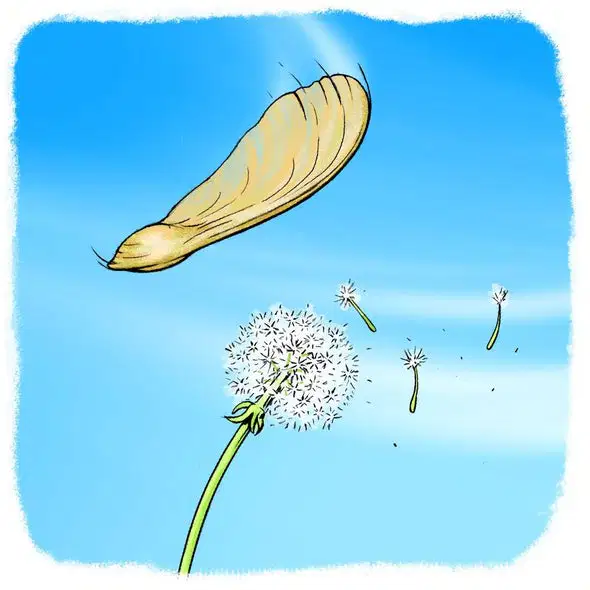
How do seeds travel to a new island
(more than 1 correct answer)
Wind
Animals
swim
Turtles

The first types of plants to grow after a disruption are called:
Climax Species
Primary consumers
Pioneer species

Characteristics of pioneer plants are...
small plants that grow quick
Need good soil to grow
Cannot grow in the sun.
Are big plants that grow slow

True or false: trees are a type of pioneer species
True
False

After a disturbance there is little good soil. What process helps create soil?
Decomposition
Succession
Competition
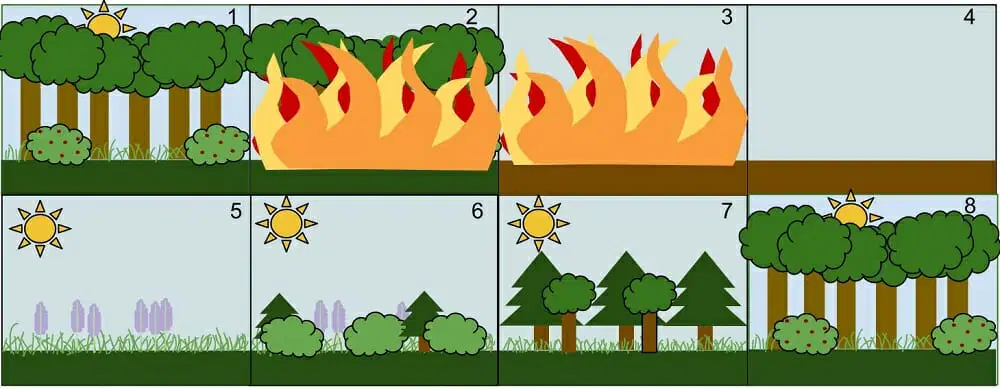
During succession grass and flowers are replaced by bigger plants because...
Bigger plants grow slow
Bigger plants take resources
Smaller plants are good at competition.

Would a tree be the first or last species to grow in a disturbed area?
First
Last
What animals would be first to enter a new ecosystem?

Insects

Wolf

Deer

Which step of succession do the types of plants not change?
Pioneer Species
Aquatic Succession
Climax Community

The original plants and animals to live in an area
A plant or animal that travels from a different continent.
A organism that grows very fast and takes habitat from other organisms

An introduced species ....
Plants and animals moved by people to another continent
Plants and animals that have lived in an area for 1000s of years
Organism that always takes the habitat of native plants and animals

1. What is an invasive species?
Organisms that come to an ecosystem and take resources from natives
Plants and animals from another planet
Species that can't adapt to a new climate

Gardens with native plants are good because...
Insects, birds and animals have habitat in native plants
Gardens with Native plants use less chemicals and water
Native plants are not invasive.
All of these answers are good
Decomposition is found during which of the following cycles?
Choose all the apply.
Phosphorus
Cycle
Carbon
Cycle
Nitrogen
Cycle
Water Cycle
Nitrogen is found in which of the following:
Fats
(lipids)
Nucleic Acids
(DNA + RNA)
Proteins
Carbohydrates
(Sugar + Starch)
Which of the following is evaporation of water from plants?
Precipitation
Nitrification
Transpiration
upllift
The Phosphorus cycle is important because phosphorus is contained in
sugars
DNA
proteins
starches
Carbon Dioxide (CO2) is released in which of the following processes?
photosynthesis
decomposition
combustion
cellular respiration
Animals get the carbon they need by
Nitrogen fixation
photosynthesis
cellular respiration
ingestion of plants and animals
In the carbon cycle, the only process that removes CO2 from the atmosphere is
combustion
cellular respiration
decomposition
photosynthesis
The main way nitrogen is removed from the atmosphere and changed into a form plants can use is
Nitrogen Fixation
Nitrification
Ammonification
Denitrification
Each process in the nitrogen cycle is carried out by
bacteria
mice
cows
plants
Decomposers include which of the following?
plants
fungi
bacteria
algae
Ammonification is the process by which decomposers convert wastes and dead organisms into ____.
ammonium
NH4+
Nitrate
NO3-
Nitrite
NO2-
nitrogen gas
N2
Denitrification is the process by which bacteria
Make ammonium
NH4+
Create Nitrate
NO3-
Create Nitrite
NO2-
Return nitrogen gas to the air
N2
Nitrification is the process by which bacteria
Make ammonium
NH4+
Create Nitrate
NO3-
Create Nitrite
NO2-
Return nitrogen gas to the air
N2
Biogeochemical Cycles are important because
matter in an ecosystem is finite and must be recycled
living things need Nitrogen, Carbon, and Phosphorus to make the building blocks of cells
they aren't important and it is a waste of time learning about them
If matter didn't cycle, organisms would eventually run out of materials to build new cells
Plants can take in Nitrogen directly from the air.
TRUE
FALSE
Legumes are plants like beans, clover, and alfalfa that have bacteria living in nodules on their roots. These bacteria fix nitrogen into a form the plant can use and in return the bacteria get nutrients from the plant as well as a place to live.
This relationship can be best described as ____.
Competition
parasitism
mutualism
commensalism
Which of the following are true of biogeochemical cycles?
They ensure that nutrients are used only once by organisms.
The create new materials to replace lost ones.
They increase the total amount of matter over time.
They can be affected by human activity.
Which of the following is an example of how biogeochemical cycles are important in sustaining life?
The atoms of water molecules are destroyed during a drought.
Oxygen atoms are converted into carbon during cellular respiration.
Nitrogen in wastes are converted into useable nutrients for other organisms.
New carbon atoms are created during the carbon cycle.
What would happen if a forest fire destroyed a community?
The land will remain unchanged by this event.
Soil formation will cause a change in ecosystem.
A new community of vegetation will establish, that is similar to the original.
A change in species of vegetation will occur, that is different from the original species
Which of the following is a biotic factor that might affect the life of an organism in an aquatic biome?
pollutants in the water
speed of water currents
temperature of the water
bacteria populations of the water
Which of the following are the abiotic factors that affect an aquatic biome?
amount of sunlight and amount of dissolved substances in the water
the temperature and elevation
amount of sunlight and the amount of moisture
temperature and the climate
What are some factors that could affect an ecosystems stability?
droughts, floods, and heat waves
hurricanes, packs of wolves, and temperature
blizzards, heat waves and swarms of grasshoppers
species of fish, the number of decomposers and the algae supply
What does abiotic mean?
non living
living
niether
What does biotic mean?
non living
living
neither
Which of the following is the best example of the relationship between abiotic and biotic factors.
Salmon (fish) eating an insect for food.
Flowers as a food source for a bee.
Water currents carrying leaves downstream.
The amount of light available for growing plants.

Using the diagram shown, what would happen in this ecosystem after a secondary succession event like a fire?
annual plants would be among the first to grow
grasses and perennials would appear
grasses, shrubs and small trees would be present
a mature oak and hickory forest would be present.
Gases such as nitrogen and oxygen are examples of which of the following:
biotic factor
abiotic factor
renewable energy
endangered factor

Using the chart, which information belongs in areas x and y?
X- biotic factors; Y-abiotic factors
X-abiotic factors; Y - biotic factors
X-ecological relationships; Y-biotic relationships
X- biotic relationships; Y-ecological relationships
Using the diagram shown, what would happen in this ecosystem after a secondary succession event like a fire?
annual plants would be among the first to grow
grasses and perennials would appear
grasses, shrubs and small trees would be present
a mature oak and hickory forest would be present.
Which of the following statements provides the best evidence of a successful ecosystem?
low amounts of biodiversity
human activities thriving in place of natural processes
natural events leading to primary succession frequently occuring
energy and nutrients moving between living and non living components.
How can changes in plants because of ecological succession impact an ecosystem?
biological evolution can occur in the ecosystem
succession can cause abiotic and biotic factors to use selective breeding
there is an increase in genetic engineering on the plants in an ecosystem
there are profound effects on the biodiversity of the ecosystem
Which of the following is the correct order for primary succession?
producers, intermediate species, and colonization
climax community, succession, and pioneer species
pioneer organisms, colonization, intermediate species
pioneer species, intermediate species, and climax community
Which of the following is correct?
Biotic factors increase the average temperature of an ecosystem
biotic factors would decrease the amount of water available for living organisms
biotic factors would increase the number and variety of predators in an ecosystem
biotic factors would decrease the oxygen in the soil causing a decrease in consumers.
A marine ecosystem is divided into two sections. The photic zone is where sunlight reaches and the aphotic zone is where there is little to no sunlight. How is life distributed in a marine system affected by sunlight?
All organisms need sunlight so they do not go to the aphotic zone
organisms are not affected by sunlight so they go wherever they want
organisms do the best with some sunlight and travel back and forth between zones depending on what they want or need
organisms that perform photosynthesis are mostly found in the photic zone so this limits some consumers and how far they travel
Science is a body of knowledge that explains the ________________world.
Environment
Abiotic
Natural
Supernatural
Gathering information with the senses is : ________________________.
Observing
Experimentling
Responding
Natural
In science, a ______________________ combines observations and explains WHY. ( Ex. Evolution )
Law
Hypothesis
Belief
Theory
Type of data that is measured with numbers; example: temperature of water: _____________________
Qualitative
Quantitative
A logical interpretation based on observations is a: ____________________________
Hypothesis
Theory
Law
None of these
Type of data that is in the form of a description; example: color of the water: _____________________
Qualitative
Quantitative
A proposed explanation that can be tested is a: _________________________________
Hypothesis
Law
Theory
Guess
A step-by-step procedure that is used to test a hypothesis is a : _______________________________
Hypothesis
Theory
Experiment
Evidence
The thing that the scientist changes in an experiment: _______________________________ variable
Independent
Dependent
Observed
None of these is correct
What is measured or observed in an experiment: _________________________________ variable
Important
Observed
Independent
Dependent
In science, a _______________________ is used to make predictions, telling us WHAT will happen
Hypothesis
Law
Theory

Approved eye protection devices (such as goggles) are worn in the laboratory
to improve your vision
so that you look super cool
for protection any time chemicals, heat or glassware are used

If you do not understand a direction or part of a lab procedure, you should
skip it and move on
ask your teacher or classmates
try different things until something works
figure it out as you do the lab

After completing an experiment, all wastes should be
taken home
tossed in the trash can
disposed of according to your teacher's directions
left out for someone else to clean

You have been injured in the laboratory (cut, burn, etc.). First you should
apply first aid yourself
tell the science teacher immediately
see a doctor after school
visit the school nurse after class

Long hair in the laboratory must be
tied or pinned back
neatly groomed
held away from the experiment with one hand
cut short

In a laboratory, the following should not be worn.
all of the answers
dangling jewelry
sandals
loose clothing

Horseplay or practical jokes in the laboratory are
okay if you're working alone
not dangerous
okay if Ms. Dominguez isn't watching me
ALWAYS against the rules


All unauthorized experiments are prohibited.
True
False


Identify this safety item
smock
apron
cover up
goggles

Identify this safety item.
shades
glasses
face mask
safety goggles

When is it OK to eat or drink at the lab tables?
Always
Only during group work, not during labs
Never
Whenever I'm hungry

