
 Worksheets
7/8 Science Mid Term
Total questions: 185
Worksheet time: 2hrs 55mins
Anything that has mass and takes up space is called?
An atom
A substance
matter
energy
Is a single kind of matter that always has a specific makeup, or composition is called:
An atom
An element
A substance
A compound
A characteristic that can be observed without changing the matter into another type of matter is a:
Chemical Property
A chemical reaction
Physical Property
A dance
What is an atom?
Basic unit from which all matter is made.
Basic unit of a living organism.
Two or more elements bonded together.
Two or molecules not chemically bonded.
What is an element?
Basic unit of structure for all nonliving things.
Basic unit of structure for all living things.
A substance made up of only one type of atom.
A substance made up of two or more types of atoms.
What is a molecule?
Basic unit of structure for all nonliving things.
A group of similar atoms not chemically combined.
Basic unit of structure for all living things.
A group of two or more atoms held together by a chemical bond.
What is a mixture?
A combination of two or more substances that are together in the same place and atoms are chemically combined.
A group of the same element together.
A combination of two or more substances that are together in the same place and atoms are NOT chemically combined.
Elements just hanging around.
What is a mixture called that has parts that keep their own properties and are not chemically combined is called?
Homogeneous
Heterogeneous
What is a mixture called when it is difficult or impossible to see the different parts?
Homogeneous
Heterogeneous
A change in which one kind of matter changes into a different kind of matter with different properties is called a
chemical change
physical change
change in matter
change in substance
A change that only affects the appearance of a substance (its size, shape, or state of matter)
physical change
chemical change
change in matter
change in substance
A rusting nail is an example of a
chemical change
physical change
Slicing bread is an example of a
chemical change
physical change
Which of the following is a physical change?
sawing a piece of wood in half
burning a piece of wood
rust forming on an iron fence

Opening and shaking a hand warmer packet makes it heat up.
Physical change
Chemical change

Mitochondria break down glucose to make usable energy (ATP).
Physical change
Chemical change

You split logs into pieces with an axe before burning them.
Physical change
Chemical change

An unusual odor is formed after combining two substances.
Physical change
Chemical change

Squeezing a cold pack and popping an internal pouch makes it get very cold.
Physical change
Chemical change

Sugar dissolves into water and disappears.
Physical change
Chemical change

A black film of tarnish develops on silverware over time.
Physical change
Chemical change

Bending a glowstick cracks an internal container. Then, shaking it makes it glow.
Physical change
Chemical change

Liquid nitrogen turns into a fog as heats up and becomes a gas.
Physical change
Chemical change

Rust forms on a metal gate.
Physical change
Chemical change

You crush aluminum cans before recycling them.
Physical change
Chemical change

During photosynthesis, a plant uses CO2 and H2O to make glucose (C6H12O6) and O2.
Physical change
Chemical change

What type of reaction absorbs thermal energy?
exothermic
endothermic
In an endothermic reaction, heat is ...
taken in
given out
A solid is a state of matter that has a(n)
indefinite volume and indefinite shape
definite volume and a definite shape
definite volume and an indefinite shape
indefinite volume and a definite shape
The freezing point of water is the same as its
melting point
boiling point
sublimation point
evaporation point
In a(n) (a) , the particles are packed closely together, but they can move past each other freely.

In which state of matter are the particles least able to move?
A
B
C

Which of these three states represents a liquid?
A
B
C

Which of these three states would you expect to be the most affected by the volume of its container?
A
B
C

Has a definite/fixed shape and definite/fixed volume. It holds its shape.
solid
liquid
gas
plasma
Which State of Matter changes its volume easiest?
Solid
Liquid
Gas
A liquid's resistance to flowing is called ______?
Pressure
Volume
Surface Tension
Viscosity
When you do a belly flop into the pool, it hurts because of _____
Surface Tension
Polarity Shift
Chemical Bonding
Pressure
When a gas is cooled to make a liquid.
evaporation
condensation
deposition
sublimation
When a liquid is cooled to make a solid.
evaporation
deposition
freezing
melting
When a solid turns to a liquid when heated.
melting
boiling
condensation
sublimation
When a liquid turns to a gas.
condensation
precipitation
deposition
evaporation
When a gas is cooled to make a solid.
deposition
sublimation
condensation
none
When a solid turns directly to a gas.
condensation
clouds
sublimation
evaporation

Clouds are an example of ...
Precipitation
Condensation
Sublimation
Deposition

Dry ice in a glass is an example of...
Deposition
Evaporation
Precipitate
Sublimation

In three days you go back and this puddle is gone. This is an example of...
Condensation
Sublimation
Deposition
Evaporation

When thermal energy is increased in a solid, what change in state is happening?
Melting
Evaporation
Freezing
Condensation

When thermal energy is decreased in a liquid, what change in state is happening?
Melting
Freezing
Condensation
Evaporation

When thermal energy is increased in a liquid, what change in state is happening?
Melting
Evaporation
Condensation
Freezing

When thermal energy is increased in a liquid and evaporation occurs, what state of matter does the liquid change into?
Solid
Gas
The faster the gas particles move...
the lower the force with which they collide with the walls of their container.
the greater the force with which they collide with the walls of their container.
has no impact on the force with which they collide with the walls of their container.
What causes a truck's tires to burst on long road trips?
Hot temperatures increase the pressure inside the tire.
Lower temperatures decrease the volume.
Lower pressure is caused by lower temperatures.
Predict: What do you think will happen when you dunk a balloon in ice water?
The balloon will remain the same size because temperature change does not affect the volume.
The ballon will become smaller because lower temperatures will cause the volume to decrease.
The balloon will become larger because lower temperatures will cause the volume to increase.
When the temperature of a gas at constant pressure is increased, its volume increases. When the temperature of a gas at constant pressure is decreased, it's volume decreases.
Boyle's Law
Charle's Law
Law of Temperature and Volume
When a gas absorbs heat...
The particles move faster.
The particles move at the same rate of speed.
The particles move slower.
Charle's Law shows that the volume of a gas is....
inversely proportional to its temperature.
directly proportional to its temperature.
unrelated to its temperature
independently related to its temperature.
When the pressure of a gas at a constant temperature is increased, the volume of the gas decreases. When the pressure is decreased, the volume increases.
Boyle's Law
Charle's Law
Law of Indirectly Proportional pressure and volume
As you push down the plunger of air pump, the pressure inside the cylinder of the pump...
decreases
increases
remains the same
The energy an object has due to its motion
thermal energy
temperature
kinetic energy
Measure of the average kinetic energy of the particles in an object
thermal energy
temperature
kinetic energy
The total potential and kinetic energy of an object
thermal energy
temperature
kinetic energy
Changing from a liquid to a gas
condensation
vaporization
sublimation
melting
Changing from a gas to a liquid
condensation
vaporization
sublimation
melting
Changing directly from a solid to a gas
condensation
vaporization
sublimation
melting
Evaporation and boiling are two kinds of _______
condensation
vaporization
sublimation
melting
Deposition is a change from a __________
gas to a solid.
solid to a gas.
liquid to a gas.
gas to a liquid.
Vaporization that occurs within a liquid is _________
boiling.
evaporation.
sublimation.
condensation.
Write your full name here (First name and Surname), your class, and your science teacher's name/names
Solid particles are able to...
Move around
Move in random directions
Vibrate in a fixed position
Be compressed
liquid particles are able to
move around
move in random directions
vibrate in a fixed position
be compressed
Gas particles move in random direction and at...
steady speeds
random speeds
faster speeds
slower speeds
Which state of matter is able to be compressed?
Liquids
Solids
Texas
Gases
Which state of matter is able change to the shape of the container but not be compressed?
Solids
Gases
Liquids
Sublimation
What is the name given to a substance changing state from a liquid to a gas?
Condensation
Freezing
Melting
Evapouration
What is the name given to a substance changing state from a solids to a gas?
Evaporation
Boiling
Sublimation
Condensation
What is the name given to a substance changing state from a liquid to a solid?
Boiling
Condensation
Melting
Freezing
What is the name given to a substance changing state from a gas to a liquid?
Freezing
Condensating
Evaporation
Boiling
What temperatures does water melt at and boil at? You need both (2) answers please
0 oC
1 oC
100 oC
60 oC
What temperatures does water freeze at and boil at? You need both (2) answers please
1 oC
-100 oC
0 oC
100 oC
Which two statements correctly describe the properties of a solid?
The particles are close together
The particles have an irregular structure
The particles are held together with strong bonds
The particles have no bonds between them
Which two statements correctly describe the properties of a liquid?
The particles are held to together by strong bonds
The particles have a random structure
The particles can not flow and move
The particles are held to together by weaker bonds
Which two statements correctly describe the properties of a gas?
The particles have no bonds between them
The particles have weak bonds between them
The particles move in random directions at steady speeds
The particles move in random directions at random speeds
When we add ... to a substance new the bonds between particles are weakened and broken.
(a)
When we ... energy from a substance bonds are formed between the particles.
(a)
When we add more energy to a solid to particles will do what?
Vibrate more
Vibrate less
Move apart
Flow around each other
The reason that liquids can take the shape of the container that they are in is because...
The particles have a random structure
The particles have space between them
The particles can move around each other
The particles are closer together so take up less space
Why can gases be compressed?
The have lots of space between the particles so can be pushed closer together
The particles can flow and move
The particles have lots of energy
The particles have no bonds

Which of the following is a sign that a chemical reaction (or change) has occurred?
change in shape
melting
formation of a gas
dissolving

Is melting butter for popcorn a chemical or physical change?
chemical
physical

Which of the following is NOT an example of a physical change?
crumpled paper
dissolving sugar in water
freezing water
burning a marshmallow


Kool-aid dissolving in water
physical change
chemical change
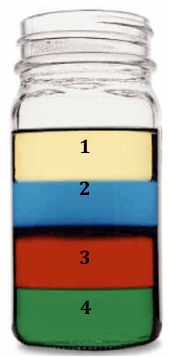

A student calculated the density of a liquid and found it to be 1.36 g/ml. What is the liquid?
baby oil
water with food coloring
honey
dark maple syrup

What is happening to the molecules of water in the chemical change: electrolysis?
Molecules get closer together and more packed
Molecules break apart and form new molecules (H and O gas)
The atoms in the molecules get bigger
Nothing happens to the molecules
In order to move something, you must use ___ to exert a ___.
force, energy
energy, force
force, motion
motion, energy
Two kids are standing on either side of a cart. Maria is pushing to the north, and Steven is pushing to the south. Which of these statements is true?
If the ball doesn't move, both students are doing work.
If the ball moves to the south, only Maria is doing work.
If the ball moves to the south, only Steven is doing work.
If the ball moves, both students are doing work.
She pushes a 10-kilogram cart a distance of 5 meters using a force of 20 Newtons. How much work does she do?
(Hint, there is more info here than you need...so look at the formula for work to determine how to solve the problem!)
50 kg-m
100 N-m
200 N-kg
40 J
It took Colton 5 seconds to apply a force of 80 Newtons to push the nail 0.25 m into a board. How much power was used? (Hint - you need to use the formula for power!)
100 w
1,600 w
400 w
4 w
If the force and motion are NOT in the same direction, then...
work is done.
work is not done.
If force and motion ARE in the same direction, then...
work is NOT done.
work is done.
Which is these IS an example of work being done.
Lifting books up off of a desk
Holding a backpack while walking forward
Pushing on a brick wall
Carrying a glass of pop across the room
How do we calculate work?
W = F * d
w = p * t
W = F / d
w = N * m
The ability to do work or cause change.
work
force
motion
energy
An object's change in position relative to a reference point.
work
force
motion
energy
A push or a pull.
work
force
motion
energy

What does letter A represent
object providing force
object receiving force
gravity
friction
What does letter C represent
object providing force
object receiving force
gravity
friction
What does letter B represent
object providing force
object receiving force
gravity
friction
What does letter D represent
object providing force
unbalanced force
gravity
friction
According to Newton's second law of motion, a/an ________ force will cause an object to move in the direction of the force.
balanced
unbalanced
equal
Yoda
What can force do to an object?
Accelerate an object
Slow down an object
Have the object remain in place
Have the object change shape
All of the above
What is the measure of force?
Newtons
Light years
Inches
Gallons
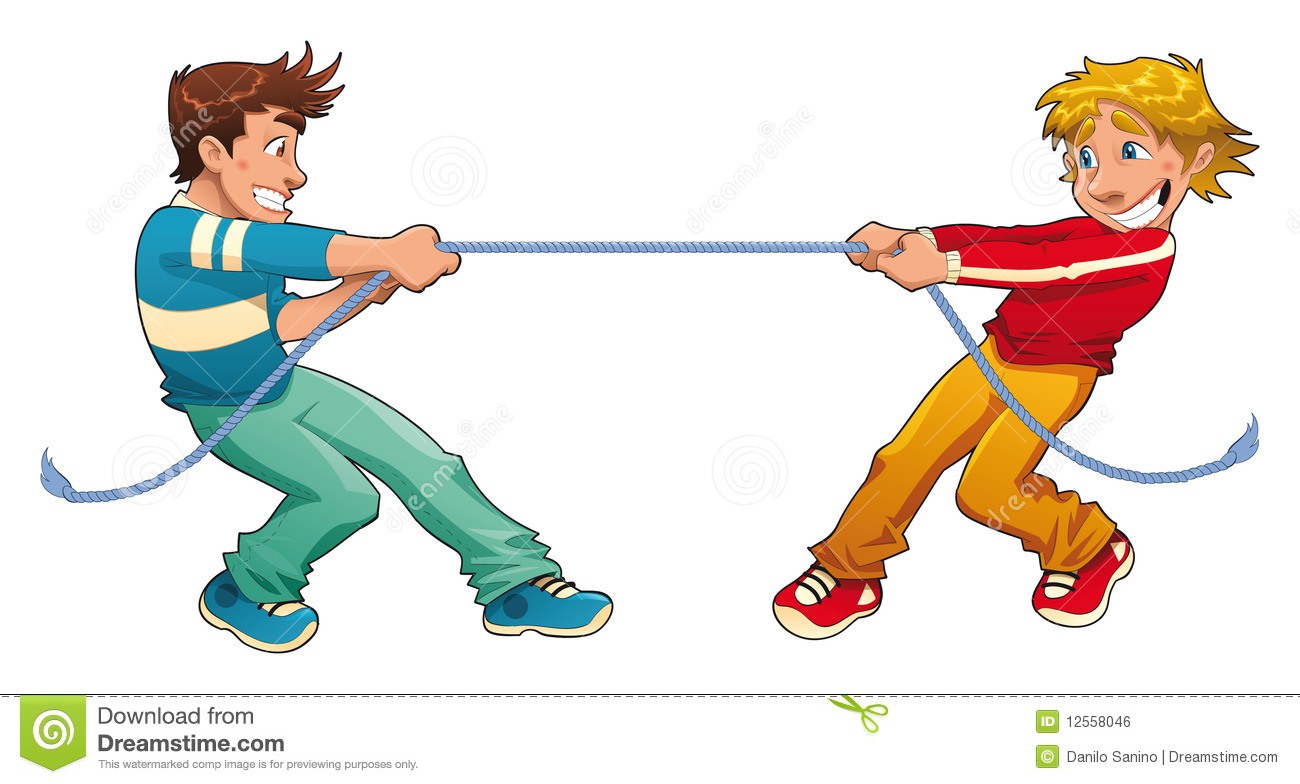

___________ is an opposing force that makes objects in motion slow down.
force
speed
friction
mass
The sum of all forces acting on an object and direction is called the
Balanced Force
Net Force
Unbalanced Force
Contact Force

Are the forces balanced or unbalanced?
Balanced
Unbalanced

To make an object move you must first apply ---
an opposing force
an unbalanced force
a stationary force
a vertical force
a force is best defined as ---
the application of weight
a push or pull that is exerted on matter
the flow of electric charges
a bond in which electrons are shared
A student pushes against a wall with 20 N of force and the wall does not move. In this situation, the wall exerts --
0 N of force
less than 20 N of force
20 N of force
more than 20 N of force
____________ is the amount of matter in an object.
Mass
Volume
Weight
Density
The amount of space that matter occupies:
Mass
Volume
Weight
Density
____________ is a measure of the force of gravity on an object.
Mass
Volume
Weight
Density
_______________ is a measure of the mass of a material in a given volume.
Mass
Volume
Weight
Density
Any chemical reaction that absorbs heat is called ________.
Endothermic energy
Physical Change
Chemical Change
Exothermic energy
When water freezes at 0 degrees and boils at
100 degrees, it's measured in ______________ .
Inches
Fahrenheit
Temperature
Celsius
States matter is not created nor destroyed in any chemical or physical change:
Thermal energy
Density
Chemical Change
Conservation of Energy
Used to measure motion and energy of particles in matter to determine the amount of cold or hot the matter is exerting:
Density
Thermal Energy
Volume
Temperature
Is energy that is absorbed or released into the matter when it’s changing:
Density
Mass
Temperature
Thermal Energy
If you measure matter it should be measured using its ______________ and volume.
Density
Mass
Weight
Thermal Energy
Weight is the force of ______________depending on the mass the object is being weighed.
Energy
Object
Gravity
Density
Density is a the relation between ________ and __________, so how much matter is in a given amount of space.
Density/Thermal energy
Weight/Mass
Volume/Mass
Volume/weight
While temperature _______, density decreases.
Decreases
Increases
The measurement of mass stays the same before and after the change is ______________________________________.
Thermal energy
Conservation of energy
Mass always stays the same
Mass has to change
When matter changes, ___________________ is released or absorbed by the object.
Weight
Mass
Conservation of energy
Thermal Energy
Endothermic means the energy is being _______________
released
released and absorbed
absorbed
not changed
Exothermic means energy is being ____________________
released
absorbed
released and absorbed
Not changed
Temperature affects the ______ of objects.
Mass
Volume
Density
Weight
An example of endothermic energy is ______________
water
ice
fire
air
When you light up a log and start a fire and the weight of the log is the same after it burned, it;s called _______________
Thermal Energy
Temperature
Conservation of energy
Conservation of matter

